
The Silent Midnight Panic of a New Freelancer
I vividly remember sitting at my kitchen table at two in the morning, staring blindly at a glowing laptop screen. My freelance writing gigs were finally starting to take off, and the extra money was a huge relief for my family.
But instead of feeling happy, a tight knot of anxiety twisted in my stomach. I was making decent money, but I was entirely unprotected from angry clients or potential legal threats.
I kept asking myself, should I start an LLC for my side hustle? The fear of losing my personal savings, my car, or even my home over a simple business mistake kept me awake for nights on end.
When you dive into the world of freelance side hustles for extra cash, you mostly focus on getting your first client. Nobody warns you about the scary legal side of making your own money.
Every day, thousands of hard-working people start the most profitable side hustles to make extra money online. They put in the late nights, sacrifice their weekends, and pour their hearts into building something special.
Yet, they live in constant fear of a single lawsuit or an unexpected tax bill wiping out everything they own. It is completely unfair that regular people are left confused by complicated legal jargon.
You deserve to build your extra income streams with absolute peace of mind. Let us break down exactly how you can protect your hard-earned money and sleep soundly at night.
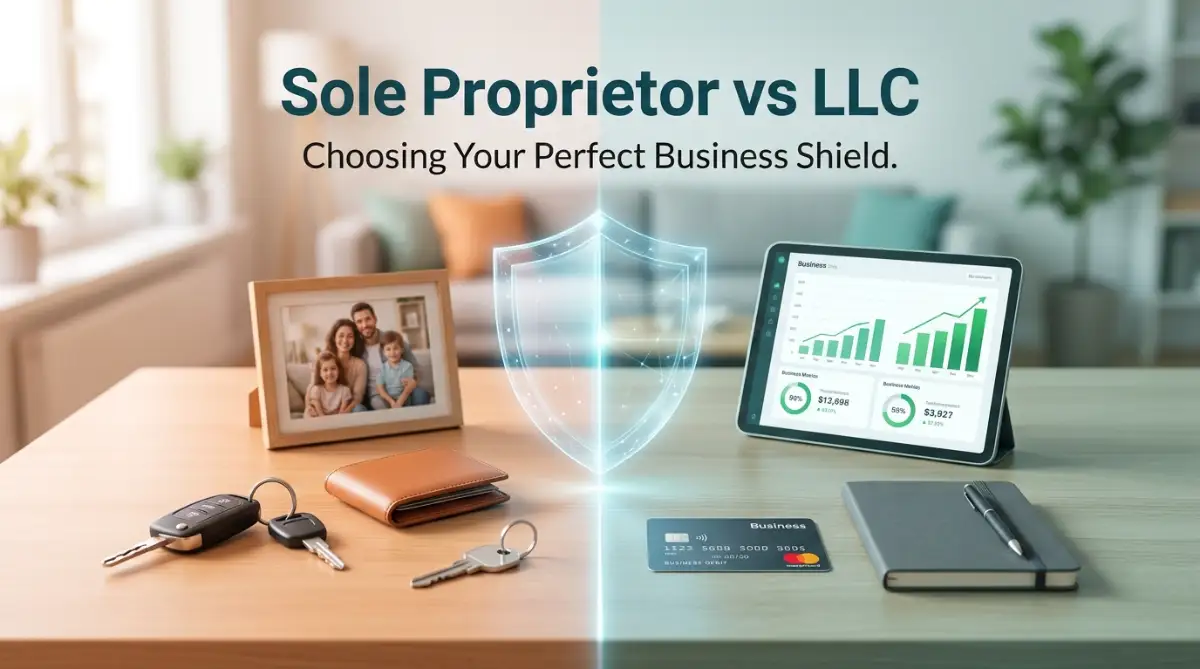
Decoding the Business Jargon: What Are Your Real Options?
When you first start making money outside of a regular job, the government automatically labels you as a specific type of business. You do not even have to sign a single piece of paper for this to happen.
This automatic label is called a sole proprietorship. It is the default setting for almost everyone who starts a small project from their bedroom.
Many people wonder, do I need an LLC or sole proprietorship to run my small gig? To answer this, you must understand exactly how the law views you and your new income stream.
In a sole proprietorship, you and your business are considered the exact same legal person. If your business owes money, you personally owe that money.
This brings us to a massive legal risk that most beginners completely ignore. We need to clearly explain limited liability vs unlimited liability so you can see the danger.
Unlimited liability means your personal bank account, your house, and your car are completely exposed to business risks. If a client sues you for a mistake, they can take your personal belongings to cover the damages.
The Ultimate Shield for Your Personal Wealth
On the other hand, forming a domestic limited liability company creates a powerful legal wall between your business and your personal life. This wall is often called a corporate veil.
If your company gets sued or goes bankrupt, only the assets owned by the business are at risk. Your family's savings account remains safely locked away from business creditors.
This legal separation is one of the absolute best benefits of an LLC for personal use. It allows you to take calculated business risks without betting your family's entire financial future on the outcome.
Pro Tip: Early on, I made the terrible mistake of mixing my personal groceries with my business expenses on the same debit card. I quickly realized that doing this can destroy your legal protection in court, so I immediately opened a dedicated business checking account to keep everything separate.
So, when you compare an LLC vs sole proprietorship, the choice often comes down to your personal comfort with risk. How much are you willing to lose if something goes horribly wrong?
Sometimes, people ask me, why start an LLC without a business idea even fully developed? The truth is, securing your brand name and legal protection early can save you massive headaches down the road.
If you are planning to build something huge, you might even ask, should I get an LLC before starting a business officially? Establishing the legal foundation first makes getting bank accounts and software much easier later.
Watch This Quick Explanation on Choosing Your Legal Structure
Are you still feeling a little overwhelmed by the difference between these legal terms? Check out this short, incredibly helpful video below that breaks down exactly which structure fits your unique goals.
The Income Threshold: When Does Upgrading Actually Make Sense?
One of the most common questions I get from readers is about timing. Specifically, how much money should I make before starting an LLC?
There is no strict legal rule that says you must hit a certain income level to form one. However, the costs of setting up and maintaining the legal structure mean it is not always smart to do it on day one.
If you are only making fifty dollars a month from a small hobby, the annual state fees might eat up all your profits. You have to weigh the exact costs against the actual money you are bringing home.
Real-Life Income Scenarios for Digital Hustlers
Let us look at some realistic earning goals to help you decide. For example, many people wonder, how can I make $300 a day side hustle income consistently?
If you are hitting that three-hundred-dollar daily mark, you are generating significant revenue. At this level of income, the legal protections of a formal company become absolutely necessary to protect your growing wealth.
Others have slightly different goals, frequently asking, how can I make $1000 a week side hustle money without quitting my job? Earning four thousand dollars a month is a serious business operation.
When you run lucrative side hustles from home that generate this kind of reliable cash, you are no longer just playing around. You are running a real company that deals with multiple clients and larger financial transactions.
Even if you are just aiming for smaller milestones, like figuring out how can I make $2000 a month side hustle income, the liability risks are still present. You might be signing non-disclosure agreements or handling sensitive client data.
Take a virtual assistant side hustle, for example. You might have access to a client's email list, their social media passwords, or their personal calendar.
If you accidentally delete an important database, that client could demand thousands of dollars in compensation. A formal company structure ensures they cannot touch your personal savings to get that money back.
Structuring Your New Company Correctly
When you finally decide to take the leap, you will need to choose the right setup for your specific situation. Most solo entrepreneurs easily fall into the category of a single-member company.
You might see debates online about a single member LLC vs multi member LLC when doing your research. If you are running the project completely by yourself, the single-member option is the easiest and most common path.
A multi-member structure is only needed if you are teaming up with a friend or a spouse to share the ownership. It requires much more complex paperwork and detailed operating agreements.
To make things simple, here is a quick breakdown of how these structures impact your daily operations.
Quick Comparison of Business Models
-
Sole Proprietorship: Zero setup cost, zero personal protection, simple taxes.
-
Single-Member LLC: Moderate setup cost, strong personal protection, simple taxes.