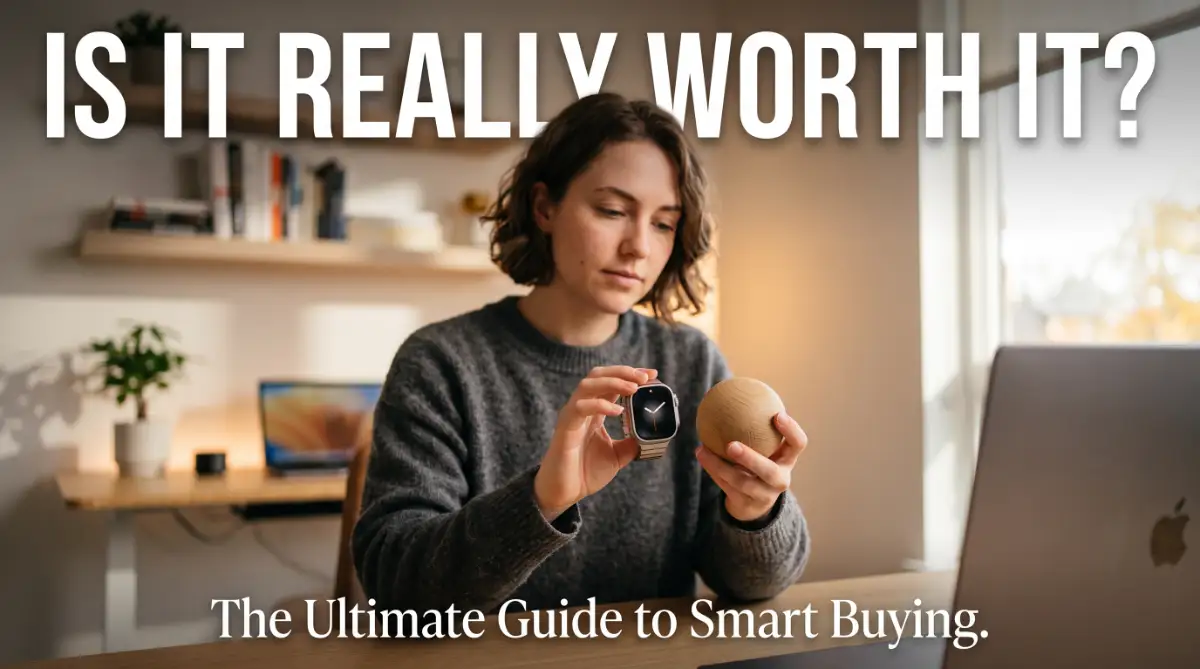
The Hidden Trap of Pretty Packaging and Clever Ads
We have all been there at least once. You see an ad for a product that looks perfect. The colors are bright, the promises are huge, and the price seems just right.
I still remember the day my new "premium" blender showed up at my door. The box looked amazing online, with bold colors and a price that felt too good to pass up.
But when I opened it, the plastic felt flimsy, and it died after blending smoothies for just two weeks. That one bad purchase taught me a lesson I never forgot.
You click that button and wait for the delivery. When the box finally arrives, your heart sinks. The material feels cheap, the size is wrong, or it simply doesn't work like the video showed.
This cycle of excitement followed by regret is a common pain. It is not just about the money you lost. It is about the feeling of being tricked by a brand you wanted to trust.
Why Most People Struggle to Find Real Value
The modern market is flooded with choices. This makes it harder, not easier, to find something good. Here is why we often fail to find the right solution:
- Marketing Overload: Brands spend millions on psychology to make us feel like we "need" their item right now.
- The Review Crisis: It is hard to know which reviews are real and which ones are paid for by the company.
- Shiny Object Syndrome: We often look at how a product looks instead of how it is built or what it actually does.
- Technical Jargon: Companies use big, fancy words to hide the fact that their product is actually very basic.
How Bad Purchases Steal Your Peace of Mind
Making a poor choice does more than just hurt your wallet. It can actually affect your daily life in ways you might not notice immediately:
- Loss of Confidence: Every time you buy a "dud," you start to doubt your own judgment and decision-making skills.
- Wasted Time: Think about the hours spent researching, ordering, and then trying to return a product that didn't work.
- Clutter Guilt: Your home fills up with items you don't use but feel too guilty to throw away because you paid for them.
- Stressful Living: Using tools or products that break easily adds small bits of frustration to your day that eventually add up.
The Reality of the Modern Consumer Experience
The truth is that we are living in an era of "fast" everything. Fast fashion, fast tech, and fast furniture. Most things are designed to look good for a month and then break so you buy another one.
This is a strategy called planned obsolescence. It means the company wants the product to fail after a certain time. If you don't know how to look past the surface, you will keep falling into this trap.
Real value is not about the lowest price. It is also not always about the highest price. Real value is when the utility of the item matches or exceeds what you paid for it.
To find this value, we have to change the way we look at things. We need to stop being "shoppers" and start being "investigators." This mindset shift is the first step to never wasting money again.
The Smart Framework: How to Decode Product Quality
If you want to stop guessing, you need a system. You don't need to be an expert in every field. You just need to know which questions to ask.
Step 1: Look at the Weight and Material Build
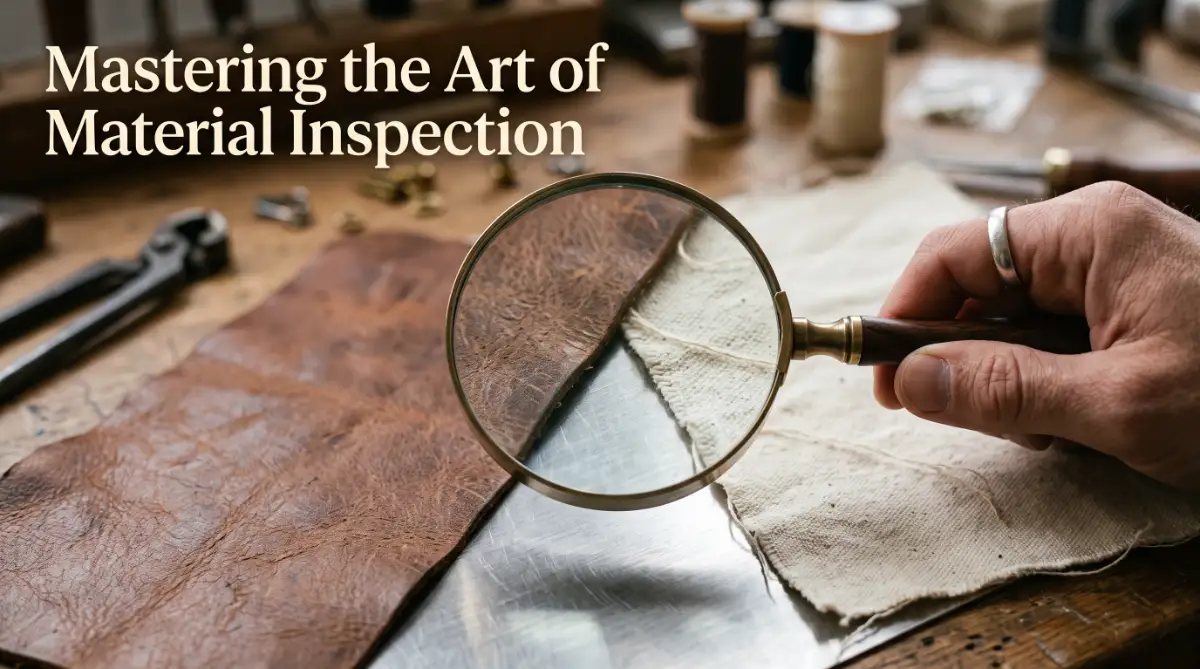
The first thing you should do is check what the item is actually made of. This is the foundation of any good product.
Why weight matters: In many cases, weight is a sign of quality components. For example, in electronics, a heavier power brick often means better heat sinks and safety parts. In furniture, solid wood is much heavier than cheap particle board.
Texture and Finish: Run your hands over the surface. Are there sharp edges where there shouldn't be? Is the paint or finish even? A company that cares about the small details usually cares about the internal quality too.
Check the "Connection Points": Look at where two parts meet. In clothing, this means checking the seams. In gadgets, look at the buttons and ports. If these small areas look messy, the whole product is likely low quality.
Step 2: The Truth About the Review Section
Reviews are a goldmine, but only if you know how to read them. Most people just look at the star rating. That is a mistake.
Ignore the 5-Star and 1-Star extremes: The 5-star reviews are often written in the "honeymoon phase" or might be fake.
The 1-star reviews are often from people who had a bad shipping experience that has nothing to do with the product.
Search for the "3-Star Sweet Spot": These are the most honest reviews. These users usually list exactly what they liked and exactly what they hated. This gives you a balanced view of what to expect.
Look for "Update" reviews: Search for people who came back after six months or a year. This is the only way to know if the product actually lasts. A product that works for a week but breaks in a month is not worth your money.
Step 3: Calculate the "Cost-Per-Use" Ratio
This is the most powerful tool for your brain. It helps you see past the initial price tag.
The Math of Value: Imagine you see a pair of shoes for $30 and another for $100. The $30 pair looks okay but will wear out in three months. The $100 pair is built to last three years.
- Cheap Pair: $30 / 90 days = $0.33 per use.
- Quality Pair: $100 / 1095 days = $0.09 per use.
Pro tip from my own mistake: I used to grab the cheapest option every time, thinking I was winning.
Then I did the math on a pair of work boots I kept replacing every few months, and realized I had spent way more than if I had just bought one solid pair upfront.
Now I run the cost-per-use math before I buy anything over $20.
The "expensive" item is actually much cheaper in the long run. When you use this logic, you realize that buying cheap things is often the most expensive way to live.
Want to see a product get pushed to its breaking point before you buy? Watch this.
Step 4: Search for Independent Testing Data
Sometimes, looking at the product isn't enough. You need to see how it performs under pressure.
Third-Party Certifications: Look for labels like UL (for electrical safety), NSF (for kitchen tools), or OEKO-TEX (for safe fabrics). These organizations test products so you don't have to.
Video Stress Tests: Go to video platforms and search for "Product Name Stress Test" or "Product Name Durability Test." Seeing someone actually try to break the item will tell you more than any advertisement ever could.
Community Forums: Websites like Reddit have specific communities for almost every product type. These people are usually enthusiasts who will tell you the cold, hard truth about a brand's reputation.
Step 5: Evaluate the Warranty and Support
A company that believes in its product will stand behind it. This is a major clue about worth.
The Warranty Gap: If a company offers a lifetime warranty, they are betting that their product won't break. If they only offer a 14-day return window, they are worried it might.
Customer Support Response: Before buying something expensive, send a simple question to their support team. See how long they take to answer and how helpful they are. If they ignore you when you want to buy, they will definitely ignore you when you have a problem.
Check for Replacement Parts: Can you buy a new battery or a new strap for this item? If the whole thing has to be thrown away because one small part broke, it is not a sustainable or smart purchase.
Real-Life Scenario: The Coffee Maker Choice
Let's look at a practical example. Suppose you want a coffee maker.
You see a Brand A machine for $20. It is made of thin plastic. It has a simple on/off switch. The reviews say the water doesn't get hot enough, and it leaks after two months.
Then you see Brand B for $80. It is made of stainless steel. It has a 2-year warranty. People in forums say they have used it every day for five years without a single leak.
The $80 machine is the "worth it" choice. It provides a better experience (hotter coffee) and costs less over time because you won't be buying a new $20 machine every few months.
Moving Toward Mindful Consumption
Being a smart buyer is a skill that grows over time. It starts with slowing down. The "Instant Buy" culture is the enemy of your bank account.
Next time you see something you want, wait 24 hours. During that time, apply the steps we discussed. Check the materials. Read the 3-star reviews. Calculate the cost-per-use.
You will find that you end up buying fewer things, but the things you do buy will be of much higher quality. This leads to a cleaner home, a fatter savings account, and a lot less stress.
Decoding the Manufacturer’s Hidden Track Record
Identifying a great product goes far beyond reading a single description. You need to look at who is actually making it. Some brands have been around for decades, but they have changed owners many times.
A brand name that meant quality twenty years ago might now be owned by a company that focuses on cheap parts. I always suggest looking at the parent company.
If a massive corporation owns twenty different brands, they often use the same cheap factory for all of them.
You should search for the company’s history with recalls or lawsuits. If a brand has a pattern of fixing their mistakes quickly, that is a green flag.
If they hide from problems and leave customers hanging, you should keep your money in your pocket.
The Secret of the Resale Market Test
One of the best ways to know if an item is truly high quality is to check the used market. Go to sites like eBay or local marketplaces and see how much the product sells for after it has been used.
If a product retains 50% or more of its value after a year, it means the build quality is respected. People are willing to pay for it even when it isn't brand new.
On the other hand, if you see hundreds of the same item being sold for pennies, it is a sign that the product does not last.
For example, think about professional-grade kitchen mixers or high-end cameras. These items often sell for high prices even when they are years old. This is because the materials are durable and the design is timeless.
Before you buy, you might want to look into [evaluating the long-term growth potential] of your investments, even when it comes to smaller physical goods.
Recognizing Stealth Marketing and Review Hijacking
Marketing has become very sneaky. Sometimes, a product has thousands of five-star reviews, but they are not for the product you see. This is called "Review Hijacking."
A seller might start by selling a simple item like a cheap USB cable and get 5,000 good reviews. Then, they change the listing to a $200 air purifier.
The reviews stay, making the new product look amazing when it hasn't actually been tested by anyone.
Always click on the "Most Recent" reviews. Look at the photos uploaded by users. Do the photos match the product being sold today?
If you see photos of socks on a listing for a vacuum cleaner, run away. This is a common trick used to steal your trust.
Analyzing the Total Ownership Experience
When you buy something, you are not just paying the price on the tag. You are signing up for an experience that lasts for months or years. You need to think about the "hidden" costs of owning that item.
Think about a cheap printer. The machine might cost only $40. However, the ink cartridges might cost $30 and only last for fifty pages. Within a year, you have spent $300 just to keep the cheap machine running.
This applies to many things. Does the product need a special cleaning solution? Does it require professional maintenance every few months?
If the upkeep is expensive, the initial "deal" is actually a trap. To avoid these traps, it is helpful to [validate your small business idea] or even your personal shopping ideas by looking at the total cost over time.
Checking the Community of Enthusiasts
Every product category has a group of people who are obsessed with it. Whether it is coffee, hiking boots, or mechanical keyboards, there is a community of experts online. These people spend their free time testing every detail.
I suggest spending ten minutes on forums like Reddit or specialized hobby sites. Search for "Product Name vs" and see what the competitors are. Enthusiasts will often point out a flaw that a regular reviewer might miss.
They might tell you that a certain laptop hinge breaks after six months of use. Or they might explain that a specific brand of shoes uses glue instead of stitching, which makes them impossible to repair. This kind of "insider" knowledge is much more valuable than a shiny advertisement.

Thinking Twice Before Chasing the Hype
We often feel a strong urge to buy something just because everyone on social media is talking about it. This is a psychological trigger that brands use to bypass our logic.
When you see an influencer showing off a product, remember that they are often being paid to look happy.
They might use the product for a thirty-second video and then never touch it again. This is why "viral" products often end up in the trash after a few weeks. Always ask yourself: "Would I still want this if nobody else was talking about it?"
If the answer is no, then you are just buying into a trend. Trends fade quickly, but quality lasts. Making decisions based on facts rather than feelings is the key to [staying calm and thinking clearly under pressure] when you are tempted by a big sale.
The Mistake of Ignoring the Replacement Cycle
Many people buy the cheapest option because they think they are saving money today. This is a short-term way of thinking.
If you buy a cheap toaster that breaks every year, you will spend more in five years than if you bought one high-quality toaster.
Buying cheap items also creates more waste. You have to deal with the stress of it breaking when you need it most. It is much better to save up and buy the "forever" version of a product.
This is especially true for tools and items you use every single day. If it is something that touches your skin, saves you time, or protects your health, do not settle for the lowest price.
For more on managing your funds for these better purchases, learn [how to create a realistic monthly budget] to help you save for quality.
Failing to Test the Return Policy First
A huge mistake is assuming that you can always return a product if it doesn't work. Some companies make the return process so difficult that you eventually give up.
They might require you to pay for international shipping, which can cost more than the item itself.
Before you checkout, spend two minutes reading the return policy. Look for a "no questions asked" guarantee. If a company is confident in their product, they will make it easy for you to send it back.
If the policy is hidden or uses confusing legal language, consider it a warning sign. You should always know your rights as a consumer.
You can find excellent resources on consumer protection through official sites like the Federal Trade Commission or local consumer rights groups.
Buying Based on Features You Will Never Use
Companies love to add "extra" features to justify a higher price. They might sell a washing machine with fifty different settings and a touch screen. But in reality, you will probably only use two or three of those settings.
This is called "Feature Creep." You are paying for technology that just makes the product more complicated and more likely to break. A simple, well-built product is usually better than a "smart" product that requires a software update just to work.
Focus on the core function of the item. If you are buying a knife, it needs to be sharp and comfortable. It doesn't need a built-in LED light or a Bluetooth connection. Stick to the basics and you will find much better value.
Forgetting to Check the Material Safety
In the rush to make things cheap, some manufacturers use materials that are not safe for long-term use. This is common in cheap plastics, paints, and fabrics. If a product has a very strong "chemical" smell when you open the box, that is a bad sign.
High-quality products often come with safety certifications. They use food-grade silicone, BPA-free plastics, or organic fibers. These materials cost more to produce, but they are worth it for your health and peace of mind.
You should also look for reports from independent labs. Organizations like Consumer Reports provide unbiased testing on thousands of everyday items. Checking these sources can save you from buying something that is actually harmful.
Your New Path to Smarter Spending
You now have the tools to look past the marketing and see the real value of any product. It is a powerful feeling to know that you are no longer a target for bad brands.
You are now an informed investigator who knows how to spot quality from a mile away.
Start small. The next time you need to buy something, even something simple like a kitchen tool, use this checklist. Check the materials, look for the 3-star reviews, and think about how long it will actually last.
You will notice a change in your life very quickly. Your home will have fewer items, but those items will be things you truly love and trust. You will stop feeling the "buyer's remorse" that ruins your mood after a shopping trip.
A Final Action Plan for Quality Living
I want you to take one action today. Look around your house and find one item that has lasted a long time. Ask yourself why it lasted. Was it the material? Was it the brand? Use that knowledge to guide your future purchases.
Remember, every dollar you spend is a vote for the kind of world you want to live in. When you buy quality, you are voting for better manufacturing, less waste, and honest business practices.
You deserve to have products that work for you, not against you. Stay curious, stay skeptical, and always value your hard-earned money. You are now ready to make choices that will benefit you for many years to come.
Once I started using this simple checklist, my shopping regret basically disappeared. I stopped buying junk I'd toss in a month and started building a home full of things I actually trust.
Try it on your very next purchase, no matter how small, and watch how much better you feel about where your money goes.
Disclaimer: The information provided in this article is for educational and informational purposes only. We do not provide financial or legal advice. Always perform your own research and consult with professionals before making significant financial decisions or purchasing expensive items.