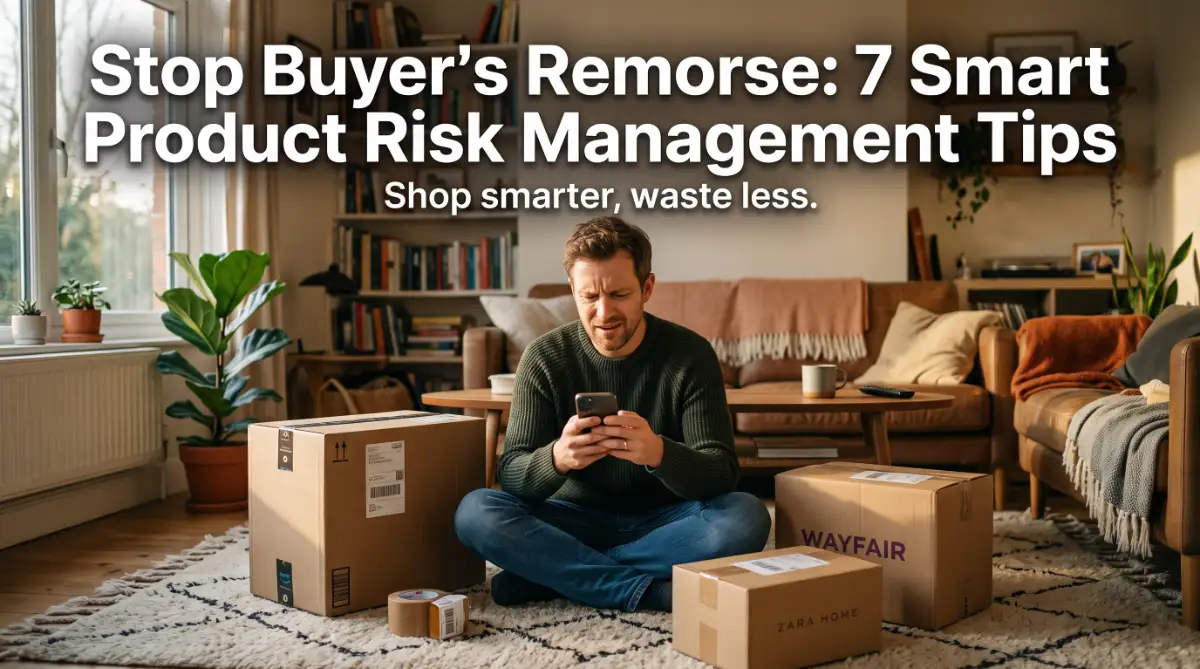
That Sinking Feeling When a Purchase Goes Wrong
I still remember the wireless earbuds I bought a while back, four and a half stars, hundreds of reviews, looked like a sure thing.
Two weeks later, one earbud stopped charging, and when I finally read the low-star reviews I'd skipped, half of them mentioned the exact same problem.
My money was gone, and so was my patience with "trust the star rating" advice. That one bad purchase is honestly why I started checking things properly before buying anything now.
You saw it online. Great photos, a tempting price, glowing comments underneath.
You clicked "buy" without really checking anything else.
Then it arrived, and it wasn't what you expected at all. Now it's sitting in a drawer, and you're out the money you spent on it.
You're not the only one this happens to. Most people make buying decisions based on excitement in the moment, not on real research.
Why the Usual Advice Doesn't Actually Help
Here's what usually goes wrong when people try to protect themselves:
- "Just read reviews" sounds simple, but many reviews are fake or paid for.
- "Compare prices" doesn't tell you if the product actually works.
- "Buy from a trusted seller" doesn't guarantee the product itself is good.
- There's no system, so people just hope for the best each time.
- By the time something's wrong, the money is already gone and returns are a hassle.
What This Does to Your Confidence Over Time
This isn't just about one bad purchase. It quietly changes how you shop and how you feel about spending money.
- Every bad purchase makes you more anxious about the next one.
- You start overthinking small purchases, which wastes time and energy.
- You may avoid trying new products entirely, even ones that could actually help you.
- Some people end up overspending on "safe" brands just to avoid the stress of choosing.
None of this means you're bad at shopping. It means you never had a simple system to check a product before buying it.
That changes today. We're going to walk through a practical way to check any product, so you can buy with confidence instead of guesswork.
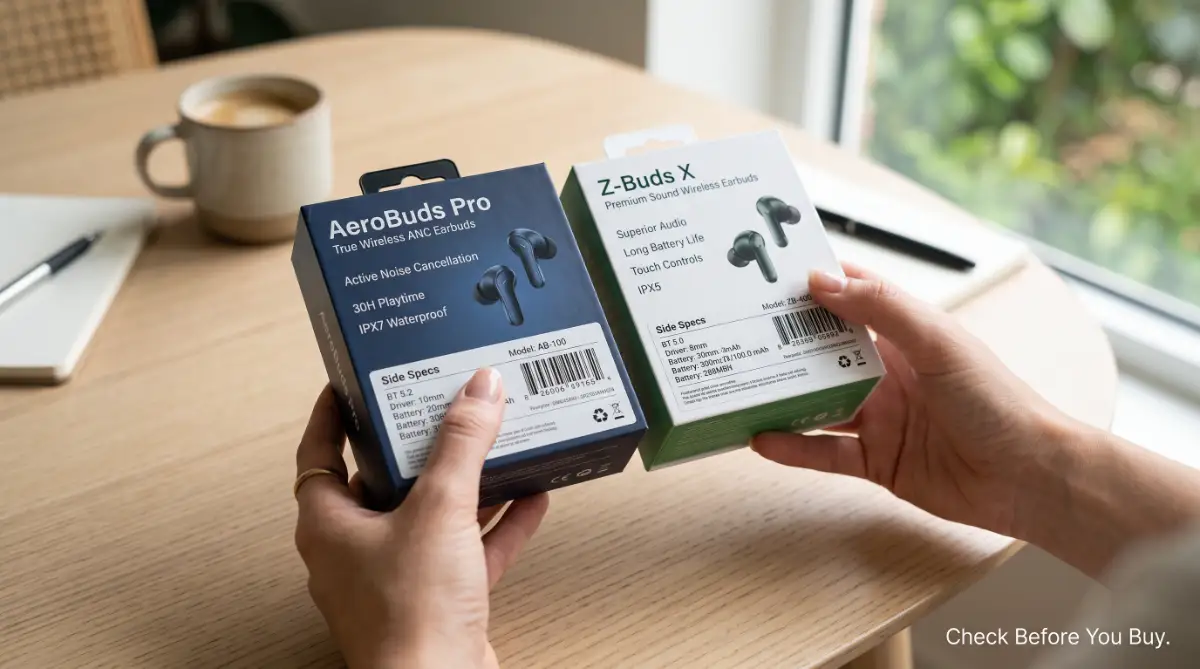
Building Your Simple Pre-Purchase Check
Think of this less like "shopping rules" and more like a quick habit you build once and use forever.
Step 1: Look Past the Star Rating
A 4.5-star rating means nothing on its own. Always check how many reviews make up that rating.
A product with 4.5 stars from 12 reviews is far less reliable than one with 4.2 stars from 3,000 reviews.
Real-life example: Imagine two phone cases. One has 5 stars from 4 reviews. The other has 4.3 stars from 2,000 reviews. The second one is the safer choice, even with a "lower" score.
What to actually check:
- Read a few of the lowest-rated reviews, not just the top ones
- Look for repeated complaints about the same issue
- Check if the seller responds to negative reviews
Not sure how to spot a fake review at a glance? Watch this quick breakdown, then keep reading for the next step.
Step 2: Research the Seller, Not Just the Product
A great product from an unreliable seller can still turn into a bad experience.
Before buying, spend two minutes checking:
- How long the seller has been active
- Whether they have a clear return policy
- If other buyers mention problems with shipping or support
Think of this like checking a restaurant's health rating before eating there. The food might look fine in photos, but the details matter.
Step 3: Start Small Before You Commit
If you've never used a brand or product type before, don't buy the biggest or most expensive version first.
My biggest mistake used to be going all in on a full-size product the first time I tried a new brand, just to save a few extra dollars on the "value pack."
I learned the hard way that a small test purchase costs almost nothing compared to being stuck with a large size of something that doesn't work for you.
Now I always buy the smallest option first, no exceptions, even if it feels slightly less convenient.
Buy the smallest, cheapest option available to test it out. This limits how much you could lose if it doesn't work for you.
Pro Tip: This is especially useful for things like skincare, supplements, or tools you've never tried. A small test purchase tells you everything a big one would, at a fraction of the risk.
Myth vs Reality
Buying something you've never used doesn't have to feel like a gamble. With a simple check before every purchase, you turn guesswork into a habit you can trust.
Beyond the Basics: Where Smart Buyers Level Up
Checking reviews and testing small purchases will already put you ahead of most buyers. But there's a level beyond that most people never reach.
This is where you stop reacting to problems and start preventing them entirely.
Read Between the Lines of Product Descriptions
Sellers often use vague language on purpose. Words like "premium quality" or "industry-leading" don't actually tell you anything measurable.
Watch out for these red flags in listings:
- Vague claims with no specific numbers or details
- Photos that look professionally staged but reviews mention a different-looking product
- Descriptions copied word-for-word across multiple unrelated sellers
A real-life scenario: Say you're looking at a kitchen gadget described as "durable and long-lasting." That tells you nothing.
But a listing that says "stainless steel body, tested for 10,000 uses" gives you something you can actually verify.
If a seller can't or won't give specific details, treat that as information too. Vague answers usually mean there's something they'd rather you not ask about.
Use the "Cross-Check Rule" Before Any New Purchase
Never rely on just one source of information. This is one habit that separates careful buyers from everyone else.
Try checking at least two of these before buying:
- The seller's own listing and photos
- An independent review site or forum discussion
- A quick search for the brand name plus the word "complaints"
This takes maybe five extra minutes. But it catches problems that a single glance would completely miss.
If you're making a bigger purchase, it also helps to get comfortable with basic understanding debt consolidation style budgeting, so a bad purchase doesn't throw off your whole month.
Know Your Return Window Before You Need It
Most people only check the return policy after something goes wrong. By then, it's often too late.
Before buying, always confirm:
- The exact number of days you have to return the item
- Whether the seller charges a restocking fee
- If you need the original packaging to qualify for a return
According to the Federal Trade Commission, sellers must give buyers certain disclosures and rights when it comes to returns and refunds under U.S. consumer protection rules.
Knowing your rights ahead of time means you're never caught off guard.
Keeping This Habit for the Long Run
The goal isn't to research every single purchase forever. Small, cheap items don't need this much attention.
Save the full check for:
- Anything over a certain price point you're not comfortable losing
- Brands or product types you've never tried before
- Purchases you can't easily return or exchange
Once this becomes automatic, it takes seconds, not minutes. You'll start spotting red flags almost without trying.
This kind of careful spending habit also connects well with a bigger goal, like building an emergency fund so unexpected costs, including bad purchases, don't throw off your finances.

The Buying Mistakes That Quietly Cost the Most
Even careful buyers fall into these traps. Here's what to watch for.
Mistake 1: Buying based only on the first search result. The first thing you see isn't always the best option, it's often just the one with the biggest ad budget.
Mistake 2: Ignoring the return deadline until it's already passed. Many return windows are shorter than people expect, sometimes just 14 or 30 days.
Mistake 3: Trusting influencer recommendations without checking further. Sponsored content doesn't always reflect real, independent testing.
Mistake 4: Skipping the seller's history because the price looks good. A low price from an unreliable seller often ends up costing more in the long run.
Mistake 5: Buying in bulk before testing a single unit. If the product doesn't work for you, you're now stuck with far more waste and regret.
Each of these mistakes seems small on its own. But together, they add up to wasted money, wasted time, and the kind of frustration that makes shopping feel stressful instead of simple.
What if I've already made one of these mistakes?
That's completely normal, and it doesn't mean you're bad at this. Use it as information. Notice which mistake keeps repeating for you, and build your check around avoiding that one specifically.
Your Simple Plan for Every Purchase From Here On
You don't need a complicated system to shop smarter. You need a few small habits you actually use every time.
Before your next purchase, run through this quick checklist:
- Check the number of reviews, not just the star rating
- Look up the seller's history and return policy
- Start small if it's a brand or product you've never tried
- Cross-check with at least one outside source
None of these steps take long. But together, they turn every purchase from a gamble into a decision you actually control.
You already have everything you need to shop with more confidence starting today. The next time something catches your eye online, you'll know exactly what to check before you click "buy."
Looking back, I wish someone had told me this system years ago instead of letting me learn it through a drawer full of regret purchases.
These days, checking a seller and reading a few low-star reviews takes me less time than scrolling through my phone while waiting for coffee.
If a few small habits saved me from wasting money over and over, I know they can do the same for you starting with your very next purchase.
Disclaimer: This article is for general informational purposes only and does not constitute financial or legal advice. Always review a seller's specific policies and consult a qualified professional before making significant purchasing decisions.