The Invisible Barrier: Why Expensive Education is Holding You Back
I remember staring at my bank account and feeling like my future was locked behind a door I couldn't afford to open. It’s a real gut-punch when you want to learn something new but the price tag is thousands of dollars.
I found a way to bypass those high costs, and honestly, it changed my entire career without costing me a single cent.

Do you feel stuck in your current job because you cannot afford the high price of new training? Many people want to grow, but they see course prices that cost thousands of dollars. It feels like a wall is standing between you and the career you want.
This struggle is real for millions of workers today. You see others getting promoted because they have new certifications.
Meanwhile, you are working hard but cannot find the extra money to pay for a "pro" bootcamp. It makes you feel like your dreams are on hold just because of your bank balance.
The dream of a better life should not be locked behind a paywall. When you cannot access the right information, you feel left behind.
This creates a deep sense of frustration that follows you every day at work. You know you have the talent, but you lack the "official" resources to prove it.
Why the Search for Quality Information Often Fails
Finding the right help online can be a total mess. Many people try to search for free help but end up in these common traps:
- They find "free" trials that ask for a credit card number immediately.
- The information they find is ten years old and no longer works.
- They get stuck in "marketing funnels" where the real secrets are hidden.
- They download files that are full of viruses or spam.
- Search results are filled with ads instead of actual learning content.
This sea of bad data makes people give up. You might spend five hours searching and zero hours actually learning. This waste of time is more painful than the lack of money. It makes you think that high-quality info simply isn't free.
The Truth About Open Educational Resources (OER)
There is a huge movement happening right now called OER. These are materials that creators have put online for free. They want the world to learn without barriers. These are not just "cheap" notes; these are often the same materials used at top universities.
Imagine having the same syllabus as an Ivy League student without paying $50,000. That is the power of open source. Once you know where to look, you realize the gold is already there. You just need a map to find it.
In this guide, I will show you exactly how to find these treasures. You will learn how to bypass the ads and find the real gems. By the time we are done, you will have a clear plan to build your skills for zero dollars.
Your Roadmap to Mastering New Skills for Free
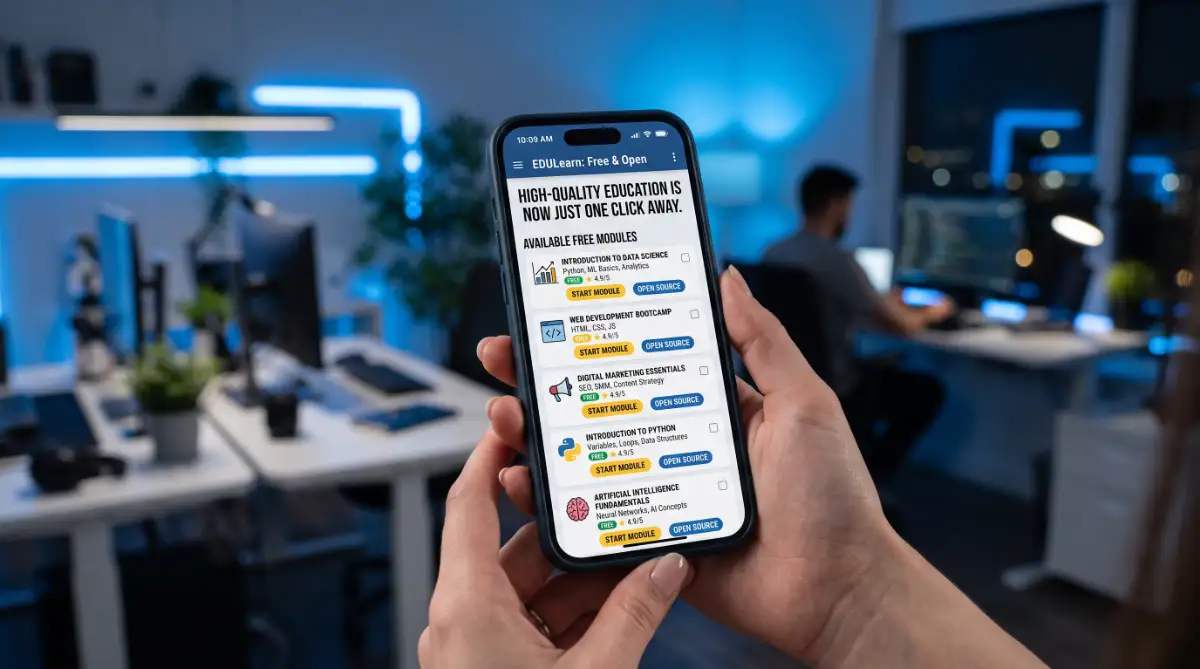
The first step to changing your career is changing how you search. You need to move away from "Google Ads" and look into academic and professional repositories. Here is how you can start your journey today.
- Audit Top Schools: You can access MIT and Harvard course materials for free using their "OpenCourseWare" portals.
- Use OER Portals: Websites like OER Commons and Merlot host peer-reviewed textbooks and modules at zero cost.
- Search Like a Pro: Use the "filetype:pdf" trick on Google to find academic papers directly.
- Build a Portfolio: Employers care more about your actual projects on GitHub or a blog than a paid certificate.
- Avoid Hoarding: Don't just save links; pick one resource and finish it before moving to the next.
Step 1: Tapping into University Open Portals
Did you know that some of the best schools in the world give away their course materials? They don't give you a degree for free, but they give you the knowledge. This is the ultimate "life hack" for professional growth.
Check out portals like MIT Open Course Ware. They have uploaded almost all their course content for the world to see. You can find lecture notes, exam papers, and reading lists. If you want to learn computer science or engineering, this is the gold standard.
Another great spot is Harvard Open Learning. They offer various courses that you can audit for free. This means you can watch the videos and read the books without paying a dime. It is like being a silent student in a world-class classroom.
Top 5 Platforms for Ivy-League Level Knowledge
Step 2: Exploring Global OER Repositories
If you are looking for specific textbooks or modules, you need a repository. A repository is like a massive digital library that only stores free educational content. You don't have to worry about copyright issues or hidden fees here.
OER Commons is one of the best places to start. It is a public digital library that allows you to search by subject and grade level. Whether you need to learn business management or data science, they have curated modules from teachers around the world.
Another powerful tool is Merlot. This site has been around for a long time and is managed by the California State University. it provides peer-reviewed online learning materials.
This means other experts have checked the work to make sure it is accurate and high-quality.
Step 3: Using Professional Archives and Public Domains
Sometimes the best learning comes from reading the original sources. If you are in a field like history, literature, or law, public domain archives are your best friend. These are works where the copyright has expired or was never applied.
The Internet Archive is a massive non-profit library of millions of free books, movies, and software. You can find out-of-print textbooks that are still very useful for learning the basics of any craft. It is a treasure chest for those who love to read and research.
For those in the tech world, GitHub is the ultimate open source resource. It isn't just for code. Many experts host "Awesome Lists" on GitHub. These are curated collections of free books, tutorials, and videos for almost every professional skill imaginable.
Ready to see these world-class university portals in action? Watch this quick guide to learn how to navigate these free resources and start your Ivy League-level learning journey right now!
Myth vs. Reality: Is Free Information Actually Good?
A lot of people think that "if it's free, it must be bad." This is a common myth that stops people from succeeding. Let's look at the reality.
The Myth: Free courses are just basic introductions.
The Reality: Many open source materials are deep, technical, and written by PhDs. They are used to train actual professionals in high-paying industries.
The Myth: You need a paid certificate to get a job.
The Reality: Modern employers care more about what you can do than a piece of paper. If you use free materials to build a great portfolio, you will get hired. Skill is the real currency in the modern world.
Pro Tip: Use Advanced Search Operators
When searching on Google, don't just type "free marketing course." You will get hit with a million ads. Instead, use search operators to find direct files.
Try typing this: filetype:pdf "marketing strategy" site:.edu. This tells Google to only show you PDF files about marketing strategy from university websites.
This simple trick bypasses all the blog spam and takes you straight to the academic resources.
Building Your Own Learning Curriculum
Once you find these resources, don't try to learn everything at once. You will get overwhelmed. Treat this like a real school. Pick one topic and find three high-quality open-source sources for it.
Set aside thirty minutes every morning before work. Consistency is much more important than speed. If you read just ten pages of an open-source textbook a day, you will be an expert in a few months. You are building a "compounding interest" of knowledge that will pay off for the rest of your life.
💡 My Expert Tip: The "20-Page Rule"
The biggest problem with free learning is that it's easy to quit. I use the "20-Page Rule" to stay on track. When I find a massive open-source textbook, I commit to reading just 20 pages. If I find it useful, I keep going. If not, I ditch it. This keeps me from getting overwhelmed and helps me find the "gold" much faster!
Why Community Support Matters
Learning alone can be hard. The best part about the open-source world is the community. Many of these resources have forums or Discord groups where you can ask questions.
When you join these groups, you meet other people who are on the same journey. They can help you when you get stuck. This social part of learning keeps your motivation high.
You realize that you are part of a global movement of people who value knowledge over money.
As you begin to use these free tools, you will feel a shift in your mindset. You are no longer a victim of high prices.
You are a digital explorer who knows how to find the best tools for the job. This confidence will show in your interviews and your daily work.
Preparing for the Next Step
In the next part of this guide, I will show you how to organize your learning so you don't get lost. I will also share how to prove your skills to employers without having a traditional degree.
The world is changing, and the "Open Source Professional" is the future.
Keep your eyes open and your mind ready. The resources are there, waiting for you to click. You have the power to change your life today for zero dollars. Let's keep moving forward!
Advanced Strategies for Mastering Open Resources
Finding the materials is only the first step. To truly change your career, you must know how to use them effectively. Many people start with great energy but lose their way because they lack a system.
Organizing Your Digital Knowledge Vault
One of the biggest secrets to success is how you organize what you find. If you just save bookmarks, you will likely forget them. You need a dedicated digital space to store your findings.
Think of your learning like a construction project. You wouldn't just throw bricks in a pile; you would stack them neatly. Use tools like Notion or Trello to create a "Learning Syllabus" for yourself.
You can even how to use artificial intelligence to automate daily productivity tasks to help categorize your resources. AI can summarize long open-source papers or find related videos that explain difficult concepts. This saves you hours of manual work and keeps your focus on actual learning.
Verifying the Authority of Free Content
Not all free information is created equal. Before you spend forty hours on a course, you must check its quality. Look for the "license" attached to the material.
True open-source materials usually have a Creative Commons license. This means experts have intentionally shared it for public benefit. You can check the Creative Commons website to understand the different types of permissions.
Always look for the author's background. If a professor from a known university wrote the material, it is likely safe. If the "expert" has no clear history or citations, proceed with caution.
Trusting the wrong source can fill your head with bad habits that are hard to unlearn later.
Building a Proof-of-Skill Portfolio
Since you won't have a traditional degree from these free resources, you need another way to show your value. Employers today care more about what you can build than what you have memorized. This is where your "Public Portfolio" comes in.
As you learn from open-source materials, document your progress. If you are learning coding, put your projects on GitHub. If you are learning marketing, create a small case study on a blog.
This acts as your "Social Proof." It tells a hiring manager, "I taught myself this skill using top-tier resources, and here is the proof." This shows more initiative and grit than someone who just sat through a paid lecture without doing any work.
The Power of Micro-Learning
You don't always need three hours to learn something new. You can use "dead time" in your day. This includes your commute, waiting in line, or your lunch break.
Keep a few open-source PDFs on your phone. Instead of scrolling through social media, read a few paragraphs.
These small moments add up over a year. You will be shocked at how much you can learn just by using ten-minute gaps effectively.
Avoiding the Traps: Common Mistakes in Self-Directed Learning
Even with the best intentions, many learners fail. They run into walls that are easy to avoid if you know they are there. Let's look at what often goes wrong so you can stay on track.
Falling Into the "Digital Hoarding" Trap
This is the most common mistake. People spend all their time finding and saving links but never actually open them. They feel "productive" because they have a list of fifty courses.
Hoarding links is not learning. It is just a form of procrastination. I suggest the One-In-One-Out Rule. Do not save a new resource until you have finished at least half of the current one you are studying.
I used to waste hours saving "free" links on social media that I never actually opened. My big realization was that finding the information is only a small part of the work; the real secret is picking one resource and actually finishing it.
Don't be a link hoarder like I was—pick one single PDF and read it until you truly understand the topic.
Skipping the Fundamentals
Free resources often let you jump around. You might want to learn "Advanced AI" before you understand basic math. This creates a weak foundation that will eventually crumble.
Always start with the "101" level courses. Even if you think you know the basics, a quick review is helpful. Experts are just people who have mastered the basics so well that they don't even have to think about them.
Ignoring the Value of Community
Some people try to learn in a dark room all by themselves. While focus is good, isolation is not. Open-source learning thrives on collaboration.
If you don't understand something, ask a question on a forum like Reddit or Stack Overflow. Chances are, someone else had the same problem five years ago. Learning from other people's mistakes is the fastest way to grow.
Neglecting Your Brain Health
You cannot learn if your brain is tired. Many people stay up late to study, thinking they are being hardworking. In reality, they are making it impossible for their brain to store the information.
Studies show that sleep is when your brain "saves" what you learned during the day. If you want to remember your new skills, you must transform your sleep quality forever. Without good rest, your learning is like writing on water.
Not Searching for the Right Keywords
Most people use very basic words when looking for free materials. If you don't find what you need, it might be your search strategy. Learning how to find the right terms is a skill in itself.
You can improve your search success by understanding the impact of keyword research on search engine ranking and applying those same ideas to your own searches. Using specific "academic" words instead of "slang" will lead you to much better PDF files and course notes.

Your Action Plan for a Smarter Future
The world is moving faster than ever before. Traditional degrees are still great, but they are no longer the only way to succeed. The person who knows how to find and use free information will always have a job.
You now know where to find these resources. You know how to organize them. You know how to avoid the common traps that stop others. The only thing left to do is start.
Steps to Take in the Next 24 Hours
- Pick one skill you have always wanted to learn (Coding, Design, Finance, etc.).
- Find one university-level syllabus for that skill using the search tricks we discussed.
- Download one open-source textbook or join one free audit-style course.
- Schedule 20 minutes on your calendar for tomorrow morning to start the first chapter.
Don't worry about being perfect. Don't worry about how long it will take to become an expert. Just focus on the next page. Every hour you spend learning is an investment in yourself that no one can ever take away.
A Final Word on Your Potential
You have the same access to information as the smartest people on the planet. The internet has leveled the playing field. Your success is now determined by your curiosity and your discipline.
Be the person who asks "Why?" and "How?" Be the person who isn't afraid to look for answers. The door to a better career is wide open, and it doesn't have a price tag. Walk through it and see what you can become.
I believe in your ability to master any skill you choose. The tools are free, the path is clear, and the future is yours for the taking. Go out there and start building the life you want!

Teaching myself these skills for free changed my life more than any paid course ever could. You already have the curiosity and the drive, so don't let a price tag stop you from becoming the person you want to be. Start with just one small lesson today and watch how your world begins to open up!
Disclaimer: The educational resources mentioned in this guide are provided by third-party institutions and organizations. While we promote the use of Open Educational Resources (OER) for personal growth, we are not responsible for the content, accuracy, or availability of these external platforms. Always use caution when downloading files from the internet and ensure your device has up-to-date security software.