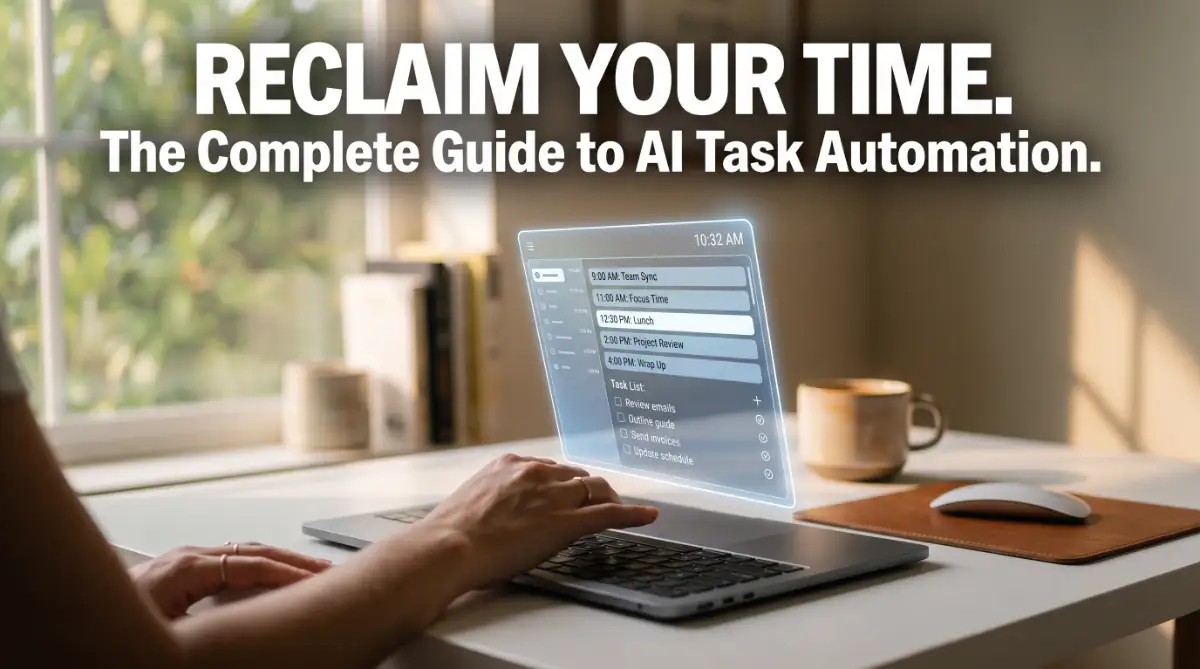
Last Monday, I woke up to fifty emails before I even touched my toothbrush. My heart sank because I felt behind before the sun was even fully up.
I wasted the whole morning just trying to organize my mess instead of doing real work, and that’s when I realized my old way of handling tasks was broken.
The Heavy Burden of Modern To-Do Lists
We are currently living in a time where our brains are constantly under attack. Every single morning, you wake up and the first thing you see is a wall of notifications. Your email inbox is overflowing with messages that need replies.
Your calendar is a messy grid of meetings that seem to go on forever. Even your personal life requires constant planning, from grocery lists to tracking your fitness goals.
This constant pressure creates a mental fog that is hard to shake off. You feel like you are running on a treadmill that never stops. No matter how fast you move, the list of tasks only gets longer. This is the reality for most people today.
We are trying to manage 21st-century information loads with 20th-century manual methods. It simply does not work anymore.
The result is a state of "functional exhaustion." You are getting things done, but you are not doing your best work. You are tired before the day even really begins.
This struggle is not because you are lazy or disorganized. It is because the volume of daily tasks has exceeded the human capacity to handle them manually.
Why Your Current To-Do List is Failing You:
- Manual Burnout: Spending too much time organizing and not enough time doing.
- Notification Overload: Your brain can't focus when it's constantly being interrupted.
- The AI Solution: Using smart tools to handle the repetitive "robot work" of your day.
- Cognitive Relief: Freeing up your mind to focus on big goals and creativity.
Why Traditional Productivity Methods Often Fail

Many people try to fix this by downloading more apps or buying fancy paper planners. However, these solutions often make the problem worse. Here is why most people stay stuck in a cycle of stress:
- The Manual Trap: Most productivity apps still require you to enter data manually. If you have to spend an hour organizing your tasks, you have just lost an hour of actual work.
- Information Overload: When we search for help online, we find thousands of conflicting tips. This leads to "analysis paralysis" where you spend more time researching tools than using them.
- Lack of Integration: Your email does not talk to your calendar, and your notes do not talk to your task manager. You become the "human bridge" between these apps, which is exhausting.
- Decision Fatigue: Every time you have to decide what to do next, you use up a little bit of your brain's energy. By noon, your ability to make good choices is completely gone.
A Deep Dive into the Solution
The good news is that we are no longer limited by manual labor. Artificial intelligence has moved from science fiction movies into our daily reality.
But it is not about "robots taking over." It is about using smart algorithms to handle the repetitive, boring, and soul-crushing parts of our day.
Imagine having a personal assistant that never sleeps and never gets tired. This assistant can read your emails, sort your priorities, and remind you of things before you even forget them.
This is what AI automation offers. It acts as an extension of your own brain.
By delegating these small but frequent tasks to AI, you free up your "mental RAM." You can finally focus on the big projects that actually matter.
You can spend your energy on thinking, creating, and connecting with people.
The shift from manual management to AI-driven automation is the biggest productivity jump since the invention of the computer.
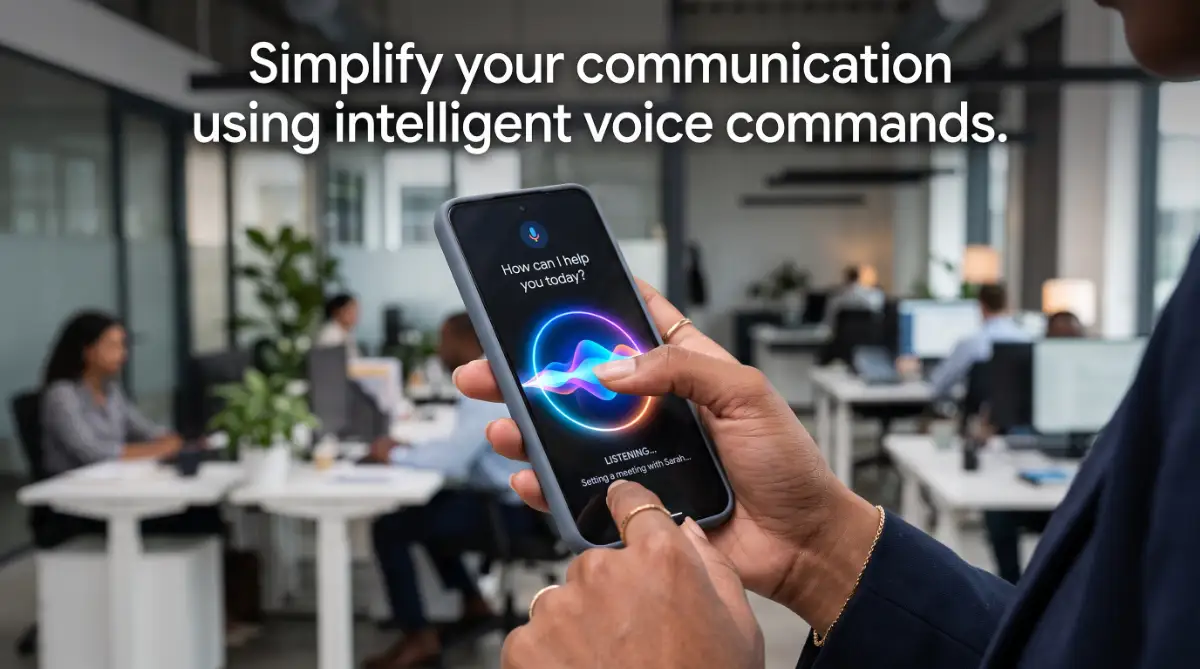
Transforming Your Routine: Practical AI Steps
Now that we understand the problem, let's look at how to actually fix it. You do not need to be a computer scientist to use AI. You just need a simple plan to let these tools take over your most annoying tasks.
Step 1: Intelligent Communication Filters
The average person spends nearly a third of their workday inside their email inbox. Most of these emails are not even important.
They are newsletters, CC'd messages you don't need to read, or simple "thank you" notes. This is the first place where AI can save you hours every week.
Modern AI tools can now "read" the context of your incoming mail. Instead of just sorting by date, they can sort by importance.
You can set up a system where only the most urgent messages from real humans reach your main view. Everything else is summarized into a single daily report.
Think about the time you waste typing the same replies over and over. AI can now suggest complete, professional responses based on your writing style.
You are still the one in control, but the AI does the heavy lifting of drafting the text. This moves you from "reading and writing" to "reviewing and sending."
Productivity: Myths vs. Facts
- Myth: "I need to find the perfect all-in-one app to be productive."
- Fact: There is no perfect app. The best system is the one you actually use every day without thinking about it.
- Myth: "AI will take over my creative job."
- Fact: AI is just a fast intern. It handles the boring admin stuff so you have more time to be creative.
- Myth: "Automation is hard to set up."
- Fact: Most modern tools only take 5 minutes to connect.
Step 2: Smart Scheduling Without the Back-and-Forth
Scheduling a single meeting often takes five or six emails. "Are you free at 2 PM?" "No, how about 4 PM?" "That doesn't work for me." This is a massive waste of human intelligence. AI scheduling assistants remove this friction entirely.
You can now use tools that look at your calendar and understand your habits. If you prefer to have deep work time in the morning, the AI will know not to book meetings then.
When someone wants to meet with you, the AI provides them with options that work for both parties.
But it goes further than just booking. AI can now join your meetings as a silent listener. It can record the conversation and provide a perfect summary with action items.
You no longer have to stress about taking notes while trying to participate in the discussion. The AI captures everything, allowing you to be 100% present.
A mistake I made for a long time was trying to automate every single part of my life in just one weekend. It was a huge mess, and I ended up more confused than I was before.
My best tip is to just pick one thing—like your messy email inbox—and let a smart tool help you with that for a full week before moving on to anything else.
Want to see how an AI assistant actually works in a real meeting? Check out this short video that shows you how to stop taking notes and start focusing on your conversation!
Step 3: Automating Information Retrieval and Research
We spend a lot of our day looking for things. You might be looking for a specific quote from a meeting last month or a file a colleague sent you on a chat app. This "searching" time is completely unproductive.
AI-powered search tools can index all your personal data across different platforms. Instead of clicking through folders, you just ask a question in plain English.
"What was the main feedback from the client on the last project?" The AI finds the answer instantly from your emails, chats, and documents.
This also applies to learning new things. If you need to research a topic, you no longer have to read twenty different articles. AI can scan those articles for you and give you the core facts in seconds. It’s like having a professional researcher working for you at all times.
Quick Q&A for Beginners:
Question: Is AI automation expensive?
Not at all. Many of the best tools have free versions that are more than enough for one person.
Question: Will I lose control of my schedule?
No, you set the rules. The AI only works within the boundaries you give it.
Question: What if the AI makes a mistake?
That's why I always suggest a "human-in-the-loop" approach. The AI drafts, but you are the boss who clicks "send."
Creating a Sustainable Workflow
The key to making this work is to start small. Do not try to automate your whole life in one day. Pick one area, like your email, and let AI help you there for a week. Once you feel comfortable, move on to your calendar.
We often think we have to do everything ourselves to ensure it is done right. But AI is now accurate enough to handle these routine steps with very high precision. It is time to trust the technology so you can trust yourself with bigger goals.
By following this path, you move from a state of constant "doing" to a state of "leading." You become the director of your own life, rather than just a worker in it. This is the true power of artificial intelligence in our daily productivity.
Beyond the Basics: Leveling Up Your Digital Life
We have already looked at how AI can handle your emails and your calendar. Those steps are great for saving an hour or two every day. But if you want to truly transform your life, you need to go deeper into advanced automation.
At this level, you are not just saving time. You are building a system that thinks alongside you. This is where AI moves from being a simple tool to becoming a part of your daily decision-making process.
Let’s explore how you can take these smart systems and turn them into a full-scale personal operation. These steps will help you stay ahead of your goals without feeling the usual burn of a heavy workload.
Smart Priority Logic: Letting AI Guard Your Focus
Most of us struggle because we treat every task as equally important. Your brain sees a "reply to a comment" task the same way it sees a "finish the big project" task. This causes huge mental fatigue.
Advanced AI tools can now act as a filter for your focus. They use something called "context-aware" logic to rank your to-do list. The AI looks at your deadlines, your past behavior, and even your current energy levels to suggest what you should do right now.
Imagine waking up and not having to decide where to start. Your AI system has already cleared away the small, noisy tasks. It presents you with the one thing that will move your life forward today.
This keeps you in a state of flow and helps you master your mind to stay calm and think clearly under pressure throughout the day.
Creating a Digital Second Brain for Instant Recall
We lose so much time simply trying to remember where we put a specific piece of information. It might be a great idea you had in the shower or a link a friend sent you. Your brain is for having ideas, not for storing them.
You can now use AI-driven "Second Brain" systems. These tools automatically grab information from your web browsing, your notes, and your voice memos. They don't just store the data; they connect it.
If you are writing a report on a new topic, the AI can surface a note you took six months ago that is perfectly related. It’s like having a library that organizes itself while you sleep.
This removes the stress of "forgetting" and allows you to build a massive knowledge base without any manual filing.
Automating Personal Habits and Physical Recovery
Productivity is not just about work; it is about how you treat your body and mind. If your phone or laptop is running low on power, you charge it. But many people forget to charge themselves.
AI can now monitor your daily habits and suggest the best times for rest. Smart apps can analyze your sleep patterns and tell you when to stop working to avoid a crash the next day.
You can even set up automations that dim your lights and turn off notifications when the AI detects you are getting tired. Using these smart triggers helps you maintain high energy.
It is much easier to stay productive when you follow 7 easy daily habits to transform your sleep quality forever. By letting AI manage your recovery, you ensure that you show up to work with a fresh and sharp mind.
Advanced Content Summarization and Learning
The amount of news and information we feel we need to keep up with is insane. Most people try to read everything, but they end up remembering nothing. This is where AI summarization becomes your best friend.
You can set up a "learning pipeline" where the AI reads the top five articles in your field every morning. It then gives you a bulleted summary of the main points.
If something sounds very interesting, you can ask the AI to explain that specific part in more detail. This allows you to stay as an expert in your niche with only ten minutes of reading.
You are getting the "gold" without having to dig through all the "dirt." This type of learning is how top CEOs stay ahead without spending all day on social media or news sites.
Maintaining Your Systems for Long-Term Success
Automation is not a "set it and forget it" thing. Your life changes, and your AI systems need to grow with you. I recommend doing a "digital check-up" once every month.
Check which automations are actually helping and which ones are just creating more noise. Sometimes, a tool that worked last month is no longer needed. Keep your system lean and simple.
Always remember that you are the boss. If the AI suggests something that doesn't feel right, ignore it. The goal is to make your life easier, not to become a slave to an algorithm.
Keep your hardware in good shape too, as a fast system is essential. You can learn how to extend the battery lifespan of a modern laptop to ensure your mobile office is always ready.

Avoiding the Traps: Why Automation Sometimes Fails
Even with the best tools, things can go wrong if you are not careful. Many people jump into AI with too much excitement and not enough strategy. This often leads to a mess that is harder to clean up than the original problem.
Let’s look at the most common mistakes people make when they try to automate their lives. If you can avoid these, you will be miles ahead of everyone else.
The Mistake of "Over-Automation"
The biggest trap is trying to automate things that require a human touch. You should never let AI handle personal apologies, deep creative feedback, or sensitive relationship issues. If a friend gets an AI-generated "thank you" note, they will feel it.
When you automate your personality, you lose your "human brand." People connect with people, not with code. Use AI for the boring data stuff, but keep your voice and your heart in your communication.
Trusting the AI Without Verification
AI is smart, but it can still make mistakes. Sometimes it might misinterpret a date or get a fact wrong in a summary. This is called "hallucination."
If you let an AI send a business report without checking it first, you are taking a huge risk. Always spend two minutes reviewing what the AI has done. Think of yourself as the "Editor-in-Chief" and the AI as your "Junior Writer." You have the final say.
The "Tool-Hopping" Loop
There is a new AI tool coming out almost every day. It is very tempting to switch to the "next big thing" every week. This is a massive productivity killer.
Every time you switch tools, you have to learn a new interface and set up your workflows again. It is better to have one "okay" tool that you use perfectly than ten "great" tools that you barely know. Pick your set and stick with it for at least three months.
Ignoring Data Privacy and Safety
When you give an AI access to your emails and files, you are sharing your life. Many people use free tools without reading the terms of service. This can lead to your private data being used to train other models.
Always use reputable tools from companies that value privacy. Check if they have encryption and clear data policies.
According to research on Harvard Business Review, keeping your data secure is just as important as being productive. Never put your passwords or bank details into a random AI chat.
The "All or Nothing" Mindset
Some people think that if they don't automate everything, it’s not worth doing at all. This is not true. Even if you only automate your grocery list, that is a win.
Small wins build momentum. If you try to change everything at once, you will get overwhelmed and quit. Start with one small task, master it, and then move to the next. This slow and steady approach is how you build a lasting habit.
Your Path to a Stress-Free Future
We have covered a lot of ground in this guide. From basic email sorting to advanced digital brains, the potential is huge. But the most important part of this entire journey is you.
Technology is just a tool. It is like a hammer; it can build a house, but only if there is a builder with a plan. You are the builder. Your plan is to reclaim your time so you can spend it on what truly matters.
A Final Plan for Action
I want you to take one single action right now. Don't wait until tomorrow. Pick the most annoying task you did today. It might be scheduling a call or sorting your receipts.
Find one AI tool that can help with that specific task. Spend thirty minutes setting it up. Once you see it work for the first time, you will feel a sense of relief. That relief is the start of your new, automated life.
You no longer have to be the person who is "always busy." You can be the person who is "always focused." The difference between those two states is how you use the technology available to you.
Looking Ahead
As you move forward, keep a curious mind. The world of AI is changing fast, and new ways to save time are appearing all the time. But don't let the speed of change scare you.
By staying informed and using these tools wisely, you are protecting your mental health. You are making room for joy, for family, and for rest. That is the real goal of productivity.
It is not about doing more work in less time. It is about having more life in your time. Start your journey today, and don't look back. You have the power to design a daily routine that serves you, rather than one that drains you.
The future is here, and it is ready to help you thrive. Take that first step, use your smart tools, and enjoy the freedom you deserve.
Looking back, I feel so much lighter and happier now that I don't have to remember every tiny detail myself. I want you to feel that same freedom where you can finally breathe and focus on your big dreams again.
Go ahead and try just one small automation today—your future self is going to be so happy you did!
Disclaimer: The information provided in this article is for educational and informational purposes only. While we discuss various AI tools and automation techniques, we do not provide technical support for specific software.
Always read the privacy policy and terms of service of any third-party application before sharing your personal data. The effectiveness of these tools may vary based on individual setups and hardware capabilities.