I still remember opening a utility bill last summer and nearly falling out of my chair. It was almost double what I usually paid, and I felt so stressed because I had no idea where that money was going.
I realized I was basically throwing my hard-earned cash away every time I left the AC running in an empty room, and that was the moment I knew I had to take control of my habits.

The Hidden Stress of Rising Monthly Power Bills
Opening your mailbox and finding a high electricity bill can feel like a heavy weight on your chest. You see the numbers go up every month, but you do not know exactly why it is happening.
Many families feel trapped in a cycle of paying more and more for basic comforts. You might feel like you are doing everything right, yet the meter keeps spinning faster than your budget can handle.
This is a common struggle in many homes today. The frustration of seeing hard-earned money disappear into a utility bill is real. It creates a sense of helplessness that affects how you enjoy your own home.
Why Common Energy Advice Often Fails Us
Most people want to save money, but they often get stuck with bad or incomplete information. Here is why many homeowners struggle to see real results:
- Buying expensive gadgets first: Many people think they need to buy thousands of dollars in solar panels or smart tech before they can save a single penny.
- Focusing on small things only: You might worry about a tiny phone charger but ignore the massive energy drain from an old water heater or a leaking window.
- Lack of consistency: Saving energy is not a one-time event. It is a way of living that requires small, daily choices that eventually add up.
- Ignoring the "invisible" leaks: Most of our energy waste happens in places we cannot see, like behind walls or through tiny gaps in door frames.
- Falling for "magic" products: There are many products sold online that promise to "save 50% on power" just by plugging them in, but most are simply scams.
Understanding the Reality of Your Energy Habits
We often think that electricity is just something that "is there." But every watt has a cost, and most of that cost comes from our small, unconscious habits.
If you walk through your house right now, you might see several things drawing power that nobody is using. This is what we call "vampire energy." It is a silent thief that takes your money while you sleep.
Appliance | Energy Drain Level | Quick Money-Saving Fix
Water Heater | Very High | Turn down to 120°F and wrap pipes in foam.
Old Refrigerator | High | Vacuum the coils and check the door seal.
Gaming Console | Medium | Turn off "Instant-On" mode in settings.
Incandescent Bulbs | Medium | Swap for LED bulbs (they use 75% less power).
Phone Chargers | Low | Unplug them when your phone hits 100%.
The truth is that you do not need a lot of money to fix this. You just need a change in perspective. Most high bills are not caused by the things we need, but by the things we use poorly.
When we talk about sustainable habits, we are talking about taking back control. It is about making sure that every cent you spend on power is actually giving you value in return.

Master Your Home’s Natural Temperature Control
The biggest part of your bill usually comes from heating and cooling. This is the first place where you should start your journey toward a lower bill.
Keep the air where it belongs. Your home is like a big box of air that you pay to heat or cool. If there are gaps under your doors or around your windows, that expensive air is escaping.
Check your doors for drafts. You can use a simple "draft stopper" or even a rolled-up towel to block the air. This small habit keeps your heater or AC from working twice as hard.
Use your curtains as a shield. During hot days, keep your curtains closed on the sunny side of the house. This blocks the sun's heat from entering, keeping your rooms naturally cooler.
In the winter, do the opposite. Open the curtains during the day to let the sun warm your floors and walls for free. Close them as soon as the sun goes down to trap that warmth inside.
Manage your thermostat wisely. You do not need to keep your home at the exact same temperature every hour of the day. Setting it just two degrees higher in summer or lower in winter can save a lot.
Optimize Your Lighting Without Dimming Your Life
Lighting is one of the easiest habits to change because the results are very clear. It is not just about turning lights off; it is about how you use light.
Clean your bulbs and fixtures. Dust can block up to 30% of the light coming from a bulb. When your lamps are dusty, you might feel the need to turn on more lights to see clearly.
A quick wipe with a dry cloth once a month can make your rooms look much brighter. This simple maintenance habit ensures you get the most light for your money.
Switch to "Task Lighting" instead of "Area Lighting." If you are reading a book, use a small desk lamp instead of turning on four large ceiling lights.
This focuses the light exactly where you need it. It creates a cozy atmosphere and uses a fraction of the power required to light up an entire room.
Embrace the power of the sun. If you have windows, use them! Arrange your furniture so that your desk or reading chair is near a window.
During the day, you should almost never need to turn on an electric light in a room with a window.
Making it a habit to open the blinds first thing in the morning sets a positive tone for your energy-saving day.
Rethink How You Use Large Household Appliances
Your large appliances like the washing machine, dishwasher, and fridge are the "heavy lifters" of your home. They use the most power, so your habits here matter most.
Always wait for a full load. It takes almost the same amount of electricity to wash three shirts as it does to wash a full basket. Running half-loads is like throwing money into the drain.
Wait until you have enough clothes or dishes for a full cycle. This habit alone can reduce your weekly appliance usage by 20% or 30%.
Use lower temperature settings. Modern detergents are very good at cleaning even in cold water. Heating the water is what uses about 90% of a washing machine's energy.
Switching your laundry habit to "Cold Wash" is one of the biggest wins for your bill. Your clothes will last longer too, as hot water can damage some fabrics over time.
Check your fridge’s "breathing room." Your refrigerator works by pushing heat out. If it is pushed too tight against the wall or if the coils are covered in dust, it can't breathe.
Pull your fridge out an inch or two and vacuum the back once a year. This helps the motor run more efficiently and prevents it from staying on for long periods of time.
Avoid the "Phantom Load" from electronics. Even when your TV or microwave is "off," it is often in standby mode. This means it is still waiting and watching for a signal.
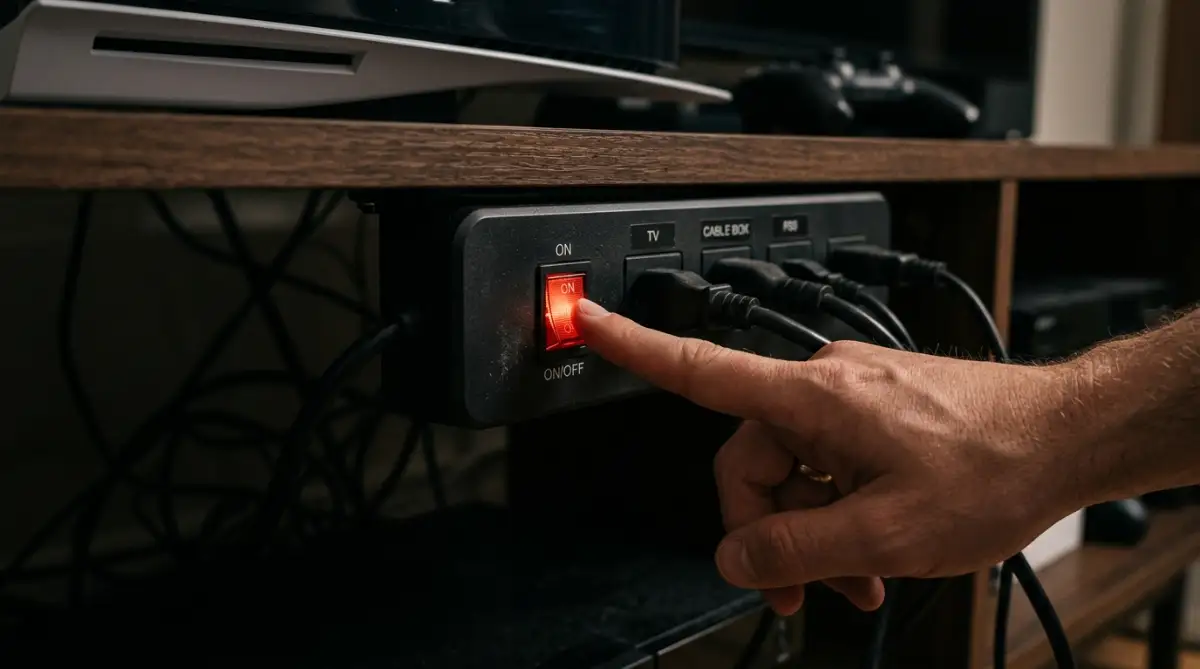
I used to think unplugging small things didn't matter, but my pro tip is to use a simple power strip for your whole TV setup.
I was shocked to find out how much my gaming console and sound bar were "stealing" from me even when they were turned off.
Now, I just flip one switch before bed, and I honestly feel better knowing I’m not paying for electricity I’m not even using.
Make it a habit to use a power strip for your entertainment center. When you are done for the night, just flip the one switch on the power strip. This kills the power to everything at once.
If you want to see exactly how to find those hidden air leaks in your home, check out this quick video. It’s the easiest way to visualize how to keep your expensive air inside where it belongs so you can stop wasting money!
Creating a Sustainable Routine for Long-Term Success
The key to all of these habits is to start small. You do not have to do everything on this list today. Pick one or two and do them until they feel natural.
Think of it like a game. Every time you turn off a light or adjust the curtains, you are "winning" back a little bit of your money.
Over time, these small actions become part of who you are. You stop thinking of it as "saving energy" and start thinking of it as just "living smartly."
We have only covered the first few steps of this journey. There are many more ways to look at your home and find hidden savings.
By focusing on these basic habits first, you build a strong foundation. You are no longer a victim of your bills. You are the manager of your home's resources.
In the next sections, we will look at more advanced ways to optimize your kitchen habits and how to involve your whole family in this process. Saving energy is a team sport, and it works best when everyone is on board.
Stay focused on the goal. A lower bill means more money for the things that truly matter to you, like your family, your hobbies, and your future.
Taking Your Energy Savings to the Next Level
Once you have mastered the basics of turning off lights and managing your curtains, it is time to look at the heart of your home. Your kitchen is often the place where energy waste happens the most.
Many of us use our ovens and stoves without thinking about how much heat is escaping. For example, did you know that your microwave is actually one of the most efficient tools you own?
According to the U.S. Department of Energy, using a microwave instead of a full-sized oven can save up to 80% of the energy needed for cooking. This is because a microwave heats only the food and not the air around it.
If you are just heating up leftovers or making a small snack, skip the big oven entirely. It takes a long time to heat up and even longer to cool down, which wastes power on both ends.
The Secret Power of Residual Heat
Another great habit is learning to use residual heat. This is the heat that stays in your pots and pans even after you turn the burner off.
When you are boiling pasta or steaming vegetables, turn the stove off two or three minutes early. The water is already hot enough to finish the job while the lid is on.
This might seem like a small thing, but over a month, those saved minutes add up. It also keeps your kitchen cooler, which means your AC does not have to work as hard to fight the extra heat.
If you are interested in more ways to keep your home budget under control, you should look into these easy ways to slash your household spending. Small changes in how you manage your kitchen can lead to big changes in your bank account.
Managing Your Water Heater Like a Pro
Most people never look at their water heater until it stops working. However, this big tank is often the second largest energy user in a typical American home.
By default, many water heaters are set to 140 degrees Fahrenheit. This is actually much hotter than you need for a safe and comfortable shower.
Lowering the setting to 120 degrees can save you a lot of money every month. It also prevents the water from being hot enough to accidentally burn your skin.
You should also think about the pipes that carry this hot water. If they are cold to the touch, they are losing heat before the water even reaches your faucet.
Buying simple foam insulation for your pipes is a one-time job that pays for itself quickly. It keeps the heat inside the pipe where it belongs.
Understanding When to Use Your Power
In many parts of the country, the price of electricity changes depending on the time of day. This is often called "Peak Hours" or "Time of Use" rates.
Power companies usually charge more during the late afternoon and early evening when everyone is home. If you run your dishwasher or laundry at 10 PM instead of 6 PM, you might pay less for the same amount of power.
Research from the National Renewable Energy Laboratory shows that shifting your energy use to "off-peak" hours helps the entire power grid stay stable. It also keeps your individual bill lower without changing your total consumption.
If you are considering bigger changes, you might even want to learn how to calculate solar panel requirements for your home. This helps you understand how much free energy you could potentially get from the sun in the future.
Staying Consistent for Long-Term Results
Building good habits is a powerful skill that applies to all areas of life. You can even apply these same principles to improving your sleep quality forever by creating a better environment at home.

Avoiding the Most Common Energy Saving Mistakes
Many people start their journey with good intentions but end up making mistakes that cost them money. It is easy to fall for myths that sound logical but are actually wrong.
One of the biggest mistakes is thinking that turning the AC to its lowest setting will cool the room faster.
Your air conditioner works at one speed; setting it to 60 degrees won't make it colder any quicker than setting it to 72.
All this does is make the machine run longer than it needs to. It wastes energy and puts unnecessary wear and tear on your expensive cooling system.
Another common pitfall is ignoring the lint trap in your clothes dryer. A clogged lint trap blocks the air from moving freely, which means your clothes take twice as long to dry.
Always clean the trap after every single load. It is a five-second habit that can save you a significant amount of money over the course of a year.
The Danger of "Vampire Electronics" and Hidden Costs
We often think that if a device is "off," it is not using power. This is rarely true for modern electronics like smart TVs, gaming consoles, and coffee makers with clocks.
These devices stay in a standby mode so they can wake up quickly. While one device doesn't use much, ten or fifteen of them together can add up to 10% of your monthly bill.
If you don't use a guest room or a home office every day, unplug everything in those rooms. There is no reason to pay for power that nobody is actually benefiting from.
Many homeowners also make the mistake of choosing "cheap" appliances over energy-efficient ones. While the price tag is lower at the store, the cost of running them is much higher.
Always look for the yellow "Energy Guide" sticker when you buy something new. It tells you exactly how much that appliance will cost you to operate over its lifetime.
Why Small Maintenance Tasks Matter So Much
Neglecting your home's maintenance is another way that money quietly leaks out of your pocket. For example, a dirty air filter in your heater makes the motor work much harder.
Change your air filters every three months. It keeps the air in your home clean and ensures your HVAC system runs as efficiently as possible.
Similarly, check the seals on your refrigerator and freezer. If you can slide a dollar bill through the closed door, cold air is escaping.
A fridge that can't stay sealed will run almost constantly to keep your food cold. Fixing a simple rubber seal is much cheaper than paying for the wasted electricity every month.
Finally, don't forget about your windows. Even if they are closed, heat can transfer through the glass. Using simple weather stripping can block air leaks that you might not even feel.
💡 My Pro Tip: The "Dollar Bill Test"
Want to know if your fridge is stealing your money? Close the fridge door on a dollar bill so half is sticking out. If you can pull the bill out easily without any resistance, your seal is bad. This means cold air is leaking out 24/7. Replacing that rubber strip is a cheap fix that can save you big on your next bill!
Your Roadmap to a Lower Bill and a Better Home
Taking control of your electricity use is a journey that pays off every single month. It is one of the few ways you can actually give yourself a "raise" by reducing your expenses.
Start by looking at your home with new eyes. Notice where the lights are on for no reason or where the heat is escaping.
Don't feel like you have to be perfect from day one. If you only remember to turn off the kitchen light half the time, that is still better than never turning it off at all.
As you see your bills start to go down, you will feel a great sense of pride. You are taking responsibility for your resources and your environment at the same time.
This positive energy can help you in other parts of your life too. When you master your home, you feel more confident in mastering your finances and your future.
Making the Change Today
There is no better time to start than right now. Go check your thermostat, look at your water heater, and unplug that old charger you aren't using.
Every small action is a step toward a more sustainable and affordable lifestyle. You have the power to change how you live and how much you spend.
Think of the money you save as a gift to your future self. Whether you use it for a vacation, an emergency fund, or just more peace of mind, it is yours to keep.
Your home should be a place of comfort, not a source of financial stress.
By following these simple guides, you can make sure it stays that way for years to come.
Stay focused on your progress and celebrate the small wins along the way. You are doing something great for your wallet and the world around you.
The path to a lower utility bill is paved with these simple, daily choices.
Start your new habits today and watch the difference they make.
Making these changes didn't just save me money; it actually made my home feel more peaceful and organized.
I want you to know that you don't have to be perfect to start seeing real results in your bank account.
Just pick one tiny thing to change tonight, and you will be so proud when you see that lower number on your next bill!
Disclaimer:
The information in this post is for educational and informational purposes only. We are not professional energy consultants or licensed electricians. While these tips are based on common energy-saving practices, your actual savings will depend on your home size, location, and specific appliance models. Always consult with a certified professional before making significant changes to your home's electrical or HVAC systems.