The Hidden Stress of Rising Electricity Costs and Solar Confusion
I used to get a pit in my stomach every time I opened my electricity bill. Seeing those prices jump by 50% felt like a punch to my wallet. I wanted to switch to solar, but the math and the sales pitches made my head spin.
I’m sharing what I learned the hard way so you can stop overpaying and start owning your power without the headache.
Every month, the mail arrives with a familiar sense of dread. You open your electricity bill and see the numbers climbing higher and higher. It feels like you are losing control over your own household budget.
You want to switch to solar energy to save money and help the planet. However, the path to going solar is often filled with confusion and doubt.
You might feel overwhelmed by the technical talk and the fear of making an expensive mistake. The dream of a home powered by the sun often gets stuck in a loop of "how much" and "how many."
Without a clear answer, many people simply give up and keep paying those high bills. This constant worry about energy prices can truly drain your happiness and peace of mind.
Quick Guide: What You’ll Learn Here
- How to find your true energy use (it’s not the dollar amount!).
- The 'Peak Sun Hour' secret that changes your panel math.
- Why you should always add a 20% safety buffer to your system size.
- How to spot a bad solar contractor before you sign a contract.
How to Find Your Real Energy Footprint
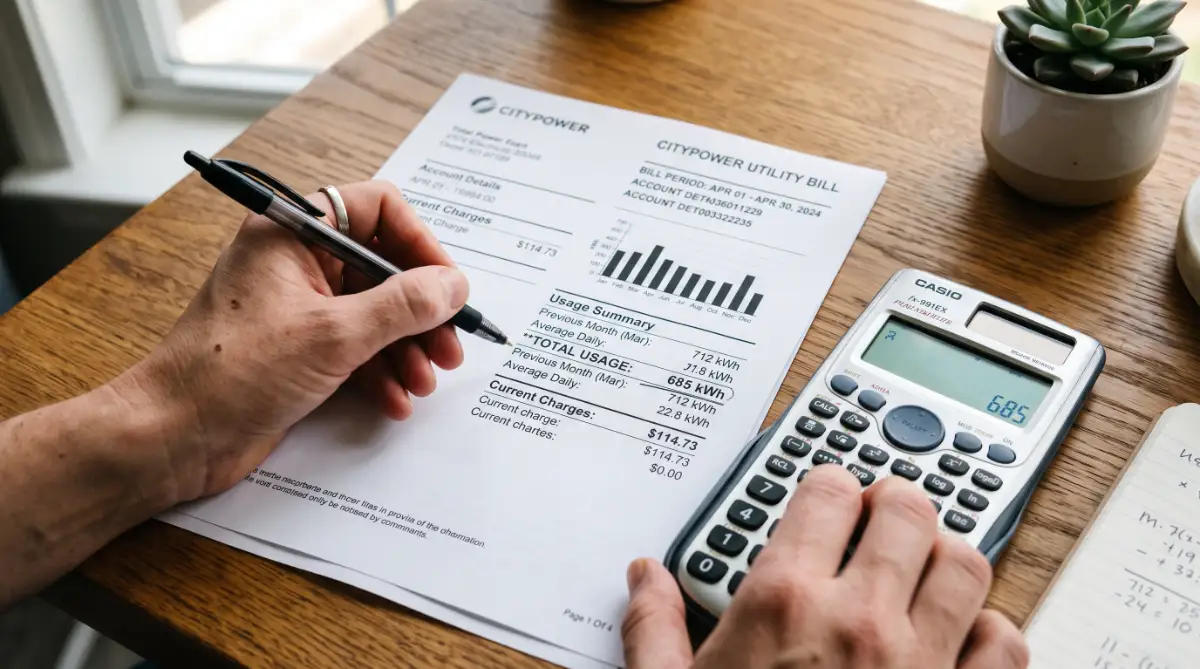
The very first thing you must do is look at your actual power usage. You cannot guess this number if you want an accurate solar system. Most people look at the dollar amount on their bill, but that is not the right data.
You need to find the kilowatt-hours (kWh) used each month.
This number tells you the actual amount of energy your home consumes regardless of the price. I recommend looking at your bills from the last twelve months.
Your energy use changes with the seasons. You likely use more power in the summer for cooling or in the winter for heating. By looking at a full year, you can find your average monthly consumption. Add all twelve months together and divide by twelve.
This average monthly number is the foundation of your entire solar plan. If you skip this step, you are just throwing darts in the dark. Once you have this number, you are already ahead of most people starting this journey.
| The Solar Myth | The Real Truth |
| Panels only work on sunny days. | They still work on cloudy days using indirect light. |
| Solar is too expensive for normal people. | Most systems pay for themselves in 6-9 years. |
| You will go totally off-grid. | Most homes stay connected to the grid for night power. |
| Solar panels damage your roof. | They actually protect shingles from UV rays and rain. |
My biggest mistake when I started was only checking my energy use for the winter months. I totally forgot how much power my air conditioner uses in the summer, which almost led me to buy a system that was way too small.
Now, I always tell people to look at a full year of bills so they get the real picture and don't end up with an unexpected bill from the power company.
Understanding Your Local Sun Potential
Not all sunshine is created equal when it comes to solar panels. A house in Arizona will get much more energy from the same panel than a house in Seattle. This is because of something called "peak sun hours."
A peak sun hour is not just an hour when the sun is out. It is an hour where the sun's intensity reaches a specific level that panels can use effectively. You can easily find a peak sun hour map for your specific area online.
In the United States, most places get between 3 and 6 peak sun hours per day. This number is vital. You will use it to figure out how much power each panel can produce in your specific backyard.
Think of it like rainfall. If you want to fill a bucket, you need to know how hard it is raining, not just how long the clouds are in the sky. Knowing your local sun hours ensures you don't buy a system that is too small for your climate.
Choosing the Right Panel Wattage for Your Roof
Once you know your energy needs and your sun hours, you need to look at the panels themselves. Not every solar panel has the same "strength." Panels are rated by their wattage, usually ranging from 300 to 450 watts.
A higher wattage panel produces more electricity in a smaller space. If you have a very small roof, you might need those high-power panels to meet your goals. If you have a huge roof, you might be able to use cheaper, lower-wattage panels.
To see how much a single panel will produce, multiply its wattage by your daily peak sun hours. For example, a 400-watt panel in an area with 5 peak sun hours will produce about 2,000 watt-hours (or 2 kWh) per day.
By understanding this simple math, you can start to see how many panels it takes to cover your average daily use. It turns a big, scary mystery into a simple addition problem. This clarity is what gives you the power to talk to installers without being fooled.
💡 My Expert "Solar-Ready" Tip:
Before you spend a dime on panels, check the age of your roof. If your roof needs replacing in 3-5 years, do it before or during the solar install. Removing and putting panels back on later can cost you an extra $3,000 to $5,000!
Why Efficiency Ratings Matter More Than You Think
When you look at different solar brands, you will see an "efficiency percentage." This number tells you how much of the sunlight hitting the panel is actually turned into electricity.
Most modern panels are between 17% and 22% efficient.
While a 3% difference might seem small, it adds up over twenty years. High-efficiency panels often perform better on cloudy days or in high heat. They are like a car that gets better gas mileage; they do more work with the same amount of fuel.
Boldly choosing quality over the absolute lowest price often leads to better long-term savings. You want a system that lasts and continues to produce power even as the equipment gets older. Cheap panels might lose their strength much faster than premium ones.
The Reality of System Losses and Inefficiency
It is a common mistake to think that a 10 kW system will always give you 10 kW of power. In the real world, energy is lost as it moves through wires and equipment. This is a natural part of any electrical system.
Your solar inverter, which turns the sun's power into electricity for your outlets, is not 100% efficient. There is also dust on the panels, shade from trees, and heat that can lower production.
Experts usually suggest adding a 20% "fudge factor" to your calculations.
If your math says you need 20 panels, it is often smarter to install 24. This extra cushion ensures that you still meet your energy goals even on days that aren't perfect. It is better to have a little too much power than not enough.
Creating a Realistic Comparison for Your Home
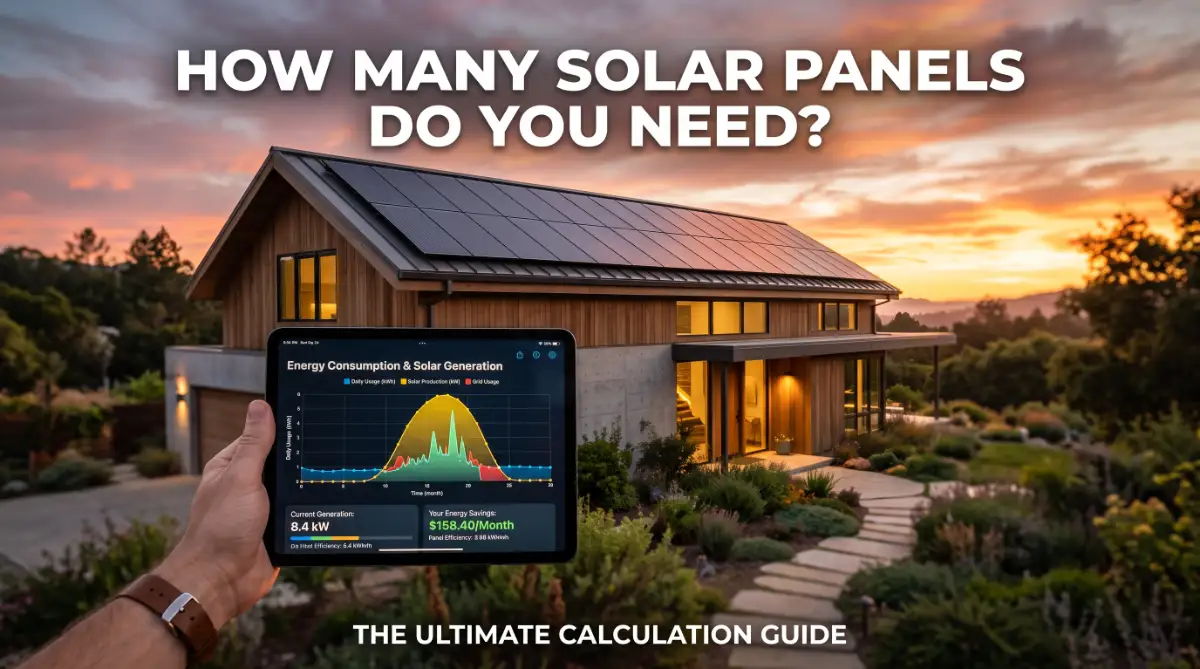
Let’s look at a quick example to make this feel real. Imagine a home that uses 900 kWh per month. That is about 30 kWh per day. If that home gets 5 peak sun hours a day, how many panels do they need?
First, divide the daily need (30 kWh) by the sun hours (5). This means you need a system that can produce 6 kW of power at any given moment of peak sun. If you use 400-watt panels, you would divide 6,000 watts by 400.
In this case, you would need 15 panels. But wait, don't forget the 20% loss we talked about! Adding that extra cushion means you should probably look at 18 panels to be safe. Now, doesn't that feel much easier to understand?
Home Size Average Monthly kWh Estimated Panels Needed Small Apartment / Tiny Home400 kWh8 - 10 Panels Average Family Home900 kWh18 - 22 Panels Large Luxury Home1,500+ kWh30+ Panels
If the math feels a bit tricky, watch this simple video walk-through! It shows you exactly how to calculate your panel count in real time so you can feel 100% sure before you finish reading our final tips below.
Myth vs. Reality: What You Should Know
Many people think that solar panels only work when the sky is perfectly blue. This is a big myth that keeps people from switching. Reality check: solar panels can still produce power on cloudy days, though they produce less.
Another myth is that solar panels will always power your home during a blackout. In reality, unless you have a battery backup, most solar systems shut down during a power outage for safety reasons. Knowing these facts helps you set the right expectations.
I also hear people say that solar panels will damage their roof. Actually, panels can protect your roof from the sun and rain, often making that section of the roof last longer. Being informed about these truths makes the decision much easier.
Taking the Final Steps Toward Solar Independence
You have now learned how to read your bill, understand the sun, and calculate panel counts. This knowledge is your shield against high prices and confusing sales pitches. You are no longer a victim of high utility costs; you are a savvy energy consumer.
The next part of your journey involves looking at your roof's direction and any shading issues. Even the best math can't overcome a giant oak tree blocking the sun. However, with the numbers you have now, you can start that conversation with confidence.
You are building a future where your home provides for you. Every panel you install is a step toward freedom and a cleaner world for everyone. Keep this data close, and you will never be led astray.
Optimizing Your Roof Strategy for Maximum Power
Knowing the number of panels is just the start of your journey. To get the most out of your investment, you need to look at how those panels sit on your roof. The direction your roof faces can change your energy output by a huge margin.
In the northern hemisphere, a south-facing roof is the gold standard for solar. This is because it gets the most direct sunlight throughout the day. If your roof faces east or west, you might need to increase your panel count by 10% to 15% to make up for the lost light.
You should also think about the tilt of your panels. Most roofs already have a slope that works well enough. However, if you have a flat roof, you will need special mounting racks to angle the panels toward the sun. This ensures the sun hits the cells at a 90-degree angle for the best performance.
Accounting for Shading and Hidden Obstacles
Even a small amount of shade can cause a big drop in power. Think of a solar panel like a garden hose. If you step on one part of the hose, the water stops flowing everywhere. Shade from a single chimney or a tall tree can sometimes shut down an entire string of panels.
You can use modern technology like micro-inverters to solve this. Unlike traditional systems, micro-inverters allow each panel to work independently. If one panel is in the shade, the others keep producing full power. This is a smart way to stop the money leak caused by inefficient energy production.
I always tell homeowners to watch their roof at different times of the day. A spot that looks sunny at 10 AM might be covered in shade by 3 PM. Doing a shading analysis now saves you from a decade of low energy yields later.
Future-Proofing Your Solar System
Your energy needs today might not be the same as your needs five years from now. Are you planning on buying an electric vehicle? Do you want to add a heat pump or a new air conditioning unit? Planning for growth is a pro-level secret that many people overlook.
Adding panels later can be much more expensive than adding them now. This is because you have to pay for labor, permits, and new wiring all over again. I suggest designing your system with a 20% buffer for future lifestyle changes.
If you are managing a realistic monthly budget, it might feel hard to spend more now. However, the long-term savings of a slightly larger system usually outweigh the initial cost. It is much better to have a bit of extra power than to outgrow your system in just a few years.
The Importance of High-Quality Inverters
While the panels get all the attention, the inverter is the true brain of your solar setup. It takes the raw power from the sun and turns it into safe electricity for your home. If the inverter fails, your entire system goes dark.
There are three main types: string inverters, power optimizers, and micro-inverters. String inverters are the cheapest but are prone to issues if one panel gets dirty or shaded. Power optimizers and micro-inverters offer better monitoring and more reliable energy flow.
When you invest in a high-quality inverter, you are protecting your home’s electrical health. According to data from the National Renewable Energy Laboratory (NREL), the inverter is the component most likely to need maintenance. Choosing a brand with a strong 25-year warranty is a move that pays off in peace of mind.
Monitoring Your Success in Real Time
Modern solar systems come with amazing mobile apps that show you exactly how much power you are making. I recommend checking this app at least once a week. It helps you notice if a panel is underperforming because of bird droppings or dust.
You can also use this data to shift your heavy energy use to the middle of the day. Instead of running your dishwasher at night, run it at noon when the sun is brightest.
This "load shifting" ensures you are using your own free power instead of buying it from the grid.
Over time, you will start to see patterns in your consumption. You will learn exactly how much energy your home uses during a rainy week versus a sunny one. This knowledge makes you the true master of your own energy destiny.

Fatal Errors That Can Ruin Your Solar Investment
Many homeowners rush into solar because they are excited to save money. Unfortunately, this excitement can lead to expensive mistakes that haunt them for years. One of the biggest errors is choosing the cheapest contractor without checking their history.
Solar is a long-term relationship. You need a company that will be around in ten years if something breaks. A "trunk slammer" contractor might give you a low price today, but they might vanish tomorrow when you need help with a warranty claim.
Another common pitfall is ignoring the condition of your roof. Never put a 25-year solar system on a roof that only has 5 years of life left. Removing and reinstalling panels just to fix a leak can cost thousands of dollars. Always have a professional roof inspection before the panels go up.
The Trap of Over-Estimating Your Battery Needs
While batteries are great for backup power, they are not always a smart financial move. In many areas, the utility company offers "Net Metering." This means the grid acts like a free battery for you.
When you produce extra power, it goes back to the grid, and you get a credit. At night, you use those credits to get power back for free. If you have net metering, buying a large battery might just be an unnecessary expense that slows down your "payback period."
Make sure you understand your local utility rules before spending $10,000 on a battery. If your goal is strictly to save money, net metering is usually the better path. If your goal is to have power during a hurricane, then a battery is worth the cost.
Forgetting to Check Local Permits and HOA Rules
Nothing stops a solar project faster than a Homeowners Association (HOA) dispute. Some HOAs have strict rules about where panels can be placed or how they should look. While many states have laws protecting solar rights, you still need to follow the proper process.
You also need to ensure your installer handles all the local building permits. An unpermitted system can lead to fines and might even make it hard to sell your home later. Always ask to see the approved permit before any work starts on your property.
A professional installer will handle this paperwork for you. However, you should still double-check that they have contacted your local utility company for an Interconnection Agreement. Without this, you cannot legally turn your system on and feed power back to the grid.
Relying Solely on "Standard" Quotes
Every house is unique, and a "one size fits all" quote is usually a bad sign. Your neighbor’s solar needs are likely very different from yours, even if your houses look the same. They might keep their house at 68 degrees, while you prefer 75.
Your energy consumption is a personal signature. If a company gives you a quote without looking at your actual monthly energy usage data, they are guessing. And in the world of solar, guessing leads to regret.
Always get at least three quotes from different companies. Compare the price per watt, the equipment quality, and the labor warranties.
This competition ensures you get a fair deal and a system that actually works for your specific life.
Neglecting Maintenance and Cleaning
While solar panels are generally "set and forget," they aren't completely maintenance-free. In dry areas, dust and pollen can build up on the glass, blocking the sun. This can reduce your power output by as much as 5% to 10%.
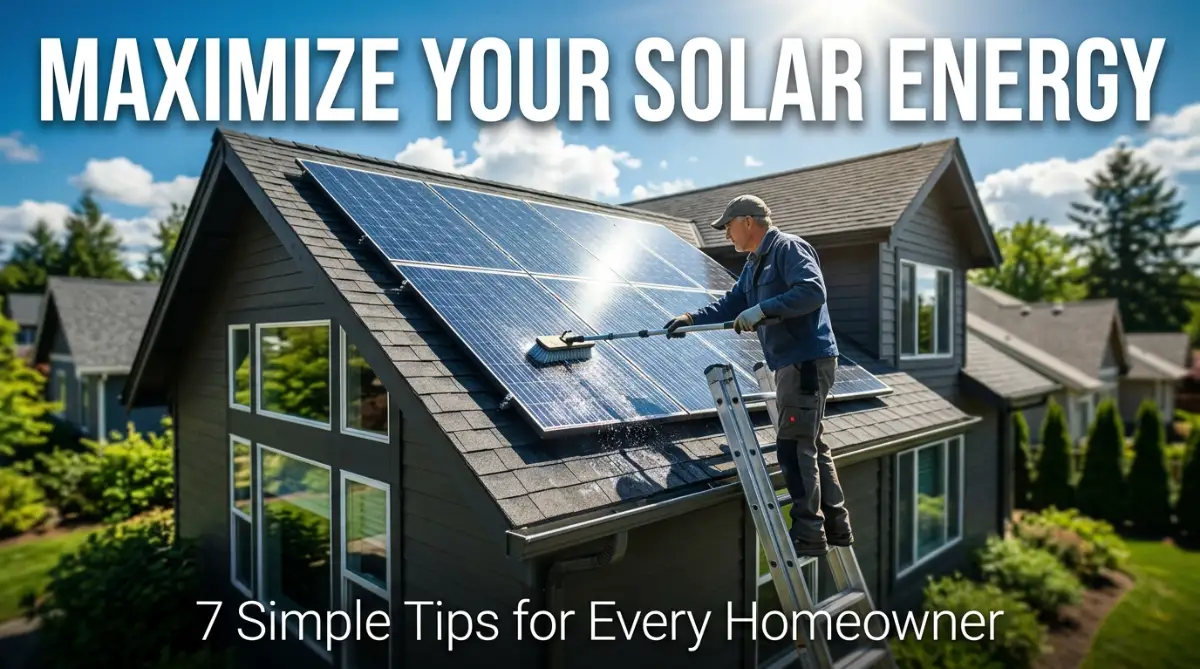
A simple rinse with a garden hose a few times a year is usually all it takes. Just be careful not to use harsh chemicals or abrasive brushes that could scratch the glass. If you live in an area with heavy snow, you might need a roof rake to clear the panels after a storm.
Think of it like keeping your windshield clean. You wouldn't drive a car with a dirty window, so don't let your panels stay covered in grime. Taking care of your equipment ensures it keeps protecting your finances for decades.
Your Path to a Brighter and Cheaper Future
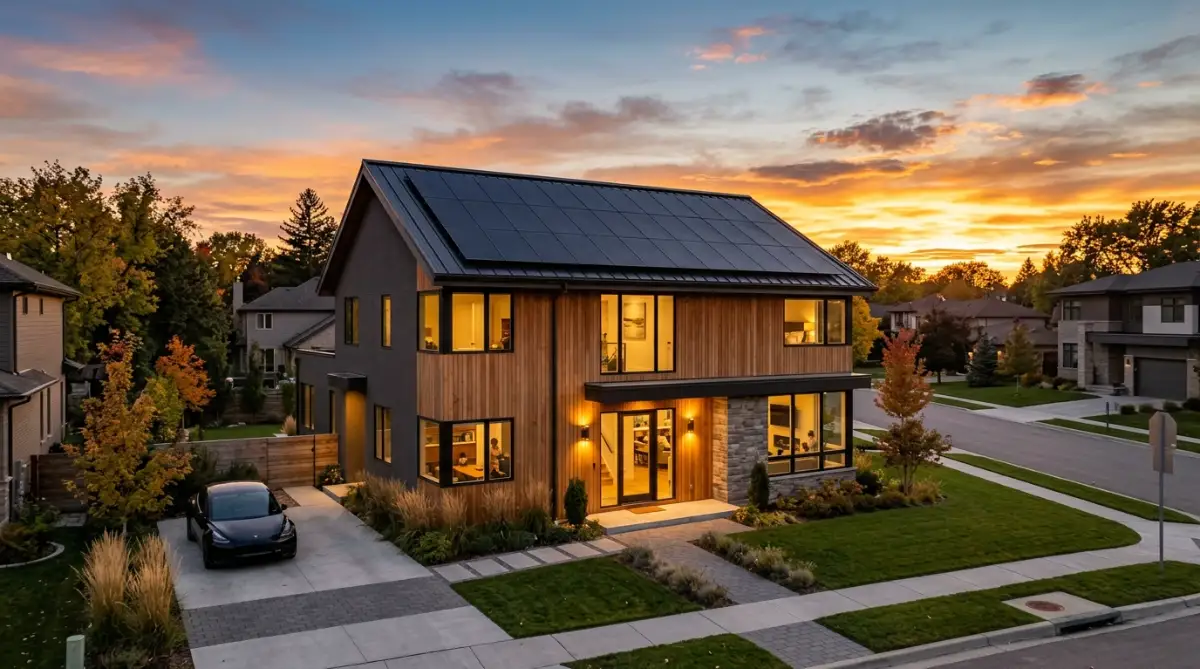
Calculating your solar requirements is the most important step you can take toward energy independence. By understanding your kWh usage, sun hours, and roof layout, you have built a solid foundation. You are no longer guessing; you are planning.
Solar power is more than just hardware on a roof. It is a commitment to a cleaner lifestyle and a smarter way to manage your household costs.
When you do the math yourself, you take the power away from high-pressure salesmen and put it back in your own hands. The technology is ready, and the sun is shining.
There has never been a better time to look at your roof and see a power plant instead of just shingles. Use the steps in this guide to make a choice that will benefit your family for the next twenty-five years.
A Final Action Plan for Success
Start by gathering your bills today. Calculate your daily average and find your local sun hours. Once you have those numbers, reach out to local installers and ask the tough questions about shading and inverters.
Don't be afraid to take your time. This is a big decision, and being thorough is a sign of a smart homeowner. You have the tools, the data, and the plan. Now, go out there and turn your home into a green energy powerhouse.
You deserve a home that works for you, not one that drains your bank account every month. The sun provides a free source of unlimited energy every single day. It is time you finally started using your fair share of it.
Making the move to solar was one of the most rewarding things I’ve ever done for my home. There is a special kind of peace that comes from knowing the sun is powering your life and keeping your hard-earned money in your pocket.
Take that first step and look at your bills today—you have the knowledge now to build a brighter, cheaper future for yourself!
Disclaimer: The information provided in this article is for educational purposes only. Solar requirements and savings can vary based on your location, local laws, and specific home characteristics. Always consult with a licensed solar professional and a structural engineer before starting any installation project. We do not provide financial or legal advice.