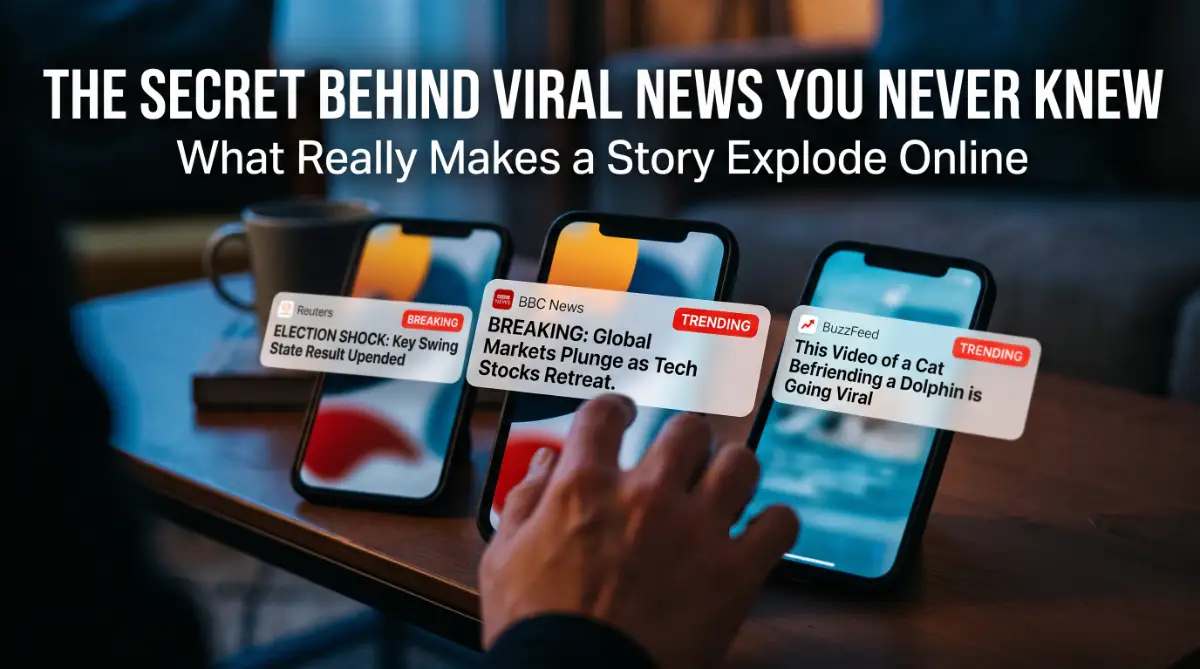
The Hidden Danger of the Viral Content Trap
I still remember the time I shared a "breaking news" post about a local health emergency without checking it first. A few minutes later, my inbox was full of worried messages from friends, only for me to find out the story was a complete lie.
I felt so embarrassed for scaring people I care about just because I fell for a clever headline. That moment changed how I look at the internet, and it is why I want to help you avoid the same mistake.
You are scrolling through your social media feed. Suddenly, you see a headline that shocks you.
Maybe it is a story about a celebrity, a new health miracle, or a scary political event. Your heart starts to beat faster.
Your first instinct is to hit that "Share" button. You want your friends and family to see it right away.
But wait. Have you ever wondered if what you are reading is actually true?
Every single day, millions of people fall into the trap of viral misinformation. It is a silent problem that spreads faster than any virus.
This happens because fake stories are designed to make you feel strong emotions. They use your fear, anger, or excitement against you.
Once you share a fake story, the damage is already done. You become part of the problem without even knowing it.
Why Finding the Truth Feels Impossible Today
It is harder than ever to know what is real. Most people struggle to find the truth for several reasons:
- Information Overload: We get hundreds of updates every hour, and our brains cannot process them all.
- Professional Designs: Fake news websites now look exactly like legitimate news organizations.
- Echo Chambers: Algorithms show us only what we want to believe, making us blind to the facts.
- The Speed of News: We want to be the first to know, so we skip the part where we check the facts.
- Clickbait Tricks: Headlines are written to trick your brain into clicking before you think.
When we can’t find a clear answer, we feel lost. We start to doubt everything we see online.
This confusion makes us vulnerable to people who want to spread lies for money or power. It creates a cycle where the loudest voice wins, not the most honest one.
How Misinformation Attacks Your Peace of Mind
Living in a world of fake stories takes a heavy toll on your mental health. It is not just about being wrong; it is about how it makes you feel.
- Constant Anxiety: Reading fake "emergency" news keeps your body in a state of high stress.
- Loss of Trust: You might stop believing even the good and helpful information because you have been burned before.
- Social Conflict: Many people lose friends or argue with family over stories that turn out to be completely made up.
- Damaged Reputation: Sharing a hoax can make you look unreliable to your professional and personal circles.
- Feeling Powerless: It feels like the truth is disappearing, which makes people feel hopeless about the future.
We want to trust the world around us. We want to feel like we are making choices based on real facts.
When that trust is broken, our confidence in the digital world fades away. But it does not have to be this way.
The Reality of the Modern News Cycle
The internet has changed how we get news forever. In the past, editors checked every story before it was printed.
Now, anyone with a phone can pretend to be a reporter. There are no gatekeepers to stop a lie from reaching millions of people.
Fake news is often more "interesting" than the truth. Real life can be boring, but a lie can be as dramatic as a movie.
That is why fake stories get more likes and shares. They are built for attention, not for accuracy.
I have seen how a single fake post can cause panic in an entire city. I have seen people lose money on fake investment "news."
This is a real struggle for everyone. But you have the power to change how you consume news.
You can learn to see through the tricks. You can become an expert at spotting the red flags that most people miss.
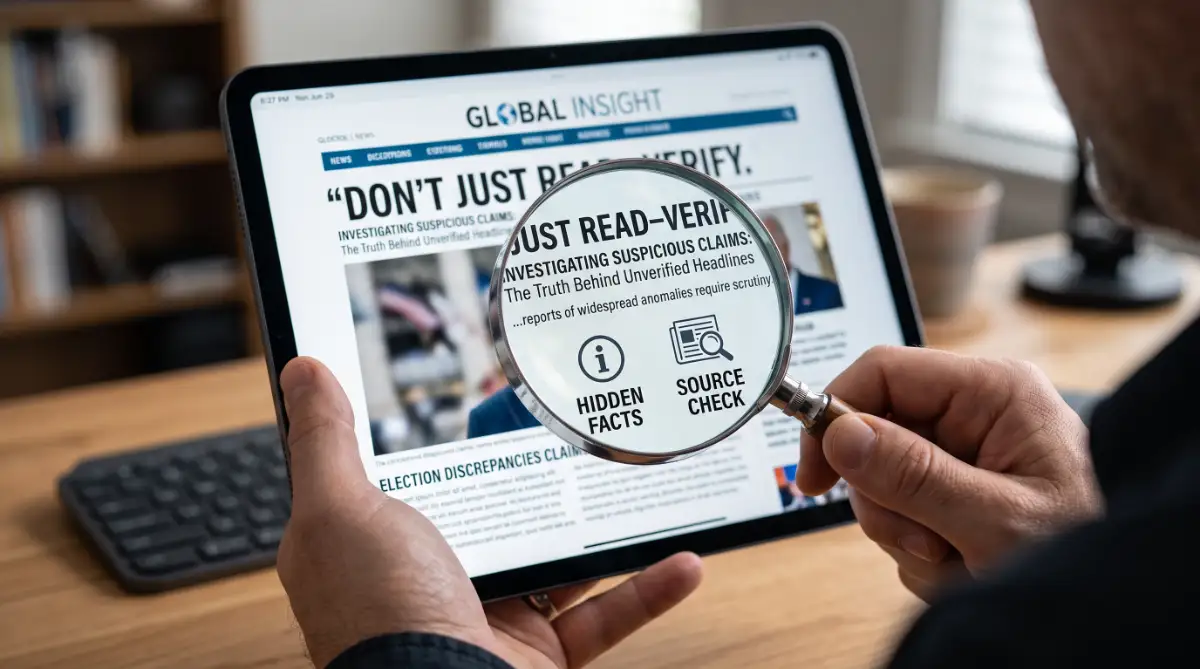
Start Your Journey to Digital Clarity
How do you protect yourself? You need a system.
You don't need to be a professional journalist to verify a story. You just need to know which questions to ask.
The goal is to move from being a passive scroller to an active thinker. This change will save you from a lot of stress.
Let's look at the first few steps you can take today to protect your mind and your social feed.
Step 1: The Three-Second Source Check
The very first thing you should do is look at where the story came from. This sounds simple, but most people skip it.
Look at the website's name. Does it sound official but look a bit "off"?
For example, a site might call itself "The New York Times-News" instead of the real name. They add extra words to confuse you.
Check the web address (URL). Many fake sites use extensions like ".co" or ".news-site" instead of ".com" or ".gov".
I always tell my friends to look for an "About Us" page. A real news site will tell you who they are and who pays them.
If a site has no contact information or no list of real editors, it is a huge red flag. Real organizations are proud to show their team.
Pro Tip: If the website is full of pop-up ads for "miracle cures" or weird gadgets, it is probably not a reliable news source.
Step 2: Use Reverse Image Search to Uncover the Truth
Pictures are powerful. We tend to believe what we see with our own eyes.
But images are very easy to fake. A photo from a movie can be used to pretend a real war is happening.
An old photo from ten years ago can be shared as if it happened this morning. This is one of the most common ways people are fooled.
You can use a tool like Google Images to do a "reverse search." Just upload the photo or paste the link.
The search engine will show you where else that picture has appeared. You might find that the "new" photo was actually taken in a different country years ago.
This simple trick can expose a lie in less than thirty seconds. It is like having a superpower in your pocket.
Expert Insight: Look at the weather or the clothes people are wearing in the photo. If the story says it’s a winter storm in Florida, but people are wearing t-shirts, you know something is wrong.
Before you keep reading, watch this quick visual guide that shows you exactly how to spot a fake photo in seconds! It is the fastest way to master this skill before you move on to the next secret in my list.
Step 3: Analyze the Emotional Temperature
Fake news wants you to feel something intense. It wants you to feel angry, terrified, or extremely happy.
If a headline uses words like "SHOCKING," "YOU WON'T BELIEVE THIS," or "DISASTER," be very careful.
Real news is usually written in a calm and neutral way. It gives you facts and lets you decide how to feel.
When you feel a sudden surge of emotion while reading a post, stop. That emotion is a signal that your brain is being manipulated.
Take a deep breath. Ask yourself, "Is this story trying to tell me facts, or is it trying to make me mad?"
Lies thrive on your reaction. If you don't react, the lie loses its power.
The Golden Rule: If it sounds too good to be true, or too bad to be true, it probably isn't true.
Step 4: Search for a Second Opinion
Never rely on just one source. Even the best reporters can make mistakes.
If a story is truly big news, every major news outlet will be talking about it.
Open a new tab on your browser. Type the main keywords of the story into a search engine.
Do you see the same story on sites like the BBC, Reuters, or the Associated Press?
If only one random blog is talking about it, the story is likely fake. Major news travels fast across all platforms.
I also recommend checking fact-checking websites. These teams spend all day long verifying viral claims.
They do the hard work so you don't have to. Using them is a smart way to stay informed without doing hours of research.
Building Your Inner Fact-Checker
Becoming smart about news is like building a muscle. At first, it takes some effort.
You have to remind yourself to check the source. You have to remind yourself not to share too quickly.
But after a while, it becomes a habit. You will start to see the patterns of fake news naturally.
You will notice when a story feels "fishy." You will know how to find the real truth in a sea of lies.
This is about more than just news. It is about taking control of your digital life.
It is about making sure that the information in your head is accurate. When you have the facts, you make better decisions for your life and your family.
We will continue this guide in the next part. We will talk about more advanced tricks like spotting deepfakes and understanding how algorithms try to trick you.
Stay curious, stay skeptical, and always keep searching for the truth. You have the tools now. Use them wisely.
Mastering the Art of Digital Investigation
Now that you know the basics of checking a source, it is time to look at the advanced ways lies are made today.
Technology is moving very fast. People who want to trick you are now using tools that did not exist a few years ago.
To stay safe, you need to think like a digital detective. You need to look past the surface of the screen and see what is really happening in the background.
Spotting the Rise of Deepfakes and AI Manipulation
One of the biggest challenges we face today is the use of Artificial Intelligence.
Sometimes, you might see a video of a famous leader or a celebrity saying something shocking. It looks real. It sounds real.
But it might be a "deepfake." This is when AI is used to change someone’s face or voice in a video.
To spot these, look closely at the person’s mouth. Does the movement of the lips match the sounds perfectly?
Check the eyes, too. Sometimes, AI has a hard time making realistic eye movements or natural blinking patterns.
If the person in the video looks a bit like a robot or a video game character, be very careful.
Pro Tip: Look at the edges of the person’s face. If the skin looks blurry or there are weird shadows around the neck, the video is likely fake.
Learning how a vpn encrypts your data on public wi-fi networks can help you stay secure in other ways, but your brain is your best defense against visual lies.
The "Money Trail" Secret: Who Profits from the Story?
Every trending story has a reason for existing. Most fake news is created for one simple thing: money.
When you click on a shocking story, you are often taken to a website covered in ads. Each click puts a small amount of money in the creator's pocket.
This is known as "ad arbitrage." They make up a lie, pay for it to go viral on social media, and get paid by ad networks when you visit.
Ask yourself: "Is this website trying to sell me something?" or "Is this story just a trap for clicks?"
If the story is full of dramatic claims but offers no real proof, it is likely just a business model.
I have found that the secret behind viral news you never knew is often just a greedy person sitting at a computer miles away.
They don't care if the information is true. They only care if it gets shared.
The biggest lesson I learned is that my own curiosity was being used against me to make someone else money. I used to think that a professional-looking website meant it was honest, but I was wrong.
Now, if I see a site covered in weird ads and "get rich quick" pop-ups, I immediately close the tab because I know my attention is just a paycheck for a liar.
Long-Term Habits for a Cleaner Mind
If you want to keep your head clear, you need to change your digital habits for good.
It is not enough to check one story today. You need a lifestyle that rejects misinformation.
Start by following trusted news organizations like Reuters. These groups have thousands of reporters around the world who follow strict rules for accuracy.
Limit your time on "opinion-heavy" social media groups. These places are often breeding grounds for rumors.
When you see a story that makes you feel a strong emotion, practice the "Wait and See" rule.
Give the story 24 hours. Most fake news is debunked within a day by professional fact-checkers like Snopes.
By waiting, you avoid being the person who spreads a lie to their friends. This builds your reputation as a person who only shares the truth.
You also need to master your mind how to stay calm and think clearly under pressure when a news alert pops up on your screen.
The calmer you are, the harder it is for a fake story to trick you.

Common Traps That Fool Almost Everyone
Even the smartest people can be tricked if they are not careful. There are a few big mistakes that lead us into the trap of fake news.
1. Trusting the "Blue Checkmark" Blindly
In the past, a blue checkmark on social media meant the person was verified.
Now, on many platforms, anyone can buy that badge for a few dollars.
Do not assume a story is true just because the account has a checkmark. Check the account's history.
Was this account created just a few days ago? Does it have a very small number of followers?
If yes, that checkmark means nothing. It is just a paid trick to look official.
2. The Confirmation Bias Trap
We all have things we want to believe. If we see a story that makes our "side" look good, we believe it instantly.
This is the biggest mistake you can make. We are often most blind to the lies that we want to be true.
If you see a story that perfectly fits your personal views, that is the moment you should be most skeptical.
Try to find a source that disagrees with you. See what they are saying about the same event.
This helps you see the whole picture instead of just a tiny slice of it.
3. Sharing Before Reading
Statistics show that many people share articles after only reading the headline.
This is dangerous. Headlines are often written to be clickbait.
The actual article might say something completely different from the title.
By sharing based only on the headline, you are helping spread a lie that you haven't even looked at.
Always open the link and read at least three paragraphs before you even think about sharing.
4. Following the "Crowd Mentality"
If you see a post with 50,000 shares, your brain thinks, "This must be true because everyone is talking about it."
This is a logical error. Thousands of people can be wrong at the same time.
Bots and fake accounts can be used to boost share numbers to make a lie look popular.
Numbers do not equal truth. A lonely fact is better than a popular lie.
5. Ignoring the Date of the Story
Sometimes, a story is true, but it is very old.
People often re-share news about a natural disaster or a political event from five years ago.
They present it as if it is happening right now. This causes unnecessary panic.
Always check the date of the article. If the date is missing, that is a huge red flag.
Your Daily Action Plan for Truth
You don't have to be afraid of the internet. You just have to be smarter than the people trying to trick you.
When you see a trending story, follow this simple checklist:
- Look for the date: Is this happening now or years ago?
- Check the source: Is this a real news site or a blog with a weird name?
- Search for a second source: Are other big news sites reporting this?
- Control your feelings: Am I sharing this because I am angry?
- Look at the photos: Are the images real or edited?
If a story fails even one of these checks, do not share it. Delete it from your mind and move on.
A Positive Future in a Digital World
The internet is an amazing tool for learning and connecting with people. It gives us access to all the knowledge in the world.
But like any powerful tool, it must be used with care. You are now better prepared to navigate this world than 90% of other users.
By being careful, you are protecting your mental health and your community.
You are helping to make the internet a more honest place for everyone.
Start today. The next time you see a "breaking" story, don't rush. Take a breath, look for the facts, and think for yourself.
You have the power to stop the spread of misinformation. It starts with your next click.
Stay smart, stay curious, and always value the truth over the trend.
The digital world is much brighter when you can see clearly through the fog of fake news.
It feels so much better to go online without feeling anxious or tricked every five minutes. Since I started using these simple habits, I feel much more in control and calm when I read the daily news.
You can do this too—start being your own digital detective today and show others how to find the truth!
Disclaimer: The information in this article is for educational purposes only. While we provide tips on how to identify misinformation, news events move quickly and no single method is 100% perfect. Always use multiple trusted sources for your information.