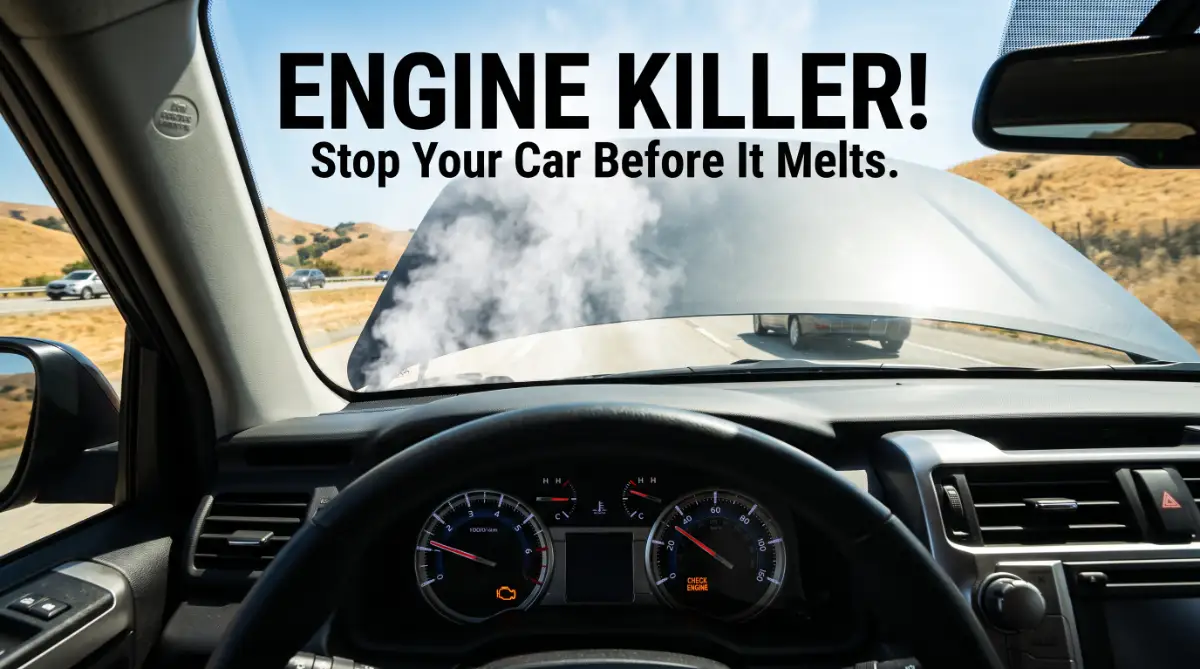
The Sudden Panic of a Dying Engine
I still remember the hot July afternoon when my own car gave up on me in the middle of a busy intersection. I had noticed the temperature needle creeping up for days, but I kept telling myself I could make it one more week.
That choice ended up costing me my entire savings account and left me stranded for hours, a mistake I never want you to make.
You are driving down the highway, enjoying your favorite podcast, when you feel a strange vibration. Suddenly, a sweet, maple-syrup smell fills the cabin, and you see a wisp of white smoke rising from the hood.
In that moment, your stomach drops. You realize that your car, your most reliable tool for daily life, is failing you right when you need it most.
This isn't just a minor inconvenience; it is a full-blown emergency that can leave you stranded in a dangerous spot. The fear of being stuck on the side of the road at night is something no driver should have to face.
Most people don't realize that their car was trying to tell them something was wrong miles ago. If you miss these signals, you are not just losing time; you are risking a total engine meltdown that costs thousands.
Why Most Drivers Fail to Catch the Warning Signs
Many car owners end up with a $3,000 repair bill because they fall for common myths or ignore small changes. Understanding why we miss these signs is the first step to saving your vehicle.
- Reliance on Warning Lights: Many people wait for the "Check Engine" or "Temperature" light to turn on before they take action. By the time that light glows red, the internal damage might already be done.
- Trusting Bad Online Advice: I have seen people suggest adding cold water to a boiling radiator, which can actually crack your engine block instantly.
- The "Just a Few More Miles" Trap: Drivers often think they can make it home if they just drive faster or turn off the AC, but this usually speeds up the overheating process.
- Ignoring Subtle Smells: We often blame "outside smells" like construction or other cars instead of realizing our own cooling system is leaking.
- Lack of Basic Knowledge: Modern cars are so quiet that we forget there is a tiny volcano of heat under the hood that needs constant cooling.
The Mental and Emotional Drain of Car Trouble
When your car is unreliable, your whole life feels unstable. It is hard to focus on your job or your family when you are constantly worried about your transportation.
- Financial Anxiety: The thought of a surprise multi-thousand-dollar bill can keep you up at night, especially when you have other bills to pay.
- Loss of Freedom: Without your car, you are stuck relying on expensive ride-shares or slow public transit, which steals your precious time.
- Safety Fears: There is a deep sense of vulnerability when you are standing by a broken car while traffic zooms past you at seventy miles per hour.
- Self-Doubt: You might feel like you failed as a car owner because you didn't "know better," leading to frustration and a loss of confidence.
I want you to know that you can avoid all of this. By learning the five simple signs of an overheating engine, you can stay in control and keep your money in your pocket.
Let’s look at the reality: a blown head gasket can cost $3,000, while fixing a small leak might only cost $50. The difference is simply paying attention to what your car is saying to you.
Your Professional Guide to Spotting Trouble Early
Now that we understand the stakes, let’s go through the specific signs your car uses to warn you. Think of this as your "Early Warning System" that protects your bank account.
I have spent years helping drivers understand their vehicles. These are the most common things I see right before an engine fails.
Sign 1: The Rising Temperature Needle
Your dashboard has a gauge that shows how hot the engine is. Usually, the needle sits right in the middle between "C" (Cold) and "H" (Hot).
If you notice that needle creeping past the middle point, your car is struggling. It doesn't have to be in the red zone to be a problem.
Any movement toward the "H" while you are sitting in traffic or climbing a hill is a red flag. This often means your cooling fan isn't working or your coolant is getting low.
What you can do right now: If the needle moves up, turn off your Air Conditioning immediately. Turn on your heater to the highest setting to pull heat away from the engine.
Sign 2: Unusual Smells (The "Sweet" or "Burnt" Scent)
Your nose is actually one of your best diagnostic tools. Different smells mean different types of trouble under the hood.
If you smell something sweet, like maple syrup or candy, you likely have a coolant leak. Coolant contains ethylene glycol, which has a very distinct sugary scent when it gets hot.
On the other hand, a burnt, acrid smell usually means oil is leaking onto hot engine parts. Both are signs that the internal temperature is rising out of control.
Pro Tip: Never ignore a new smell in your car. If it persists for more than a minute, pull over and check for leaks once the car is cool.
Sign 3: Strange Ticking or Thumping Sounds
Engines should hum, not tick. If you hear a fast ticking sound, it might mean your oil has become too thin.
When an engine overheats, the oil loses its ability to lubricate the metal parts. This causes the valves to hit each other, creating that ticking noise.
You might also hear a thumping or "clunking" sound. This often happens when the coolant in your radiator starts to boil and creates air pockets.
It sounds like someone is knocking on your engine from the inside. If you hear this, stop driving immediately because your coolant is no longer doing its job.
Sign 4: Puddles Under the Car
Check your driveway or garage floor every morning. Your car should not be "leaving marks" on the ground.
If you see an orange, green, or pink puddle, that is your engine's lifeblood leaking out. Unlike water from the AC (which is clear), coolant is bright and colorful.
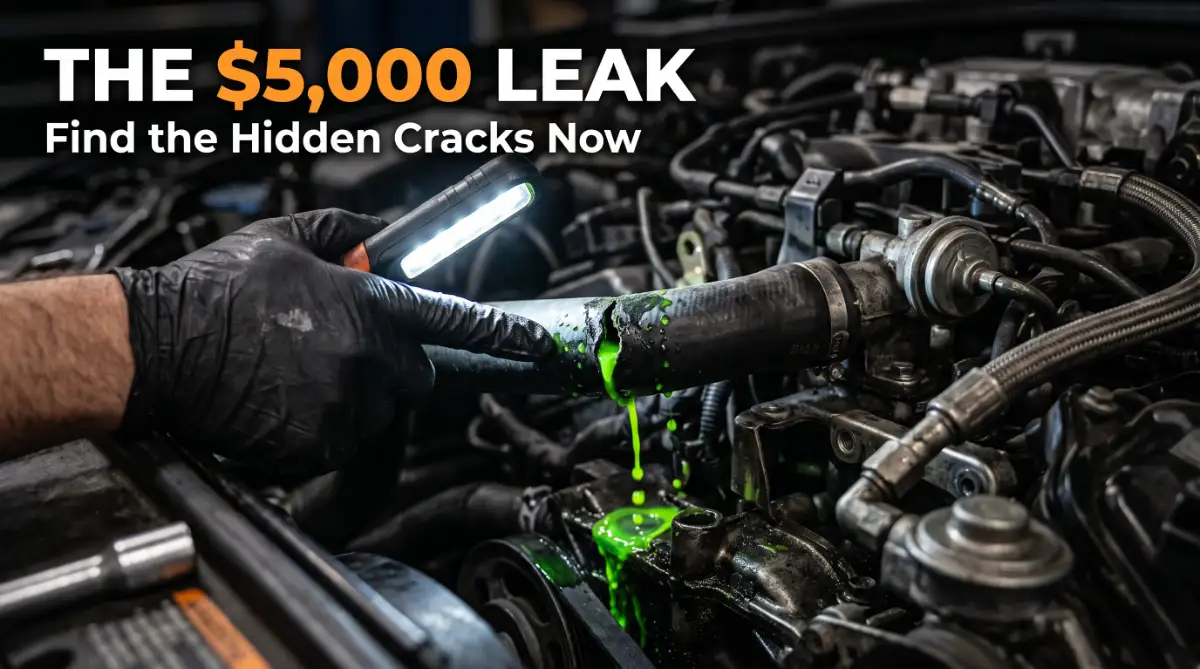
A small leak today will become a big burst tomorrow. Hoses can wear out or clamps can get loose over time.
Real-life Scenario: I once knew a driver who ignored a tiny green drip for a week. On Friday, the hose finally snapped on the highway, and his engine melted before he could even pull over.
Sign 5: A Sudden Drop in Engine Power
When an engine gets too hot, the metal parts inside start to expand too much. This creates friction, which makes it harder for the engine to move.
You might feel like you are "flooring it," but the car isn't speeding up. This is often called "heat soak" or "engine drag."
Some modern cars have a "Limp Mode" that automatically slows the car down to protect the engine. If your car suddenly feels weak, check that temp gauge right away.
Driving an engine in this state is like running a marathon with a fever. It is only a matter of time before it collapses completely.
Simple Steps to Keep Your Engine Cool Today
You don't need to be a mechanic to prevent these issues. A few simple habits will keep your car running smooth for years.
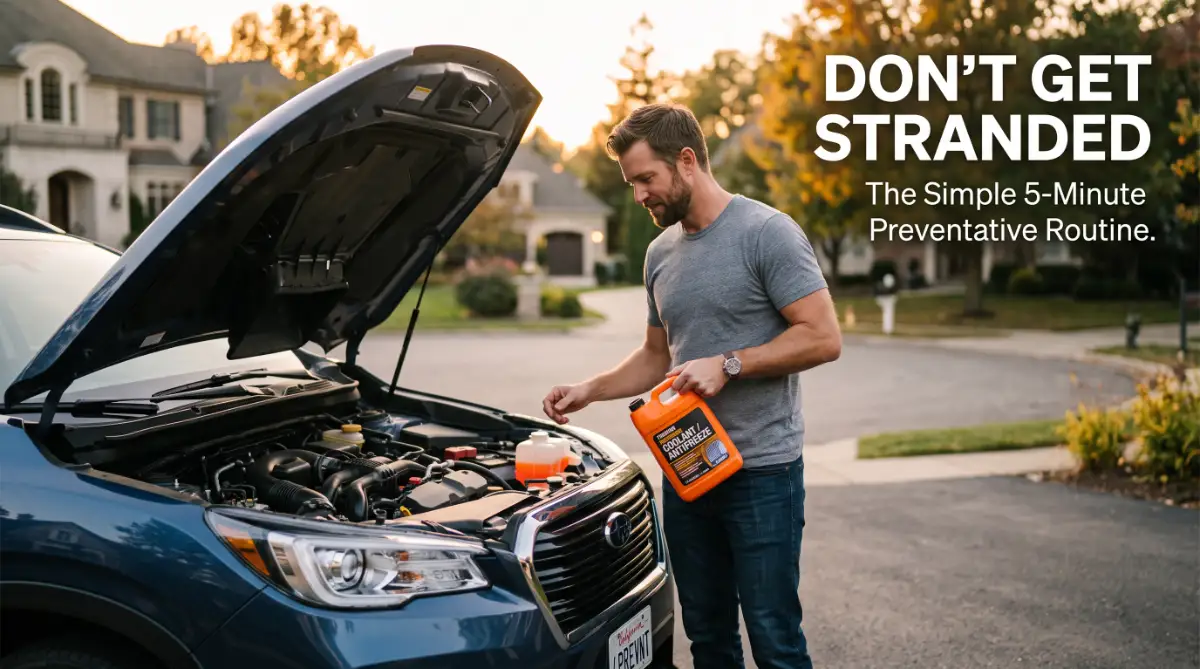
Step 1: Check Your Coolant Level Weekly
Wait until the car is completely cold, like in the morning before you start it. Open the hood and look at the plastic coolant reservoir.
It will have "Min" and "Max" lines on the side. If it is low, add a 50/50 mix of distilled water and the correct antifreeze for your car.
Step 2: Inspect Your Hoses for Wear
While the engine is cold, give the big rubber hoses a gentle squeeze. They should feel firm but flexible.
If they feel very soft, "crunchy," or look cracked, they are ready to fail. Replacing a $20 hose is the easiest way to save $3,000.
Step 3: Keep Your Radiator Clean
Sometimes the problem isn't inside the car; it is outside. Dirt, leaves, and plastic bags can get stuck in the front of your radiator.
This blocks the air that is supposed to cool the liquid. Periodically spray the front of your car with a garden hose to keep the airflow clear.
Before you grab your tools, watch this short video that shows you exactly how to check your coolant and hoses safely. Seeing it in action will give you the confidence to handle these simple checks like a pro in under five minutes!
How to Stay Safe During an Overheat Emergency
If you see smoke or the needle hits the red, you must act fast but stay calm. Your safety is more important than the car.
- Find a Safe Spot: Pull over to the shoulder or a parking lot immediately. Do not try to make it to the next exit if the car is smoking.
- Kill the Engine: Turn off the car to stop the heat production. Leave the key in the "on" position so the fans can keep running if they still work.
- Stay Away from the Hood: Do not open the hood for at least 15 to 20 minutes. Boiling steam can burst out and cause permanent skin damage.
- Call for a Tow: It is much cheaper to pay $100 for a tow truck than to pay $3,000 for a new engine. Don't risk driving it again until a pro looks at it.
By following these rules, you protect yourself and your investment. You are now smarter than 90% of the drivers on the road!
Keep these signs in mind, and you will never have to fear the "smoke under the hood" again. Your car—and your wallet—will thank you.
Professional Techniques to Keep Your Engine Running Cool
You have already learned how to spot the early warning signs of a hot engine. Now, I want to share some "pro-level" secrets that mechanics use to keep vehicles running for hundreds of thousands of miles.
These tips go beyond just looking at a gauge. We are going to look at the chemistry and physics happening inside your cooling system.
Understanding the Chemistry of Your Coolant
Most drivers think all coolant is the same. They walk into a store and buy the cheapest bottle, but this is a huge mistake that can lead to internal rust.
Your car was designed for a specific type of coolant, often categorized by its color (like orange, green, or blue). These colors represent different chemical formulas, such as Inorganic Additive Technology (IAT) or Organic Acid Technology (OAT).
Mixing these can create a thick "sludge" that blocks the tiny passages in your engine. If you aren't sure what you have, check your owner's manual or ask a professional to do a chemical test.
Using the right fluid ensures that the metal parts inside your engine don't corrode over time. This is especially important for modern cars that use a lot of aluminum in their engine blocks.
The Magic of the Radiator Cap
Did you know your radiator cap is actually a sophisticated pressure valve? It is not just a lid to keep the liquid inside.
The cap is designed to hold a specific amount of pressure, which raises the boiling point of the coolant. This allows the liquid to get much hotter than 212 degrees Fahrenheit without turning into steam.
If the rubber seal on this cap becomes hard or cracked, the system loses pressure. When pressure drops, the coolant boils sooner, leading to an overheat even if your levels are full.
I recommend replacing your radiator cap every few years as a cheap insurance policy. It is a ten-dollar part that can prevent a three-thousand-dollar engine failure.
I once made the mistake of using a cheap, used radiator cap I found in my garage, and it nearly ruined my engine because it couldn't hold the right pressure.
Now, I always tell my friends that buying a brand-new, high-quality cap is the simplest way to avoid a massive repair bill. It’s a tiny part, but it’s the only thing standing between a cool engine and a total meltdown.
How to "Bleed" Air Out of Your System
Sometimes, your car overheats because there is air trapped inside the metal pipes. This often happens after a repair or when you top off the fluid.
Air pockets are dangerous because they create "hot spots" where the coolant cannot reach. This can cause your cylinder head to warp or your head gasket to blow.
To fix this, you need to "bleed" the system by opening the bleeder valve while the engine is warming up. This allows the trapped air to bubble out so the liquid can flow perfectly.
If you don't feel comfortable doing this yourself, a quick visit to a shop can solve it. Keeping the air out is one of the best ways to properly maintain vehicle systems for maximum longevity and performance.
The Water Pump "Weep Hole" Secret
Your water pump is the heart of the cooling system. It has a tiny hidden hole called a "weep hole" designed to tell you when the internal seal is failing.
Get a flashlight and look at the front of your engine where the water pump is located. If you see a small trail of dried, crusty coolant coming from that hole, your pump is dying.
It might not be leaking enough to leave a puddle yet, but it is a warning. Replacing the pump now is much easier than waiting for it to seize up on the highway.
I have seen many drivers ignore this tiny sign, only to have the pump fail during a long road trip. Being proactive here is the ultimate way to save money and stress.
Dangerous Mistakes That Can Ruin Your Engine
Even well-meaning drivers often make mistakes that cause more harm than good. I want to point these out so you can avoid a very expensive trip to the mechanic.
If your car does suffer a major breakdown, you will quickly realize why comprehensive car insurance is essential for every vehicle owner to cover unexpected disasters. However, prevention is always the better path.
Mistake 1: Using Plain Tap Water
In an emergency, people often grab a garden hose and fill their radiator with tap water. While this works for a few miles, it is terrible for your engine in the long run.
Tap water contains minerals like calcium and magnesium. When these minerals get hot, they turn into "scale" that coats the inside of your radiator.
This scale acts like an insulator, keeping the heat inside the engine instead of letting it escape. Always use distilled water or pre-mixed coolant to keep the system clean.
Mistake 2: Pouring Cold Water into a Hot Engine
This is perhaps the most dangerous mistake on this list. If your engine is boiling and you pour cold water into it, you might hear a "crack."
The sudden change in temperature causes the hot metal to shrink too fast. This can literally crack the engine block or the cylinder head, making the car useless.
If you must add water to a hot car, do it very slowly while the engine is running. This allows the cold water to mix with the hot liquid before it hits the engine block.
Mistake 3: Opening the Cap While it is Steaming
I cannot stress this enough: Never open a hot radiator cap. The system is under massive pressure, and the liquid inside is way above the boiling point.
Opening the cap is like opening a shaken-up soda bottle, but the liquid is boiling acid. It will spray onto your face and hands, causing third-degree burns in seconds.
Wait at least thirty to forty minutes before touching the cap. Use a thick rag and turn it slowly to release the pressure safely.
Mistake 4: Ignoring a "Lazy" Thermostat
A thermostat is a small valve that opens and closes based on temperature. Sometimes, they become "lazy" and don't open all the way.
The car might not overheat in the winter, but as soon as the weather gets warm, the temp needle starts to climb. People often ignore this, thinking it is just the weather.
A lazy thermostat is a ticking time bomb for your engine. Since it is a cheap part, you should replace it the moment you notice the temperature fluctuating.
Mistake 5: Neglecting the Cooling Fans
Modern cars rely heavily on electric fans to pull air through the radiator. If your car stays cool on the highway but gets hot in traffic, your fan is likely broken.
I have seen people try to "fix" this by driving faster to get more air. This is a dangerous game that usually ends with a tow truck and a massive bill.
Check your fans by turning on your Air Conditioning. Usually, the cooling fans should start spinning immediately to help the system.
Your Action Plan for a Cooler Engine
I want you to feel confident every time you get behind the wheel. Use this checklist to ensure your car stays in top shape all year round.
If you find yourself in a stressful situation on the side of the road, remember that learning how to stay calm and think clearly under pressure can help you make the right safety choices. Take a deep breath and follow the steps you've learned.
- The Monthly Look: Once a month, check your coolant reservoir and look for any new drips under the car.
- The Smell Test: If you ever smell something sweet like syrup, stop and look for leaks immediately.
- The 30,000-Mile Flush: Have your cooling system flushed and refilled every 30,000 to 50,000 miles to remove rust and old chemicals.
- Hose Squeeze: Every few months, give your radiator hoses a squeeze (when the engine is cold) to make sure they aren't getting soft or brittle.
By taking these small steps, you are protecting your investment and your family. You are also avoiding the huge financial hit of a major engine rebuild.
Facing a massive repair bill is a nightmare, which is why having an emergency fund as a financial safety net is so helpful for car owners. It turns a disaster into a minor speed bump.
Drive Forward with Total Confidence
You now know an expert when it comes to car overheating. You know what to look for, what to avoid, and how to fix small problems before they grow.
Your car is a tool that serves you, but it needs a little bit of care in return. Think of these maintenance steps as an investment in your future freedom and safety.
Don't wait for the smoke to start rising to take action. Go outside tomorrow morning, pop the hood, and spend five minutes checking your fluids.
That simple five-minute check could be the reason you save three thousand dollars this month. You have the power to keep your car running smooth and cool for years to come.
Stay alert, stay safe, and enjoy the peace of mind that comes with a healthy, well-maintained engine. You've got this!
You don't need to be a car expert to keep your vehicle running perfectly; you just need to be a driver who pays attention.
Take five minutes tomorrow morning to pop the hood and check your fluids—it is the best way to keep your money in your pocket and stay safe on the road. Your car is ready to go the distance if you just give it a little bit of care today.
Disclaimer: The information provided in this article is for educational purposes only. Always consult your vehicle's owner manual and a certified mechanic before performing any repairs or maintenance. Working on a car engine involves risks of burns, injury, and mechanical damage if not done correctly. If you are unsure about any procedure, seek professional assistance immediately.