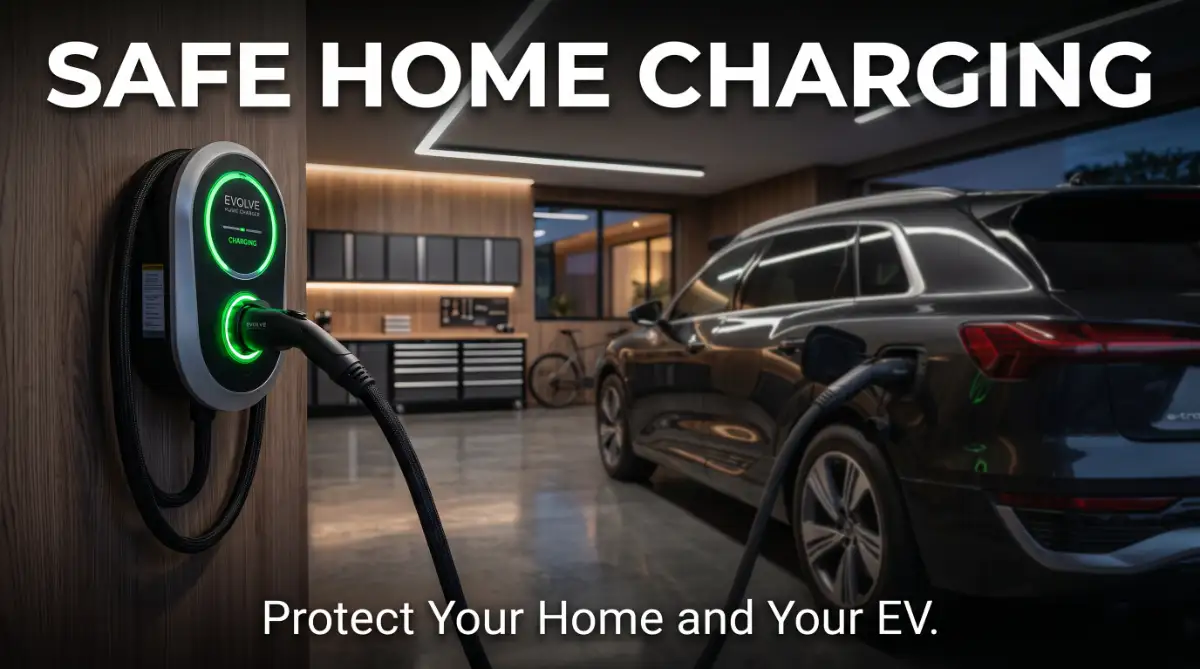
The Hidden Stress of Owning an Electric Car
I used to stare at my car's battery percentage like it was a ticking time bomb. I bought an EV to save money and help the planet, but I ended up with "battery anxiety" that kept me up at night.
After a year of trial and error, I finally figured out how to stop worrying and actually enjoy the drive. Here is how I keep my car's heart healthy without losing my mind.
Buying an electric car is a big move. You feel proud of helping the earth. You love the quiet drive. But soon, a small worry starts to grow in your mind.
You look at the battery bar every morning. You wonder if it will hold the same charge in three years. The thought of a very expensive battery replacement keeps you up at night.
Most owners feel this "range anxiety" and "health anxiety." You want your car to last forever. But the battery is a complex thing. It is not like a gas tank.
It is more like a living thing that can get tired or sick. If you don't know the rules, you might be hurting your car every single day without knowing it.
Quick Summary: How to Save Your Battery
- The Sweet Spot: Keep your charge between 20% and 80% for daily use.
- Cool Down: Avoid parking in direct sunlight for long periods.
- Slow is Better: Use home charging (Level 1 or 2) whenever you can.
- Be Smooth: Avoid "flooring it" constantly; smooth driving keeps the battery cool.
- Update Often: Always install software updates to get the latest battery tech fixes.
Why Many People Fail to Protect Their EV Battery
Most people treat their car like a cell phone. They plug it in every night and wait for 100%. This is the first mistake.
Here are the reasons why many owners struggle:
- Overcharging Habits: People think a full "tank" is always better.
- Fast Charging Addiction: Using high-speed chargers every day because it is fast and easy.
- Ignoring the Heat: Parking in the hot sun for hours, which cooks the internal cells.
- Deep Discharging: Letting the battery hit 0% and staying there for a long time.
EV Battery: Myths vs. Facts
The Cost of Poor Battery Management
When you don't care for the battery, you lose more than just miles. It affects your whole life and your wallet.
- Resale Value Drops: Nobody wants to buy a used EV with a weak battery.
- Stressful Road Trips: You start to worry if you can reach the next charger.
- Wasted Money: Replacing a battery can cost as much as a small car.
- Loss of Freedom: You stop taking long drives because the car can't handle it anymore.
- Anxiety: Every time you drive, you look at the battery percentage with fear.
The Truth About Battery Wear and Tear
Electric car batteries are made of lithium-ion. Think of them like a rubber band. If you stretch a rubber band too far, it loses its snap. If you keep it stretched tight all the time, it gets weak.
The battery works by moving ions between two sides. When you charge it to the max, the ions are squeezed tight. This creates heat and pressure.
Over time, this pressure causes tiny cracks inside the battery cells. These cracks make it harder for electricity to flow.
This is why a car that used to go 300 miles might only go 250 miles after a few years. It is a natural process called degradation.
But here is the good news. You can slow this down significantly. Most batteries are designed to last for many years.
If you follow the right steps, you might never need to replace it. You can keep the "snap" in your battery for a very long time. It just takes a few small changes in how you think and how you charge.
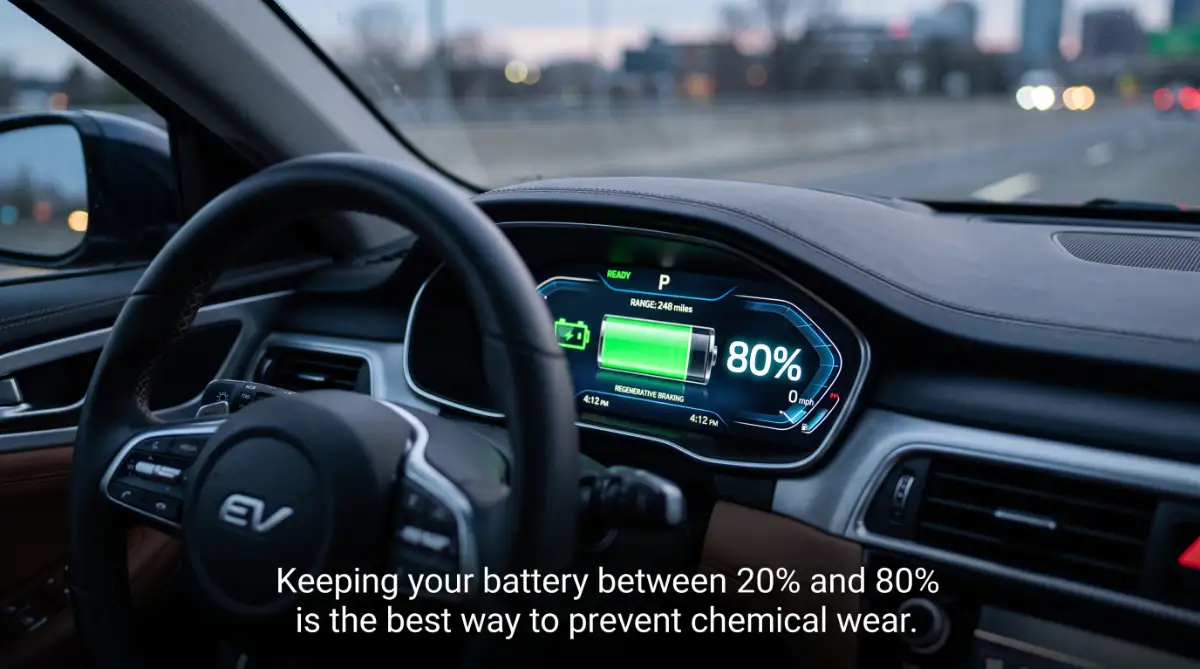
How to Master the 20-80 Percent Charging Rule
The most important habit you can start today is the 20-80 rule. Lithium-ion batteries are happiest when they stay in the middle.
Think of it like your stomach. You feel bad when you are starving (0%). You feel sick when you are stuffed (100%). You feel your best when you are just right.
Step 1: Set Your Charging Limit
Most modern electric cars have a setting in the menu. You can tell the car to stop charging at 80%. I highly recommend doing this for your daily driving.
I used to be the person who plugged in my car every single night to reach 100%, thinking I was being prepared. I didn't realize I was actually putting a lot of pressure on the battery cells, and I saw my max range drop slightly after just one year.
My big realization was that treating my car like a smartphone was a mistake; once I started stopping at 80% for my daily drives, my battery health stabilized and stayed that way.
Only charge to 100% when you are about to start a very long trip. Leaving a car at 100% in a garage is like leaving a balloon overfilled. Eventually, it will leak or weaken.
Step 2: Avoid the "Red Zone"
Try not to let your battery fall below 20%. When the battery gets very low, the voltage drops. This makes the battery work much harder to provide power.
If you let it hit 0% and leave it there, the battery might "brick." This means it might never turn on again. Always plug in before the warning light comes on.
Step 3: Be Smart with Slow Charging
If you have a charger at home, use it. Level 1 or Level 2 home charging is much "gentler" than a public fast charger.
It is like a slow walk versus a sprint. Sprinting is fine sometimes, but doing it every day will wear out your legs. Home charging keeps the battery cool and happy.
💡 My Expert Tip for Busy Owners:
If your car doesn't have a built-in "charge limit" setting, don't panic. You can buy a smart home charger that lets you set a schedule and a limit from your phone. I set mine to finish charging right at 7:00 AM so the battery doesn't sit full all night. It’s a game-changer for your battery's long-term health.
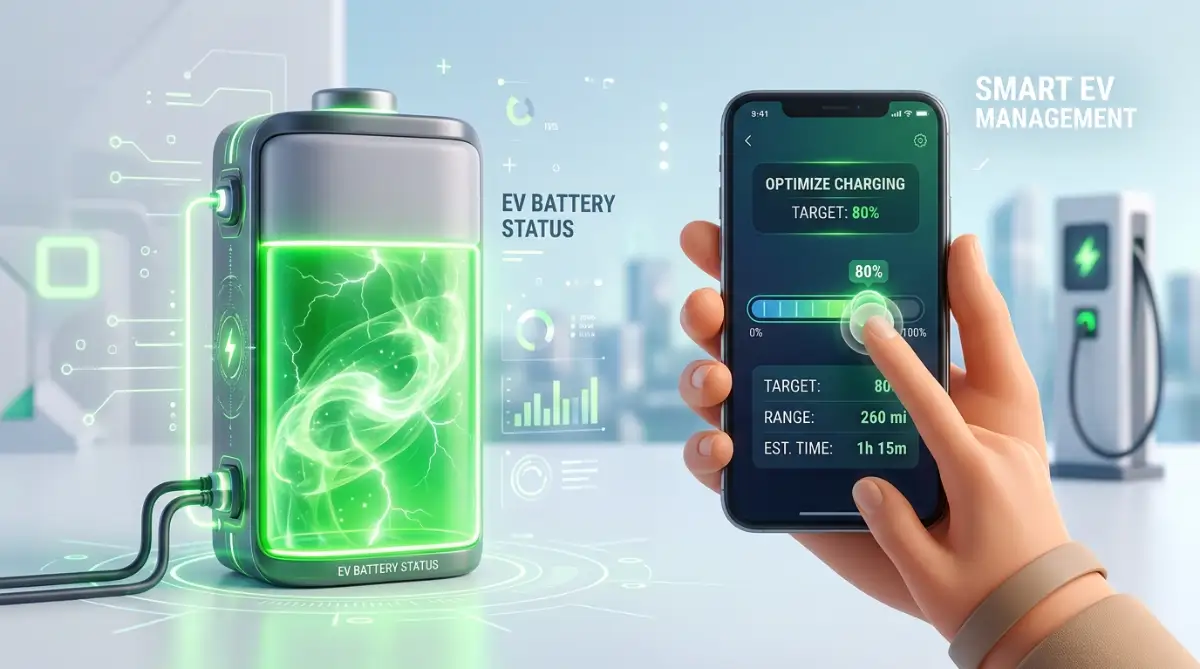
Why Heat is Your Battery’s Biggest Enemy
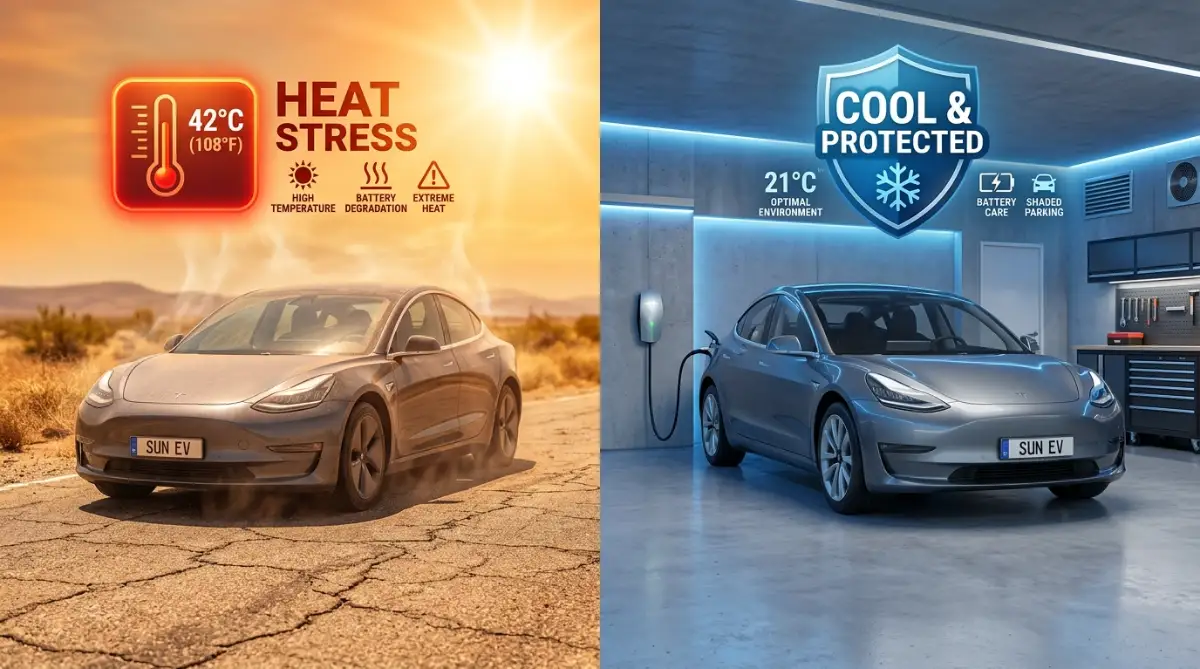
Heat is the silent killer of electronics. Inside your EV battery, heat causes chemical reactions that shouldn't happen. These reactions eat away at the parts that hold energy.
Keep it Cool in the Summer
When it is very hot outside, try to park in the shade. If you have a garage, use it. Even a small difference in temperature can save your battery from aging too fast.
Thermal Management is Your Friend
Your car has a cooling system for the battery. It uses liquid to keep the cells at a safe temperature. You should leave your car plugged in on very hot or very cold days.
When the car is plugged in, it can use the wall power to run the cooling or heating system. This means it doesn't have to use the battery's own energy to protect itself.
If you want to see a real-life walk-through of how the 20-80 rule works, check out this helpful video. It makes the technical side much easier to understand so you can start protecting your car today! Once you're done watching, keep reading to learn why heat is your battery's next big enemy.
Managing High-Speed Charging (DC Fast Charging)
We all love DC fast chargers. They can fill a car in 30 minutes. But they also pump a lot of electricity in a very short time. This creates a lot of heat.
Use Fast Charging Only When Needed
If you are on a road trip, go ahead and use them. That is what they are for. But don't make it a daily habit. If you use a fast charger every single day, you might see your battery health drop faster than someone who charges at home.
The "Cold Battery" Problem
Fast charging a frozen battery is also bad. Most cars will now "pre-condition" the battery. This means the car warms up the battery before you get to the charger.
Always use your car's built-in GPS to navigate to a charger. This tells the car to get the battery ready for the high speed of electricity.
Driving Habits That Save Your Cells
How you drive affects your battery too. If you are always "flooring it" at every green light, you are pulling a lot of power very quickly. This creates internal heat.
Smooth is Fast
Try to drive smoothly. Use Regenerative Braking as much as you can. This is a special feature where the motor turns into a generator when you let go of the pedal.
It slows the car down and puts a little bit of energy back into the battery. It is much better than using the friction brakes. It saves your brake pads and helps your battery stay balanced.
The Importance of Software Updates
Your car is basically a computer on wheels. The engineers who built it are always learning new things about battery science. They send out "over-the-air" updates to improve how the car manages power.
Don't Ignore the "Update Available" Icon
Sometimes an update can change how the battery handles heat or how it charges. These updates are often free and can add years to your battery life. Always make sure your car is running the latest software.
Balance Your Cells Once in a While
While I said to stay between 20% and 80%, there is one exception. Every few months, it is good to charge to 100%. This helps the "Battery Management System" (BMS) know exactly how much energy is left.
It is called "cell balancing." It ensures that every tiny part of the battery is equal. Just make sure you drive the car shortly after it hits 100%. Don't let it sit full for days.
Planning for the Long Run
Modern EV batteries are very tough. They are built to last for hundreds of thousands of miles. Most companies give you a warranty for 8 years or 100,000 miles.
This shows they have confidence. But you want to go beyond the warranty. You want a car that stays useful for 15 or 20 years.
By following these simple charging and driving tips, you are not just saving a battery. You are saving thousands of dollars. You are also making sure that your electric car stays as fun to drive as the day you bought it.
Remember, the battery is the heart of your car. Treat it with a little bit of respect, and it will take you wherever you need to go for a very long time.
Advanced Strategies for Pro-Level Battery Care
Now that you know the basics of the 20-80 rule, let’s look at the deeper secrets of battery science. Many people think they just need to plug the car in and walk away.
But if you want your battery to outlast the car itself, you need to think like an engineer.
One of the best kept secrets is managing the Depth of Discharge (DOD). This means looking at how much of the battery's capacity you use before recharging. Using 10% of your battery and then charging it back up is much better than using 70% and then charging it.
Think of it like a rubber band. If you pull it just a little bit many times, it stays strong. If you pull it to the very limit every day, it will eventually snap. Small, frequent charges are much better for lithium-ion health than one big, heavy charge once a week.
Another expert tip involves pre-conditioning your battery before you drive. In very cold or very hot weather, the chemicals inside the battery are "sleepy" or "agitated."
If you start driving and demand high power right away, it causes internal stress.
Most modern electric cars allow you to "pre-warm" or "pre-cool" the car while it is still plugged into your home charger. This uses electricity from your house rather than the battery. It ensures the battery is at the perfect temperature before the wheels even turn.
Just like humans need 7 easy daily habits to transform your sleep quality forever to function well the next day, your car needs a "rest and prep" phase. When the battery starts its day at the right temperature, it avoids the chemical friction that leads to permanent degradation.
The Science of Storage and Long-Term Health
What happens if you go on a vacation for three weeks? This is where many owners accidentally hurt their cars. If you leave your car at 100% and let it sit in a hot garage, the high voltage will put constant pressure on the cells.
If you leave it at 0%, the small computer systems in the car (the "vampire drain") will slowly eat the remaining power. Once it goes below a certain point, the battery might "die" forever. The sweet spot for long-term storage is exactly 50 percent.
Experts suggest that if you aren't using the car, keep it at half-full. This is the state where the chemicals are most stable. It is the same reason why how to extend the battery lifespan of a modern laptop involves keeping the device in a cool, semi-charged state when not in use.
Also, keep an eye on your tires and weight. It sounds strange, but if your tires are low on air, the car has to work harder to move. This pulls more current from the battery, creating more internal heat. Keeping your car light and your tires firm is a "pro-move" that protects your battery health over many years.
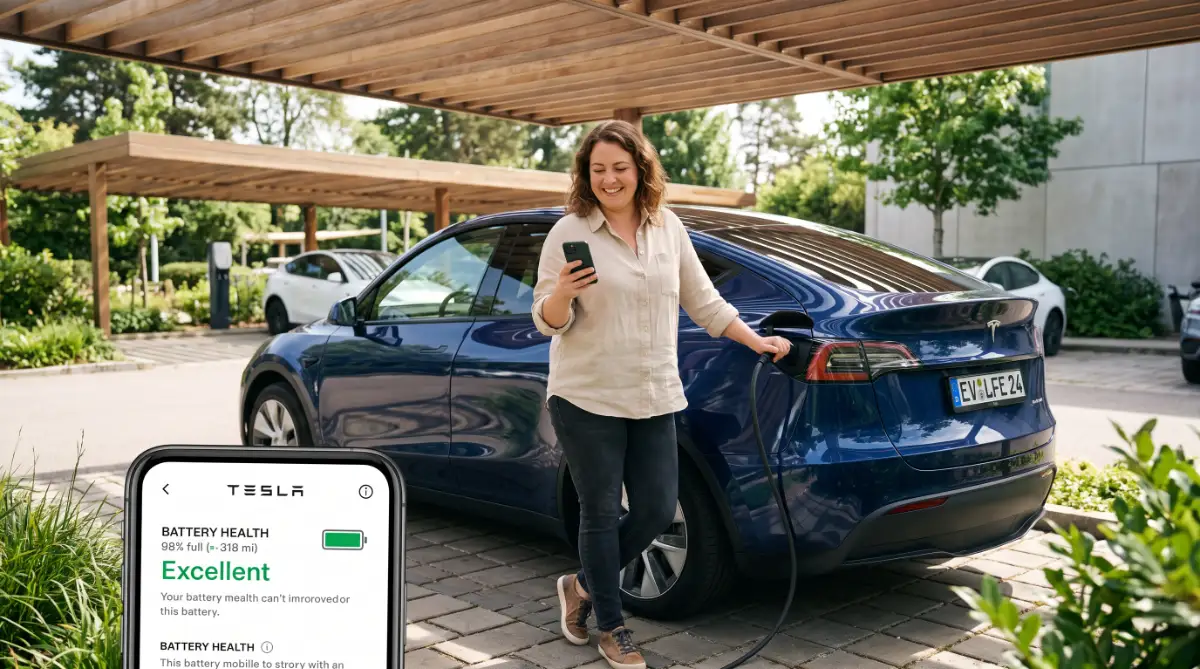
Fatal Mistakes That Are Slowly Killing Your Battery
Even with the best intentions, many owners fall into traps that shorten their car's life. These mistakes often seem small, but they add up to thousands of dollars in lost value. Protecting your car is just as important as why comprehensive car insurance is essential for every vehicle owner because it guards your biggest investment.
Mistake 1: Relying Exclusively on Public Fast Chargers
Fast chargers are amazing for road trips, but they are not meant for every day. They push a massive amount of energy into the cells very quickly. This causes the battery temperature to spike. If you do this every single day, you are essentially "cooking" the battery from the inside out.
Mistake 2: Ignoring the Cooling System Maintenance
Electric cars don't have oil changes, but they do have coolant. This liquid flows around the battery to keep it from overheating. Some owners forget to check this.
If the coolant level is low or the pump is failing, your battery will run hot every time you drive. This is a fast track to battery failure.
Mistake 3: Flooring the Pedal Every Time You Take Off
We all love the instant speed of an electric car. It feels like a roller coaster. But every time you floor it, the battery has to discharge a huge burst of energy.
This creates a "heat pulse" inside the cells. Doing this occasionally is fine, but aggressive driving as a habit will lead to faster capacity loss.
Mistake 4: Charging in Extreme Temperatures Without Shade
If it is a scorching afternoon, don't plug into a fast charger that is sitting in direct sunlight. The sun heats the car, and the charger heats the battery.
It is a "double-heat" situation that is very dangerous for the cells. Always look for shaded charging spots or charge during the cooler parts of the day.
Mistake 5: Letting the Battery Stay at 100% for Too Long
Some people charge to 100% on a Sunday night and then don't drive the car until Tuesday morning. This "high-voltage state" is very stressful for the battery.
If you must charge to 100%, set a timer so the car finishes charging right before you leave. This way, the battery spends the least amount of time at that stressful high level.
The Financial Impact of Battery Neglect
If you make these mistakes, you won't see the damage today. It happens slowly. One day, you will notice your "full charge" only gives you 200 miles instead of 250. When you go to sell the car, the buyer will check the battery health.
A car with a degraded battery is worth much less. It is like trying to sell a house with a broken foundation. By following the right habits, you are essentially saving money every single day. You are keeping the car’s most expensive part in "like-new" condition.
According to data from the U.S. Department of Energy, modern batteries are getting better, but user behavior is still the number one factor in how long they last. You have more power over your car’s lifespan than the manufacturer does.
Your Roadmap to a Decade of Worry-Free Driving
Taking care of an electric vehicle doesn't have to be a full-time job. It is about building small, simple habits that become second nature. Once you set your car's charging limit to 80%, you don't even have to think about it anymore.
Think of your battery like a retirement fund. If you treat it well now, it will support you for years to come. You will enjoy the same range, the same power, and the same reliability on day 3,000 as you did on day 1.
The technology inside your car is a miracle of science. Thousands of tiny cells working together to move you silently across the world. They are tough, but they are not invincible. They need you to be their "manager."
Start Your Battery Health Journey Today
Don't wait for a warning light to start caring for your EV. Start tonight. Check your car's settings. See if you can set a "charge target." Look at where you park and see if there is a shaded spot available.
These small wins add up. You will feel a sense of pride knowing that you are one of the few owners who truly understands their machine.
You are not just a driver; you are a savvy owner who knows how to protect their wealth and their transport.
Electric driving is the future, and you are already ahead of the curve. By mastering these battery secrets, you are ensuring that your journey into that future is smooth, cheap, and incredibly long-lasting.
Whether you are commuting to work or taking a family road trip, a healthy battery gives you peace of mind.
It allows you to focus on the road and the memories you are making, rather than the numbers on the dash. Your car was built to serve you—treat its heart well, and it will never let you down.
Taking care of my EV battery really changed my driving life, and it’s a great feeling knowing my car will still be worth a lot when I’m ready to sell it.
Don't wait until you see your range start to fade—go out to your car right now and set that charging limit. You've made a great choice by going electric, and with these simple steps, you'll be enjoying that quiet, smooth ride for a very long time!
Disclaimer: The information provided in this article is for educational purposes only. Always consult your vehicle's official owner's manual for specific maintenance schedules and safety guidelines as different EV models may have unique battery management requirements.