The Secret Struggle with Food We Never Talk About
I used to spend my evenings sitting on the couch with a giant bag of salty chips. I wasn't even hungry when I started. My eyes were glued to the TV screen, watching a show I barely liked.
Before I realized it, my hand hit the bottom of the bag. I looked down, shocked that all those chips were gone. I didn't even taste the salt or feel the crunch after the first three bites.
My stomach felt heavy and bloated, but my brain was still looking for more. I felt a deep sense of guilt and shame. This was my daily reality for years, and maybe it is yours too.
We live in a world where we eat while driving, working, or scrolling through our phones. We have lost the connection between our mind and our stomach. This lack of focus is why so many of us feel tired and unhappy with our bodies.
When we eat without thinking, we are not just feeding our bodies; we are numbing our feelings. This cycle of mindless eating makes us feel like we have no control. It feels like food is the boss of us, rather than the other way around.
Many people think the answer is a strict diet or a gym membership. But the real problem isn't what is on the plate. The real problem is what is happening in our heads while we eat.
You might feel like you are failing every time you overeat. You might think you just need more willpower. But I want to tell you that willpower is not the answer.
The answer is learning to listen to your body again. It is about being present in the moment. When we ignore our body's signals, we lose our peace of mind.
I remember feeling so frustrated that I couldn't just "eat normally." I wanted to enjoy a meal without feeling like I had to finish everything in five minutes. This struggle is real, and it affects our mental health just as much as our physical health.
If you feel like you are stuck in a loop of stress eating and regret, you are not alone. I have been there, and I know how dark that place can feel. But there is a way to break free.
What Exactly Is Mindful Eating Anyway?
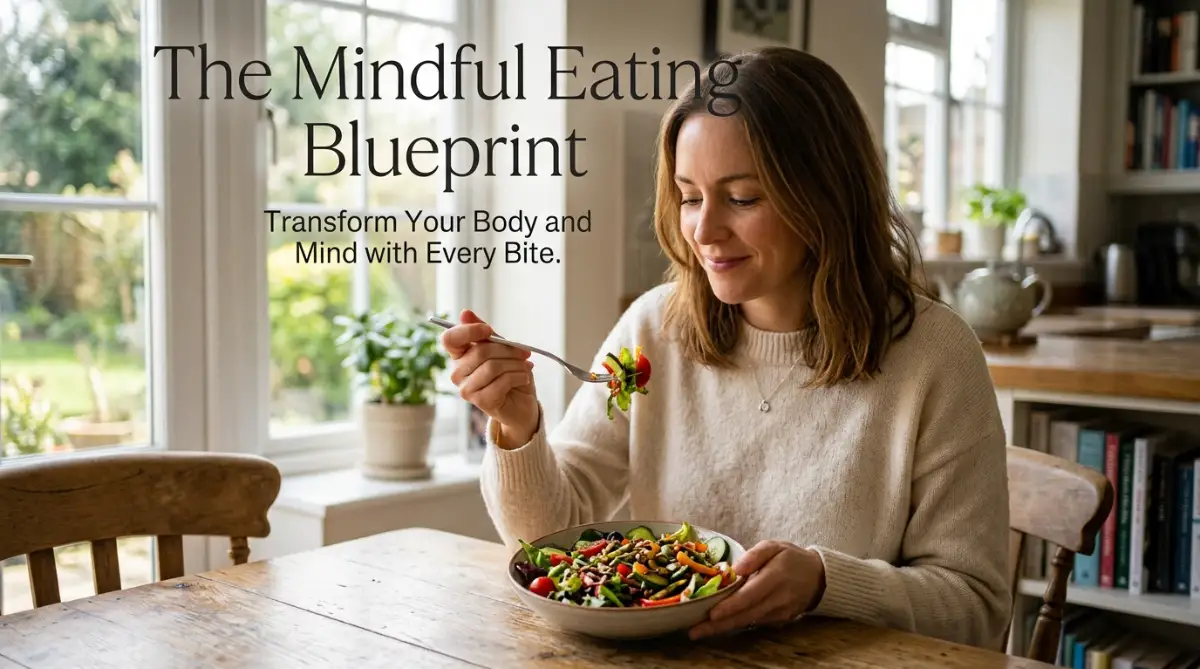
Many people think mindful eating is a fancy diet or a set of strict rules. It is actually the opposite. Mindful eating is about freedom and awareness.
It means being fully present while you are eating. You notice the colors, the smells, the textures, and the flavors of your food. You pay attention to how your body feels before, during, and after a meal.
When we eat mindfully, we stop judging ourselves. We don't label foods as "good" or "bad." Instead, we focus on how food makes us feel in the long run.
The Science Behind the Practice
Your brain and your stomach have a very special relationship. There is a nerve called the vagus nerve that sends signals between them. It takes about 20 minutes for your stomach to tell your brain that it is full.
If you eat your lunch in five minutes while checking emails, your brain never gets the message. This is why you can eat a huge meal and still feel like you want a dessert. You aren't actually hungry; your brain just hasn't processed the food yet.
By slowing down, you give your hormones a chance to work. Two main hormones, Leptin and Ghrelin, control your hunger and fullness. Mindful eating helps these hormones balance out naturally.
How to Start Listening to Your Body’s Natural Hunger Cues
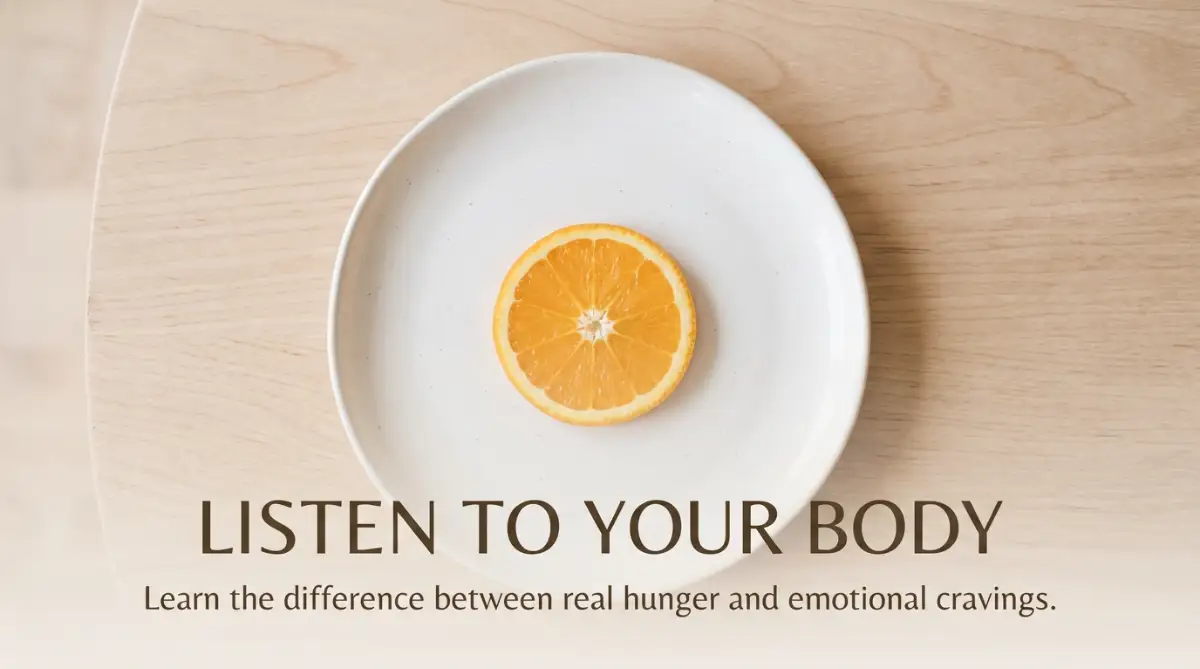
The first step in this journey is learning to tell the difference between "stomach hunger" and "head hunger."
Stomach Hunger comes on slowly. You might feel a little growl or a drop in energy. It can be satisfied by almost any healthy food.
Head Hunger (or emotional hunger) happens suddenly. It usually craves something very specific, like chocolate or pizza. It often comes when we are bored, sad, or stressed.
The Hunger Scale Trick
I started using a simple scale from 1 to 10. 1 is "starving" and 10 is "so full I feel sick."
Before I take a single bite, I ask myself, "Where am I on the scale?" If I am at a 3 or 4, I eat. If I am at a 6 because I am just bored, I wait.
This simple check-in changed everything for me. It stopped me from eating just because the clock said it was lunchtime. I started eating because my body actually needed fuel.
I realized that I used to eat just to fill a void in my day. Once I started asking myself how I really felt, the urge to snack on junk food slowly started to fade away.
Building Your Personal Mindful Eating Environment
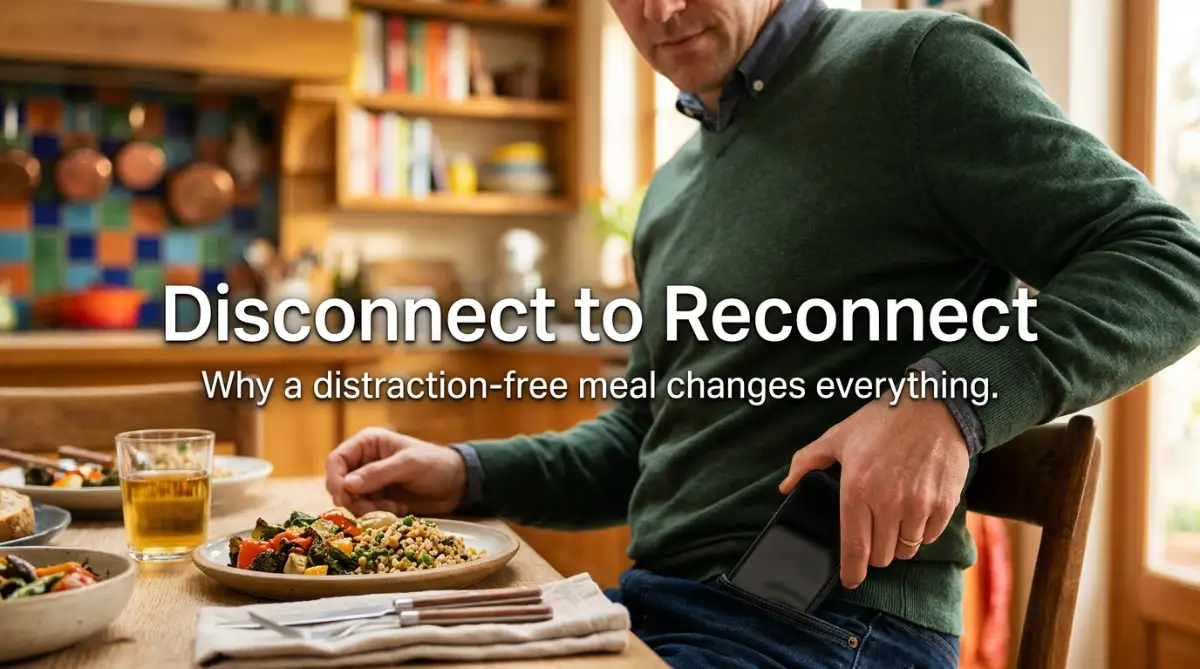
To succeed, you need to set your environment up for success. You cannot be mindful if your phone is buzzing every two seconds.
Create a peaceful space for your meals. Even if it is just a small corner of your desk, clear away the mess. Use a nice plate and a real fork.
Treat your meal like an important appointment. You wouldn't check Facebook in the middle of a meeting with your boss, right? So don't do it while you are nourishing your body.
Remove the Distractions
Turn off the TV. Put your phone in another room. When you eat, just eat.
At first, this will feel very strange. You might even feel a little bit bored. That is okay. That boredom is where the magic happens.
Without the screen, you start to notice the taste of your food. You might realize that those crackers you loved actually taste like cardboard. Or you might discover that a simple apple tastes incredibly sweet.
If you want to see how much your phone is ruining your digestion, check out this amazing explanation of the mind-body connection.
Watching this will help you understand why your brain needs to be focused on your food to stay healthy.
The Five Senses Exercise for Every Meal
This is a very practical way to stay grounded while you eat. I try to do this at least once a day.
- Sight: Look at your food. What colors do you see? Is it bright green, deep red, or golden brown? Notice the shape and the way it is arranged on the plate.
- Smell: Take a deep breath. Can you smell the spices? Is there a hint of garlic or a sweet scent of cinnamon? Smelling your food actually starts the digestion process in your mouth.
- Touch: Notice the texture. Is it crunchy, smooth, or chewy? How does it feel when you pick it up or when the fork enters it?
- Sound: Yes, even food has a sound! Listen to the crunch of a carrot or the sizzle of a hot dish.
- Taste: This is the best part. Take a small bite. Let it sit on your tongue for a second. Is it salty, sweet, sour, or bitter? How does the flavor change as you chew?
Why Slowing Down is Your New Superpower
We are always in a rush. We rush to work, rush home, and rush through our meals. But your body wasn't designed to process food in a hurry.
When you eat fast, you swallow air. This leads to gas and bloating. More importantly, you don't chew your food enough. Your stomach has to work ten times harder to break down big chunks of food.
The "Put the Fork Down" Rule
One of the best habits I picked up was putting my fork down between every single bite.
I take a bite, put the fork on the table, and chew completely. I don't pick the fork back up until my mouth is empty. This naturally slows the meal down.
It might take you 20 minutes to finish a meal instead of 5. That is perfect. This is the 20-minute window your brain needs to feel satisfied.
Overcoming the "Clean Plate Club" Mentality
Most of us were told as children that we must finish everything on our plate. Our parents meant well, but this taught us to ignore our fullness.
Mindful eating means you have permission to stop whenever you want. You don't have to finish the fries just because they are there. You don't have to eat the crust if you don't want it.
It is okay to leave food behind. You can save it for later or put it in the compost. Putting it in your body when you are already full is just using your body as a trash can. You deserve better than that.
Dealing with Cravings Without the Guilt
We all get cravings. Sometimes you just really want a cookie. And guess what? Mindful eating allows you to have that cookie!
The difference is how you eat it. Instead of eating five cookies while standing up in the kitchen, you take one cookie. You sit down. You eat it slowly and enjoy every single crumb.
Often, when we really taste our "treats," we find that one is enough. We feel satisfied because we actually experienced the flavor.
When we hide or eat in a hurry, we don't feel satisfied. That is when we go back for more and more. Mindful eating removes the "forbidden" feeling of food.
The Role of Water and Hydration
Sometimes our brains get confused. We think we are hungry, but we are actually just thirsty.
Drinking a glass of water before a meal can help you stay mindful. It calms the stomach and helps you approach the food with less urgency.
I found that by staying hydrated throughout the day, my "false" hunger pangs almost disappeared. It made it much easier to wait for real, physical hunger.
Practicing Gratitude for Your Food
Before you start eating, take three seconds to be thankful. Think about where the food came from.
Think about the farmer who grew the vegetables. Think about the sun and the rain that helped the plants grow. This small act of gratitude shifts your mind from a state of "consuming" to a state of "receiving."
It makes the meal feel more special. When something is special, we naturally treat it with more respect. We eat slower. We enjoy more.
Be Kind to Yourself on This Journey
You are not going to be a perfect mindful eater overnight. There will be days when you are stressed and you eat a bowl of cereal at midnight while standing over the sink.
That is okay. Don't beat yourself up.
The goal isn't perfection; it is awareness. If you realize you were eating mindlessly, just notice it. Say to yourself, "I was eating pretty fast there. I'll try to slow down for the last few bites."
One "bad" meal doesn't ruin your progress. Every single bite is a new chance to start again. This journey is about building a better relationship with yourself, one meal at a time.
I used to get so angry at myself when I slipped up. I would say, "Well, I already ruined the day, I might as well eat everything." Now, I just take a breath and focus on the next moment. It is much more peaceful this way.
Summary of the Mindful Approach
By now, you can see that mindful eating is a holistic way of living. It isn't just about the food. It is about how you treat your body and your time.
When you practice these steps, you will notice a change in your energy. You will feel less bloated. You will likely find that you naturally reach for healthier foods because they make your body feel better.
This is the foundation of healthy food habits. It isn't about restriction. It is about connection.
In the next part of this guide, we will look at how to handle social situations and how to meal prep with a mindful mindset. But for today, just focus on your next meal. Sit down, breathe, and enjoy the taste.
Taking Your Food Awareness to the Next Level
Now that we have covered the basics, I want to share some deeper secrets I learned on my own path. Mastering the way we eat isn't just about slowing down; it is about changing how we think about fuel.
I found that the most powerful thing you can do is a "Body Scan" before you even touch your plate. I take thirty seconds to close my eyes and feel my stomach.
Am I actually empty, or am I just looking for a break from work? Often, I realized my body was just craving a stretch or a glass of water. When you check in with yourself like this, you stop the autopilot before it starts.
This type of mental check-in is very similar to how you would master your mind to stay calm during a busy day. If your mind is racing, your eating will be racing too.
The Power of the First Three Bites
I want to tell you about the "First Three Bites" rule that changed my life. Scientists have found that the highest level of pleasure from food comes in the very beginning.
By the time you reach the tenth bite, your taste buds are already getting bored. I started focusing 100% of my energy on just those first three bites.
I chew them until they are liquid, noticing every tiny spice. This satisfies my brain's need for flavor very quickly. Usually, this helps me feel happy with a much smaller portion of food.
According to research from the Center for Mindful Eating, this focus helps reduce the "reward-seeking" behavior in our brains. It means you aren't just eating to get a hit of dopamine; you are eating for nourishment.
Navigating Social Dinners Without Stress
One of the hardest things for me was eating out with friends. Everyone is talking, the music is loud, and the food comes in huge portions.
I used to feel like I had to keep up with everyone else's pace. Now, I use a "Social Shield" strategy. I make sure to be the person who talks the most while the food is hot.
If I am talking, I am not chewing. This naturally makes me the slowest eater at the table. I also try to keep my hands in my lap while I am listening to a friend.
It keeps me from mindlessly picking at appetizers while I am distracted by the conversation. This way, I can enjoy the company and the food without feeling like I lost control.
Connecting Your Daily Routine to Your Hunger
I also noticed that my eating habits were tied to how I slept. When I was tired, my body screamed for sugar and carbs.
I had to fix my sleep to fix my stomach. If you are struggling with energy, you might want to look at 7 easy daily habits to transform your sleep quality forever.
When you are well-rested, your brain can make better choices. You won't feel that desperate need for a "sugar fix" at 3:00 PM.
I also started a ritual of why your morning routine never sticks and how a calm start helps you stay mindful all day. If you start your morning in a rush, you will likely spend the rest of the day "reacting" to food instead of choosing it.
The Hidden Traps That Can Ruin Your Progress
Even when we have the best intentions, we can fall into traps. I want to warn you about the "Perfectionism Trap."
I used to think that if I ate one thing mindlessly, I had failed for the entire week. This led to a "downward spiral" where I would just give up and eat everything in sight.
This is a dangerous way to think. Mindfulness is not a test you pass or fail. It is a skill you practice.
If you realize you just ate a whole bag of cookies without thinking, don't get angry. Just notice it. Say, "Okay, I was really stressed, and I used food to cope."
Then, move on to the next moment. Guilt is the enemy of healthy habits. Guilt makes you want to eat more to feel better.
Using Food as a Reward or Punishment
Another big mistake is treating food like a prize. "I went to the gym, so I deserve this cake."
When you do this, you make the cake the "hero" and the gym the "villain." It makes healthy choices feel like a chore.
Instead, try to see healthy food as a gift to your body. You are eating a salad because it makes your skin glow and gives you energy. You aren't doing it to "earn" a cookie later.
This change in your inner voice is very important. It takes the pressure off. You stop fighting with yourself and start working with yourself.
The Distraction Excuse
Many people tell me, "I don't have time to sit and eat for twenty minutes." I used to say this too.
But I realized I had plenty of time to scroll through social media for an hour. We make time for what we value.
If you don't value your mealtime, your body won't value the food you give it. Even if you only have ten minutes, spend those ten minutes truly eating.
Don't try to "multitask" by eating and working at the same time. Research from Harvard Health shows that distracted eaters consume much more food than those who focus.
Your brain needs to see the food to record that you have eaten. If your eyes are on a screen, your brain thinks you are still hungry. This leads to that "money leak" feeling where you spend too much on extra snacks you don't even need.
Speaking of saving money, learning to be happy with less food is one of the easy ways to slash your household spending. You will be surprised how much you save when you stop buying "filler" foods.
Mastering the Mindset for Long-Term Success
To make this a permanent part of your life, you need to change your environment. I stopped keeping "trigger foods" in the house.
If I really want a treat, I make myself go out and buy a single serving of it. This adds a "pause" between the craving and the action.
Most of the time, I realize I don't want it enough to leave the house. This isn't about restriction; it is about making the right choice easier.
I also started practicing better posture while sitting at the dinner table. It sounds simple, but sitting up straight opens up your digestive system.
It makes you feel more alert and present. When you slouch, you feel sleepy and disconnected. This small physical change can make a huge difference in how you experience a meal.
The "Why" Behind Your Hunger
I want you to start asking yourself one question every time you feel hungry: "What do I truly need right now?"
Sometimes the answer is food. But often, the answer is a hug, a nap, or a conversation.
We try to solve non-food problems with food. It is like trying to fix a broken car by putting more gas in it. The gas won't fix the engine.
If you are stressed about money or a personal loan mistake, eating a pizza won't solve the debt. It will just give you a stomach ache on top of your financial stress.
By identifying the real problem, you can find the real solution. This is how you develop true emotional intelligence around food.
Your Daily Action Plan for a Healthier Life
I believe that anyone can change their relationship with food. It doesn't matter how long you have been struggling.
Start small. Pick just one meal a day to eat mindfully. Maybe it is your breakfast or your afternoon snack.
Commit to sitting down and removing all distractions for just that one meal. Once you see how good it feels, you will naturally want to do it more often.
I remember the first time I really tasted a strawberry after I started this practice. It was like I had been eating in black and white, and suddenly everything was in color.
That joy is available to you too. You don't need a special diet or a expensive coach. You just need to be present with yourself.
You have the power to change your habits and your health. Every meal is a fresh start. Every bite is a choice.
I want you to remember that your body is your only true home. Treat it with the respect and love it deserves. When you eat with awareness, you are saying "I matter" to yourself.
I am so excited for you to start this journey. I know it can feel scary to face your habits, but the freedom on the other side is worth every bit of effort. I believe in you, and I know you can build a life where food is a source of joy, not stress.
Common Questions About Mindful Eating
Can I still watch TV while I eat sometimes?
It is best to avoid it, but we are all human. If you do watch TV, try to take "mindfulness breaks." Put your fork down during commercials and check in with your stomach to see if you are full.
How long does it take to see results?
You will feel the mental benefits, like less guilt, almost immediately. Physical changes, like better digestion and weight balance, usually take a few weeks of consistent practice to notice.
What if my family doesn't want to eat mindfully?
You can still practice it yourself! You don't need everyone else to be quiet for you to be aware. Lead by example, and they might start slowing down just by watching you.
Is mindful eating the same as a diet?
No, it is a behavior, not a food list. You can eat any food mindfully. It is about how you eat, which naturally leads to better food choices over time.
Does it help with bloating?
Yes, very much! By chewing your food more and not swallowing air while rushing, you reduce the stress on your digestive system, which helps stop bloating.
Disclaimer: The information in this article is for educational purposes only and is not intended as medical advice. Always consult with a healthcare professional or a registered dietitian before making significant changes to your diet or lifestyle, especially if you have a history of disordered eating or medical conditions.
Final Thought:
I used to think that I was broken because I couldn't stop eating when I was stressed. I realized I wasn't broken; I was just disconnected. Once I started listening to my body, the "hunger" I couldn't satisfy finally went away. I truly hope you find that same peace.