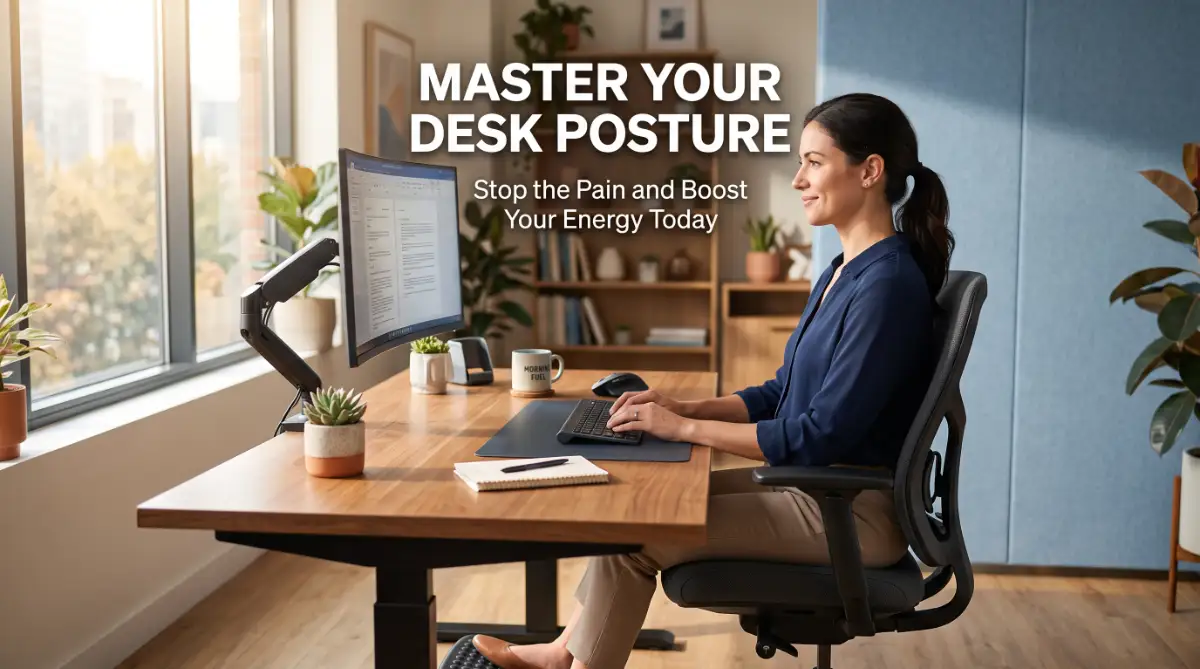
The Hidden Cost of Your Daily Desk Routine
Last month, I woke up feeling like my back was eighty years old. I couldn't even bend over to tie my shoes without a sharp pain shooting through my spine.
I finally realized that my long hours at a messy desk were slowly breaking my body down. I knew I had to change something before the damage became permanent.
I remember waking up last Tuesday morning and feeling like my lower back was made of old, rusted gears. As I tried to stand up and reach for my coffee, a sharp pinch shot through my spine.
It was a wake-up call I couldn't ignore anymore. For months, I spent eight to ten hours a day hunched over my laptop, thinking I was "working hard."
My neck always felt stiff, and my shoulders seemed to stay permanently raised toward my ears. I felt tired all the time, even when I slept enough. I realized that my desk setup was slowly breaking my body down. I wasn't just tired; I was physically hurting because of how I chose to sit.
You might be feeling the same way right now. Maybe you have a dull ache in your neck that won't go away. Or perhaps your wrists feel sore after just an hour of typing. These are not just small annoyances; they are your body’s way of screaming for help.
When we sit poorly, we aren't just "slouching." We are putting massive pressure on our spine and lungs. This makes it harder to breathe deeply and lowers our energy levels. It affects our mood, making us feel grumpy and stressed before the workday even ends.
Living with chronic pain is exhausting. It takes away your focus and makes you less productive. You start to dread sitting down at your desk because you know how you will feel later.
Your mental peace vanishes when every movement reminds you of your discomfort.
It is easy to think that this is just part of the job. We tell ourselves that everyone has back pain. But that is a lie we tell to stay comfortable in our bad habits. You deserve to work without feeling like your body is failing you.
Let’s look at how we can change this story. It doesn't require a total life overhaul or a thousand-dollar chair. It starts with small, smart changes to how you interact with your workspace. We are going to fix this together, one step at a time.
Building Your Foundation: The Science of Sitting Right
To fix your posture, you first need to understand your foundation. Most people think posture is about sitting "straight" like a soldier. In reality, it is about keeping the natural curves of your spine in place. Your back is shaped like an "S," not a "I," and we need to support that shape.
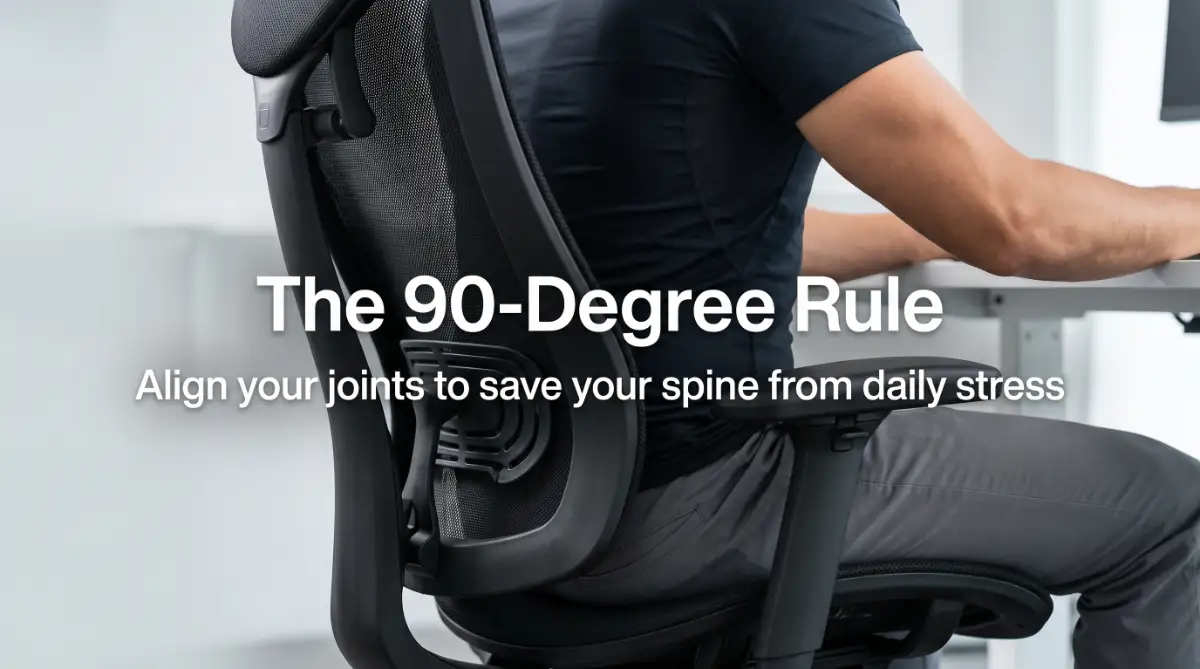
The Magic of the 90-Degree Rule
One of the best things I ever learned was the 90-degree rule. This simple trick changed everything for my hip and knee pain. You want your hips, knees, and ankles to all sit at about a 90-degree angle. This keeps your weight distributed evenly so one part of your body doesn't take all the heat.
If your chair is too high, your feet dangle. This pulls on your lower back and causes that familiar ache. If your chair is too low, your knees are higher than your hips, which cramps your pelvic area. Find that middle ground where your feet stay flat on the floor.
Support Your Lower Back or Pay the Price
Your lower back, or the lumbar region, needs constant support. Most office chairs have a gap right where your back should rest.
I used to ignore this until I started feeling a deep throb in my spine every evening. My biggest mistake was thinking I could hold myself up with muscle power alone.
If your chair doesn't have built-in support, use a small pillow or a rolled-up towel. Place it in the curve of your lower back. This tiny change prevents you from slouching forward when you get tired. It does the hard work of holding you up so your muscles can relax.
Eye Level is the Key to Neck Peace
Take a look at where your screen is right now. Are you looking down? If you are using a laptop on a flat table, the answer is probably yes.
Looking down puts about 60 pounds of pressure on your neck. That is like carrying a large dog on your shoulders all day.
Raise your monitor or laptop so the top third of the screen is at eye level. Use a stack of books or a dedicated stand. When your eyes are level, your head stays balanced over your shoulders. This stops the "tech neck" that causes those nasty tension headaches.
The Golden Rule for Your Arms and Wrists
Your keyboard and mouse should be at a height where your elbows are at your sides. Your forearms should be parallel to the floor. This prevents you from reaching forward, which tightens your chest and rounds your shoulders. Keeping everything close to your body is much more relaxing.
I used to think I needed a thousand-dollar chair to feel better, but my biggest mistake was actually the height of my screen. Once I stacked a few old books under my laptop to bring it to eye level, my neck pain almost vanished overnight. Sometimes the simplest fixes are the ones that actually save your health and keep you moving.
Pro Tip: My Footstool Realization
I spent years struggling with back pain because my desk was just a bit too high for my height. Instead of buying a new desk, I bought a cheap footstool. This allowed me to raise my chair to the right arm height while keeping my feet supported. It was a $15 fix for a $500 problem!
Watch This to See Posture in Action
Sometimes seeing the movement is better than just reading about it. This short video shows exactly how to align your body for maximum comfort and zero pain throughout your workday.
Ready to see these posture tips in action? Watch this simple breakdown to master your desk setup and finally say goodbye to that nagging back pain for good.
The Rhythm of Movement: Breaking the Static Hold
Even with the perfect chair and desk, sitting still for hours is bad for you. Our bodies were made to move, not to stay frozen in one spot. When we stay still, our blood flow slows down and our muscles get stiff. This is why you feel "heavy" after a long afternoon of work.
The Power of Micro-Breaks
I used to think I was being productive by sitting for four hours straight. I was wrong. My brain would get foggy, and I would make more mistakes. Now, I use the "20-20-20 rule" for my eyes and a "30-minute rule" for my body. Every 30 minutes, I stand up for just 60 seconds.
You don't need a full workout. Just stand up, reach for the ceiling, and shake out your arms. This simple act resets your nervous system. It tells your muscles they can stop "holding" your weight and can relax for a moment. You will find that you return to your work with much more focus.
Walking Meetings and Phone Calls
We often think we have to be at our desks to be working. But many tasks can be done while moving. If you have a phone call that doesn't require looking at a screen, walk around the room. Pacing while talking helps you think better and keeps your joints lubricated.
I started doing this for my morning check-ins. Not only did my back feel better, but I also felt more creative. Movement pumps oxygen to your brain. It is the best natural "energy drink" you can find, and it is completely free.
Shoulder Blade Squeezes for Instant Relief
When we type, our shoulders naturally want to roll forward. This creates a "caved-in" chest. To fight this, try shoulder blade squeezes. Simply pull your shoulder blades back and down as if you are trying to tuck them into your back pockets.
Hold this for five seconds and repeat it five times. You will feel your chest open up immediately. It feels like taking a deep breath after being underwater. Do this every time you finish an email or a specific task. It builds the "posture muscle" memory you need.
Optimizing Your Workspace Environment
Your physical environment dictates your posture more than you think. If your desk is messy, you might lean to one side to find space. If your lighting is bad, you will lean forward to see the screen better. A healthy posture requires a healthy workspace.
Clear the Clutter for Better Alignment
Keep the items you use most—like your phone, water bottle, or notepad—within easy reach. If you have to reach across the desk constantly, you are twisting your spine. Over hundreds of repetitions, this twisting causes muscle imbalances and pain on one side of your body.
Arrange your desk in a semi-circle. Everything should be an arm's length away. This keeps your movements centered and your spine neutral. It also makes you feel more organized and less stressed, which naturally helps you sit more comfortably.
Lighting and Eye Strain
We don't often connect our eyes to our back pain, but they are deeply linked. If there is a glare on your screen, you will tilt your head to avoid it. This puts your neck at an awkward angle. Use soft, indirect lighting and position your monitor to avoid reflections from windows.
Also, remember to blink! When we stare at screens, we blink less, which makes our eyes dry and tired. Tired eyes lead to a tired head, which leads to a slumped back. It is all connected in one big circle of health.
Hydration as a Movement Trigger
Here is a secret trick I use: I drink a lot of water. Why? Because it forces me to get up and walk to the bathroom or the kitchen. It is a built-in timer for movement. Plus, staying hydrated keeps the discs in your spine healthy.
Your spinal discs are mostly water. When you are dehydrated, they become thinner and less effective at cushioning your bones. Drinking water isn't just for your skin or energy; it is literally padding for your back. It makes sitting much more comfortable over long periods.
The Mental Shift: Posture as Self-Care
Finally, we need to stop looking at posture as a "chore." It is not something you "have" to do; it is something you do for yourself. When you sit well, you are telling yourself that your health matters. You are investing in your future self who won't have to deal with chronic pain.
I used to feel guilty for taking breaks or adjusting my chair. I thought I was wasting time. Now, I see it as maintenance. Just like a car needs oil, your body needs alignment. You wouldn't drive a car with a flat tire for a hundred miles, so don't force your body to work while it is out of alignment.
Check-In With Yourself
Set a silent alarm on your phone every hour. When it goes off, don't just ignore it. Ask yourself: "Where are my shoulders? Am I breathing? Are my feet flat?" This five-second check-in is the most powerful tool you have.
Over time, you won't need the alarm. Your body will start to crave the correct position. You will feel the "wrongness" of slouching and naturally fix it. This is the goal—to make good posture your default state instead of a constant struggle.
Embracing the Journey
Don't expect to have perfect posture tomorrow. You have spent years building bad habits, and it will take time to build new ones. Some days you will find yourself hunched over again. That’s okay. Just sit back, take a breath, and reset.
Every minute you spend in a good position is a win for your health. You are protecting your nerves, your bones, and your mental clarity. By following these steps, you are taking control of your workday. You are no longer a victim of your desk; you are the master of it.
Your back will thank you, your energy will return, and you will find that working isn't nearly as painful as it used to be. You have the tools now. It is time to sit up, breathe deep, and work with confidence.
Mastering the Art of Dynamic Desk Movement
I used to think that buying an expensive chair was the finish line. I thought once I clicked "buy" on that fancy ergonomic seat, my back pain would vanish forever. I was very wrong because posture is not a product you buy; it is a skill you practice every hour.
To truly protect your spine, you need to understand Active Sitting. This means your muscles are still doing a little bit of work to keep you balanced instead of just collapsing into the chair. Think of it like a pilot flying a plane; they make small, constant adjustments to stay on course.
One pro secret is the "Shoulder Reset" you can do without even stopping your work. Gently pull your shoulder blades back and down as if you are trying to put them in your back pockets. Hold this for a few seconds while you are reading an email.
I found that doing this five times an hour stopped that burning feeling in my upper back. It also helps to master your mind because stress often makes us tighten our shoulders without noticing. When you stay calm, your muscles stay relaxed, making it much easier to sit correctly.
Another advanced tip is to focus on your Visual Hygiene. Your body follows your eyes, so if you are squinting at small text, your neck will naturally lean forward. This "turtle neck" position is a disaster for your cervical spine.
Try increasing your browser zoom to 125% so you can sit back and still see clearly. This small change in your digital setup can have a massive impact on your physical health. When you stop leaning in, your spine stays in its natural "S" curve.
If you struggle to stay focused on these changes, you might want to use artificial intelligence to set smart reminders. There are simple tools that can ping you every thirty minutes to remind you to check your alignment. These small nudges help turn a new habit into a permanent lifestyle.
Don't forget about your feet, as they are the foundation of your entire sitting posture. If your feet are tucked under your chair or crossing each other, your hips will tilt. This tilt travels up your spine and causes lower back pain.
Keep your feet flat and slightly apart to create a stable base for your weight. If your chair is too high, use a small footrest or even a stack of old books. This keeps the blood flowing and stops your legs from feeling heavy or numb by the end of the day.

The Sneaky Habits Ruining Your Progress
We often focus so much on sitting "straight" that we make a huge mistake called Postural Rigidity. This is when you sit so stiffly that your muscles actually get tired and sore from the effort. Your body was made for movement, not for being a statue.
The biggest trap I see people fall into is the "One-Side Lean." Do you always lean on your left elbow while thinking? Or do you keep your phone between your ear and shoulder while typing?
These tiny, repetitive movements pull your skeleton out of balance. Over months, one side of your back becomes much stronger and tighter than the other.
This imbalance is exactly what leads to those sharp, sudden pains when you try to pick something up.
Another silent killer is Crossing Your Legs for long periods. It feels comfortable in the moment, but it rotates your pelvis and puts huge pressure on your lower vertebrae. I used to do this all day until I realized it was the main reason for my hip pain.
If you feel the urge to cross your legs, it usually means your body is bored and needs to move. Instead of crossing your legs, stand up and walk for sixty seconds. This resets your nervous system and gets the blood moving again.
Many people also forget that their sleep affects how they sit the next day. If you don't transform your sleep quality, your muscles won't have the energy to support you. Tired muscles always default to slouching because it takes less effort.
Slouching might feel easy, but it is actually exhausting for your internal organs. It compresses your lungs, which means you get less oxygen and feel more tired. It is a cycle of fatigue that starts with how you choose to sit at nine in the morning.
I also want to warn you about the "Laptop Couch Trap." Working from a sofa is very tempting, but it is the worst thing you can do for your posture. Your neck is forced to look down, and your lower back has zero support.
Save the couch for relaxing and keep your work at a desk where you can control the environment. If you must work from a different spot, make sure your screen is still at eye level. Your body will thank you for setting these boundaries.
Taking Charge of Your Long-Term Comfort
The road to a pain-free life is built on consistency, not perfection. You don't need to be perfect every second of the day. You just need to be aware of your body and make corrections when you notice things going wrong.
Think of your posture like a daily budget for your health. Every time you sit correctly, you are making a deposit into your wellness account. Every time you slouch for an hour, you are taking a withdrawal.
By the end of the week, you want your "wellness balance" to be in the positive. This mindset takes the pressure off and makes the process feel more like a game than a chore. It helps you stay motivated even on busy days when you have a lot of deadlines.
I started seeing real results when I stopped treating my desk like a prison. I began to see it as a place where I could practice being healthy. I added a small plant and better lighting to make the space feel inviting.
When you like your workspace, you are less likely to hunch over in stress. You tend to sit taller and feel more confident in your work. This mental shift is just as important as the physical chair you sit on.
Research from high-authority sources like the Mayo Clinic suggests that even small movements can reduce the risks of prolonged sitting. They recommend "active breaks" to keep the metabolic rate higher. You can learn more about these health standards on the official Mayo Clinic website.
If you are a student or someone learning new skills, posture is even more important. It helps you stop wasting time because you aren't constantly distracted by a sore neck. You can focus on the screen and absorb information much faster when you aren't in pain.
Good posture also improves your voice and how you come across in meetings. When your chest is open and your spine is long, you sound more authoritative and clear. People listen more closely to someone who looks and sounds physically balanced.
Your health is the most valuable asset you own, much like your financial future. You have to protect it with smart habits and regular maintenance. Don't wait for a major injury to start caring about how you sit.
Start today by making one small adjustment to your chair or monitor height. Tomorrow, focus on keeping your feet flat. By the end of the month, these actions will become automatic. You will wonder how you ever managed to work the old, painful way.
Common Questions About Desk Posture
How often should I actually stand up?
You should aim to stand up or move every 30 to 45 minutes. Even a 60-second stretch can reset your posture and improve blood flow. I personally set a timer on my phone to make sure I don't get lost in my work for hours.
Can a standing desk solve all my posture problems?
A standing desk is a great tool, but standing still for too long can also cause leg and back strain. The key is to switch between sitting and standing throughout the day. Your best posture is always your "next" posture, meaning you should keep moving.
Is it okay to use a laptop on my lap for a short time?
Using a laptop on your lap forces your neck into a deep curve, which is never ideal. If you must do it, place a firm pillow under the laptop to raise it higher. Try to limit this to 15 or 20 minutes before returning to a proper desk setup.
What is the best way to stop my shoulders from hunching?
The best way is to strengthen your upper back muscles and stay mindful of your chest. Imagine a string pulling the top of your head toward the ceiling. This naturally drops your shoulders and opens up your ribcage for better breathing.
Should I use a posture corrector brace?
Braces can be helpful for short periods to remind you where your shoulders should be. However, relying on them too much can make your natural muscles weak. It is much better to train your own muscles to hold you up through simple exercises and awareness.
Your Path to a Pain-Free Workday
Fixing your posture is one of the kindest things you can do for yourself. It is about more than just looking good; it is about feeling strong and energetic every single day. When you take care of your spine, you are taking care of your entire nervous system.
I want you to remember that your body is incredibly resilient and capable of change. Even if you have been sitting poorly for years, you can start feeling better in just a few days of mindful practice. The ache in your back doesn't have to be your permanent shadow.
I really hope you take these tips and try them out right now as you finish reading this. My own journey from constant back pain to feeling light and flexible started with just one small chair adjustment. You have the power to change how you feel, so sit up tall and start your new healthy habit today!
I spent years hurting because I ignored the small signs my body was sending me, but I feel like a new person now. You don't have to live with that constant ache in your shoulders anymore.
Please, just try one small change today—even if it is just sitting back in your chair—because your future self will be so happy you did.
Disclaimer: The information provided in this blog post is for educational and informational purposes only. It is not intended as a substitute for professional medical advice, diagnosis, or treatment. Always seek the advice of your physician or other qualified health provider with any questions you may have regarding a medical condition or physical pain. Never disregard professional medical advice or delay in seeking it because of something you have read on this website.