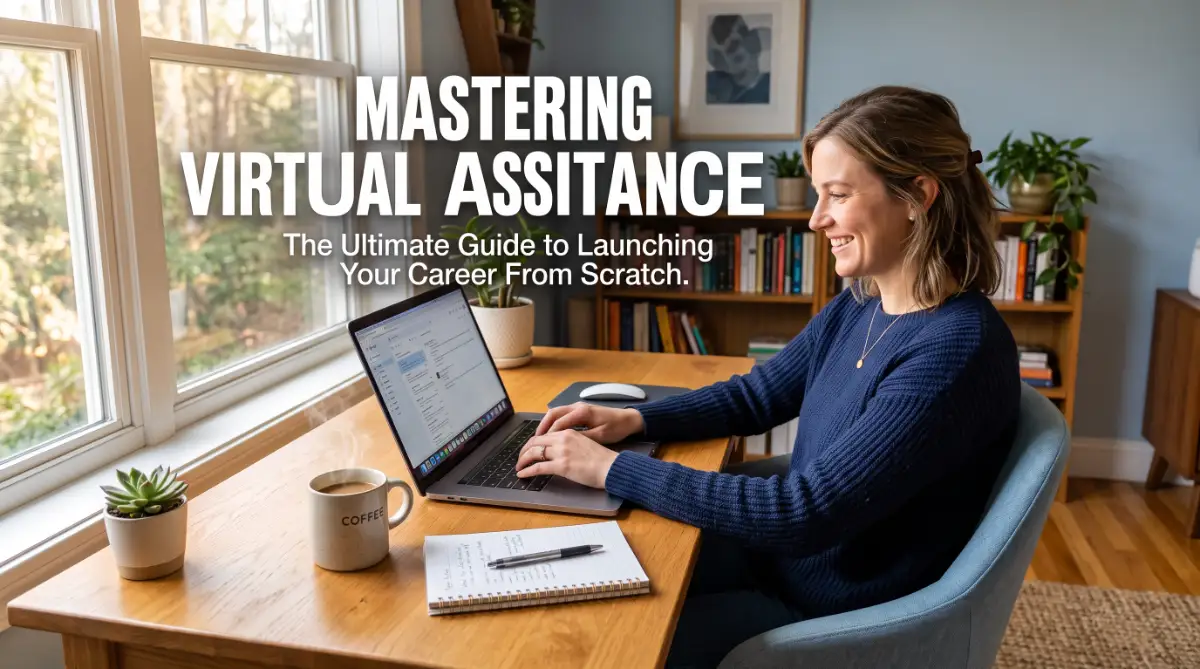
Why Most Talented Freelancers Stay Broke and Unseen
I remember sitting at my small desk at 2 AM, staring at another rejection email for a $50 job. I had the skills, but my bank account was empty and I felt totally invisible. I was working harder than ever, yet I was barely making enough to pay my bills.
It wasn't until I stopped acting like a "worker" and started building a real portfolio that the $5,000 checks actually started appearing in my inbox.
You have the skills, the passion, and the drive to succeed in the online world. Yet, you find yourself stuck in a cycle of low-paying gigs and endless "ghosting" from potential clients.
It feels like you are screaming into a void while others, with perhaps less talent, are landing five-figure contracts.
The truth is painful: the market does not care how good you are if you cannot prove it in seconds. Most freelancers spend months perfecting their craft but only minutes throwing together a mediocre CV or a messy folder of work.
This disconnect is exactly why $5k monthly clients are ignoring your messages and hiring your competitors instead.
The Hidden Barriers to Your Freelance Success
Many people think that working harder is the secret to getting paid more. They take every low-paying job they can find, hoping it will eventually lead to something bigger.
This strategy rarely works and usually leads to complete burnout.
- The Sea of Sameness: You look exactly like every other person on Upwork or LinkedIn because your presentation is generic.
- Information Overload: You follow too many "gurus" who give conflicting advice about what a portfolio should actually look like.
- Lack of Proof: You tell clients you are "the best," but you provide zero evidence that you have solved problems similar to theirs.
- Poor First Impressions: Your links are broken, your images are low-quality, or your website takes too long to load on a mobile phone.
- Fear of Nicheing: You try to offer everything to everyone, which makes you look like a "jack of all trades" and a master of none.
How Invisible Portfolios Destroy Your Confidence
When you don't have a professional way to showcase your work, it starts to eat away at your mental peace. You begin to doubt if you are actually good at what you do, even if you are an expert.
- Imposter Syndrome: Seeing others win while you struggle makes you feel like a fraud who doesn't belong in the high-ticket space.
- Financial Stress: Living project-to-project without any high-paying retainers keeps you in a constant state of anxiety and fear.
- Loss of Motivation: After getting rejected fifty times, the spark that made you start your online journey begins to fade away.
- Social Isolation: Watching your friends move forward while you stay stuck creates a sense of loneliness and professional shame.
The reality is that a $5k client is not looking for a "worker." They are looking for a partner who can solve a specific problem and bring a massive return on their investment.
If your portfolio looks like a grocery list of skills, you will never be seen as that partner. You need a shift in strategy that focuses on value, authority, and professional storytelling.
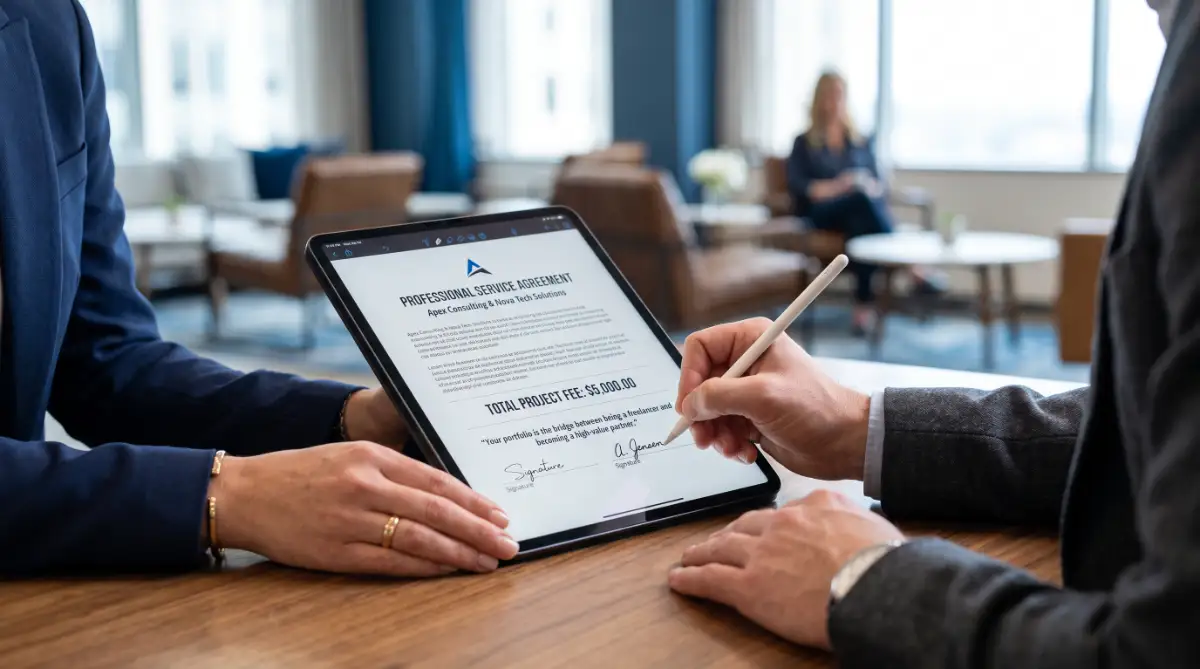
The Blueprint for a High-Authority Digital Portfolio
Building a portfolio that commands high fees is not about having a hundred items on a page. It is about curating a narrative that makes a client feel safe spending a lot of money with you.
You want them to look at your work and think, "This is exactly what I need."
Choosing Your Million-Dollar Niche
The first step to a $5k portfolio is deciding who you are actually talking to. High-paying clients do not hire generalists; they hire specialists who understand their industry inside and out.
If you are a graphic designer, don't just say you "make logos." Say you "build visual identities for eco-friendly skincare brands."
This immediately sets you apart from the thousands of people charging $50 for a logo. You become a premium choice because you understand the specific market and the customers of that skincare brand.
Focus on the outcome, not just the output. A client doesn't want a 1,000-word blog post. They want a post that ranks on Google and brings in 500 new leads. When your portfolio reflects this mindset, your perceived value triples instantly.
Curating Your Best Work (The "Less is More" Rule)
One of the biggest mistakes you can make is including every single project you have ever done.
If you show ten amazing pieces of work and two average ones, the client will only remember the average ones. Quality always beats quantity in the world of high-ticket sales.
Select three to five projects that represent the type of work you want to do more of. These should be your "hero" projects—the ones where you achieved the best results or faced the most interesting challenges.
For each project, don't just show a screenshot. Tell a story using the Challenge-Action-Result framework. What was the problem the client faced? What specific steps did you take to fix it? What was the final result (more sales, more traffic, better branding)?
Building Trust Through Social Proof
A high-paying client is taking a risk by hiring you. Your job is to minimize that risk as much as possible through social proof. This is where testimonials and case studies become your most powerful weapons.
If you don't have testimonials yet, reach out to past clients and ask for a specific quote about how your work helped their business. A generic "he did a good job" is not enough. You want something like, "Working with him increased our conversion rate by 20% in just two months."
I used to make the mistake of hiding behind my screen and only showing polished, finished work. Once I started sharing my actual thought process and the mistakes I fixed along the way, my value went up instantly.
I realized that high-paying clients don't just want a perfect result; they want to see that I am a real person who knows how to handle real problems.
Expert Tip: Use real photos of your clients next to their testimonials if possible. It makes the proof feel much more human and authentic. If you are just starting, you can even offer a small piece of work for free to a high-profile person in exchange for a detailed video testimonial.
The Technical Setup for a Professional Look
Your portfolio needs a "home" that you own and control. While platforms like Behance or Dribbble are great for discovery, a $5k client expects you to have your own professional website. It shows that you are serious about your business.
You don't need to be a coder to build a great site. Use simple tools like WordPress or specialized portfolio builders. The key is to keep the design clean and minimal.
Use a lot of white space so that your work can breathe and grab the reader's attention.
Mobile optimization is non-negotiable. Most clients will likely glance at your portfolio on their phones while they are in a meeting or commuting.
If your site looks broken on mobile, you have lost the deal before it even started. Ensure your images are compressed so the site loads in under two seconds.
Don't just read about it—see it in action! Watch this step-by-step video to see the exact portfolio layout that high-paying clients love to see before they hit the hire button.
Myth vs. Reality: Portfolio Edition
Creating High-Impact Case Studies
Instead of just showing a "finished product," walk the client through your thought process. This is what truly sells your expertise. High-paying clients want to see how you think, not just what you can click.
Include sketches, wireframes, or early drafts to show the evolution of your work. Explain why you chose a certain color, a specific word, or a particular strategy. This level of detail shows that you are a strategist, not just a technician.
When you present your work as a solution to a business problem, you stop being a commodity.
You are no longer someone who can be replaced by a cheaper person on a freelance marketplace. You are an expert consultant, and consultants get paid the big bucks.
Networking and Distribution
Once your portfolio is ready, you cannot just wait for people to find it. You must be proactive. Share your case studies on LinkedIn, write articles about your process, and engage with your target clients in a meaningful way.
Send your portfolio link only when it is relevant to a conversation. Instead of saying "Hire me," say "I recently solved a similar problem for a client in your industry; here is how I did it."
This approach is helpful rather than salesy, which is exactly what premium clients appreciate. By following these steps, you are not just building a list of work. You are building a reputation.
You are creating a digital asset that works for you 24/7, attracting the right people and filtering out the wrong ones. This is the foundation of a $5k monthly freelance business.
Mastering the Art of Authority: Moving Beyond the Basics
Building the foundation of your portfolio is just the start of your journey. To truly command $5,000 fees, you must transition from being a "service provider" to a "strategic partner."
High-paying clients do not just buy your time; they buy a result that makes their lives easier or their businesses more profitable. This requires a level of polish and psychological depth that most freelancers never bother to learn.
When you reach this level, you stop competing on price and start competing on value. You become the person who helps a business grow, not just the person who finishes a task.
This shift in mindset is what separates the people struggling for pennies from those who consistently sign high-ticket retainers.
The Power of "Over-the-Shoulder" Proof
One of the most effective ways to build trust quickly is to show exactly how you work. Instead of just showing a final logo or a finished article, use a short screen-recording video to walk through your process.
Explain why you made specific choices and how those choices lead to more money for the client.
Clients at this level are often busy and overwhelmed. Seeing a video of you explaining your strategy makes you feel like a real human being.
It proves you have a logical system for getting results. This is often more persuasive than a dozen static images because it removes the mystery from your work.
High-Impact Data Visuals and Strategic Analytics
Numbers carry a weight that words simply cannot match. If you are a writer, don't just say your articles are good. Show a screenshot of a Google Search Console report showing a rise in traffic.
If you are a social media manager, show a graph of engagement growth over a six-month period.
Using data makes your portfolio feel scientific and dependable. You can even how to use artificial intelligence to automate daily productivity tasks to gather this data or organize it more clearly.
When a client sees that you track your own success, they trust you to track theirs too. This level of transparency is rare and highly valued in the premium market.
Long-Term Growth: Staying Relevant in a Changing Market
Getting a high-paying client is a win, but keeping them is where real wealth is built. You need to consistently update your portfolio with your latest and greatest wins.
A portfolio that hasn't been touched in six months looks like a dead business to a savvy entrepreneur.
Set a reminder to review your work every thirty days. Ask yourself: "Does this still represent the absolute best I can do?" If the answer is no, replace an old project with a new one.
This habit ensures that you are always ready when a big opportunity suddenly appears in your inbox.
Focusing on the future also means understanding the lifetime value of your connections. You should learn why customer lifetime value is the secret to sustainable business growth to realize why one $5k client is worth more than fifty $100 clients.
Building deep roots with a few big players is much easier than constantly hunting for new small projects.

Hidden Traps That Scare Away Premium Clients
Even with a beautiful website, small mistakes can make a big client turn away instantly. These errors send a signal that you are not ready for the "big leagues." Avoiding these pitfalls is just as important as having great work samples.
The "Wall of Text" Nightmare
High-paying clients are usually extremely busy. If they open your portfolio and see long, dense paragraphs without any breaks, they will close the tab.
They want to scan your page and find the "meat" of your experience in less than thirty seconds.
Use bold headings, short sentences, and bullet points to guide their eyes. If you make them work too hard to understand your value, they will assume working with you will be just as difficult. Keep everything simple and easy to digest at a glance.
Technical Glitches and Performance Issues
Nothing kills a deal faster than a slow-loading website or a broken link. If you are selling a high-priced service, your own digital house must be in perfect order.
A slow site suggests that you are sloppy or that you don't pay attention to detail.
Check your site speed regularly. You might find that why your hosting is quietly killing your business if your portfolio takes more than three seconds to load. A fast, snappy site gives the impression of a fast, snappy professional.
Talking Only About Yourself
Many portfolios read like a self-centered diary. "I did this, I like that, I want this." Premium clients don't care about what you want; they care about what you can do for them. Your portfolio should be "you-focused" (meaning the client).
Instead of saying "I am a great writer," say "Your brand will reach more people through my targeted storytelling." Shift the focus from your ego to their goals. This small change in language makes a massive difference in how a professional perceives your worth.
Lack of a Clear Call to Action
You would be surprised how many people build a great portfolio but forget to tell the visitor what to do next. Do you want them to book a call? Should they fill out a form? Can they email you directly?
Don't make them search for your contact info. Place a clear button or link at the bottom of every case study. If they are impressed by a specific project, give them an immediate way to start a conversation about it.
Using Stale or Generic Examples
If you are using the same samples that everyone else in your niche is using, you look like a beginner. Avoid "practice" projects that look like homework.
High-paying clients want to see real-world applications where money or reputation was on the line.
If you are just starting, it is better to have one deep, detailed case study than five shallow ones.
You can learn how to get paid to write with zero experience to find ways to build those first real-world samples. Once you have them, treat them like gold and present them with the respect they deserve.
Your Path Forward: From Portfolio to Profit
You now have a complete map for building a portfolio that stands out in a crowded market. This is not a task you finish in one afternoon. It is a living part of your professional identity that grows as you grow.
Success in the online world is not about being the most famous person. It is about being the most trusted person in the room for a specific problem. When your portfolio proves that trust, the $5,000 monthly checks become a natural result of your hard work.
Today’s Action Checklist
Take these steps right now to start your transformation:
- Audit Your Work: Pick your top three projects and remove everything else that feels "average."
- Fix Your Messaging: Rewrite your headlines to focus on the client's return on investment (ROI).
- Check Your Speed: Open your portfolio on a mobile device to ensure it loads quickly and looks professional.
- Add Proof: Contact one past client today and ask for a specific, numbers-based testimonial.
A Final Word of Encouragement
The gap between a low-paid freelancer and a high-paid consultant is smaller than you think. It mostly comes down to how you choose to present yourself to the world.
You have the skills to help businesses succeed, so do not let a poor portfolio hold you back.
Believe in the value you provide. When you show up with a professional, data-backed portfolio, you are telling the market that you are an expert who knows their worth.
Start today, stay consistent, and watch as your dream clients finally start saying "Yes."
I know it feels scary to stop taking small, easy jobs and wait for a big client. But I promise you, once I focused on my authority and my portfolio, I never had to worry about money again.
You already have the talent inside you; now you just need to show it to the world in a way that makes people respect your time.
Disclaimer: The strategies mentioned in this article are based on professional best practices and common industry success stories. Results in freelancing and online business vary based on individual effort, skill level, and market demand. There is no guarantee of specific earnings. Always research your specific niche and local regulations before starting a new business venture.
![Affiliate Marketing Secrets: How Beginners Actually Win [No Sales Pitch Inside]](https://nexvoramag.com/storage/uploads/blogs/1786594500_affiliate-marketing-secrets-how-beginners-actually-win-no-sales-pitch-inside.webp)