The Day I Realized My Insurance Was Eating My Savings
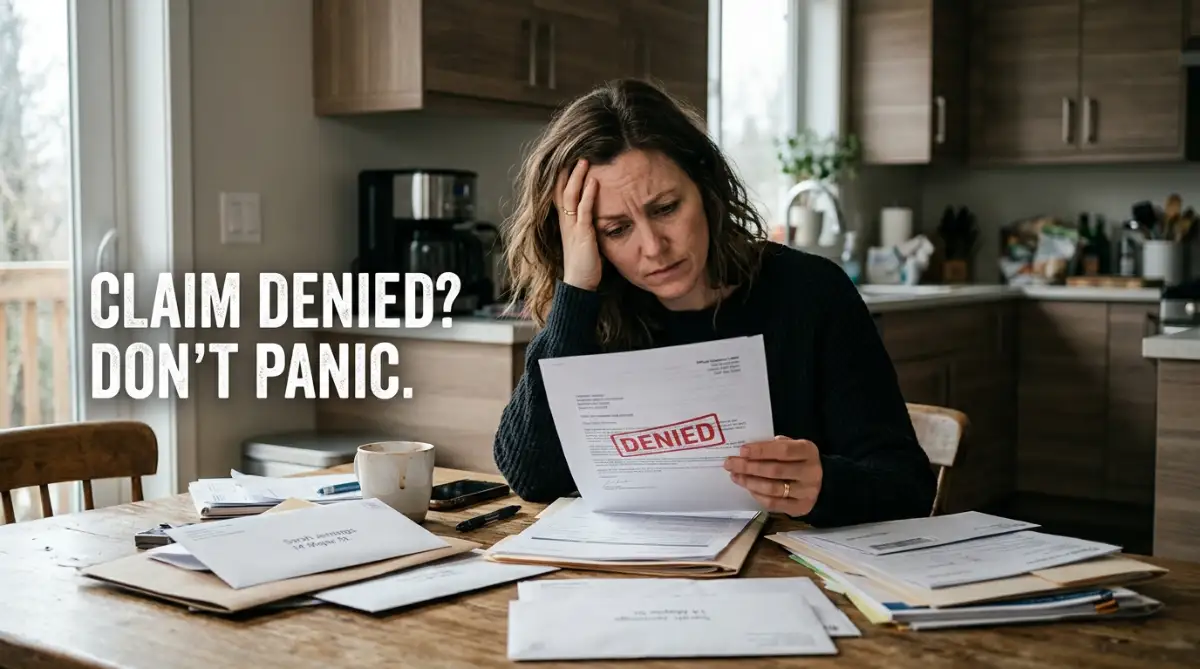
I remember sitting at my kitchen table, staring at a repair bill for my roof after a small storm. I felt a cold knot in my stomach. I had been paying my insurance premiums faithfully for years, never missing a single payment.
I thought I was "fully covered," but the bill in my hand said I owed two thousand dollars before the insurance would even talk to me.
That was my wake-up call. I realized I didn't actually know how my deductible worked. I was just clicking "accept" on whatever the website suggested. I felt cheated, not by the company, but by my own lack of knowledge. I decided right then to learn every trick in the book to make sure this never happened again.
Since that day, I have spent hundreds of hours reading the fine print. I have talked to experts and compared dozens of policies. What I found was shocking. There are so many small things we aren't told. These "secrets" are the difference between being broke after an accident and staying financially safe.
Many people living in the USA today are just one accident away from a financial disaster. We work hard for our money, but we give so much of it to insurance companies. When something goes wrong, we expect them to be there. But the deductible often stands in the way like a giant wall.
This wall creates a lot of stress. You might worry every time you hear thunder or every time you drive in heavy traffic. That constant fear of a "hidden cost" ruins your peace of mind. It makes you feel like you aren't really in control of your own life or your own wallet.
I want to change that for you. I want to give you the keys to the castle. You don't have to be a math genius to understand this. You just need to know where the traps are and how to avoid them. Let's look at the secrets I discovered that changed the way I handle my money.
Secret 1: The "Sweet Spot" Between Premium and Risk
The first big secret is finding the balance. Most people think they only have two choices: a very low deductible or a very high one. But there is a middle ground that insurance companies rarely talk about. I call this the "Sweet Spot."
If you choose a $250 deductible, your monthly premium is usually huge. You are paying the company a lot of money just for the chance that they might help you with a small repair. On the other side, a $2,500 deductible might save you money every month, but it could ruin you if you have a claim.
The secret is to look at your savings account first. If you have $1,000 in emergency savings, why are you paying for a $250 deductible? You are essentially overpaying the insurance company for a risk you can already cover yourself. I adjusted my deductible to match my actual savings, and I saved forty dollars a month instantly.
Secret 2: The "Vanishing" Deductible Trick
Did you know some companies offer what is called a "vanishing" or "disappearing" deductible? This is a hidden gem that many people ignore. For every year you drive safely or don't file a home claim, the company reduces your deductible by a certain amount.
Over time, your deductible could actually go down to zero. The best part is that your monthly premium usually stays the same or only goes up a tiny bit.
It is a reward for being a responsible person. I didn't even know I had this option until I called my agent and asked specifically for it.
Always ask your provider if they offer this feature. It isn't always advertised on the main page. It is a long-term game, but it pays off in a big way. Imagine having a major car accident and paying nothing at all because you were a safe driver for five years.
Secret 3: Not All Claims Are Worth Filing
This is a secret that insurance agents might not want you to hear. Sometimes, filing a claim is the worst thing you can do for your money. If your deductible is $500 and the repair cost is $700, you might think it is a good idea to let the insurance pay the $200.
Pro Tip:
I once filed a claim for a broken window that cost just a little more than my deductible. I thought I was being smart by getting my "money's worth" from the company.
However, my premium went up by twenty percent the next year because I was now a "higher risk" in their eyes. I ended up paying way more in the long run than if I had just paid for the window myself.
If the repair cost is close to your deductible, pay it out of your own pocket. Keep your insurance for the "big stuff" like a total car loss or a major house fire. This keeps your "claims history" clean, which saves you thousands of dollars in premiums over your lifetime.
Secret 4: The Health Savings Account (HSA) Power Move
If you have a high-deductible health plan (HDHP), you are eligible for an HSA. This is one of the greatest tax secrets in the USA. You can put money into this account before taxes are taken out. This means you are lowering your taxable income while saving for your deductible.
The money in an HSA can be used to pay for your medical deductible. If you don't use it, the money stays there and grows. It even earns interest! It is like a second retirement account that is specifically for your health needs.
I started using an HSA a few years ago. Not only did it help me cover my deductible when I needed a surprise surgery, but it also saved me nearly a thousand dollars in taxes that year. It is a win-win situation that most people don't use to its full potential.
Understanding the math behind your health plan can change your life. Watch this video to see how an HSA can work for you.
Secret 5: The "Aggregate" vs. "Per-Occurrence" Trap
This secret is vital for homeowners. Some policies have a "per-occurrence" deductible, while others have an "aggregate" one. If a storm hits and damages your roof, and then a week later a tree falls on your fence, a "per-occurrence" policy makes you pay the deductible twice.
An "aggregate" deductible counts all your losses toward one single limit for the year. This is a huge distinction that can save you thousands during a bad year of weather.
I always check my policy to see which one I have. It is often a small box you have to check during the sign-up process.
Most people don't even look for this word in their policy. They just assume a deductible is a deductible. But knowing the difference can be the factor that keeps you out of debt. Always aim for an aggregate limit if it is available and fits your budget.
Secret 6: Employee Assistance Programs (EAPs) and Deductible Offsets
Many people work for companies that offer "Deductible Offsets" or special EAPs. These are benefits that help employees pay for their health or even car deductibles. Sometimes your employer will put money into a special fund just for you.
I once worked for a company that would pay the first $500 of my medical deductible every year. I didn't even know about it for the first six months! I was paying bills that my company would have covered. Check with your HR department today to see if there is a "hidden" pot of money waiting for you.
These programs are designed to keep employees happy and healthy. It is part of your total compensation package. If you aren't using it, you are essentially leaving money on the table. It is one of the easiest ways to save cash on your insurance costs.
Secret 7: Re-Evaluating as Your Assets Age
The final secret is about time. Your insurance needs change as you get older and as your things get older. If you are driving a ten-year-old car, having a $250 deductible is often a waste of money. The car's value is so low that the insurance company won't pay out much anyway.
As my car got older, I slowly raised my deductible. This lowered my monthly bill significantly. I took that extra money and put it into my savings. By the time I needed a new car, I had enough saved up for a large down payment just from the insurance savings alone.
You should review your deductibles at least once every year. Don't just let the policy auto-renew. Things change, and your policy should change with them. Being proactive is the best way to ensure you are always getting the best deal possible.
Why Your Agent Might Not Tell You Everything
It is important to remember that insurance agents are often paid on commission. If your premium is higher, they might make more money. This doesn't mean they are bad people, but it does mean their goals might be different from yours.
They might not always suggest a higher deductible because they want to keep your premium at a certain level. That is why you have to be your own advocate. You have to be the one to ask, "How much will I save if I double my deductible?"
When I started asking these direct questions, my agent's tone changed. They realized I was an educated consumer. Suddenly, new "discounts" and options started appearing. Knowledge is your best weapon in the world of finance.
The Mental Peace of a "Deductible Fund"
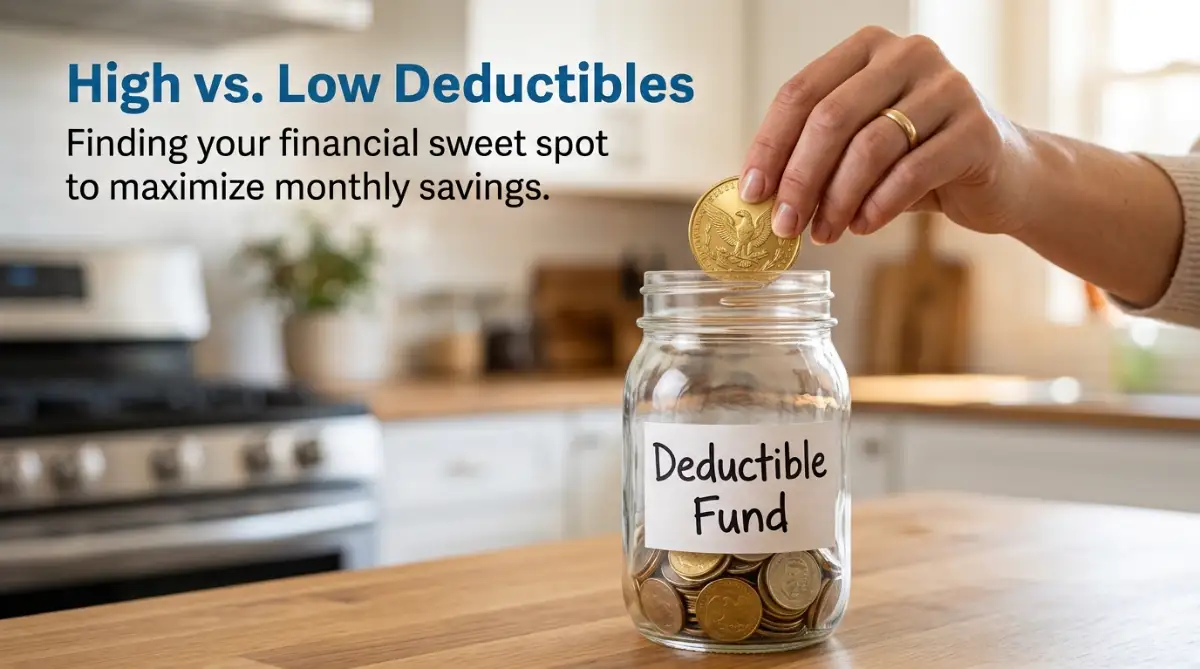
The biggest secret to saving money isn't just about the policy itself. It is about your mindset. I created a dedicated "Deductible Fund" in my bank account. I put a small amount in there every month until it reached the amount of my highest deductible.
Once that fund was full, all my fear went away. I stopped worrying about "what if" scenarios. I knew that no matter what happened, I had the cash ready to go. This allowed me to choose higher deductibles and save more money on my monthly premiums.
It is a cycle of success. You save on premiums, you put that savings into your fund, and your fund grows. Eventually, you are "self-insured" for the small things, and you only pay the big companies for the major disasters. That is how the wealthy stay wealthy.
Common Myths That Cost You Money
There is a myth that "Full Coverage" means you pay nothing. This is completely false. Even with full coverage, the deductible still applies to comprehensive and collision claims. Don't let the name of the policy fool you into being unprepared.
Another myth is that you can't change your deductible whenever you want. In most cases, you can call your company today and change it. You don't have to wait for your policy to expire. If your financial situation changes, your deductible should be able to change too.
I used to think that a high deductible was only for rich people. I was wrong. A high deductible is a tool for anyone who wants to stop overpaying for insurance. As long as you have a plan to cover the cost, it is a smart move for almost everyone.
How to Start Your Savings Journey Today
The first thing you should do after reading this is find your insurance cards. Look for the number next to the word "Deductible." Is it $250? $500? $1,000? Write it down and put it on your fridge. This is your target for your savings fund.
Next, call your insurance company. Ask them for a quote with a higher deductible. Compare the new monthly price to your old one. You might be surprised to see you could save $20, $50, or even $100 every single month.
Take that savings and set up an automatic transfer to a separate account. Before you know it, you will have your deductible covered. You will be part of the small group of people who actually understand how the system works. And that is the best feeling in the world.
Why Insurance Companies Love Prepared Customers
You might think insurance companies want you to be confused. While some might, the best companies actually love prepared customers.
A customer who understands their deductible is less likely to file small, annoying claims that cost the company money to process.
When you are prepared, you are a "low-maintenance" client. This often leads to better rates and better service in the future. It builds a relationship of trust between you and the provider. You aren't just a number; you are a partner in managing risk.
I have found that since I became "insurance literate," my interactions with these companies have been much smoother. I know what to ask for, and I know when a deal is good or bad. You can have that same confidence starting right now.
Taking Control of Your Financial Future
Insurance is a big part of life in the USA. We can't avoid it, but we can master it. By using these seven secrets, you are taking a giant step toward financial freedom. You are no longer a victim of the "fine print."
You are now the boss of your policy. You decide how much risk you take and how much money you keep. It is a powerful feeling to know exactly where every dollar is going. No more surprises, no more knots in your stomach, and no more eating into your savings.
Keep learning and keep questioning. The world of finance is full of these small secrets. Once you find them, you can build a life that is secure and prosperous. You deserve to keep your hard-earned money in your own pocket.
Thoughts for the Beginner
If all this feels overwhelming, remember one thing: the deductible is your share. The smaller the share you want to pay later, the more you pay now. The more you are willing to pay later, the more you keep now.
Start with one policy. Maybe it is your car insurance. Master that one, and then move on to your home or health insurance. Each step you take makes the next one easier. You are on the right path, and your future self will thank you for the work you are doing today.
I am glad I went through that stressful day at my kitchen table. It taught me the value of being informed. I hope my struggle helps you avoid the same pain. Now, go take a look at those policies and start saving your money!
Taking the Lead on Your Policy Costs
Now that we have covered the basics, I want to share some secrets that most people never think about. These are the steps I took to turn my insurance from a monthly headache into a smart financial plan. Most folks just pay their bill and hope for the best, but you can do better than that.
One of the biggest secrets I found is something called "deductible bundling." If you have your home and car insurance with the same company, ask them about a single deductible. Some top-tier companies allow you to pay just one deductible if a single event, like a major storm, damages both your house and your car.
I remember a friend who had a tree limb fall during a windstorm. It smashed his garage roof and his SUV parked inside. Because he had bundled his policies with a "single loss" deductible, he saved a thousand dollars that day. Always check if your provider offers this "hidden" perk.
Another advanced move is understanding the "premium-to-deductible ratio." I spent a weekend with a calculator and realized that moving my car deductible from five hundred to one thousand dollars saved me nearly two hundred dollars a year. That means in just two and a half years, the savings paid for the higher risk.
If you go five years without an accident, you have basically made an extra five hundred dollars. This is why why comprehensive car insurance is essential for every vehicle owner isn't just about protection; it is about playing the long-term math game. You are taking a calculated risk that pays you back in cold, hard cash.
I also learned to look at my insurance as part of my total health plan. If you are generally healthy, switching to a high-deductible health plan (HDHP) can be a goldmine. You can take the money you save on premiums and put it into an account that helps with emergency fund financial safety net goals.
Strategic Moves for Long-Term Wealth
If you want to really master this, you need to think about your "self-insurance" limit. This is the amount of money you can comfortably lose without it ruining your life. For me, that number grew as I got better at how to create a realistic monthly budget when you have irregular income.
As my savings grew, my insurance deductibles went up. It felt scary at first to see a high deductible on my paperwork. But then I looked at my bank account and saw the thousands of dollars I had saved over the years. I wasn't giving that money to a big corporation anymore; I was keeping it for my family.
You should also look into "Deductible Credits." Some specialized companies give you a credit just for signing up or for every year you stay with them. It is almost like a loyalty program for your insurance. I once found a policy that gave me a fifty-dollar credit every year, which eventually made my deductible much smaller for free.
If you are a business owner or a freelancer, you can often find even more advanced ways to handle these costs. Some professional groups offer group rates with unique deductible structures.
It pays to join a local trade group or professional association just to see what kind of "insider" insurance deals they have negotiated for their members.
The key is to never stop looking for a better way. The insurance market changes all the time. A deal that was great two years ago might be terrible today.
Stay curious and always ask your agent for the "non-standard" options that they might be keeping in their back pocket.

Traps That Can Drain Your Bank Account
I have seen so many people make the same painful mistakes with their insurance. The most common one is what I call the "Premium Mirage." This is when you choose the absolute lowest premium possible without looking at the deductible.
When a disaster happens, these folks are shocked to find they owe five or ten thousand dollars. They saved twenty dollars a month but lost thousands in a single day. This is a trap that can lead to why your loan balance stays high a complete guide to interest calculations because they have to borrow money to pay the deductible.
Another major error is ignoring "percentage-based" deductibles. In many parts of the USA, especially where hurricanes or earthquakes are common, deductibles aren't a flat dollar amount. They are a percentage of your home's total value.
If your home is insured for $400,000 and you have a 2% windstorm deductible, you owe $8,000 before the insurance pays a dime.
I have seen families lose their homes because they couldn't afford the "percentage" deductible after a storm. It is a heartbreaking situation that can be avoided by reading the fine print very carefully.
Then there is the "Small Claim Syndrome." This is when people file a claim for every tiny scratch or dent. I once talked to a neighbor who filed three claims in two years for small things like a cracked windshield and a dented bumper. His insurance company eventually canceled his policy because he was "too expensive" to cover.
When he tried to get a new policy, the rates were double what he was paying before. He learned the hard way that 7 huge insurance claim mistakes that will cost you thousands is a real warning. Insurance should be for the big, life-changing events, not for the small annoyances of daily life.
I also see people forget to update their deductibles when they move or change jobs. If you move from a safe neighborhood to a busy city area, your risk changes.
If you don't adjust your policy, you might be paying for a deductible that no longer makes sense for your new environment.
Lastly, some people assume that their health insurance deductible covers everything. They don't realize that things like "out-of-network" doctors have their own separate deductibles.
I once went to a specialist and found out that my $1,000 deductible didn't count because the doctor wasn't in my plan's "network." Always verify your doctor’s status before you walk through that door.
Your Path to Financial Confidence
Mastering your insurance isn't just about saving a few bucks; it’s about feeling safe. When you know exactly what you owe and you have that money ready, the world feels much less scary. You can drive your car or sleep in your house with a sense of true security.
I want you to take a deep breath and realize that you are now in the driver's seat. You have the secrets, the tools, and the knowledge to make smart choices. You don't have to follow the crowd and overpay for peace of mind. You can build your own safety net.
Think about what you could do with an extra fifty or a hundred dollars every month. Maybe you could invest it, or maybe you could finally the debt free roadmap your 30-day budget blueprint and get rid of those old credit card bills. Every dollar you save on insurance is a dollar that works for you, not the insurance company.
I started this journey feeling confused and taken advantage of. Today, I feel like I have a "superpower" because I understand the system. You have that same power now. Don't let it go to waste by letting your policies sit on a shelf gathering dust.
Go out there and have those tough conversations with your insurance agent. Ask the questions that most people are too afraid to ask. If you want official data on consumer rights, check the National Association of Insurance Commissioners (NAIC) website. They have amazing resources for people who want to protect their rights as a policyholder.
I truly believe that anyone can become a master of their own finances with just a little bit of effort. I did it, and I know you can do it too. Start today, and by this time next year, you will be amazed at how much money you have kept in your own pocket.
My personal journey with insurance taught me that the biggest risk is not having a plan. Once I decided to take charge, I found that I had so much more control over my life than I ever thought possible.
I hope you take that first step today and feel the same sense of freedom and pride that I feel every time I look at my growing savings account.
Common Questions About Insurance Deductibles
Can I change my deductible in the middle of my policy term?
Yes, in most cases, you can call your insurance company or agent and ask to change it whenever you want. If you raise it, your premium will go down for the remaining months. If you lower it, you will likely get a bill for the difference in cost. It is a great way to adjust your finances as your life changes.
Is it better to have a high deductible if I am a safe driver?
Generally, yes. If you haven't had an accident in years, a high deductible can save you a lot of money on your monthly premiums. You can take those savings and put them into an emergency fund 101 5 easy steps to financial peace. Just make sure you have enough cash to cover the deductible if an accident actually happens.
Does my deductible apply if the accident wasn't my fault?
This depends on where you live and your specific policy. In many cases, you still have to pay your deductible to get your car fixed quickly. Your insurance company will then try to get that money back from the other person's insurance. This process is called "subrogation," and if they win, they will send you a check for your deductible amount.
Can I use my credit card to pay an insurance deductible?
Most repair shops and doctors will accept credit cards for your portion of the bill. However, you should be careful not to create a high-interest debt situation. It is always better to pay from a dedicated savings account. If you do use a card, try to pay it off as fast as possible to avoid extra costs.
Do all types of insurance have deductibles?
Most "property and casualty" insurance policies like home, auto, and renters insurance have them. Health insurance almost always has one as well. Life insurance is one of the few types that usually does not have a deductible. Instead, the company simply pays the "face value" of the policy to your loved ones.
Disclaimer: This article is for informational purposes only and does not constitute professional financial or legal advice. Insurance laws and policy details can vary significantly by state and provider. Always consult with a licensed insurance professional or financial advisor before making changes to your coverage.