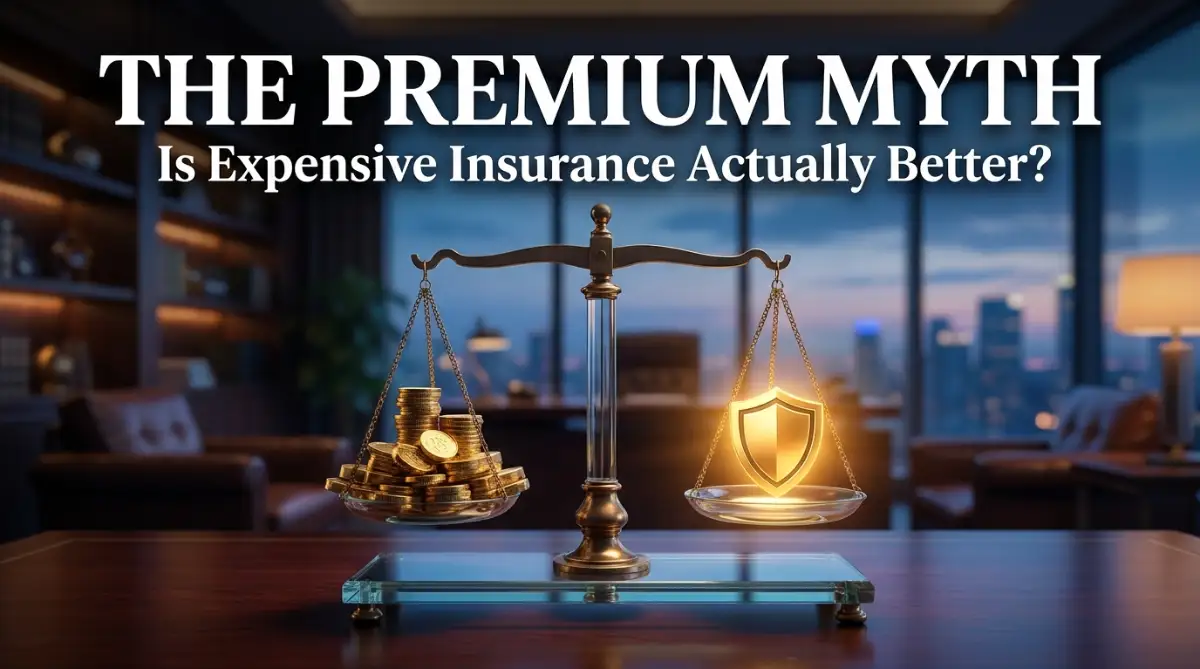
The Day I Realized I Was Throwing Money Away
I sat at my kitchen table last month, staring at my new car insurance bill. The number was huge. I had always believed that paying more meant I was "safer." My logic was simple: if I pay the most, the company will take care of everything.
But then I had a small accident in a parking lot. I called my agent, confident that my "premium" plan would handle it. He told me my deductible was $2,000. I almost dropped my phone.
I was paying $300 a month just for the privilege of having a massive bill when I actually needed help. It felt like a punch to the stomach. I realized I didn't have "better" coverage. I just had a more expensive bill.
I spent the next three days reading every single page of my policy. I found out I was paying for things I didn't even need, like a rental car upgrade I couldn't use.
This is a trap many of us fall into. We buy the most expensive option because we are afraid of being unprotected. But fear is a bad financial advisor.
The Hidden Anxiety of the "Premium" Price Tag
Most people feel a sense of relief when they sign up for a high-cost insurance plan. It feels like buying a high-end brand of shoes. You assume the quality is automatically higher because the price is.
However, that relief turns into anger very quickly when a claim is denied. You start to realize that a high price doesn't change the legal language in the contract.
This creates a cycle of stress. You work hard to pay the high premiums every month. But you still worry if the company will actually show up when things go wrong.
It’s an emotional weight that shouldn't be there. You deserve to know exactly what you are paying for. Paying more should mean more value, but in the insurance world, that’s often a lie.
I want to help you break that cycle. Let's look at why the price on the sticker is rarely the whole story.
Why Price Tags Are Often Decoy Numbers
Insurance companies are businesses. They use complex math to decide what to charge you. They look at your age, your zip code, and even your credit score.
Sometimes, a higher premium happens because the company has a massive marketing budget. You are paying for their TV commercials, not for better doctors or better mechanics.
Think of it like buying a bottle of water at an airport. It costs five dollars, but it’s the same water you get for fifty cents at a grocery store. The price is about the location and the brand, not the water itself.
In insurance, you might be in a "high-risk" pool for a reason that has nothing to do with you. Maybe your neighbors file a lot of claims. Suddenly, your price goes up.
The Big Difference Between "Price" and "Value"
Value is what you get back when you are in a crisis. If you pay a high premium but have a $5,000 deductible, you aren't getting much value for small problems.
A cheaper plan with a $500 deductible might actually be "better" for your lifestyle. It means you can actually afford to use the insurance when you have a minor mishap.
I’ve seen people pay for "platinum" plans that exclude the very things they are worried about. It's like buying a gold-plated hammer that breaks the first time you hit a nail.
Always look at the "out-of-pocket" maximums. That is the number that actually protects your bank account. A high monthly payment is just a slow drain on your savings.
You can find more details on this in my guide about 7-hidden-secrets-about-insurance-deductibles-that-save-you-money-the-ultimate-guide. It explains how to balance your monthly costs with real-world protection.
The Role of Commission and Sales Tactics
Many insurance agents get a percentage of the premium you pay. This means they have a natural reason to suggest the more expensive plan. They might call it "comprehensive" or "worry-free."
These words are designed to make you feel safe. But "comprehensive" doesn't mean "everything." It’s a specific technical term that only covers certain types of damage, like theft or fire.
I remember an agent telling me I needed a specific rider for my electronics. He made it sound like a small addition. Later, I found out my standard homeowner's policy already covered those items.
He wasn't lying, but he wasn't telling the whole truth either. He was selling a "better" plan that I didn't actually need. This is why you must learn to read the "Summary of Benefits" yourself.
According to the National Association of Insurance Commissioners, understanding your specific policy limits is more important than the brand name of the company. They provide great resources for comparing plans side-by-side.
Examining the "Ghost" Coverage You Don't Need
Ghost coverage is what I call the extra stuff that inflates your bill. For example, roadside assistance on a car insurance policy is often redundant.
If you already have a membership with a motor club, you are paying for the same service twice. Or, if you have a new car, your manufacturer likely provides it for free.
I once discovered I was paying for "towing and labor" on three different policies. It was only ten dollars here and there, but it added up over the years.
Take a look at your bill and highlight every "add-on." Ask yourself if you have ever used it or if you have it somewhere else. You might be shocked at how much you can cut without losing any real safety.
This is a key part of how-to-lower-monthly-utility-bills-through-sustainable-home-energy-habits where small, unnecessary costs are removed to save big money. The same logic applies to your insurance portfolio.
The Myth of the "White Glove" Service
Some people pay higher premiums because they think they will get better customer service. They want a real person to answer the phone immediately.
While some premium companies do have better support, many of them use the same third-party call centers as the budget brands. The "premium" experience is often just a different hold music.
I’ve had "budget" insurance companies process claims faster than the big-name players. It often comes down to the local adjuster, not the size of the company's headquarters.
Don't assume that a high price guarantees a smooth process. Check online reviews and talk to local repair shops. They know which companies actually pay out claims without a fight.
This video shows exactly how to compare insurance quotes like a pro without getting tricked by fancy ads. It’s the best way to see the real numbers behind the marketing.
Your Risk Profile vs. The Company's Appetite
Every insurance company has a "type." Some love safe drivers over 40. Others specialize in high-risk teenagers.
If you are a safe driver but you are with a company that specializes in high-risk cases, your premium will be high. You are essentially subsidizing the bad drivers in their system.
By switching to a company that "wants" someone like you, your premium could drop by 30%. The coverage would be exactly the same, or even better.
I used to stay with the same company for a decade because I thought "loyalty" mattered. It doesn't. In fact, many companies charge a "loyalty tax" because they know you won't leave.
I wrote a detailed post about 7-hidden-reasons-your-insurance-premium-increases-every-renewal-avoid-these-mistakes. It reveals why your bill goes up even if you don't have any accidents.
Understanding the Law of Large Numbers
Insurance works because thousands of people pay into a pool. The company uses that money to pay for the few people who have accidents.
If a company has a lot of "bad" customers, they have to raise prices for everyone. A high premium might just mean you are in a "bad" pool of people.
It has nothing to do with how good your coverage is. It’s just simple math. If the pool is leaking money, everyone has to pay more to keep it full.
This is why shopping around every two years is a smart financial move. You want to find a pool that is healthy and well-managed.
The Consumer Financial Protection Bureau offers a lot of data on how these pools work. They help consumers understand how their data is used to set these prices.
The "Over-Insured" Problem Is Real
You can actually have too much insurance. If you have an old car worth $2,000, paying for full collision coverage is a mistake.
If you get into an accident, the company will only give you the value of the car. If you have been paying $100 a month for that coverage, you are losing money.
I see this a lot with life insurance too. People buy massive policies they don't need, leaving them "house poor" because of the premiums.
You should aim to be "right-insured." That means having enough to cover your actual risks without giving away your future savings.
Check out 5-shocking-truths-about-term-life-insurance-and-why-your-family-needs-it to see how to pick the right amount of protection. It’s a great way to simplify your financial life.
Why Your Credit Score Affects Your Premium
This is a part of insurance that feels unfair to many people. In most states, companies use your credit history to decide your "insurance score."
They have found a link between financial stability and the likelihood of filing a claim. If your credit is low, your premium will be high—even if you are a perfect driver.
Again, this higher price doesn't mean you have "better" insurance. You are just paying more because of a number on a different piece of paper.
If you work on how-to-increase-your-credit-score-rapidly-without-stress, you will eventually see your insurance bills go down too. It’s a hidden benefit of being financially healthy.
It’s another example of why a high price doesn't equal better protection. It’s just the cost of your specific risk profile at that moment.
The "Bundle" Trap and How to Avoid It
Companies love to tell you to "bundle and save." While this can work, it often makes it harder to see the individual prices of your policies.
They might give you a discount on your home insurance but quietly raise the price of your car insurance. You think you are saving money, but the total bill stays high.
I always suggest checking the prices of each policy separately before you agree to a bundle. Sometimes, two different companies are cheaper than one bundle.
Don't let the convenience of a single bill blind you to the actual costs. You are the customer, and you have the power to mix and match your protection.
Final Thoughts on the Price vs. Protection Debate
The most important thing I can tell you is this: read your policy. I know it’s boring and the words are small. But those words are the only thing that matters when a disaster hits.
A high premium might buy you a fancy logo, but the fine print is what buys you a new roof or a new car. Be the kind of person who knows what they are paying for.
I've learned that a smaller, smarter policy often beats a massive, expensive one. It’s about being prepared, not just being billed.
I hope you take some time this weekend to look at your own bills. You might find a few hundred dollars hiding in there, just waiting for you to claim it.
I’m so much more relaxed now that I know my insurance actually fits my life. I want that same feeling for you, starting today.
Smart Ways to Audit Your Policy Like an Expert
I used to think my insurance policy was a "set it and forget it" document. I would sign the papers, put them in a drawer, and ignore them for years. That was my first big mistake.
Now, I do a "Deep Audit" every six months, and it saves me hundreds of dollars while actually improving my protection.
One of the most effective things you can do is check for Replacement Cost versus Actual Cash Value. If your house burns down, Actual Cash Value only pays you what your stuff is worth today (which isn't much).
Replacement Cost pays you what it costs to buy everything brand new. I found out I was paying a "premium" price for a policy that only offered Cash Value. I switched it immediately.
You should also look into Telematics if you are a safe driver. Many car insurance companies now offer a small device or an app that tracks how you drive. If you don't speed and you don't slam on your brakes, they give you a massive discount.
My premium dropped by 25% just by proving I was a calm driver. It’s a great way to use your own good habits to lower your bills.
I also recommend looking at your Liability Limits rather than just your monthly payment. Most people stick with the state minimum, but that is a huge risk. If you cause a big accident, the state minimum won't even cover the hospital bills of the other person.
Raising your liability from $50,000 to $250,000 often costs only a few dollars more a month. That is what I call high-value spending.
You can learn more about picking the right levels in this guide on how-to-choose-the-right-health-insurance-coverage-for-your-family-needs. It helps you see through the confusing marketing talk. Most people end up buying too much of the wrong thing and not enough of what actually matters.
Another secret is to check for affinity discounts. Are you a teacher? An engineer? A member of a specific credit union? I found out my college alumni association had a deal with a major insurer that saved me $150 a year. Companies love these "low-risk" groups and will give you a better rate just for being part of them.
You should also consider unbundling your policies every few years. While companies scream about the "bundle discount," sometimes it’s a trap. I found that my home insurance was way cheaper with one company, and my car was cheaper with another.
Even after losing the bundle discount, I saved $400 total by splitting them up. You have to do the math yourself because the company won't do it for you.
If you are worried about your health coverage specifically, check out the-ultimate-guide-to-mastering-your-health-insurance-deductible. It breaks down the math of how to pick a plan that won't bankrupt you during a medical emergency.
I’ve learned that being an active shopper is the only way to keep these companies honest. They rely on your laziness to keep their profits high. If you show them you are willing to leave, they suddenly find "hidden" discounts to keep you. It happens almost every time I call to complain about a rate hike.
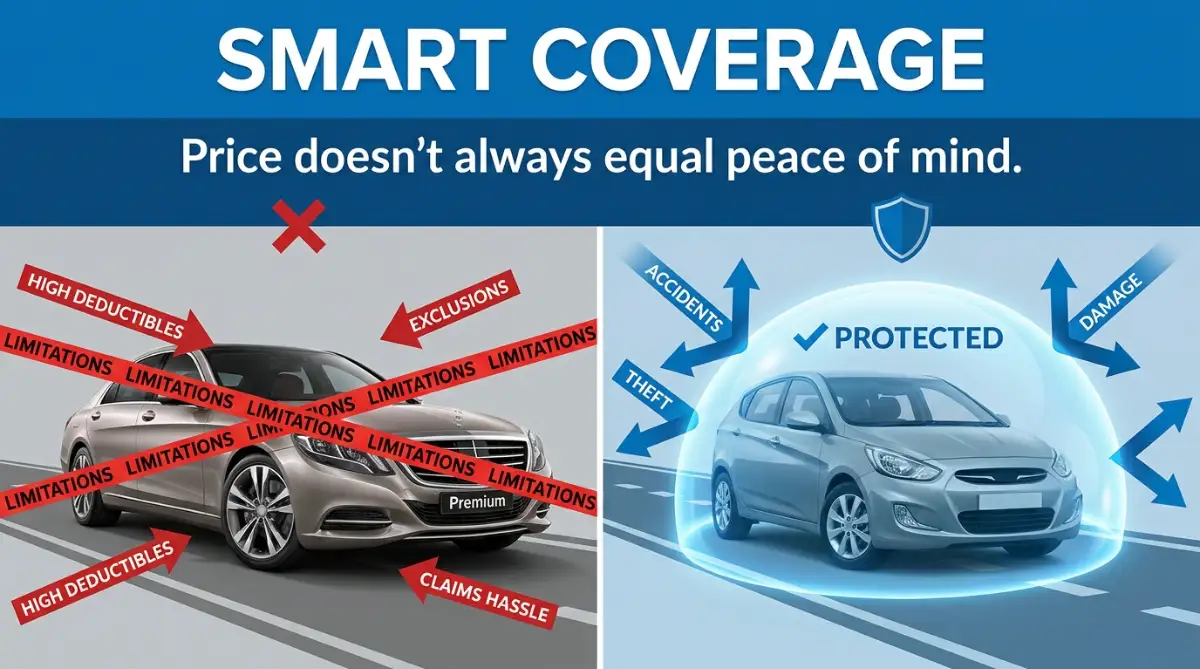
Costly Errors That Leave You Broke and Unprotected
The biggest mistake I see people make is "Price Hunting" without reading the exclusions. They find a policy that is $50 cheaper and jump on it immediately. Then, a storm hits, and they realize their new "cheap" policy doesn't cover wind damage. It’s a nightmare scenario that happens to thousands of families every year.
You must look for exclusion clauses. These are the tiny paragraphs that say "We don't cover X, Y, and Z." Sometimes, a high premium policy has just as many exclusions as a cheap one. If you live in an area prone to floods or earthquakes, you usually need a separate policy entirely. Don't assume your "premium" plan covers everything.
Another emotional trap is staying with a company because you "like" your local agent. I liked my agent too. He was a nice guy and we talked about football. But he was charging me $600 more a year than the competitor next door. A nice personality doesn't pay your claims when your basement is under water.
You also need to watch out for under-insuring to save money. This is when you tell the company your house is worth less than it actually is to get a lower premium. If you have a total loss, the insurance company will only pay what you told them it was worth. You could end up losing hundreds of thousands of dollars just to save $20 a month.
I fell into the "low deductible" trap for a long time. I wanted a $250 deductible so I wouldn't have to pay much if I crashed. But I was paying so much extra in premiums that I had "pre-paid" for an accident I hadn't even had yet. Once I raised my deductible to $1,000, my monthly bill tanked. I just kept that extra money in a savings account instead.
If you want to avoid these kinds of financial headaches, read about 7-huge-insurance-claim-mistakes-that-will-cost-you-thousands. It covers the specific things you might be doing right now that will lead to a denied claim later.
There is also the mistake of ignoring your life changes. Did you get a security system? Did you stop smoking? Did you get married? All of these things can lower your insurance costs. If you don't tell the company, they will keep charging you the old, higher rate. I saved $80 a year just by telling my home insurer that I installed a $20 water leak sensor under my sink.
I also see people making errors with their health history. If you don't understand how your past affects your future, read does-insurance-cover-pre-existing-conditions-5-secrets. It’s an area where people often pay way too much because they are afraid of being rejected.
Finally, stop buying insurance for things you can afford to replace. Do you really need "protection" for a $40 toaster? Or a "protection plan" for a $200 smartphone? These are almost always a waste of money. Use insurance for the big disasters that would ruin you financially. For the small stuff, just keep a little cash aside and be your own insurance company.
Taking Control of Your Financial Safety Net
Building a smart insurance plan is about balance. You want enough protection so you can sleep at night, but not so much that you can't afford to live your life. It's about being a conscious consumer instead of a passive victim of corporate billing.
I’ve spent a lot of time "sanding down" my monthly expenses. Insurance was one of the biggest wins I ever had. By simply asking questions and moving my money to companies that actually valued my business, I freed up thousands of dollars. That is money that now goes into my retirement instead of an insurance company's pocket.
You have more power than you think. Every time you get a renewal notice, view it as an invitation to shop. Never accept the first price they give you. The Federal Trade Commission actually has great guides on how to spot deceptive pricing in the insurance world. Use those tools to stay ahead.
If you are worried about getting rejected for coverage, you should look at how-to-stop-life-insurance-rejection-5-simple-steps. It shows that there is almost always a way to get protected if you know the right path to take.
I want you to feel the same relief I felt when I finally understood my policy. I no longer panic when I see my premium bill because I know every dollar is going toward real, calculated protection. It is a wonderful feeling of control in an unpredictable world.
Start your audit this evening. Spend just thirty minutes looking at your coverages. You will likely find a mistake, a duplicate, or an outdated price that you can fix with a single phone call.
I’ve made all the mistakes so you don't have to. Take that first step toward a leaner, smarter financial life right now. My experience shows that a little bit of curiosity goes a long way in saving your hard-earned cash.
Your Top Questions About Premium Costs Answered
Will my premium go down if I get an older car?
Usually, yes, because the "comprehensive" and "collision" parts of your bill are based on what the car is worth. If the car is worth less, the company has less to pay out in an accident. However, your liability costs might stay the same because an old car can cause just as much damage as a new one.
Is a high-deductible plan always a gamble?
It’s only a gamble if you don't have the money saved to cover the deductible. If you have $1,000 in an emergency fund, a $1,000 deductible is a great way to save money on your monthly bill. If you have zero savings, a low deductible is safer but much more expensive every month.
Do insurance companies share my information with each other?
Yes, most companies use a database called C.L.U.E. (Comprehensive Loss Underwriting Exchange). This tracks your history of claims across different companies. This is why you can't just hide a previous accident when you go to buy a new policy from a different brand.
How often should I really shop for new insurance?
I recommend doing a quick search every twelve months or whenever you have a major life event. Rates change constantly as companies adjust their math. A company that was the cheapest last year might be the most expensive this year.
Disclaimer: I am not a licensed insurance agent or financial advisor. This content is based on my personal experiences and research. Insurance laws vary greatly by state and country. Always consult with a certified professional before making major changes to your legal or financial protection plans.
![7 Hidden Secrets About Insurance Deductibles That Save You Money [The Ultimate Guide]](https://nexvoramag.com/storage/uploads/blogs/1787723740_7-hidden-secrets-about-insurance-deductibles-that-save-you-money-the-ultimate-guide.webp)
![7 Hidden Reasons Your Insurance Premium Increases Every Renewal [Avoid These Mistakes]](https://nexvoramag.com/storage/uploads/blogs/1787293030_7-hidden-reasons-your-insurance-premium-increases-every-renewal-avoid-these-mistakes.webp)
![5 Things Your Renters Insurance Covers (That Your Landlord Won't Tell You) [Must Read]](https://nexvoramag.com/storage/uploads/blogs/1786690217_5-things-your-renters-insurance-covers-that-your-landlord-wont-tell-you-must-read.webp)