I remember standing in my living room, staring at a massive crack in my ceiling while holding a denial letter that said I wasn't covered.
I had paid my monthly premiums for seven years without ever missing a day, yet I felt completely abandoned when I needed help the most.
That experience taught me the hard way that the system isn't always on our side, and I wrote this because I don't want you to feel that same gut-wrenching pain.
The Silent Crisis of Denied Insurance Claims
Imagine waking up to a flooded basement or seeing your car smashed in a parking lot. Your first thought is probably a mix of shock and relief because you have insurance.
You have paid your premiums every month for years just for this moment. You expect the insurance company to step in and fix everything.
But for many people, the nightmare is only beginning. They file a claim and wait, only to receive a letter saying their request is denied or the payout is much lower than expected.
This moment feels like a punch in the stomach. You feel betrayed by the system you trusted to protect your hard-earned money.
The reality is that insurance companies are businesses, and they look for any reason to pay less. One small slip-up on your part can lead to a massive financial loss.
We see families losing their savings because of a single sentence they wrote or a photo they forgot to take.
Why Most People Fail to Get Their Full Payout
Getting a fair payout should be simple, but it rarely is. Most people struggle because they don't know the "unwritten rules" of the insurance world.
They often fall victim to common traps that the companies don't warn them about.
- Trusting the Adjuster Too Much: We often think the company's adjuster is on our side, but their job is to save the company money.
- Missing Hidden Deadlines: Most policies have very strict timelines that can disqualify your claim if you wait even a day too long.
- Cleaning Up Too Fast: People want to fix the mess immediately, but doing so can destroy the evidence needed for a payout.
- Giving Recorded Statements Early: Saying the wrong thing while you are stressed can be used against you later to lower your settlement.
- Incomplete Documentation: If you don't have proof of every single item lost, the insurance company will simply act like it never existed.
How Claim Errors Destroy Your Mental Health
The stress of a denied claim goes far beyond just money. It seeps into your daily life and ruins your peace of mind when you need it most.
- Loss of Confidence: You start to feel helpless and angry at a system that feels rigged against the average person.
- Sleepless Nights: Worrying about how to pay for repairs without the insurance money can lead to physical and emotional exhaustion.
- Strained Relationships: Financial pressure often leads to arguments at home, making a bad situation even worse for the whole family.
- Feeling Cheated: There is a deep sense of injustice when you realize your years of loyalty to a company meant nothing.
A Professional Analysis of the Insurance Game
The insurance industry is built on complex language and strict rules. When you file a claim, you are essentially entering a legal negotiation.
Most people show up to this negotiation without any tools or knowledge. This is why the payout gap is so large between those who know the system and those who don't.
We need to understand that the "burden of proof" is on you, the policyholder. The insurance company does not have to prove the damage didn't happen; you have to prove it did.
If your evidence is weak, your payout will be weak. It is a cold, calculated process that rewards preparation and punishes mistakes.
Many people think that being "honest" is enough to get a fair deal. While honesty is required, you also need to be strategic.
You have to speak their language and provide the exact data points they need to approve a high-value claim. Without a plan, you are just hoping for the best, and hope is not a financial strategy.
Your Strategic Guide to a Successful Payout
Solving the problem of a denied claim starts long before you receive a check. You need to act like a detective at a crime scene.
Your goal is to make it impossible for the insurance company to say "no" to your request. If you follow a logical, step-by-step approach, you can take back control of the situation.
These steps are not just suggestions; they are the foundation of a professional claim. If you skip even one, you are leaving your money on the table.
Let’s look at how you can build a solid case that protects your bank account and your family's future.
Step 1: Master the Art of Immediate Evidence
The moment damage occurs, your clock starts ticking. You should never wait until the next day to start gathering proof. The insurance company will look for any signs that the damage happened earlier or was caused by something else.
Take hundreds of photos and several high-definition videos from every possible angle. Do not just focus on the big damage.
Capture the small details, the surrounding areas, and even the weather conditions. This visual proof is your strongest weapon because it is hard to argue with a clear photo.
I always tell people to think of it this way : if a stranger saw your photos, could they tell exactly what happened? If the answer is no, keep clicking. Store these files in a cloud-based folder immediately so they are safe from any phone damage or loss.
Step 2: Decode Your Policy Before You Call
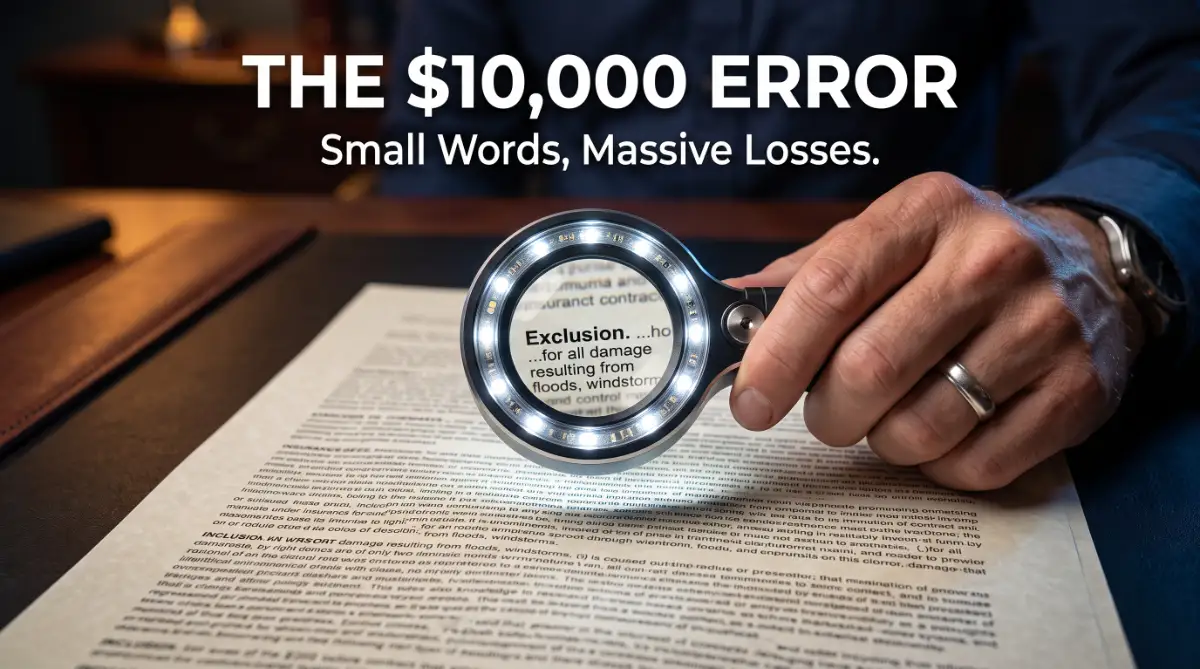
Most people have never actually read their full insurance policy. They only look at the "Declarations Page" which shows the price and the basic coverage. This is a huge mistake because the real rules are buried in the "Exclusions" and "Endorsements" sections.
You need to know your limits and your deductibles before you even pick up the phone. If you tell the insurance company that a specific event happened, and that event is on the "Excluded" list, your claim will be dead within seconds.
Knowing what is covered allows you to describe the situation accurately within the terms of your contract.
Think of your policy as a map. If you don't know how to read the map, you will get lost. Take an hour to highlight the parts that explain what is covered and what your duties are after a loss occurs.
This knowledge puts you on equal footing with the adjuster who will be sent to your home.
One thing I learned after my own claim mess was to never trust my memory during a crisis. I used to think a quick phone call with my agent was enough, but I quickly realized that if it isn't in writing, the company will act like it never happened.
Now, I always send a quick 'summary email' after every talk so there is a permanent trail that no one can argue with later.
Stop! Before you move a single piece of debris, watch this short guide on how to document damage like a pro so the insurance company can't find a reason to say no.
Step 3: Keep a Formal Communication Log
Every single conversation you have with an insurance representative must be tracked. This includes phone calls, emails, and in-person meetings. Do not rely on your memory or trust that the company is keeping perfect records of what they promised you.
Create a simple document or use a notebook to write down the date, time, name of the person you spoke with, and a summary of the talk.
If they tell you something on the phone, send a follow-up email saying, "As we discussed on our call today, I understand that..." This creates a paper trail that is very hard for them to deny later.
This log is your insurance for your insurance. If they try to change their story or claim they never received a document, you have the proof to set the record straight.
It shows the company that you are organized and serious, which often makes them treat your claim with more respect.
The Science of "Claim Language"
When you talk to an insurance company, specific words have specific legal meanings. For example, in many policies, "flooding" and "water damage" are two different things.
If you use the word "flood" when you should have said "pipe burst," you might lose your entire payout.
This is why we must be very careful with our descriptions. You are not trying to be a poet; you are trying to be a reporter. Stick to the facts of what you see and hear. Avoid guessing about the cause of the damage if you are not 100% sure.
It is perfectly okay to say, "I am still investigating the cause," instead of giving a wrong answer. Taking your time to be accurate is better than being fast and wrong.
A single incorrect word can be labeled as "misrepresentation," which is a fancy way for the company to cancel your claim entirely.
Protecting Your Right to a Second Opinion
Many policyholders don't realize they are allowed to get their own estimates for repairs. You do not have to accept the first number the insurance company gives you. Often, their estimate is based on the cheapest possible labor and materials.
We recommend hiring a reputable local contractor to give you a detailed, written quote for the repairs.
If their price is much higher than the insurance company's offer, you have the right to ask why. This is a normal part of the process, and you should not feel intimidated by it.
Having a second opinion is like having a witness in court. It proves that your request for more money is based on real-world costs, not just a guess. This one step alone can often increase your payout by thousands of dollars.
The Professional Edge: Secrets to Maximizing Your Payout
Most people treat an insurance claim like a simple request for help. However, the experts know that it is actually a formal business negotiation. To win this game, you need to use the same tools the big companies use.
One of the best-kept secrets in the industry is the Public Adjuster. Unlike the company's adjuster, a public adjuster works only for you. They have the training to find damage that the insurance company might try to overlook.
While they do take a small percentage of the payout, they often help you get a much larger total check. This is especially true for large property claims where every penny counts.
Before you hire one, make sure you how to carefully read and understand a legal contract before signing so you know their fee structure.
Protecting Your Property from Further Harm
Another pro-level move is what we call "Mitigation of Damages." Most policies actually require you to take "reasonable steps" to stop more damage from happening. If a pipe bursts, you must turn off the water immediately.
If a storm breaks a window, you need to board it up right away to keep out the rain. If you just leave it and the floors get ruined later, the insurance company can legally deny that part of the claim.
They will say the extra damage was your fault, not the storm's fault.
Always keep receipts for any plywood, tarps, or cleaning supplies you buy for these temporary fixes. These costs are usually part of your claim and should be paid back to you.
It shows the company that you are a responsible owner who cares about protecting the property.
Managing Your Long-Term Insurance Strategy
Success in insurance claims starts long before you ever have an accident. You should treat your policy like a living document that needs regular check-ups.
Every year, you should sit down and see if your coverage still matches the value of your assets.
If you have upgraded your kitchen or bought a new car, your old policy might not cover the full cost of a replacement. This is why why comprehensive car insurance is essential for every vehicle owner who wants to avoid paying out of pocket for non-crash events.
Don't wait for a crisis to find out you are "under-insured." Being under-insured is one of the most painful ways to lose money during a claim. It means you paid for insurance, but you still have to pay thousands of dollars for the repairs yourself.

The Trap: Common Blunders That Empty Your Wallet
Even with a good policy, many people walk straight into traps that the insurance company sets. These mistakes are common because they seem like the "natural" thing to do.
If you want a fast and fair payout, you must avoid these five major errors at all costs.
Mistake 1: Accepting the First Settlement Check
The insurance company often sends a check very quickly after a loss. It might look like a huge amount, but it is often just a "low-ball" offer. They hope you will take the money and sign a release form.
Once you sign that form, you usually cannot ask for more money later. Even if you find more hidden damage, the case is closed. Always wait until you have a full estimate from your own contractor before saying yes to their first offer.
Mistake 2: Speculating About the Cause
When an investigator asks, "What happened?" never guess. If you say, "I think it was the roof leaking," but it was actually a pipe burst, they might deny the claim. Only state the facts that you are absolutely sure of.
If you don't know, simply say, "I am not sure yet, I am still waiting for an expert report." This protects you from being accused of lying or misrepresenting the situation.
You are not an expert, and you should not act like one during the investigation.
Mistake 3: Poor Record Keeping and Lost Receipts
If you tell an insurance company you had a $2,000 television, they will want proof. Without a receipt or a photo, they might only offer you $200 for a basic model. This is where most people lose the most money.
Start a digital folder on your phone right now. Take photos of the serial numbers and receipts for every major item in your home. Having this emergency fund financial safety net of data makes the claim process go much smoother and faster.
Mistake 4: Missing the "Proof of Loss" Deadline
Every policy has a specific timeframe for when you must submit a formal "Proof of Loss" statement. This is different from the initial phone call you made to report the claim. If you miss this date, the company can legally walk away from the entire claim.
Mark this date in your calendar with multiple reminders. Do not trust the company to remind you. They are happy to let the clock run out so they don't have to pay.
For more detailed rules on timelines, check out the resources from the Insurance Information Institute.
Mistake 5: Giving a Recorded Statement Without Preparation
Insurance adjusters are trained to ask questions that make you sound responsible for the damage. They might call you while you are still in shock from the accident. They will ask to record the call for "quality purposes."
Be very careful. You have the right to tell them you will provide a statement later when you are calm. Anything you say in that first hour can be used to lower your payout.
Take a day to gather your thoughts and write down the facts before you speak on the record.
Why These Mistakes Are So Costly
If you make these errors, you aren't just losing a few dollars. You are losing the ability to rebuild your life. A denied claim for a house fire could mean you lose your home and stay in debt for the rest of your life.
Insurance companies use these mistakes to protect their profit margins. According to data from Forbes Advisor, thousands of claims are denied every year due to simple paperwork errors.
By being aware of these traps, you are already ahead of 90% of other policyholders.
Winning the Insurance Battle: Your Path Forward
Navigating an insurance claim can feel like you are fighting a giant. But remember, you have rights as a consumer. You have paid for a service, and you deserve to get what you were promised. It just takes a little bit of focus and a lot of organization.
Start today by organizing your policy documents. Put them in a waterproof bag or upload them to a secure cloud drive.
This small act of preparation will save you hours of panic if a disaster ever strikes. You will be the person who stays calm because you already have a plan.
We want you to feel empowered. Don't let the complex language and the scary forms stop you from getting your fair payout. You have the tools, the knowledge, and the strategy to win.
Take control of your financial safety and never let a simple mistake cost you thousands of dollars.
Your Final Action Checklist
Don't just read this and forget it. Take action now to protect your family. First, check your policy limits and make sure they are up to date. Second, start a digital inventory of your most expensive belongings today.
Third, keep the contact information for a trusted contractor and a public adjuster saved in your phone. Having these names ready before an emergency happens is a pro move.
You are now ready to handle whatever life throws your way with confidence and clarity.
You don't have to be a victim of a confusing system anymore. By following these simple steps, you are building a shield around your hard-earned money and your family's future.
Start with just one small thing today, like taking a photo of your TV or fridge, and you will already feel the stress start to lift off your shoulders.
Disclaimer: The content provided in this article is for informational purposes only and does not constitute legal or professional financial advice. Insurance laws and policy terms vary greatly by region and provider. Always consult with a licensed insurance professional or a legal expert regarding your specific claim or policy details.
![5 Things Your Renters Insurance Covers (That Your Landlord Won't Tell You) [Must Read]](https://nexvoramag.com/storage/uploads/blogs/1786690217_5-things-your-renters-insurance-covers-that-your-landlord-wont-tell-you-must-read.webp)