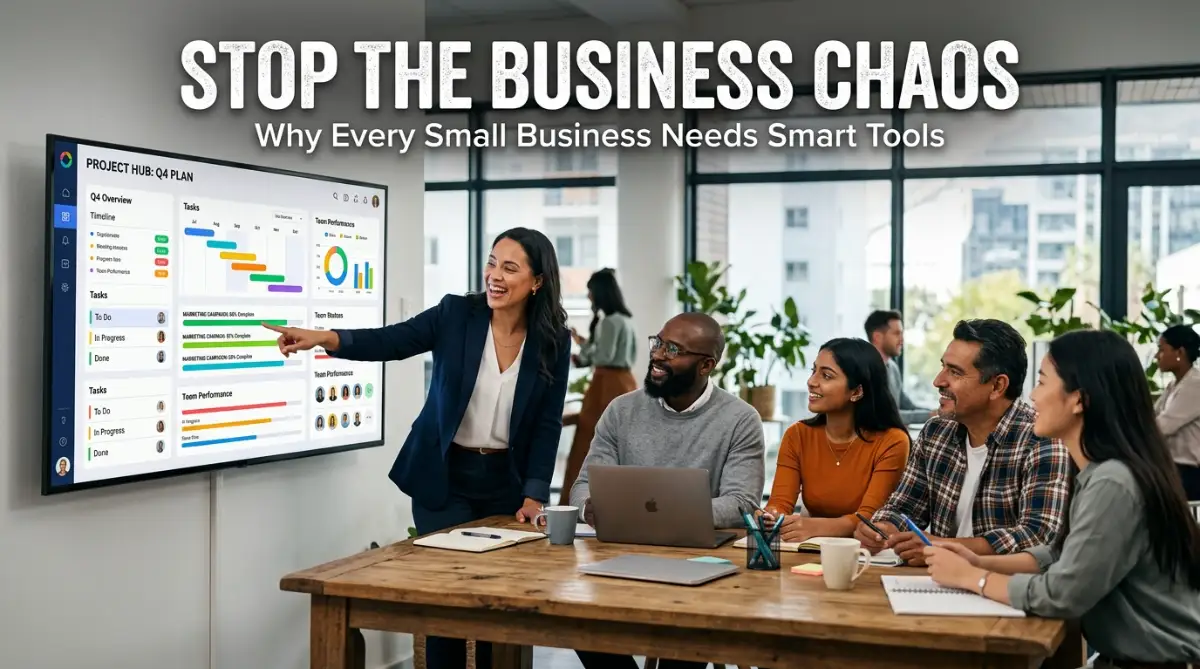
The Hidden Cost of Being Unorganized: My Personal Journey Through Business Chaos
I remember sitting at my wooden desk last Tuesday night at 2:00 AM. My eyes were burning from looking at five different spreadsheets that didn't match up. I had three sticky notes on my monitor that were falling off, and a client was waiting for an update I forgot to send.
My heart was racing because I knew I was losing control of my own dream. I started my small business to find freedom, but instead, I found myself trapped in a web of emails and missed deadlines. It felt like I was trying to hold water in my hands; the more I tried to grab, the faster it slipped away.
That night, I realized that hard work isn't enough if you don't have a system. I was drowning in the "small things" and forgetting the big picture of my business growth. It wasn't just about being busy; it was about the constant fear of dropping the ball on a major project.
The Daily Struggle Many Business Owners Face Alone
Many people think running a small business is just about selling a product or a service. But the reality is much heavier than that. You are the CEO, the secretary, the marketing person, and the guy who fixes the coffee machine all at once.
When you don't have a central place to track your work, your brain becomes the storage unit for everything. This leads to what I call "mental clutter." You wake up at 3:00 AM wondering if you replied to that invoice or if the designer started on the new logo.
This constant state of worry takes a massive toll on your mental health. It makes you feel like you are failing even when you are working 12-hour days. You lose the joy of being a creator because you are too busy being a fire-fighter, jumping from one emergency to the next.
Your team feels it too. Without a clear plan, they keep asking, "What should I do next?" This creates a loop of interruptions that stops anyone from actually getting deep work done. It is a slow, painful way to run a company that eventually leads to burnout or worse—losing your best clients.
I’ve talked to so many friends who feel like they are stuck in a hamster wheel. They are running fast, but they aren't going anywhere. They feel guilty when they take a break because they aren't sure what is happening in their business at that very moment.
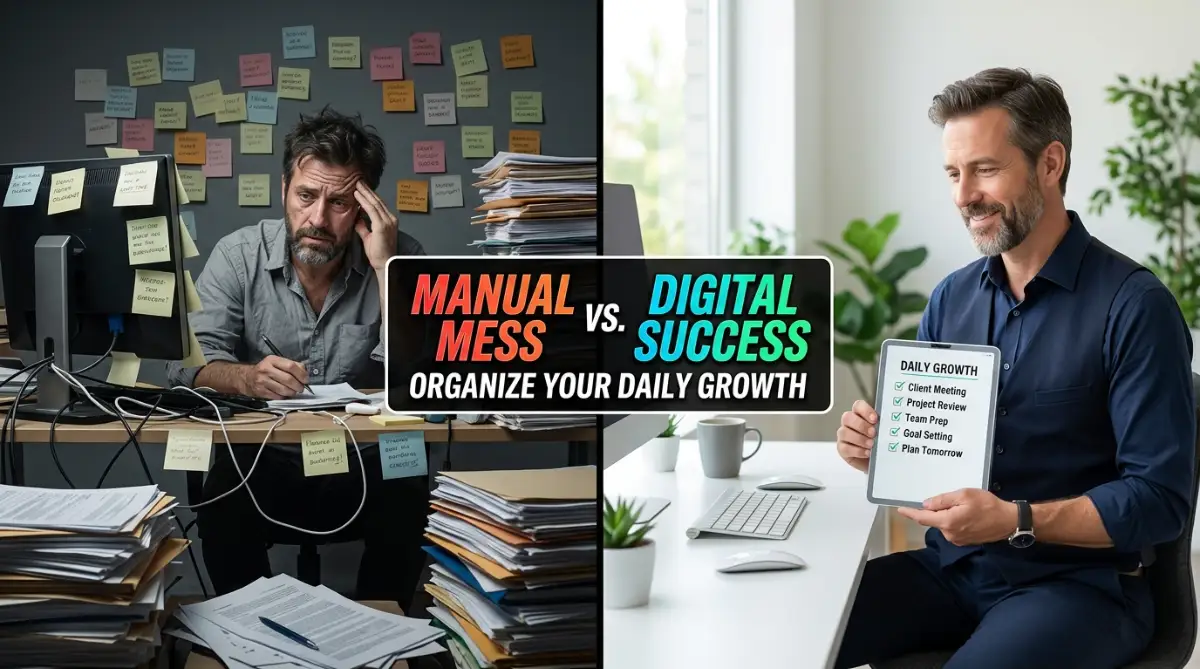
How to Transition from Total Chaos to Complete Control
The good news is that you don't have to live this way forever. There is a simple fix that changed my life and my business. It is all about moving your brain out of your head and into a digital system.
Let's look at the first steps you can take to reclaim your time and your sanity.
Centralizing Your Communication to Stop the Email Madness
The biggest time-waster in any small business is the endless search for information. Think about how many times you’ve searched through three different email threads to find one attachment. It’s a nightmare that eats up hours of your week.
By using a project tool, you move all those conversations into one place. Each project has its own "home." When someone has a question about a specific task, they ask it right there inside the task.
This means you never have to ask, "Where did we talk about the color of the website?" You just click on the website project and see the whole history. It creates a "single source of truth" for your entire team.
Pro Tip:
When I first started using a system, I made the mistake of still sending some tasks over email. I quickly realized that if it isn't in the project tool, it doesn't exist. Now, I tell my team, "If you want me to do it, put it in the dashboard," and it has saved us so much confusion!
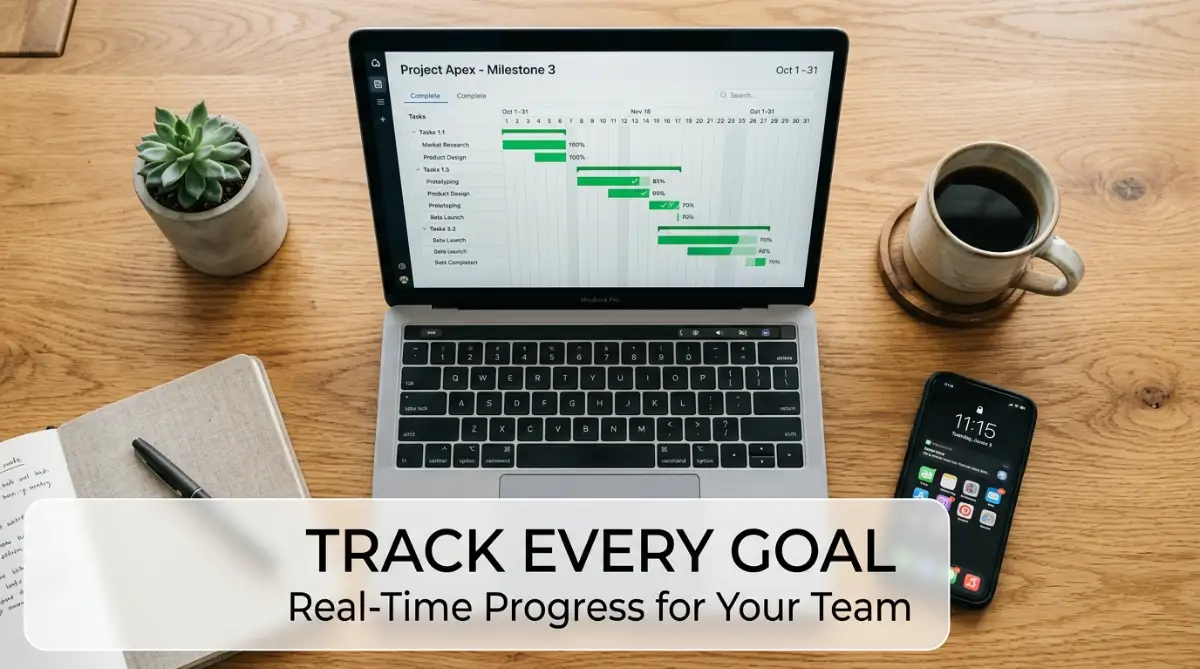
Visualizing Your Goals with Real-Time Progress Tracking
One of the best things about modern software is that it gives you a "bird's eye view." Instead of a long list of text, you can see your projects on a calendar or a board. This helps you see where things are getting stuck.
For example, you might see that five tasks are stuck at the "Review" stage. This tells you that YOU are the bottleneck. You are the one holding up the team. Seeing this visually is a huge wake-up call that helps you fix problems before they become disasters.
It also gives you a sense of pride. Seeing those little green checkmarks or moving a card to the "Done" column provides a hit of dopamine. It proves that you are actually making progress, which is great for your motivation on hard days.
Why Visual Tracking is a Game Changer for Your Team
Watch this video to see how visual planning can transform your daily productivity.
Ending the "Who is Doing What?" Mystery Forever
In a small office or a remote team, it is very easy for two people to do the same task. Or even worse, for a task to fall through the cracks because everyone thought someone else was doing it.
A project management tool assigns a "Human Face" to every task. There is no guessing. You can see exactly who is responsible for the social media posts and who is handling the client calls.
This creates a culture of accountability. When a person knows their name is attached to a deadline, they are much more likely to finish it on time. It also stops you from micromanaging because you can see the progress without having to ask them every five minutes.
Automating the Boring Stuff So You Can Focus on Growth
Many small business owners spend 40% of their day on "work about work." This includes things like setting up meetings, sending reminders, or moving files. This is not the work that makes you money.
Project software can automate these small steps. You can set it up so that when a task is finished, the next person in line automatically gets a notification. Or, you can set recurring tasks for things like "Monthly Invoicing" so you never forget them.
This "set it and forget it" mindset is how you scale. You want to spend your brainpower on creative ideas and sales, not on remembering to send a follow-up email. Automation acts like a silent assistant that never sleeps and never makes a mistake.
The Myth of "I'm Too Small for Professional Software"
I often hear people say, "Oh, it's just me and one helper, we don't need fancy tools." This is a huge trap. If you don't build the system when you are small, you will never have the foundation to get big.
Think of it like building a house. You wouldn't wait until the second floor is finished to put in the plumbing. You do it at the start. Using a tool now prepares you for the day you have ten employees.
Also, most tools have free versions for very small teams. You are getting world-class organization for zero dollars. There is literally no reason to keep using a messy notebook when you have these options at your fingertips.
Protecting Your Most Valuable Asset: Your Time
Time is the only thing you can't buy more of. Every minute you spend looking for a lost password or asking a team member for an update is a minute you aren't growing your revenue.
When you use a system, you are buying back your time. You are making your business run like a well-oiled machine. This allows you to actually leave the office at 5:00 PM and spend time with your family without checking your phone every two minutes.
It’s about more than just business; it’s about your quality of life. A calm business owner is a smart business owner. When you aren't stressed, you make better decisions and treat your customers better.
Why Documentation is Your New Secret Weapon
Have you ever had a great employee leave, and suddenly nobody knows how to do their job? This is a common disaster for small companies. All the "know-how" was in that person's head, and now it's gone.
Project management software allows you to store "How-To" guides and templates inside the system. If a new person joins, they can just look at the previous projects to see how things are done.
This makes your business "people-independent." It means the business can run even if you aren't there to oversee every single detail. This is the first step to truly owning a business instead of just owning a job.
Breaking Down Complex Projects into Bite-Sized Wins
Big projects can feel scary. If you have a goal like "Launch a New Product," it feels like an mountain. Most people procrastinate on big goals because they don't know where to start.
A good tool helps you break that mountain into small stones. You can create sub-tasks for every tiny step. Instead of "Launch Product," you have "Write one product description" or "Take one photo."
When you focus on these small wins, the big goal happens naturally. It stops you from feeling overwhelmed and keeps your team moving forward every single day. Consistent small steps lead to massive results over time.
Improving Client Trust Through Better Organization
Clients can smell chaos. If you take three days to answer a simple question or if you forget a detail they told you, they lose trust. They start wondering if you are professional enough to handle their money.
When you use a management tool, you look like a pro. You can give them updates instantly. Some tools even let you invite the client to see the progress in real-time. This level of transparency makes you stand out from all your messy competitors.
Happy clients are the best marketing you can ever have. They refer their friends and stay with you for years. All of this starts with being organized enough to give them a great experience every single time.
Preparing for the Future of Remote and Hybrid Work
The way we work has changed forever. Even small businesses often have a virtual assistant in another country or a bookkeeper who works from home. You can't just shout across the room anymore to get an answer.
Project management software is the "digital office" where everyone meets. It doesn't matter if your team is in the same room or across the globe. Everyone sees the same tasks and the same deadlines.
This flexibility allows you to hire the best talent from anywhere, not just people who live near your office. It gives your business a global reach and keeps everyone connected without needing 20 Zoom calls a week.
Creating a Stress-Free Environment for Success
At the end of the day, your business should serve you, not the other way around. Project management software is the bridge that takes you from a place of constant stress to a place of calm productivity.
It takes effort to set up, but the rewards are worth it. You will find that you have more energy, more focus, and a much clearer path to the success you’ve always wanted. Don't wait until you are "big enough" to be organized. Be organized so that you can finally get big.
The Power of Data-Driven Decisions
When you use a tool, you start to see patterns. You might notice that a certain type of project always takes twice as long as you thought. Or you might see that one team member is consistently finishing tasks early.
This data is gold. It helps you price your services better and reward your best workers. Without a tool, you are just guessing based on your "gut feeling." With a tool, you have the facts to make smart moves that grow your bank account.
I used to think I knew where my time went. But when I tracked it in my software, I saw I was spending way too much time on admin tasks. I changed my focus, and my profits grew by 30% in just three months. That is the power of knowing your numbers.
Mastering Your Business Workflow: Expert Secrets for Long-Term Growth
Now that you understand the basic "why" behind these tools, let’s talk about how to actually win with them. It is one thing to buy a piece of software, but it is another thing to make it the heartbeat of your company. I’ve seen so many people sign up for a tool, use it for three days, and then go back to their messy notebooks.
To avoid this, you need to treat your software as a living part of your team. One of the best secrets I’ve learned is to keep it simple at the start. You don't need to use every single feature or button on day one.
Start by just tracking your main deadlines and who is doing what. As you get comfortable, you can start exploring more advanced things like how to use artificial intelligence to automate daily productivity tasks within your workflow.
Another expert tip is to set a "Weekly Review" time. Every Friday afternoon, I spend 20 minutes looking at my dashboard. I check what we finished and what needs to move to next week.
This small habit stops the "Sunday night scaries" because I know exactly what my Monday looks like. It is about building a system that gives you mental peace before the weekend even starts.
You should also look into how your tools talk to each other. For example, if you use a chat app like Slack or Discord, you can connect it to your project manager. This way, when a task is done, you get a quick ping. This keeps everyone in the loop without needing to log in and out of ten different windows. It’s all about reducing the friction in your day.
If you are a solo worker or just starting out, you might be thinking about how to start a virtual assistant business. If that’s you, these tools are your best friend. They allow you to show your clients exactly how hard you are working.
It builds a level of trust that a simple email never could. You become a partner in their success, not just another freelancer.
According to research from the Project Management Institute (PMI), organizations that use standardized project management practices waste 28 times less money than those that don't. That is a massive difference for a small business! You aren't just buying software; you are protecting your bank account from invisible leaks.
To keep this going long-term, you must make documentation a habit. Whenever you finish a task that you will have to do again next month, write down the steps. Put that guide inside your project tool. Next time, you won't have to "remember" how to do it. You just follow the map you already built for yourself.
Finally, remember that the goal is master your mind how to stay calm and think clearly under pressure. When your business is organized, your brain is free to be creative. You stop reacting to problems and start creating opportunities. That is the true secret of high-level business owners.
Dangerous Traps That Could Sink Your Business Growth
Even with the best tools, people still make mistakes that cost them time and money. One of the biggest errors I see is over-complicating the setup. Some business owners spend weeks building a perfect "system" with hundreds of labels and colors. By the time they finish, the team is too confused to use it.
If your team feels like the software is "more work" than the actual job, they will stop using it. This leads to a broken system where half the info is in the tool and the other half is in private texts. This is a recipe for a total communication breakdown. I've been there, and believe me, it’s harder to fix a messy system than to start a clean one.
Another mistake is ignoring the training phase. You can't just send a link to your team and say "use this." You need to show them why it helps THEM, not just why it helps you. If they don't see the benefit, they will treat it like a chore. You have to be the cheerleader for your new system until it becomes a natural habit for everyone.
Many people also fail because they don't trust the data. They see the software telling them a project is behind schedule, but they ignore it. They think, "Oh, we can catch up later." But later never comes. The software is like a smoke alarm; if it’s beeping, you need to check for fire. Ignoring the warnings is a fast way to lose a client’s trust.
This is exactly why most startup founders struggle with time management. They try to do everything themselves and ignore the systems that could help them. They treat the software like a suggestion instead of a rule. If you want to grow, you have to let the system lead the way.
I also see people picking the wrong tool for their specific needs. Just because a giant corporation uses a specific software doesn't mean it’s right for your small team. Some tools are too heavy and slow. If it takes five clicks to add a simple task, you picked the wrong one. Pick a tool that fits your current size but has room to grow as you do.
Lastly, there is the trap of forgetting to clean up. Over time, your dashboard can get cluttered with old tasks and finished projects. If you don't archive them, the screen becomes overwhelming.
A messy digital workspace is just as bad as a messy physical desk. It slows down your brain and makes you want to avoid looking at it.
Your New Path to a Stress-Free Business Life
We have covered a lot of ground today. From the early days of feeling lost in a pile of emails to the advanced secrets of using automation.
The journey from chaos to control isn't always easy, but it is always worth it. Think about the version of yourself a month from now. That person could be waking up with a clear plan, a happy team, and more free time.
Using project management software is really about respecting your own time. It is a way of saying that your dreams are worth the effort of being organized. You are no longer just "trying" to run a business; you are building a professional machine. This change in mindset is often the thing that separates those who stay small from those who scale.
If you are interested in how technology is changing the way we work, you might enjoy reading about how generative ai is transforming digital content creation. These tools are all part of the same big picture: working smarter so you can live better. The future of business belongs to those who use the right tools to amplify their human skills.
I want you to take a deep breath and realize that you don't have to do it all alone. The tools are there, the guides are ready, and the path is clear. Start small, stay consistent, and watch how your business transforms. You deserve to have a company that brings you joy, not just stress.
I truly believe that once you see the clarity that comes from a well-organized dashboard, you will never want to go back to the old way. My own business changed the moment I stopped trying to remember everything and started trusting my system.
I felt a weight lift off my shoulders that I didn't even know I was carrying. I want that same feeling of freedom for you, starting right now!
Common Questions About Small Business Management Tools
Is project management software too expensive for a brand-new business?
Not at all! Many of the best tools on the market offer a "forever free" plan for small teams or individuals. You can get all the basic features like task lists, boards, and file sharing without spending a single dollar. It’s a great way to build your system while you are still growing your revenue.
How long does it take to learn how to use these tools?
Most modern tools are designed to be very user-friendly, almost like using a social media app. You can learn the basics in about 30 minutes. The real challenge isn't learning the buttons; it’s the habit of checking the tool every day. If you can commit to using it for just one week, it will start to feel like second nature.
Can I use these tools on my phone or do I need a computer?
Almost every major project management tool has a great mobile app. This is perfect for business owners who are always on the move. You can check the status of a project while waiting for coffee or assign a new task while you are away from your desk. It keeps you connected to your business wherever you go.
What if my team doesn't want to use new software?
The best way to get them on board is to show them how it saves them time. Explain that they will have fewer meetings and fewer "check-in" emails. When they see that the software makes their job easier and less stressful, they will usually be happy to use it. It’s all about showing the value for their own daily life.
Disclaimer: This article is for informational purposes only. The advice provided is based on general business practices and personal experiences. Every business is unique, and you should evaluate any software or strategy based on your specific needs and legal requirements. Always check the terms of service and privacy policies of any third-party tools you decide to use.
![7 Secret Prompting Formulas for AI Success [The Blueprint]](https://nexvoramag.com/storage/uploads/blogs/1786000012_7-secret-prompting-formulas-for-ai-success-the-blueprint.webp)