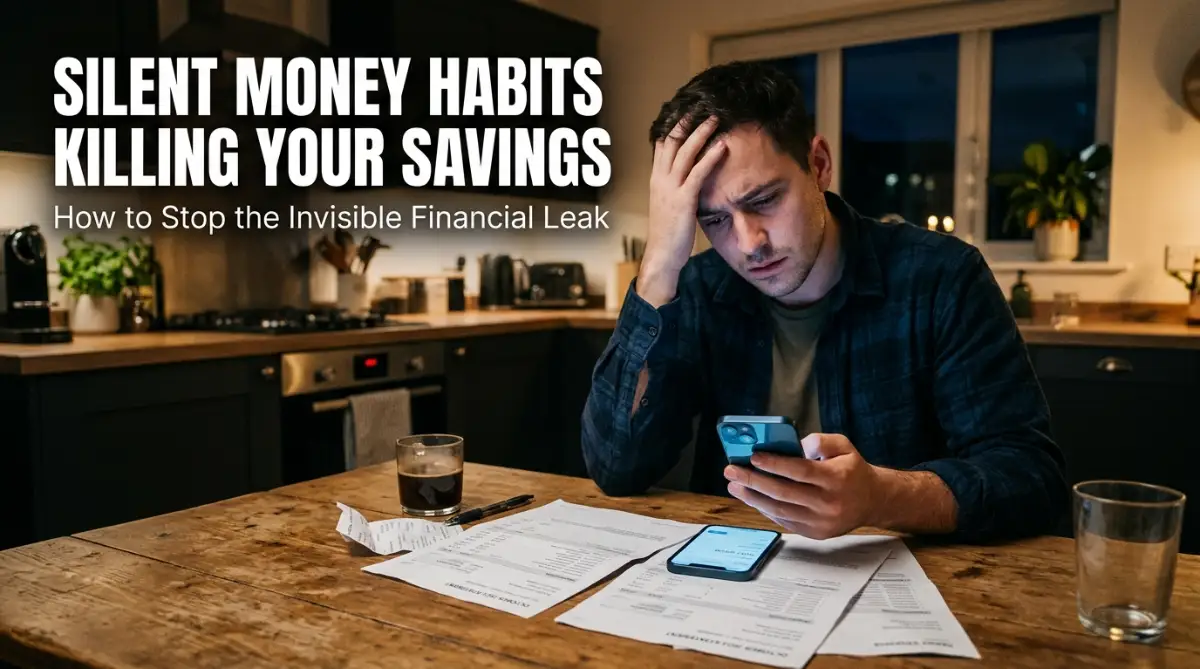
When Your Search for Financial Help Becomes a Nightmare
I once almost lost $200 to a fake loan site because my roof was leaking and I was panicking. It’s scary how fast a professional-looking website can trick you when you're desperate for help.
I’ve learned that scammers don't just want your money; they want to use your stress against you.
Imagine you are in a tight spot. Your car broke down, or a medical bill just arrived. You need money fast, and your bank is taking too long.
Suddenly, you see an ad or get a text. It promises a loan with "no credit check" and "instant approval." You feel a huge sense of relief. But that relief can turn into a nightmare in just a few hours. Instead of getting help, you might lose the little money you have left.
Scammers are experts at finding people who are stressed. They use your worry to cloud your judgment. They promise a way out, but they are actually digging a deeper hole for you.
This is a reality for thousands of people every single day. They aren't just losing money; they are losing their sense of security.
Before You Move Forward, Remember This:
- Never pay first: Real lenders take fees from the loan itself, not from your pocket.
- Check the URL: Scammers often use names that look like big banks but have one wrong letter.
- Wait 24 hours: If they say you must act "right now," they are probably trying to scare you.
- Trust your gut: If an offer feels too good to be true, it’s a trap 100% of the time.
Why Finding Real Financial Help Is So Hard

It is not your fault that these scams look so real. Criminals today use professional websites and polite customer service to trick you. Here is why many people struggle to find the truth:
- Fake Professionalism: Scammers create websites that look exactly like big banks or famous insurance companies.
- Too Good to Be True: They offer interest rates that are much lower than the market average to lure you in.
- Urgency Tactics: They tell you the offer expires in one hour, so you don't have time to think or research.
- Information Overload: The internet is full of "quick cash" ads that hide the real, safe options.
- Social Engineering: They use friendly voices on the phone to build trust before they steal from you.
The Reality of the Modern Financial Trap
Scammers have changed their ways. They no longer send emails with bad grammar from far away. They now live in your social media feeds and your text messages.
They use "Advanced Fee" tricks. This is where they tell you that your loan is approved, but you must pay a "processing fee" or "insurance fee" first.
Once you pay that fee, the person disappears. Your phone calls go to voicemail. Your emails bounce back. The money you sent is gone forever.
In the insurance world, "Ghost Brokers" sell you fake policies. You think you are covered until you have an accident. Only then do you find out your policy never existed.
This creates a cycle of debt and fear. But you can stop it by learning how to spot these traps before you step into them.
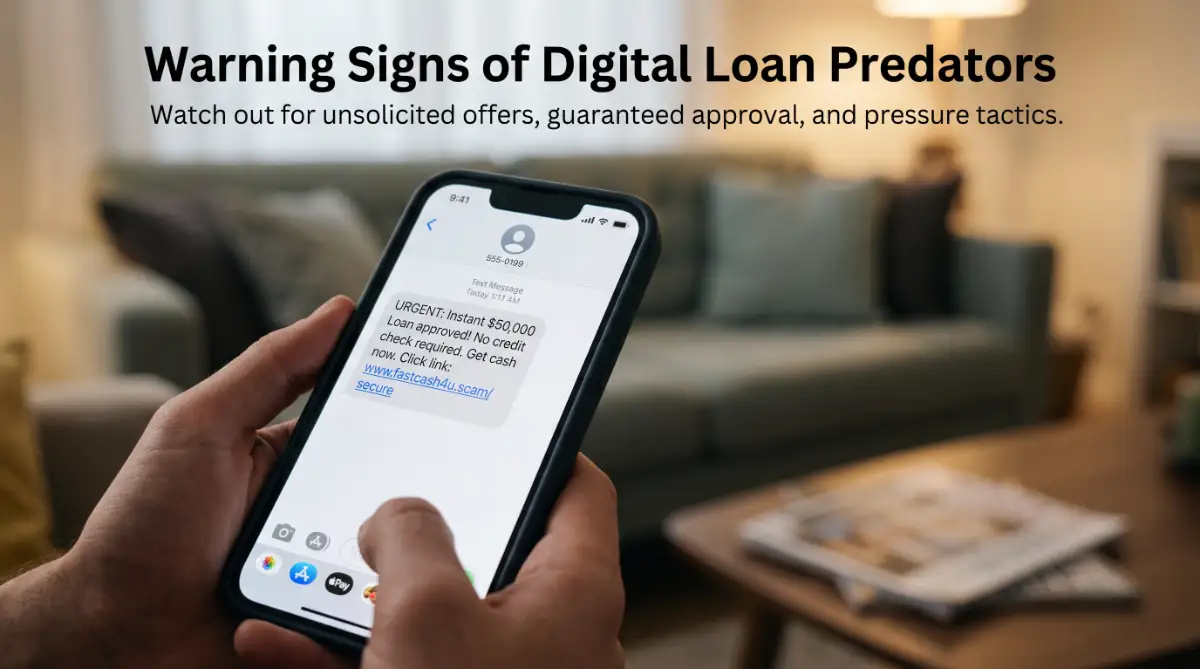
Essential Steps to Protect Your Wallet from Predators
You do not have to be a financial expert to stay safe. You just need to know the basic rules that scammers hate. These steps will help you verify every offer you get.
Step 1: Ignore the "Guaranteed Approval" Bait
If a lender says they don't care about your credit score, run away. Real lenders always want to know if you can pay them back.
One big mistake I made in the past was trusting a person just because they sounded friendly and had a nice profile picture on social media.
I eventually realized that anyone can steal a photo and a logo, so now I always hang up and do my own research before I share even a tiny bit of my personal info.
Real-Life Scenario: Think of it like a job interview. Would a real company hire you without even looking at your name or skills? No.
Lending is a business. No business gives money away for free to everyone. "Guaranteed approval" is almost always a sign that they want your upfront fee, not a long-term loan relationship.
FeatureLegitimate LenderScam OfferCredit CheckAlways required"No credit check"Upfront FeesTaken from the loan amountAsked for via gift card or wirePressureGives you time to thinkSays "Act now or lose it"
Pro Tip: Always check the lender's physical address. If they only have a website and a phone number, it is a huge red flag.
| Common Scam Type | The Hook | The Reality |
| :--- | :--- | :--- |
| Advanced Fee Loan | Pay $100 to release your $5,000 loan | They take your $100 and disappear. |
| Ghost Broker | Super cheap car insurance via WhatsApp | You pay for a policy that doesn't exist. |
| Phishing SMS | Your bank account is locked. Click here | They steal your login details and drain your cash. |
Step 2: Spot the Red Flags in Digital Communication
Scammers love using WhatsApp, Telegram, or private Facebook messages. They do this because these platforms are hard for the police to track.
A real bank or insurance company will send you official documents through a secure portal or registered mail. They will not ask you for your social security number over a text message.
The "Gift Card" Trick: No real business will ever ask you to pay a fee using a Google Play card, an Amazon gift card, or Bitcoin.
These payment methods are like cash. Once you give them the code, the money is gone. There is no "undo" button for a gift card scam.
If someone asks for a payment before they give you the loan, they are a scammer. In the US and many other countries, it is actually illegal for a lender to ask for money before they fund your loan.
Want to see exactly how these sneaky scammers try to trick you? Watch this eye-opening video to hear the common lies they use so you can hang up the phone or delete that message with total confidence!
Step 3: Use Government and Official Tools for Verification
Before you sign anything, you must check if the company is licensed. Every state and country has a registry for financial companies.
If someone claims to be an insurance agent, ask for their license number. Then, go to your government’s insurance department website and look them up.
Analogy: You wouldn't let a person perform surgery on you just because they wore a white coat. You would want to know they are a real doctor. Insurance and loans are the same.
If the "agent" gets angry or defensive when you ask for their license, that is your answer. A professional will be happy to show you their credentials because they have nothing to hide.
Practical Checklist for Every Offer
Before you provide any data or pay any money, ask yourself these three things:
- Did I contact them first, or did they contact me out of the blue?
- Are they asking me to pay money to "unlock" the loan?
- Is the offer way better than what my local bank is offering?
If the answer to any of these makes you feel uneasy, stop. You are better off with no loan than with a stolen identity and a drained bank account.
Stay calm and stay skeptical. Your financial safety depends on your ability to say "no" to a deal that looks too good to be true.
Mastering the Art of Financial Self-Defense
Moving beyond the basic red flags, you need to learn how to investigate a lender or insurance agent like a professional.
Scammers are becoming more sophisticated, but they almost always leave small clues that you can find if you know where to look.
One of the best ways to stay safe is to verify the digital footprint of the company before you even say hello to them.
Digging Deeper into the Company Website
A professional-looking website is very easy to buy or copy. To find the truth, you should look at how long the website has actually existed. You can use free online tools to check the "WHOIS" data of a domain.
If a company claims they have been around for twenty years but their website was registered only two weeks ago, you are looking at a scam.
Also, check the contact page very carefully. A legitimate financial business will have a physical street address, not just a PO Box or a vague "Headquarters in New York" mention.
Take that address and put it into a map search. If the address belongs to a residential house, a parking lot, or a shared co-working space that doesn't list the company, stop all communication immediately.
The Power of Silence and Cold Research
Scammers rely on "High-Pressure Selling." They want to keep you on the phone or in a chat room so you don't have time to think.
One expert secret is to simply hang up and call the company back using a number you found on an official government website or a trusted directory like Investopedia.
If a person calls you claiming to be from your bank, tell them you will call them back. Never use the "Extension" or the direct number they give you.
By doing your own "Cold Research," you take the power away from the scammer. You are now the one in control of the conversation, which is exactly what a criminal does not want.
Building Your Own Financial Fortress
The reason many people fall for predatory loans is a lack of a backup plan. When you have no savings, a fake $5,000 loan offer looks like a gift from heaven.
To avoid this trap in the future, you should focus on creating an emergency fund financial safety net. This fund acts as a wall between you and the scammers.
When you have even a small amount of money saved for surprises, you won't feel the panic that makes you overlook red flags. You will have the luxury of time to shop around for real, licensed lenders.
Being prepared is the most advanced form of scam prevention there is. Understanding what is a credit score and how it impacts your financial future will also help you get approved by real banks so you never have to look at shady ads again.
Protecting Your Identity in a Digital World
Insurance scams often start with a "simple" survey or a request for your medical history. They use this information to steal your identity or sell your data to other criminals.
Never give out your social security number or tax ID to someone who reached out to you first.
Real insurance companies only ask for this sensitive data after you have gone through a formal application process on their secure website.
If you are browsing for quotes on public networks, remember that your data could be intercepted.
Using a tool to keep your connection private is a smart move. Learn how a vpn encrypts your data on public wi-fi networks to make sure no one is "listening" to your financial conversations.
Myth vs. Fact: Financial Safety Edition
- Myth: "If a website has a padlock icon (HTTPS), it is 100% safe."
- Fact: Scammers use padlock icons too. It only means the connection is private, not that the company is honest.
- Myth: "A bank worker will call me to fix a security issue."
- Fact: Real banks rarely call out of the blue to ask for personal details. They usually send a secure message in your app.

Dangerous Missteps That Could Cost You Everything
Even the smartest people can make mistakes when they are tired or stressed. Scammers wait for these moments of weakness.
Knowing the most common pitfalls will help you catch yourself before you make a choice you will regret later.
Blind Trust in Social Media Advertisements
Just because an ad appears on your Facebook or Instagram feed does not mean it is safe. Scammers pay for these ads just like real businesses do.
Many people assume that big tech companies "verify" every advertiser, but that is not always true.
If you see a loan offer in a social media comment section or a sponsored post, treat it with extreme caution. These ads often lead to "Phishing" sites designed to look like your bank’s login page.
If you enter your password there, the scammer has full access to your life savings within seconds.
Handing Over Your Digital Keys
One of the biggest mistakes is sharing a "One-Time Password" (OTP) or a verification code with someone over the phone. A bank worker will never, ever ask you for this code. This code is the final key to your account.
If someone says, "I sent a code to your phone to verify your identity, please read it to me," they are actually trying to log into your account and the bank is sending you a warning.
By giving them that code, you are opening the vault for them. Hang up immediately and report the number to the Federal Trade Commission or your local authorities.
Skipping the Fine Print in Insurance Policies
In the insurance world, "Ghost Brokers" are a massive problem. They might give you a paper that looks like a policy, but they have actually changed the details to make it cheaper or completely fake.
People often make the mistake of not calling the actual insurance company to verify the policy number.
If you bought car insurance from an individual agent, take ten minutes to call the main company line. Ask them if your name and vehicle are in their system. This simple step can prevent you from driving without coverage.
Many people realize why comprehensive car insurance is essential for every vehicle owner, but it only works if the policy is actually real.
Believing in the "Refund" or "Overpayment" Story
A common scam involves a fake lender "accidentally" sending you too much money. They will show you a fake screenshot and ask you to send the "extra" money back via a wire transfer or a payment app.
Later, you will find out that the original money they "sent" was from a stolen account or a fake check. When the bank realizes this, they will take the full amount back from your account.
The "refund" you sent to the scammer was your own real money, and it is gone forever.
Letting Emotions Drive Your Financial Decisions
The biggest mistake is acting out of fear. Scammers use words like "Urgent," "Final Notice," or "Legal Action" to make you panic. When you are in a state of fear, the logical part of your brain shuts down.
Before you make any move, take a deep breath. Ask yourself, "What is the worst thing that happens if I wait 24 hours?" Usually, the answer is nothing.
A real business will always give you time to consult with a lawyer or a financial advisor. If they won't let you wait, it is a trap. Be sure to avoid these personal loan mistakes ruin your finances by staying calm and collected.
Your Roadmap to a Secure Financial Future
Protecting yourself from scams is a skill that you get better at over time. It starts with a healthy dose of skepticism and ends with a solid plan for your money. You have the power to keep your hard-earned cash safe from those who want to take it.
Think of your financial safety like a house. You need strong locks (passwords), a good fence (verification), and a security system (knowledge).
By reading this guide, you have already installed the security system. You now know what the "thieves" look like and how they try to get inside.
Start today by checking your current accounts. Enable "Two-Factor Authentication" on all your banking and insurance apps.
This adds an extra layer of protection that scammers find very hard to break. It is a simple habit that provides massive peace of mind.
Remember, if a deal feels like a miracle, it is probably a mirage. Real financial growth and stability come from patience and using trusted, licensed institutions. You don't need a "fast" loan when you are building a slow and steady future.
Stay curious, stay cautious, and always trust your gut feeling. If something feels wrong, it usually is. You have worked hard for your money, and you deserve to keep every cent of it.
Take these lessons and share them with your friends and family so they can stay safe too.
Learning to spot these traps was like gaining a superpower that finally gave me peace of mind. You don’t have to be afraid of the digital world as long as you stay alert and follow your instincts.
Take a deep breath, stay skeptical, and remember that you are the one in charge of your financial safety starting today.
Disclaimer: The information provided in this article is for educational purposes only and does not constitute professional financial, legal, or insurance advice. Always consult with a licensed financial advisor or legal professional before making any major financial decisions. We are not responsible for any losses incurred by following the tips mentioned in this post.