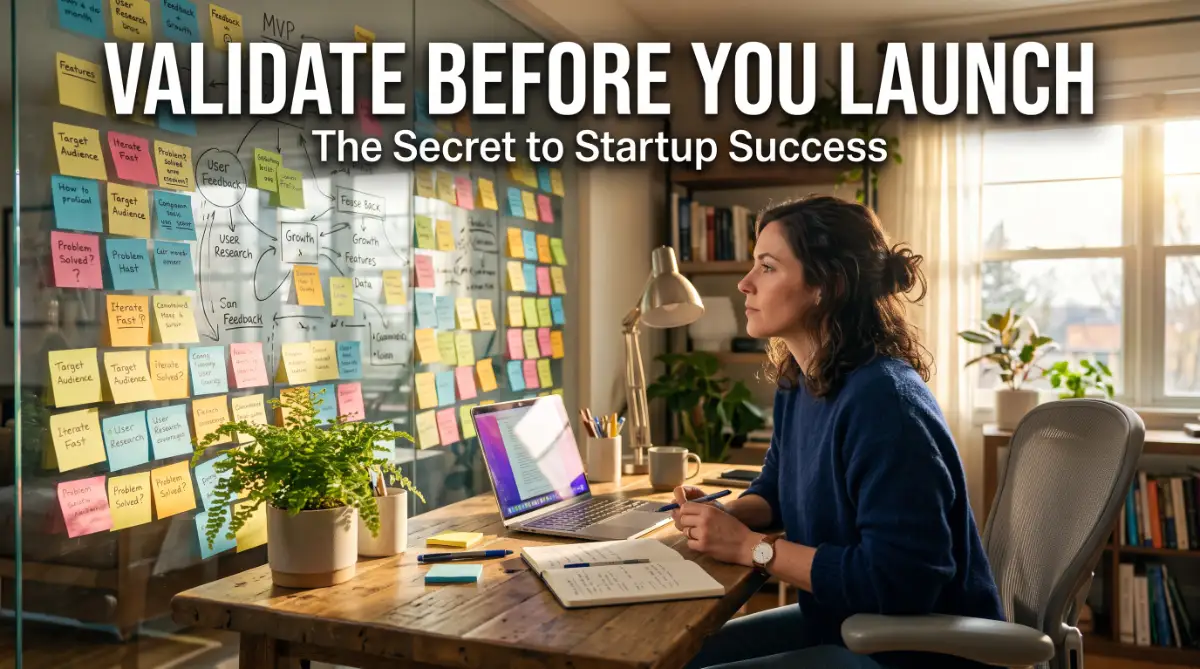
I Spent My Savings on an Idea Nobody Wanted (Don't Be Me)
I once blew three months of my life and every penny I had on a software project I thought was "pure genius." I had the perfect logo and a sleek website, but when I launched, the only sound was crickets.
It turns out, I was solving a problem that didn't exist. I don't want you to feel that gut-punch of failure, so let's talk about how to make sure people actually want to buy what you’re building before you spend a dime.

Quick Summary: How to Avoid Business Failure
- Stop Secret Building: Share your idea with strangers early to get real feedback.
- Find the Pain: Don't build "cool" things; solve "bleeding neck" problems.
- Test Before Building: Use landing pages and "smoke tests" to see if people click.
- Pre-Sell: A real customer is someone who pays, not someone who says "nice idea."
- Start Small: Use a Minimum Viable Product (MVP) to save your savings.
Why Most Ideas Fail the Reality Test
People often get trapped in their own heads. They fall in love with their "invention" rather than the "solution." Here is why the struggle is so common for new founders:
- The Echo Chamber: You only talk to friends and family who don't want to hurt your feelings.
- Building in Secret: You are so scared someone will "steal" your idea that you never show it to real people.
- Assuming Demand: You think because you have a problem, millions of others must have the same one too.
- Skipping the Hard Part: Research is boring. Building a website is fun. Most people choose the fun part first.
- The "Build it and They Will Come" Lie: This only works in movies. In the real world, if you build it, people usually ignore it.
Is Your Idea a "Vitamin" or a "Painkiller"?
Before you start, you need to know what you are selling. People pay much faster for painkillers.
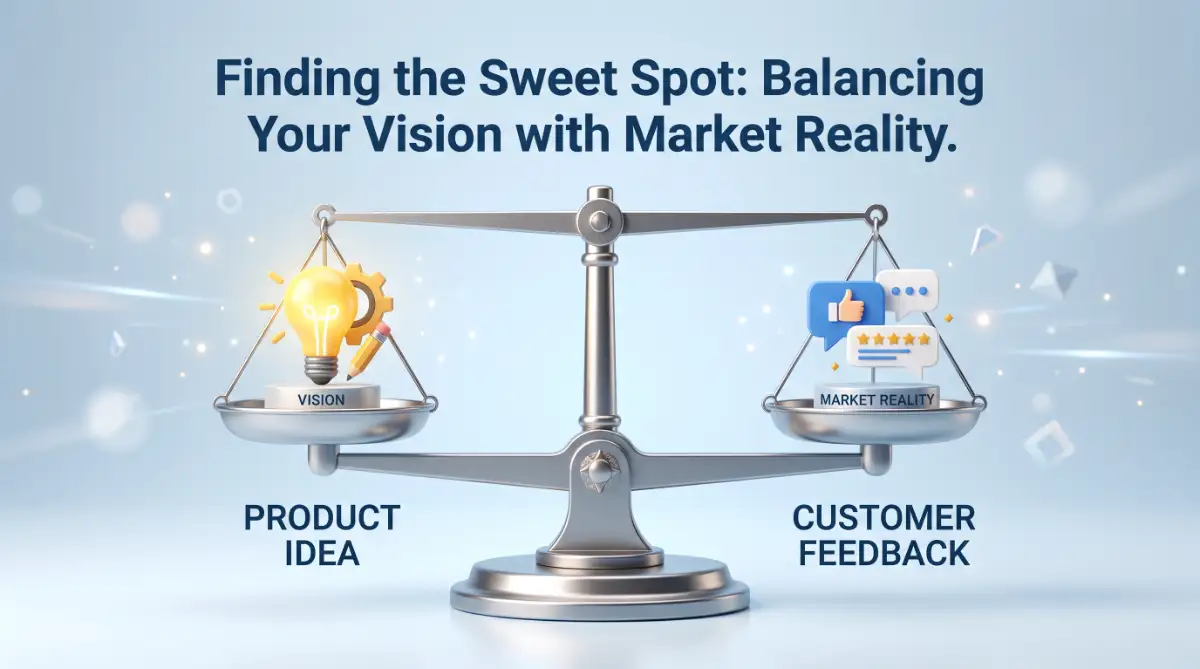
The First Steps to Protecting Your Future Business
We are going to move through this in a way that is easy to follow. You don't need an MBA to do this. You just need to be honest with yourself and willing to listen.
Let's look at the first few stages of turning a "guess" into a "proven plan." These steps will help you build a solid foundation so that when you do launch, you already have people waiting to buy.
Step 1: Identifying the "Bleeding Neck" Problem
The world does not need another "cool app." It needs solutions to painful problems. A "bleeding neck" problem is something so annoying or difficult that people are desperate to fix it.
How to find it:
Stop looking at your idea and start looking at people. Go where they hang out online. Read comments on Reddit, Quora, or specialized Facebook groups. Look for people complaining.
If you see someone saying, "I hate it when..." or "Why is it so hard to...", you have found a potential business. Your job is to listen more than you talk. If your idea doesn't solve a specific pain, it is a hobby, not a business.
Pro Tip: Ask yourself, "Would someone pay $50 to make this problem go away right now?" If the answer is "maybe," keep searching. If the answer is "yes, please take my money!", you are on the right track.
Step 2: Conducting the "Inconvenient" Market Research
Most people send a survey to their friends. Don't do this. Your friends will lie to you because they like you. Instead, you need to talk to strangers.
The "Five-Minute" Interview:
Find five people who fit your target customer profile. Ask them for five minutes of their time. Don't tell them your idea yet. Instead, ask them about their daily struggles in the area you want to work in.
- Tell me about the last time you tried to [task]?
- What was the hardest part about that?
- What have you tried to do to fix it?
- Why didn't those solutions work for you?
If they describe the problem you want to solve without you prompting them, you have a winner. This kind of research is like understanding the impact of keyword research on search engine ranking.
Just as you need to know what people search for in Google, you must know what they struggle with in real life.
Step 3: The "Smoke Test" Validation
This is the most powerful tool in your kit. A smoke test is a way to see if people will actually "click" or "sign up" for your solution before the solution exists.
How to run a simple test:
Create a very simple, one-page website (a landing page). You can do this in an afternoon. On this page, describe exactly how you solve the problem. Include a big button that says "Join the Waitlist" or "Get Early Access."
Then, tell people about it. You can share the link in groups or even run a very small $5-a-day ad on social media.
The Reality Check:
If 100 people visit your page and 10 of them give you their email address, you have real data. You have proven that a percentage of the market wants what you have.
This is much better than a friend saying "I'd buy that." An email address is a "micro-commitment." It is the first step toward a sale.
This process is a lot like how a VPN encrypts your data on public Wi-Fi networks. It provides a layer of security. In this case, it’s security for your wallet and your time.
Watch this video to see exactly how to run a smoke test and find out if people want your product before you spend a single dollar building it. It is the smartest way to save your time and money!
Myth vs. Reality: The Truth About "First Mover Advantage"
Myth: "I can't tell anyone my idea because someone will steal it and launch before me."
Reality: Ideas are cheap. Execution is everything. Most successful businesses were not the first ones. Google was not the first search engine. Facebook was not the first social network.
The "First Mover" often makes all the expensive mistakes. The "Second Mover" learns from those mistakes and builds something better.
Don't let fear keep you quiet. Talk to people. The feedback you get is worth much more than the risk of someone stealing your unfinished thought.
Analyzing Your Competitors (Without Being Scared)
If you find a competitor, don't be discouraged. Competition is actually a good sign. It proves that a market exists and people are already spending money there.
Go read the one-star reviews of your competitors. What are people complaining about? Are they too expensive? Is the customer service bad? Is the app too slow?
Your goal is not to be "better" at everything. Your goal is to be different in one area that people care about. This is your "Unique Value Proposition." It is the reason why someone would switch from a big company to your small, new business.
Why You Need a "Minimum Viable Product" (MVP)
Once you have your emails and your research, don't build the whole thing. Build the smallest possible version that solves the main problem.
If you want to start a gourmet cupcake business, don't buy a commercial kitchen. Bake six cupcakes in your home oven and see if people at a local market will buy them.
If you want to build a complex software tool, start with a simple Google Sheet or a manual service.
This "Lean" approach keeps you safe. It allows you to learn while you grow. If you make a mistake, it’s a small mistake that is easy to fix.
My Expert Tip: The "Wallet Test"
If you want to know if an idea is good, don't ask for "feedback." Ask for $1. If someone is willing to give you even a single dollar as a deposit, you have a real business. If they give you a compliment but won't reach for their wallet, keep working on the idea. Talk is cheap; sales are proof.
One thing I learned the hard way is to stop worrying about your business cards or your office space before you have a customer.
My biggest mistake was spending money on things that looked "professional" instead of just asking a stranger if they would buy my product. Now, I never build anything until I have at least ten people ready to pay me first.
Turning Your Data into a Plan
By now, you should feel a little different. Instead of just "hoping" your idea is good, you are starting to collect proof. You are seeing what real people think, say, and do.
In the next part, we will discuss how to use this proof to get your first paying customers. We will also look at the biggest traps that wait for entrepreneurs right before they launch.
Stay patient. The work you are doing now is what separates the people who "dream" from the people who actually "do." You are building your business on rock, not sand. And that makes all the difference.
Moving from Feedback to Real Financial Proof
Validation isn't just about people saying they like your idea. It is about seeing if they will actually open their wallets. In this stage, we move away from simple conversations and start looking for hard evidence.
The main goal of any business is to help people and get paid for it. If you spend months building something without asking for money, you are taking a massive risk. We want to reduce that risk to zero by testing the most important part of your business: the Transaction.
Securing Your First Dollar: The Power of Pre-Selling
Pre-selling is a technique where you offer your product or service before it is fully ready. This might sound scary, but it is the most honest form of market research. When a stranger gives you money for an idea, they are giving you a 100% "Yes."
The Slide Deck Strategy:
Imagine you want to start a specialized consulting service or a new software tool. Instead of building the whole thing, create a simple presentation.
Show it to potential clients and offer them a "Founding Member" discount if they sign up now.
If they say, "I'll buy it when it's ready," they aren't fully convinced. If they say, "Here is my credit card, let me know when I can start," you have a proven business.
This is a lot safer than borrowing money. If you're stressed about your startup costs, you should learn how to create a realistic monthly budget when you have irregular income to keep your personal life stable.
The Concierge MVP: Doing the Work Manually First
Many entrepreneurs think they need expensive technology to start. This is usually a mistake. You can often validate an idea by doing the work manually behind the scenes. This is called a Concierge MVP.
A Real-Life Scenario:
Think about the founders of a famous food delivery app. They didn't start with a complex GPS-tracked mobile application. They started with a simple website where they listed local menus.
When someone ordered, the founders would literally drive to the restaurant, buy the food, and deliver it themselves.
They did this to see if people even wanted food delivered from those specific places. Once they had too many orders to handle by themselves, they knew it was time to build the app.
By doing the work manually, you learn the "hidden" problems of your business that no survey will ever show you.
The "Wizard of Oz" Technique: High Tech on the Front, Human on the Back

This is similar to the concierge method but with a twist. To the customer, your business looks automated and high-tech. But in reality, you are the one pulling the levers behind the curtain.
If you are building an AI-powered resume builder, you don't need a complex algorithm on day one. You can have a website where people upload their info. Then, you manually rewrite it and send it back to them an hour later.
If people are happy with the result, then you know it is worth spending money to use artificial intelligence to automate daily productivity tasks and build the actual software.
How to Maintain Your Momentum Long-Term
Validation doesn't end on launch day. The best companies are in a constant state of testing. You must create a "Feedback Loop" that never stops.
- Weekly Customer Calls: Spend 30 minutes every week talking to a new user. Ask them what they hate about your product.
- The "Net Promoter Score" (NPS): Ask your customers, "On a scale of 1 to 10, how likely are you to recommend us to a friend?" Anything below an 8 means you still have work to do.
- Iterate, Don't Abandon: If a feature doesn't work, don't quit. Change it. Small tweaks often lead to big breakthroughs.
- Watch the Churn: If people sign up but leave after one week, your "Value Proposition" is strong, but your "Product Experience" is weak.
According to data from Harvard Business Review, businesses that pivot based on data are three times more likely to succeed than those that stick to their original plan no matter what.
Flexibility is your greatest strength as a small business owner.

The Danger Zones: Why Most Validations Go Wrong
Even if you follow the steps, it is easy to get tricked by "False Positives." These are signs that look like success but are actually leading you toward a cliff. You must be your own harshest critic during this phase.
If you don't stay objective, you might end up in a financial hole. It is always smart to have an emergency fund as a financial safety net before you commit all your resources to a new venture.
1. The "Mom Test" Trap
If you ask your mom or your best friend if they like your idea, they will say yes. They love you and want you to be happy. Their feedback is useless.
You must seek out people who don't care about your feelings. You want the person who is grumpy and busy. If you can convince that person to listen to you, you have something special. Avoid seeking "compliments" and start seeking "commitments."
2. Confusing "Likes" with "Sales"
Social media is a giant trap for new entrepreneurs. Getting 1,000 likes on a post about your business idea feels good. It gives you a "hit" of dopamine.
But likes don't pay the rent. Many people will "like" your idea because it sounds cool, but they have zero intention of ever buying it. Do not use social media engagement as your only form of validation. Always push for an email sign-up or a pre-order.
3. The Feature Overload Pitfall
I often see founders say, "People aren't buying because it’s missing this one feature." So they spend two months adding the feature. Then they think it needs another one.
This is a cycle of procrastination. Usually, if people don't want the basic version of your solution, they won't want the complex version either. A diamond in the rough is still a diamond. A rock with glitter on it is still just a rock.
4. Ignoring the "Dog Food" Test
Would you use your own product every day? If the answer is no, why should anyone else?
If you are building a tool for plumbers but you have never spent a day talking to a plumber on a job site, your validation is shallow.
You must immerse yourself in the world of your customer. If you find your own tool annoying to use, your customers will find it even worse.
5. Underestimating the Cost of Getting a Customer
You might have a product that costs $10 to make and you sell it for $50. That looks like a $40 profit.
But if it costs you $45 in advertising to find one person to buy it, you are actually losing money. This is a common "Hidden Pitfall."
During validation, you must track how much time and money it takes to get just one person to say yes. If the "Cost of Acquisition" is too high, your business model is broken.
Your Expert Action Plan for Tomorrow Morning
Don't let this info sit in your head. Knowledge without action is just a distraction. Here is exactly what you should do when you wake up tomorrow to start proving your idea.
The "Day 1" Checklist:
- Write down your "Riskiest Assumption": What is the one thing that must be true for your business to work? (e.g., "People are willing to pay $20 for a cat-walking service").
- Find three "Strangers": Go to a forum, a coffee shop, or a LinkedIn group where your customers hang out.
- Ask for a "15-Minute Chat": Don't sell. Just ask them about their problems.
- Record the "Pain Language": What specific words do they use to describe their struggle? Use those exact words on your future website.
Stepping Into the Entrepreneurial World with Clarity
Starting a business is one of the most exciting journeys a human can take. It is a path to freedom, creativity, and impact. But the path is full of fog. Validation is the flashlight that helps you see the road ahead.
You don't need to have all the answers today. You just need to be willing to ask the questions. By testing your ideas early, you are being brave and smart. You are choosing to face the truth now so you can enjoy success later.
Remember this: Every "No" you get during validation is a gift. It is a signpost telling you which way to go. Don't be afraid of the "No." Embrace it. It is the fuel that will eventually lead you to a resounding "Yes."
Go out there and start talking to your future customers. They have the answers you are looking for. Your dream is possible, but it must be built on the solid ground of reality. You have the tools; now it is time to build!
I know starting can feel like you are walking in the dark, but testing your idea makes everything much clearer. Don't let the fear of a "no" stop you, because every piece of feedback I got helped me build a business that actually makes money today. Go take that first step tomorrow—you really can do this!
Disclaimer: The information provided in this article is for educational and informational purposes only. Business ventures carry inherent financial, legal, and operational risks. We are not professional business strategists or legal advisors.
We strongly recommend that you consult with a qualified professional before making any significant investments or legal commitments. Any reliance you place on the information in this post is strictly at your own risk.