I used to spend hours stuck in gridlock traffic just to make a 6 PM college lecture. By the time I sat down in that hard wooden chair, I was too tired to even take notes.
If you’ve ever felt like the old-school education system is a trap for busy people, I want you to know there’s a much better way to grow your career without losing your mind.
Education was once a rigid, physical journey that required you to be in a specific chair at a specific time. For many, this has become a source of deep frustration.
These barriers are real and they are painful. The high cost of physical textbooks and rising tuition fees make education feel like a luxury for the rich.
People feel stuck because they think they must follow the old path. When they try to find online solutions, they often get lost in a sea of poor-quality videos and confusing websites.
⚡ Quick Summary: Why E-Learning Wins
- Save Big Money: No more expensive textbooks or commuting costs.
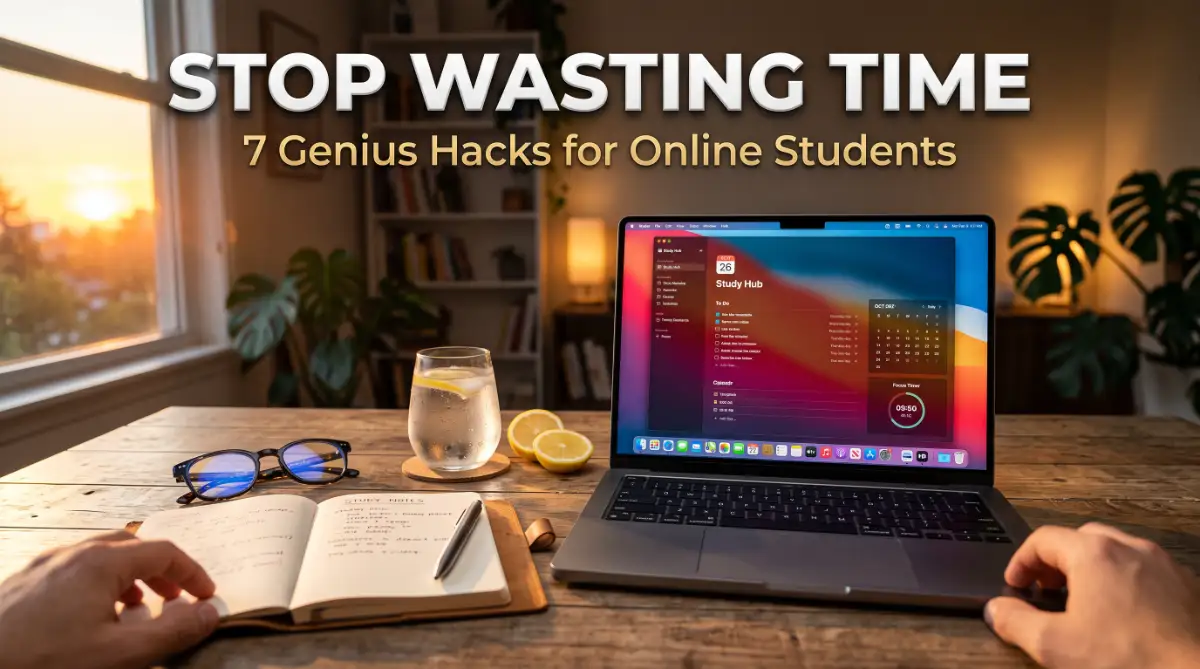
- You Own the Clock: Learn when you are most awake, not when a bell rings.
- Skill-Focused: Skip the fluff and learn the exact skills employers are hiring for right now.
- Global Connection: Learn from the best experts in the world without leaving your house.
- Instant Updates: Digital content stays fresh, while physical books get old fast.
Why Many Learners Feel Lost in the Old System
Many students and professionals are struggling to keep up with the world. They feel that the old ways of teaching simply do not fit their busy lives anymore.
- Lack of Flexibility: Traditional schools demand your presence, often ignoring your work schedule or family needs.
- High Financial Burden: Between transportation, housing, and printed books, the costs are overwhelming.
- Outdated Materials: Physical books can take years to update, while the world moves forward every day.
- One-Size-Fits-All Teaching: In a classroom of fifty, the teacher cannot focus on your specific speed of learning.
The Mental Toll of Educational Barriers
When you cannot access the knowledge you need, it hurts your confidence. You start to feel like the world is moving ahead while you stay in the same place.
- Fear of Being Left Behind: Seeing others get promoted because they have newer skills can cause massive anxiety.
- Loss of Interest: Being forced to sit through long, boring lectures often kills the natural love for learning.
- Financial Stress: The debt from traditional degrees can hang over your head for decades, ruining your peace of mind.
- Isolation: If you live far from a city, you might feel that high-quality education is just a dream you can't reach.
The Reality of Our Shifting World
We are all looking for a way to learn that is faster, cheaper, and more effective.
We need a system that respects our time and our unique goals. This is why millions of people are now turning toward digital solutions to fix these old problems.
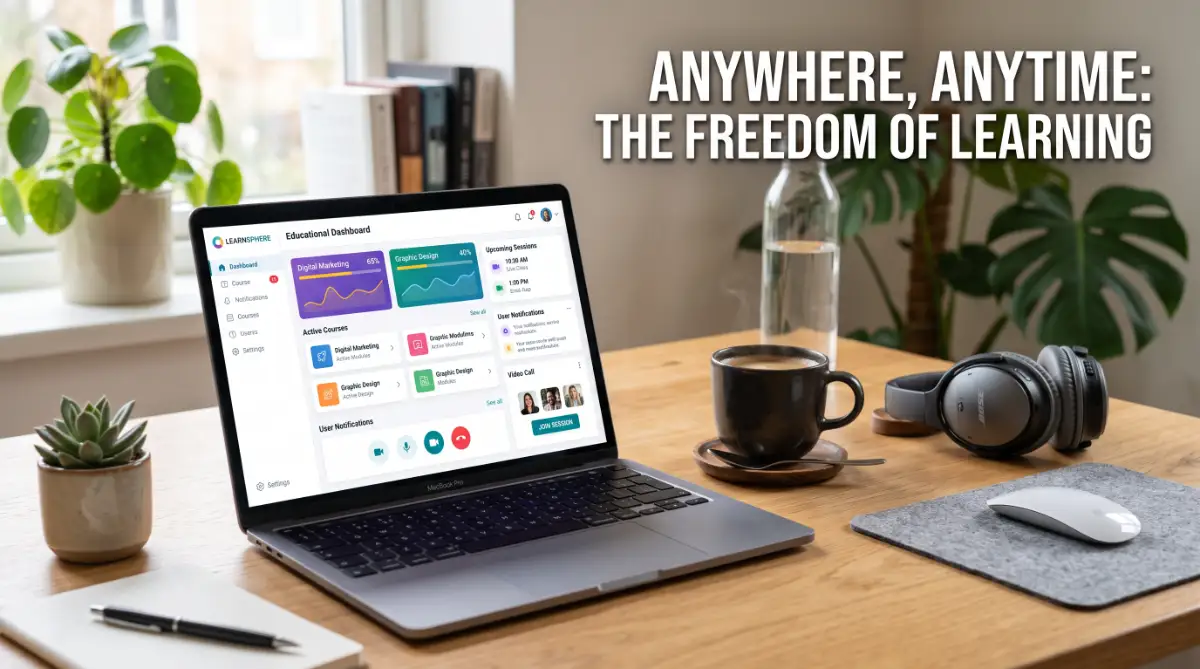
Breaking Down the Digital Learning Revolution
E-learning is not just a fancy word for watching videos on the internet. It is a complete shift in how we share and consume knowledge.
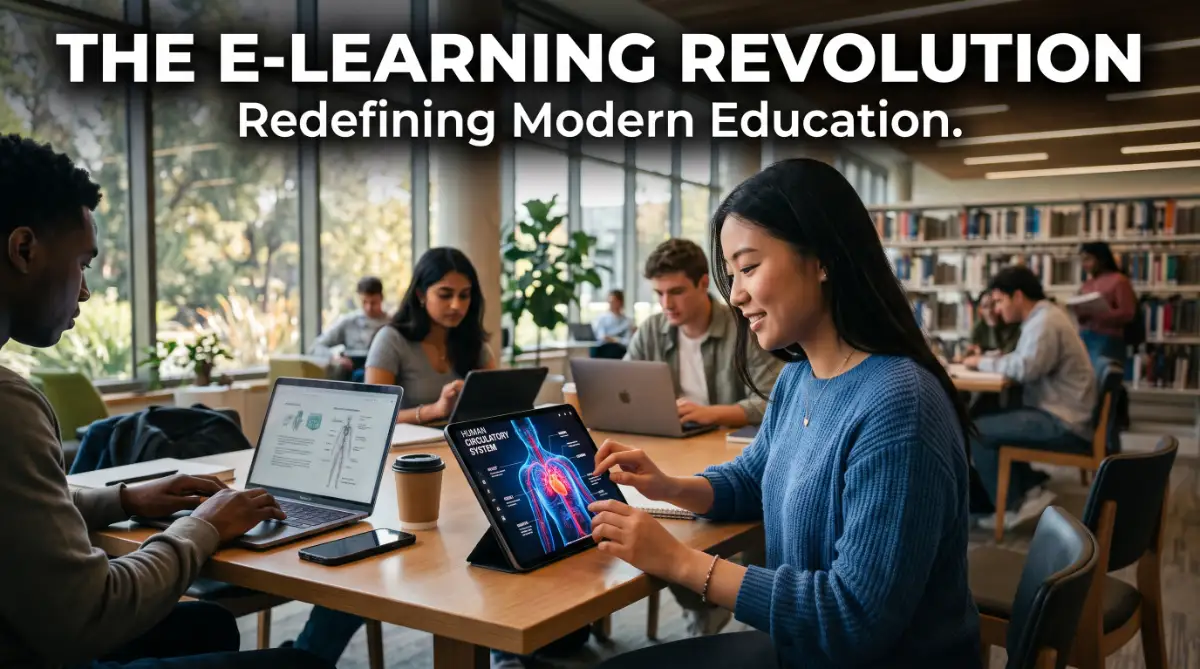
At its core, e-learning is the use of electronic technologies to create educational experiences. This happens through laptops, smartphones, and tablets.
It is transforming education by making it accessible to everyone, regardless of their bank balance or where they live on the map.
Step 1: Embracing the Power of Total Accessibility
The first major change is that education no longer has borders. You can live in a small town and take a course from a top professor in London.
This "borderless" learning is a game-changer for those who were once ignored by the system. All you need is an internet connection to open a door to the world's best libraries.
Expert Insight: True accessibility means that a student with a physical disability can learn from home without facing the hurdles of a physical campus.
Step 2: Transitioning to Self-Paced Mastery
In a traditional class, if you don't understand a math problem, the teacher usually moves on anyway. In the digital world, you are the boss of the "Pause" button.
Self-paced learning allows you to spend more time on hard topics and skip the things you already know. This leads to deeper understanding rather than just memorization.
I have seen people finish a six-month course in two months because they were highly motivated. I have also seen people take their time to balance it with a full-time job.
This flexibility removes the pressure of "keeping up with the class." It allows your brain to absorb information in a way that feels natural and stress-free.
Step 3: Reducing Costs Without Losing Quality
Feature | Traditional College | Online E-Learning
Average Cost | $20,000 - $50,000+ per year | $200 - $1,000 per course
Commute Time | 1 - 2 hours daily | 0 minutes (Learn anywhere)
Schedule | Rigid (Fixed hours) | 100% Flexible
Material Updates | Every 3-5 years | Updated instantly
Networking | Local / Regional | Global (World-wide)
One of the most practical benefits of e-learning is the massive cost savings. You no longer need to pay for gas, parking, or expensive paper books.
Most digital platforms offer courses at a fraction of the price of a physical college. Some of the world's best information is even available for free.
Real-Life Scenario: Consider a graphic design student. Instead of paying $20,000 for a year of college, they spend $500 on high-quality online certifications and build a professional portfolio.
By the time the college student graduates, the e-learner is already working and earning money. This is a powerful shift in the return on investment for education.
Expert Tips: How I Pick the Best Online Courses
- Check the "Last Updated" Date: The tech world moves fast. If a course hasn't been updated in 12 months, it might be old news.
- Look for Projects, Not Just Quizzes: You learn by doing. Pick courses that force you to build a real project.
- Read the 3-Star Reviews: 5-star reviews can be fake, and 1-star reviews are often just angry people. 3-star reviews usually give you the honest truth about the pros and cons.
Is it really possible to learn at your own speed without getting distracted? Watch this quick video to see how to build a simple study plan that actually fits into your busy daily life!
Myth vs. Reality: The Truth About Online Education

Why Interactive Content is the Secret Sauce
I used to think that just finishing a video meant I had learned the skill, but I was wrong. My real breakthrough came when I started doing small projects right after every lesson instead of just taking notes.
Now, I always tell my friends: don't just be a watcher; be a maker, even if your first try looks messy.
Old-school learning was mostly passive. You sat and listened while someone else talked. Digital education changes this by using interactive elements.
Imagine a history lesson where you don't just read about ancient ruins. Instead, you use VR (Virtual Reality) to walk through them.
Or think about a coding class where you write code in one window and see it work in the next window instantly. This "learning by doing" is much more effective.
When you are active in your learning, you remember 90% of what you do, compared to only 10% of what you read in a boring book.
The Role of Micro-Learning in Our Daily Lives
We live in a world where we are always busy. E-learning adapts to this by offering "Micro-learning."
These are short, five-minute lessons that focus on one specific point. You can finish a lesson while waiting for the bus or during your lunch break.
This makes it easy to build a habit of learning. Instead of waiting for a big "study day," you learn a little bit every single day.
Over time, these small wins lead to massive growth. It is like planting a seed every day until you have a full forest of knowledge.
Personalization: A Teacher for Every Student
The most exciting part of modern education is the use of smart technology to guide you. Every student is different, and now, the software knows that.
If you struggle with a specific quiz, the system might suggest a different video or an easier reading to help you. It builds a path just for you.
This level of personalization was impossible in the past. One teacher could not create thirty different lesson plans for thirty different kids.
Now, a student who is a visual learner gets more videos. A student who likes reading gets more text. This makes the learning process feel like it was made just for you.
Building a Global Network from Your Desk
Many people worry that they will miss out on the "college experience" of meeting new people. In reality, e-learning connects you with a global audience.
In one online class, you might work on a project with someone from Japan, Brazil, and Germany. This gives you a global perspective that a local classroom cannot provide.
You learn how to communicate across cultures and time zones. These are the exact skills that modern companies are looking for in their employees.
The friendships you make online are based on shared interests and goals. These connections often last much longer than those made just because you sat in the same room.
Mastering Your Digital Study Environment
Learning from home or a coffee shop sounds like a dream. But without the right setup, it can quickly turn into a productivity nightmare.
Your brain needs a specific trigger to enter "learning mode." If you try to study in the same bed where you sleep, your mind will feel confused and tired.
Create a dedicated space that is only for your education. It does not have to be a big office; even a small corner of a desk works as long as it is clean.
Building a Distraction-Free Sanctuary
The biggest enemy of e-learning is the "one more tab" syndrome. You start by watching a lecture and end up watching cat videos for three hours.
I suggest using browser extensions that block social media during your study hours. This simple step protects your focus and keeps your momentum high.
You should also communicate with the people you live with. Let them know that when you have your headphones on, you are "in class" and should not be disturbed.
A quiet environment allows you to master your mind and think clearly under pressure. This mental clarity is what separates top students from those who just struggle to get by.
Harnessing Smart Tech for Faster Learning
We live in an amazing time where technology can actually do the heavy lifting for us. You should not just use the internet to watch videos; use it to automate your life.
There are now tools that can summarize long articles or create flashcards from your notes instantly. This saves you hours of manual work every single week.
You can actually use artificial intelligence to automate daily productivity tasks related to your studies. For example, AI can help you organize your schedule or find the best sources for a research paper.
This is not "cheating." It is being smart with your time so you can focus on understanding the hard concepts rather than doing busy work.
The Long-Term Blueprint for Success
E-learning is a marathon, not a sprint. Many people start with a lot of energy but quit after two weeks because they feel overwhelmed.
To avoid this, you must build a sustainable routine. Think about your energy levels throughout the day and plan your hardest lessons for when you are most awake.
The Importance of Brain Health
Your brain is a muscle that needs rest to grow. If you study for ten hours straight without sleep, you will forget almost everything by the next morning.
According to research shared by Edutopia, the brain processes new information mostly while we sleep. Without rest, the "links" in your memory don't form correctly.
This is why you should adopt 7 easy daily habits to transform your sleep quality. Better sleep leads to better memory, which leads to faster learning.
Pro-Level Secret: Try the Pomodoro Technique. Study for 25 minutes, then take a 5-minute break to walk around or drink water. This keeps your brain fresh and prevents the dreaded "study burnout."
Active Participation in Virtual Groups
Don't be a "ghost learner." A ghost learner is someone who watches all the videos but never talks to anyone or asks questions.
The real magic of e-learning happens in the forums and community groups. When you explain a concept to another student, you understand it much better yourself.
Join Discord servers or LinkedIn groups related to your topic. Share your progress and ask for feedback on your work.
These digital connections can lead to real job opportunities later on. Networking is just as important in the digital world as it is in a physical office.
Hidden Traps That Sabotage Your Online Success
Transitioning to a digital education system is exciting, but it has many "potholes." If you are not careful, you might spend months learning without actually making progress.
The lack of a physical teacher standing over your shoulder means you are 100% responsible for your own success. This freedom is a double-edged sword.
Mistake 1: The "Collector" Habit
Many people spend more time looking for the "perfect" course than actually learning. They bookmarked hundreds of videos but never finish a single one.
This gives you a fake sense of achievement. You feel like you are learning because you found a great resource, but your brain hasn't actually done any work.
How to avoid it: Choose one course and stick to it until the end. Do not look for another one until you have finished the first one and done the final project.
Mistake 2: Ignoring the Practical Projects
Reading a book about swimming won't teach you how to swim. The same logic applies to e-learning, especially for technical skills like coding or design.
If a course has a project, do it. Even if it feels hard and you make mistakes, that is where the real learning happens.
Employers don't care about your "completion certificate" as much as they care about what you can build. Your portfolio is your real degree.
Mistake 3: Poor Hardware and Internet Choices
Trying to learn on a slow computer or a bad internet connection is like trying to run a race in heavy boots. It creates small frustrations that slowly kill your motivation.
You don't need the most expensive laptop, but you do need a reliable one. If your computer is slow, try to clean it up or upgrade the basic parts.
If you notice your tech is failing, look for signs of a failing laptop hard drive before it crashes and you lose all your study notes. Being proactive with your tools saves you from many tears later.
Mistake 4: Multitasking During Lectures
You might think you can listen to a lecture while checking your emails or cooking dinner. Science says you are wrong.
The human brain cannot "multitask" complex information. It just switches very fast between tasks, which leads to poor memory and mistakes.
When it is time to learn, give it 100% of your attention. You will learn more in 30 focused minutes than in three hours of "distracted" study.
Mistake 5: Setting Unrealistic Goals
Don't tell yourself you will study for five hours every night if you have a full-time job. You will fail, feel bad, and then quit entirely.
Start small. Set a goal of just 20 minutes a day. Once that becomes a habit, you can slowly increase the time.
Consistency is much more powerful than intensity. A person who studies 30 minutes every day for a year will learn much more than someone who studies 15 hours once a month.
Your New Journey into the Future of Education
We are witnessing the biggest change in education since the invention of the printing press. The walls of schools are falling down, and the world is becoming one big classroom.
You now have the power to learn anything you want, from anywhere in the world. This is a gift that previous generations could only dream about.
E-learning is not just about technology; it is about freedom. It is the freedom to choose your own path, your own speed, and your own future.
Your Action Plan for Today
Don't just read this and close the tab. Take one small step right now to start your digital learning journey.
- Pick one skill: What is the one thing that would change your life if you learned it this year?
- Find one resource: Don't look for ten. Find one highly-rated course or book on that topic.
- Clear your desk: Spend five minutes making a clean space for your new habit.
- Set a timer: Promise yourself to spend just 15 minutes learning today.
I’ve seen firsthand how one single online course can open doors that used to be locked tightly. You have everything you need right in front of you, so don't let another day pass by just thinking about it.
Take that first step today, and I promise you’ll look back in a year and be so glad you started.
The world is moving fast, and the tools to keep up are right at your fingertips. You don't need a lucky break; you just need to start clicking.
A Final Word of Encouragement
You might feel that you are too old to learn something new, or that you aren't "smart enough" for digital tools. I promise you that is not true.
The most successful learners are not the ones with the highest IQ. They are the ones who are the most curious and who don't give up when things get confusing.
Every expert you admire was once a beginner who felt exactly like you do right now. They just kept showing up, one lesson at a time.
Embrace the digital revolution. Take control of your mind. The future of education is here, and it is waiting for you to take the first step.
Disclaimer: The information provided in this article is for educational and informational purposes only. While we strive to provide accurate and up-to-date content, we do not guarantee the effectiveness of specific e-learning platforms or tools. Always perform your own research before investing in any paid online course or educational software.
Frequently Asked Questions
1. Is an online certificate as good as a college degree?
In many fields like Tech, Design, and Marketing, employers care more about what you can do than where you went to school. A strong portfolio built through online courses often beats a degree with no real-world experience.
2. How do I stay motivated without a teacher watching me?
Set a small goal, like learning for 20 minutes a day. It is much easier to stick to a small habit than to try and study for five hours once a week. Consistency is your secret weapon.
3. Do I need an expensive laptop for e-learning?
Not at all. As long as your computer can run a web browser and play video, you are good to go. Most people start with what they already have.