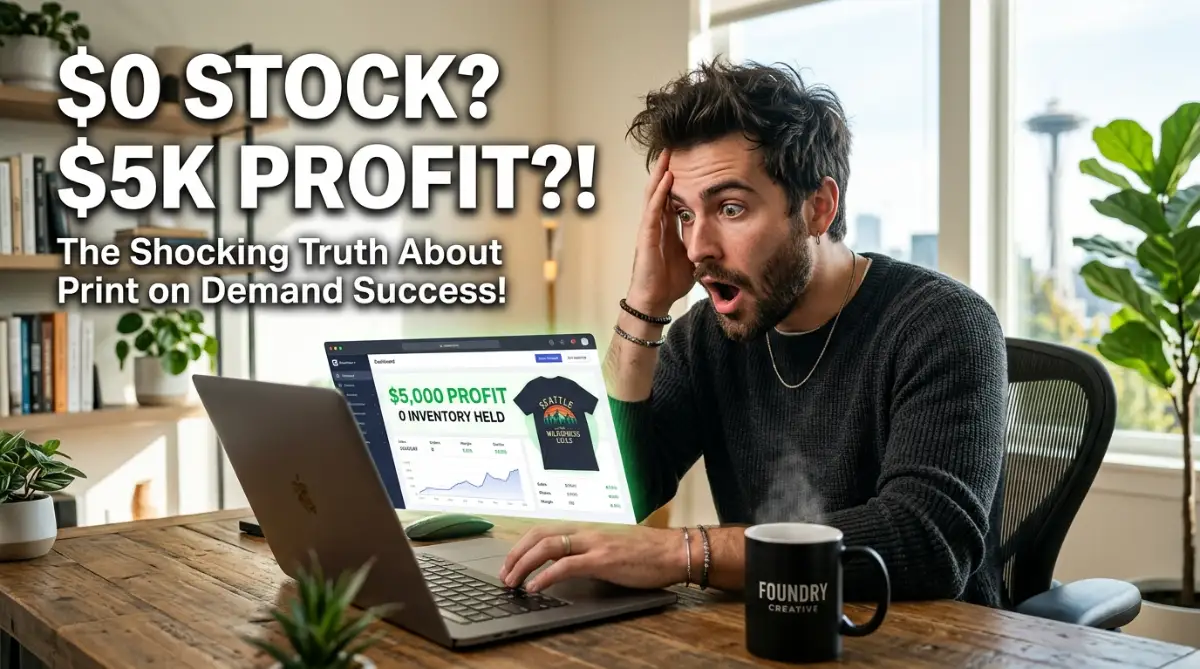
The Heavy Burden of Unsold Boxes and the Dream That Almost Died
I remember sitting on my cold living room floor a few years ago, surrounded by cardboard boxes. Those boxes were filled with 200 black t-shirts I had ordered in bulk. I thought they would sell like hotcakes. I had spent nearly $1,500 of my hard-earned savings on that stock.
Weeks turned into months, and I only sold five shirts. My dream of being a creative business owner felt like it was suffocating under the weight of that unsold inventory.
Every time I walked into the room, those boxes reminded me of my failure. It wasn't just about the money; it was the stress of managing space and the fear of losing everything.
Many of you are probably feeling that same fear right now. You have amazing artistic ideas, but the thought of buying stock keeps you awake at night. You worry about shipping, printing errors, and wasting your limited budget. It feels like the world of business is only for people with deep pockets.
This constant worry can really hurt your mental peace. You want to create, not count boxes in a garage. Seeing your bank account go down while your "stock" stays high is a nightmare. It makes you want to quit before you even truly begin.
But then, I found a way out that changed everything for me. It removed the risk and let me focus on what I love: creating art. This was the moment I discovered the print on demand meaning in a real, practical way. It was like a weight being lifted off my shoulders.
I stopped worrying about "what if it doesn't sell?" because I didn't have to buy anything upfront. If you are tired of the traditional retail struggle, you are in the right place. Let's look at a better way to build your dream.

A Fresh Start: How This No-Inventory Model Changes the Game
If you are wondering what is print on demand, think of it as your silent business partner. It is a way to sell custom products without ever touching the item yourself. You simply create a design, and a third-party company handles the rest.
This is often called a print on demand no inventory business because you literally have zero stock. When a customer buys something from your online shop, the printer gets a notification. They print your design on the product, pack it, and ship it directly to the person who bought it.
This model is perfect for print on demand for beginners because it removes the biggest wall: money. You don't need a warehouse or a printing press in your basement. All you need is a computer and a spark of creativity.
Understanding the Simple Core Process
To truly understand how print on demand works, you need to see the flow of the business. It is a three-way connection between you, your customer, and the supplier. First, you pick a product, like a mug or a shirt, and add your unique artwork to it digitally.
Next, you list this product on your website or a marketplace. The product doesn't actually exist in physical form yet. It only exists as a beautiful image on a screen. This is the magic of the digital age.
When a customer clicks "buy," they pay you the retail price you set. Then, a small part of that money goes to the supplier to cover the cost of the item and the printing. The leftover money is your pure profit.
Choosing Your Creative Path Wisely
The first real step to start print on demand business success is picking what to sell. Don't try to sell everything to everyone. I made this mistake early on by trying to sell funny cat shirts and serious gym gear on the same page. It was a mess.
Focus on a specific group of people, also known as a niche. Maybe you love gardening, or perhaps you are a fan of 90s retro vibes. When you speak to a specific group, your designs will feel more personal and valuable.
Think about what you would actually want to buy yourself. If you are passionate about the topic, your designs will show that. People can tell when a design is made with love versus when it is just made for a quick buck.
Setting Up Your Digital Shop Front
Once you have an idea, you need a place to show it. You don't need to be a tech genius to do this. There are platforms that let you drag and drop your designs onto products in seconds.
These platforms connect directly to your online store. This means everything is automated. You don't have to send emails to the printer every time you get an order. The system does the hard work while you sleep or hang out with your family.
Pro Tip:
I used to think I needed to be a master at Photoshop to start. I wasted weeks trying to learn complex tools. Then I realized that simple, text-based designs often sell better than complex art. Don't let your lack of "pro" skills stop you; sometimes a great quote is all people want.
Why Quality Really Matters for Your Brand
Even though you don't print the items, you are responsible for the quality in the eyes of the customer. This is why this print on demand step by step guide focuses on testing. Never sell a product without ordering a sample for yourself first.
You need to feel the fabric and see if the colors look right. If the shirt feels itchy or the print peels off, your customers will be unhappy. Happy customers come back, but unhappy ones leave bad reviews that can kill your business.
Treat your samples like a small investment in your brand's future. It gives you the confidence to tell the world that your products are great. Plus, you can use these samples to take real photos for your social media.
See the Process in Action
Watching how a shirt goes from a digital file to a physical product is truly eye-opening. It helps you understand the value you are providing to your customers.
Watch this short video to see how modern printing technology brings your creative ideas to life in seconds!
The Science of Picking the Right Products
Not all products are equal in the world of POD. Some items have higher profit margins than others. For example, a basic t-shirt might make you $5 to $10 in profit. However, a custom-printed blanket or a piece of wall art might make you $20 or more.
You should also look at the weight of the items. Heavier items cost more to ship, which might eat into your profits. Stick to lightweight or standard items when you are just starting out to keep things simple.
Data shows that personalized items are growing in popularity every year. People love seeing their own names or special dates on products. This is a great way to make your shop stand out from big-box retailers.
Creating Designs That Actually Sell
You don't have to be a professional artist to succeed here. You just need to solve a "feeling" for your customer. A design should make someone laugh, feel proud, or feel like they belong to a group.
Use simple fonts that are easy to read from a distance. Avoid using too many colors, as this can sometimes make the print look muddy. Clean and bold is usually the winning formula for online sales.
Always check if your designs are the right size for the product. If your image is too small, it will look blurry when printed. High-resolution files are your best friend in this business.
Building Trust with Your Audience
In the online world, trust is the only currency that matters. Since people can't touch your products, they rely on your descriptions and your "About" page. Tell your story and why you started this journey.
Be honest about shipping times. Since the item is printed only after it is ordered, it takes a few days longer than Amazon. Tell your customers this upfront so they aren't surprised.
Most people don't mind waiting a little longer for something unique and custom-made. Clear communication is the key to avoiding "where is my order?" emails. It makes you look like a pro.
Keeping Your Expenses Low
The best part of this model is the low overhead. You don't have to pay for a shop lease or electricity for a factory. Your main costs will be your website hosting and maybe some small ads.
This allows you to test many different ideas at once. If a design doesn't sell, you haven't lost any money on stock. You can simply delete it and try something else the next day.
This "fail fast and cheap" method is how many successful entrepreneurs found their winning products. It turns the traditional business model on its head. It is the safest way to learn how to make money online.
Legal Basics You Should Know
Before you go full speed, make sure you aren't using someone else's work. Never use famous movie characters, logos, or song lyrics without permission. This is a quick way to get your shop shut down.
Create original work or use "commercial use" graphics that you have legally bought. Being unique is not just about staying safe; it is about building something that is truly yours. Your brand is your reputation, so keep it clean.
Also, look into how taxes work in your local area for online sales. Usually, you only need to worry about this once you start making a consistent profit. Keeping simple records from day one will save you a lot of headaches later.
Finding Your First Customers
You have a shop and great designs, so where are the people? You don't need a huge marketing budget to get eyes on your work. Social media is a free tool that can drive thousands of visitors if used correctly.
Post "behind the scenes" content of you designing. Share the stories behind your niche. If you are selling to gardeners, share tips on how to grow better tomatoes alongside your shirt designs.
Engage with people in your niche. Don't just spam your links. Be a helpful member of the community, and people will naturally want to check out what you are offering. Authenticity wins every single time.
Mastering the Art of Scaling Your Creative Empire
Now that you understand the core basics, it is time to move from being a beginner to a pro. Many people start this journey, but only a few actually make enough money to quit their day jobs. The difference usually comes down to how they handle the small details that others ignore.
To truly succeed, you need to think about your shop as a long-term brand rather than a quick way to make cash. You should look for the best print on demand sites that offer high-quality products and fast shipping times. A happy customer who receives their order quickly is much more likely to leave a five-star review and tell their friends about you.
I learned the hard way that picking just any supplier can be a disaster. Some print on demand companies might have cheap prices, but their printing quality is terrible. This is why I always suggest starting with industry leaders like printful or similar trusted names to ensure your reputation stays solid.
When you are ready to reach more people, you should consider moving beyond your own website. Using amazon print on demand services can put your designs in front of millions of shoppers who are already looking to spend money. Amazon has a massive reach that is hard to beat, especially for beginners who don't have a big marketing budget yet.
Another powerful platform is print on demand etsy. Etsy shoppers love unique, handmade-style items, which fits the creative entrepreneur perfectly. Before you jump in, it is a smart move to spend some time validating your small business idea to make sure there is actually a demand for your specific style.
The Psychology of Design and Marketing
You might think that a cool design is enough to sell, but there is a science to it. People buy things because of how it makes them feel or how it helps them express their identity. When you sell custom products online, you are selling a piece of someone’s personality.
Think about the colors you use. Blue often creates a feeling of trust, while bright orange can spark excitement and energy. If you are designing for a specific group, like nurses or gamers, use the "slang" or inside jokes that only they would understand. This makes your product feel exclusive and special to them.
I found that my sales doubled when I stopped trying to make "pretty" things and started making "relatable" things. If a customer sees a shirt and says, "That is so me!", they will click the buy button without thinking twice. This is the secret to turning a hobby into a best print on demand side hustle that pays the bills.
To keep your growth steady, you need to understand the impact of your visibility. Just like a physical shop needs a good location, your online shop needs to be found. This is where understanding the impact of keyword research becomes a major tool in your belt. If you know what words people type into search bars, you can put your products right in their path.
Automating for Long-Term Freedom
The beauty of print on demand dropshipping is that it allows you to step back from the daily grind. Once your designs are up and your shop is connected to your supplier, the system handles the heavy lifting. However, "passive income" still requires some maintenance and oversight.
You should check your shop analytics at least once a week. Look for which designs are getting clicks but no sales. This might mean the price is too high or the product description isn't clear enough. On the other hand, if a design is selling well, consider putting it on more products like hoodies or phone cases.
I also recommend setting up a basic email list. When someone buys from you, they are giving you permission to stay in touch. Sending a friendly email when you launch a new collection is a great way to get repeat customers without spending a penny on ads. This strategy is one of the many ways to turn your hobbies into a $1,000 month business effectively.
Remember that technology is always changing. New print on demand websites pop up all the time with new products like shoes, jewelry, or even furniture. Stay curious and keep testing new things to see what your audience loves. Being an early adopter of a new product type can often lead to a massive surge in sales before the market gets crowded.

Heartbreaking Mistakes That Can End Your Business Overnight
Starting an online business is exciting, but it also has some hidden traps that can catch you off guard. I have seen talented artists lose everything because they ignored the boring, legal side of things. One of the most common print on demand mistakes to avoid is using copyrighted material without knowing it.
It feels tempting to put a famous quote or a popular movie character on a shirt. You might see others doing it and think it is okay. But companies have lawyers whose only job is to find people using their property. One legal notice can shut down your entire shop and take all your hard-earned profits.
You must be very careful about the difference between inspiration and theft. I highly recommend reading up on copyright vs trademark vs patent so you don't accidentally step on a legal landmine. Protecting your brand is just as important as building it.
Another big mistake is ignoring the customer experience after the sale. If a customer receives a damaged item or the wrong size, they will be upset. If you don't respond to their emails quickly, they will feel ignored and cheated. This leads to bad reviews and chargebacks from banks, which can ruin your standing with your payment processor.
I once lost a whole week of sales because I didn't check my supplier's stock levels. They ran out of the specific blue shirt I was selling, and I didn't know it. My customers were waiting for weeks, and I had no idea. It was a painful lesson in communication. Always keep an eye on your print on demand companies and their status updates to avoid these messy situations.
Lastly, don't fall into the trap of "perfectionism." Many people spend months trying to make one perfect design and never actually launch their shop. They are afraid of failing, so they never try. The truth is, your first few designs might not sell at all, and that is perfectly okay. Success in this business is about testing many ideas until you find the winners.
Taking Your First Step Toward Creative Freedom
This journey into the world of custom printing is about more than just making money. it is about taking control of your time and your creative life. You don't need a fancy office or an expensive print on demand machine in your house. You only need the courage to put your ideas out there for the world to see.
The most successful people I know in this space didn't start with thousands of dollars. They started with one idea and one simple shop. They learned as they went, made mistakes, and kept moving forward. You have the tools and the knowledge now to do the same thing.
If you ever feel overwhelmed, just remember why you started. Maybe you want more time with your kids, or maybe you just want a way to share your art with the world. Keep that "why" in your mind whenever things get tough. The path is already laid out for you, and the risk is lower than it has ever been in history.
I truly believe that anyone with a little bit of creativity and a lot of heart can make this work. Don't let another day go by just thinking about it. Start your shop, upload your first design, and see where this path takes you. I am cheering for you, and I can't wait to see the amazing things you create today!
Common Questions About Starting Print on Demand
How much money do I need to start a POD business?
The amazing thing is that you can start for almost zero dollars. You don't need to buy any inventory upfront. Most of the best print on demand sites allow you to sign up and upload designs for free. You only pay for the product after a customer has already paid you!
Do I need to be a professional graphic designer?
Not at all! Many of the top-selling products use very simple text-based designs or basic shapes. You can use free tools like Canva or even simple phone apps to create your art. What matters most is that your design connects with a specific group of people and their interests.
Is the print on demand market too crowded to join?
While there are many sellers, there is always room for unique voices. New trends and hobbies emerge every single day. If you focus on a specific niche rather than trying to sell general items, you will find plenty of space to grow. People are always looking for fresh, new designs that haven't been seen a thousand times before.
How long does it take to see my first sale?
It depends on how much you promote your shop. Some people get a sale in their first week by sharing with friends or on social media. Others might take a month or two to get found through search engines. The key is to keep adding new designs and learning what your customers like.
Can I do this while working a full-time job?
Yes, this is actually the best print on demand side hustle because it is so flexible. You can spend just an hour or two a week uploading designs and checking your orders. Since the printing and shipping are automated, you don't have to be at your computer when a sale happens.
Disclaimer: The information provided in this article is for educational purposes only. While print on demand is a low-risk business model, success depends on individual effort, design quality, and marketing strategy. We do not guarantee specific earnings. Please consult with a legal or financial professional before making significant business investments or legal decisions regarding trademarks and copyrights.

![How I Replaced My 9-to-5 Using Only Basic Content Writing Skills [Proven Guide]](https://nexvoramag.com/storage/uploads/blogs/1786964227_how-i-replaced-my-9-to-5-using-only-basic-content-writing-skills-proven-guide.webp)
![Affiliate Marketing Secrets: How Beginners Actually Win [No Sales Pitch Inside]](https://nexvoramag.com/storage/uploads/blogs/1786594500_affiliate-marketing-secrets-how-beginners-actually-win-no-sales-pitch-inside.webp)