Why My Surprise Bill Taught Me a Hard Lesson About Driving Records
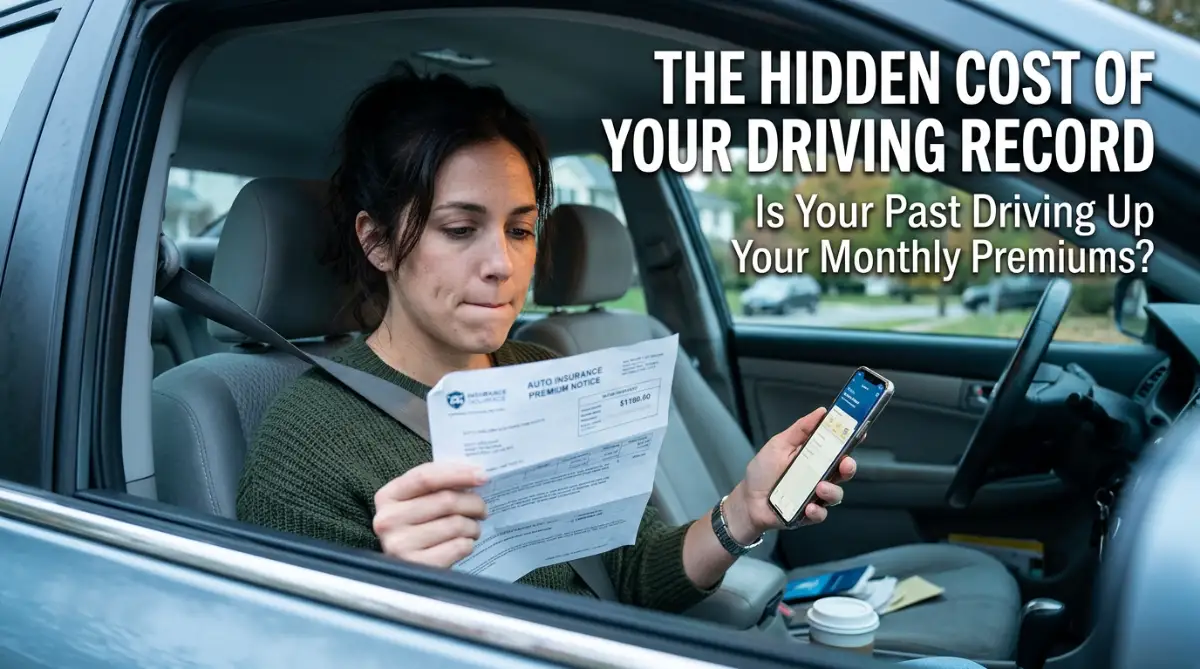
I remember the morning like it happened yesterday. I opened a small white envelope from my car insurance company. I expected the usual bill, but my jaw dropped when I saw the number. My monthly payment had jumped by almost sixty dollars.
I sat there at my kitchen table, staring at the paper. I hadn't bought a new car. I hadn't moved to a new neighborhood. Then, I remembered that one afternoon when I was running late for a meeting. I had been caught speeding just ten miles over the limit.
I thought paying the fine was the end of it. I was wrong. That one small mistake stayed with me like a shadow. It felt like I was being punished every single month for a five-minute lapse in judgment. It honestly made me feel trapped and frustrated with the system.
Many of you are probably feeling this same stress right now. You look at your bank account and wonder why so much money goes to insurance.
You might feel like the insurance company is watching your every move. It can keep you up at night, worrying about how to afford your next premium.
When your rates go up, it doesn't just hurt your wallet. It hurts your peace of mind. You start to drive with fear, constantly checking your speedometer.
You worry that one more tiny mistake will make your insurance impossible to pay for. This feeling of constant pressure is something many drivers face every day.
We work hard for our money. Seeing it vanish because of a mistake from a year ago feels unfair. But understanding the "why" behind these costs is the first step to taking control again. You are not alone in this struggle, and there are ways to fix it.
How Your Past Driving Decisions Shape Your Future Costs
Your driving history is like a report card that never truly goes away. Insurance companies use this record to decide how much of a "risk" you are.
If they think you might have an accident, they charge you more. It is a simple game of math for them, but it is a game of survival for us.
The Power of Your Motor Vehicle Report
Every time you get a ticket or have an accident, it goes on your Motor Vehicle Report (MVR). Think of this as your financial fingerprint in the world of driving.
Insurance companies pull this report every time you ask for a quote or when your policy renews.
If your report is clean, you are seen as a "Preferred" driver. This means you get the lowest rates and the best discounts.
But even one "Moving Violation" can change your status. A moving violation is anything that happens while the car is in motion, like running a red light or speeding.
Why Speeding Tickets Are Not Just One-Time Fines
Most people think a speeding ticket costs $150 or $200. In reality, that ticket might cost you $2,000 over three years. When you pay the fine, you are admitting guilt.
Your insurance company sees this and thinks, "This person drives fast, which means they are more likely to crash."
They then raise your "surcharge." A surcharge is an extra fee added to your base premium. Some companies raise rates by 20% to 30% for a single speeding ticket.
If you have two tickets, your rates could double. This is why fighting a ticket in court is often worth the time.
The Heavy Impact of At-Fault Accidents
Nothing hurts your driving record more than an accident where you were at fault. If you hit someone from behind or fail to yield, you are labeled as high-risk. Insurance companies often look back three to five years for these accidents.
I have seen people lose their "Good Driver Discount" because of a tiny fender-bender. Once that discount is gone, your bill jumps instantly.
Some companies also add a "claims surcharge" that stays on your account for years. It feels like you are paying for the repairs of the car over and over again through your premiums.
Minor Violations That Add Up Fast
It is not just the big things that matter. Small things like a broken taillight, an expired registration, or failing to wear a seatbelt can also play a role. While one minor "non-moving" violation might not raise your rates, a pattern of them will.
Insurance companies look for patterns. If you have three small tickets in two years, they see a driver who does not follow the rules. This makes them nervous. When an insurance company gets nervous, they raise your price to protect their own profits.
A Scientific Look at Risk and Insurance Math
Insurance is based on the "Law of Large Numbers." Companies look at millions of drivers to see who is likely to cost them money. Statistically, a person with one speeding ticket is twice as likely to have an accident than someone with zero tickets.
This is not personal; it is just data. They use algorithms to predict your future behavior based on your past actions. If you have a history of driving safely, the math works in your favor. If you have a history of mistakes, the math works against you.
How Long Do These Mistakes Last?
In most places, points stay on your license for three years. However, insurance companies might look back even further. Some "high-risk" companies look back five years.
This means a mistake you made a long time ago can still be draining your bank account today.
You need to know exactly what is on your record. You can request a copy of your MVR from your local DMV. Sometimes, there are mistakes on these reports.
I once found a ticket on my record that belonged to someone with a similar name! Fixing that one error saved me a lot of money.
The Role of "Points" on Your License
Each state has a point system. When you get a ticket, points are added to your license. If you get too many points, your license can be suspended. Insurance companies track these points closely.
Even if your state "drops" the points after a while, the record of the ticket stays. This is a common myth. People think, "My points are gone, so my insurance should go down."
Unfortunately, the insurance company still sees the violation in their private databases for a longer time.
Watch this video to understand exactly how insurance adjusters calculate your risk level and what you can do to lower it.
Proven Steps to Clean Your Record and Lower Your Costs
You might feel like you are stuck with high rates, but you have power. You can take specific actions today to start moving back toward lower premiums. It takes time, but the savings are worth the effort.
Step 1: Take a Defensive Driving Course
Many insurance companies offer a discount if you complete a certified defensive driving course. These classes teach you how to avoid accidents and handle road rage.
In many cases, taking this course can remove points from your license. Even if it doesn't remove the points, your insurance provider might give you a 5% to 10% discount just for showing that you care about safety. It usually takes only a few hours on a Saturday, and you can often do it online.
Step 2: Use Telematics and Tracking Apps
If you know you are a safe driver now, you can prove it to your insurance company. Many companies have apps that track your driving habits. They look at how hard you brake, how fast you turn, and if you use your phone while driving.
I tried one of these apps for three months. I was very careful, and at the end of the trial, my insurance company gave me a 15% discount.
It felt great to finally be rewarded for my good habits instead of being punished for my old ones. If you don't mind the "big brother" aspect, this is the fastest way to lower your bill.
Step 3: Increase Your Deductible
If your driving history is bad, your monthly premium will be high. One way to balance this out is by raising your deductible. The deductible is the amount you pay out of pocket before the insurance kicks in.
If you change your deductible from $500 to $1,000, your monthly bill will drop immediately. However, you must make sure you have $1,000 saved in the bank just in case. This is a smart move if you are confident that you won't have another accident soon.
Step 4: Shop Around Every Six Months
Not all insurance companies treat driving history the same way. One company might hate speeding tickets, while another might be more forgiving. If your rates stay high, don't be afraid to leave your current provider.
I tell my friends to get three new quotes every time their policy is up for renewal. You would be surprised how much prices can vary. Some companies specialize in "high-risk" drivers and might offer you a much better deal than a standard company like State Farm or Geico.
Step 5: Bundle Your Policies
If you have a home or renters insurance policy, put it with the same company as your car insurance. This is called "bundling." Even with a bad driving record, a bundle discount can save you a lot of money.
Insurance companies want more of your business. If you give them two or three policies, they are more likely to give you a break on the price of your car insurance. It is a win-win for everyone involved.
Why Your Credit Score Matters Too
It might seem strange, but in many places, your credit score is linked to your insurance cost. Insurance companies found that people with high credit scores tend to have fewer accidents.
If you have a bad driving record and bad credit, you will pay the highest prices possible. By improving your credit score—paying bills on time and lowering debt—you can actually lower your car insurance rates. It is all connected to how "responsible" you appear to the insurance company's computer.
The "Time Heals All" Rule
The best thing you can do for your driving history is simply to wait and drive safely. Most violations stop affecting your insurance after three years. Some major things like a DUI might take ten years.
Every day you drive without a ticket is a day you are moving closer to a lower bill. Be patient. Avoid the urge to speed. Use your cruise control. Your future self will thank you when that insurance renewal comes in much lower than before.
Common Myths About Driving History
There are many lies out there about insurance. Let's clear some of them up right now so you don't make mistakes based on bad info.
Myth: Red cars cost more to insure.
Reality: The color of your car does not matter. The insurance company cares about your driving record and the make and model of the car. They don't care if it's red, blue, or neon green.
Myth: If I move to a new state, my record starts over.
Reality: Most states share driving information through a national database. Your tickets will follow you across the country. Don't think moving will solve your insurance problems.
Myth: My insurance goes down automatically when I turn 25.
Reality: While rates often drop at 25, it is not magic. If you have a bad driving record at 25, your rates will still be high. Your history is always more important than your age.
The Pro Tip: Check Your Own Record Regularly
I make it a habit to check my driving record once a year. It costs a few dollars, but it gives me peace of mind. I want to make sure no one else's tickets ended up on my file.
I also want to see exactly when my old tickets are set to "fall off" so I can call my insurance agent and ask for a lower rate that very day.
Driving is a privilege, and your history is the price you pay for that privilege. By being smart, stay informed, and taking these steps, you can stop the cycle of high costs. You have the map now; all you have to do is drive the right way.
Insurance companies might have the data, but you have the power to change your future. Keep your eyes on the road and your record clean. The savings will follow naturally. You can do this!
Expert Secrets to Rescuing Your Driving Record and Your Wallet
Understanding the basics of insurance is a good start, but there are deeper secrets that the big companies don't always tell you.
If you want to see your monthly bills drop significantly, you need to go beyond just driving safely today. You have to actively manage the data that insurance companies use to judge you.
One of the most powerful tools you have is something called the CLUE report. This stands for Comprehensive Loss Underwriting Exchange.
While your motor vehicle report shows your tickets, the CLUE report shows every single claim you have ever made. Sometimes, these reports have errors that keep your rates high for no reason.
I once worked with a friend who couldn't understand why his rates were so high despite having no tickets. We checked his CLUE report and found a claim for a car he never even owned!
By disputing that error with LexisNexis, he saved over four hundred dollars a year. You should check this report just as often as you check your credit score.
Speaking of credit, many people don't realize how much their financial habits affect their car insurance. In most states, insurance companies use a "credit-based insurance score" to predict how likely you are to file a claim.
If you want to lower your premiums, you should learn how to increase your credit score rapidly without stress. A better score can sometimes save you more money than a clean driving record alone.
Another pro-level tip is to look into "accident forgiveness" programs before you actually need them. Some companies allow you to pay a small fee now to protect your rates later.
If you do have a small slip-up, they promise not to raise your rates for your first at-fault accident. This is like a safety net for your wallet that keeps a single mistake from ruining your financial plan.
You should also be very careful about who you allow to drive your car. If a friend borrows your vehicle and gets into an accident, it usually goes on your insurance record, not theirs.
This is a huge risk that many people take without thinking. Always remember that your insurance follows the car, not just the driver.
If your record is currently messy, you might think you are stuck with high-risk "non-standard" insurance companies. But there is a secret strategy called "stepping up."
After six months of clean driving with a high-risk carrier, you can often apply to a mid-tier company for a better rate. Don't wait three years to look for a better deal; look for small improvements every six months.
For those who are dealing with very high rates, consider a "non-owner" policy if you don't own a car but still want to keep your insurance history active. Insurance companies hate seeing "gaps in coverage."
If you go six months without any insurance, they will treat you like a brand-new driver when you sign up again. Keeping a continuous history of coverage is one of the best ways to keep long-term costs low.
Finally, make sure you are taking advantage of every single discount available. Ask your agent about low-mileage discounts if you work from home.
Mention if you are a member of certain professional groups or alumni associations. Every small 2% or 5% discount adds up to a much larger pile of savings at the end of the year.
Dangerous Blunders That Keep Your Insurance Bills Sky-High
When you are trying to fix a bad driving record, it is very easy to make mistakes that actually make the situation worse.
One of the biggest pitfalls is lying on your insurance application. You might think that if you don't mention a ticket from another state, they won't find it.
This is a terrible idea because insurance companies have massive databases that track everything. If they find out you lied, they can cancel your policy immediately or refuse to pay for an accident.
Being dishonest can lead to being "blacklisted" by major carriers, which forces you into the most expensive insurance plans available.
Another common mistake is ignoring small "fix-it" tickets. You might think a ticket for a cracked windshield or a loud exhaust doesn't matter.
But if you don't take care of it, it can turn into a "failure to appear" on your record. This looks much worse to an insurance company than the original ticket and can lead to a license suspension.
I have seen many people make the mistake of choosing the lowest possible coverage just to save a few dollars. While this makes your monthly bill smaller, it leaves you wide open to a financial disaster.
If you cause an accident and your insurance doesn't cover all the damage, the other person can sue you for your savings and even your home.
You should always ensure you have enough protection, and why comprehensive car insurance is essential for every vehicle owner explains this in great detail.
Saving twenty dollars a month is not worth losing everything you own in a lawsuit. Balance is key when choosing your policy limits.
Many drivers also fail to report "not-at-fault" accidents because they are afraid their rates will go up. While some companies might raise rates slightly, failing to report an accident can be a violation of your contract.
If the other driver later claims they were injured, your insurance company might refuse to help you because you didn't tell them about it right away.
Avoid the trap of "auto-renewal" without checking the market. Many people stay with the same company for ten years because they think they are getting a "loyalty discount."
In reality, many companies use "price optimization" to slowly raise rates on loyal customers who they think won't shop around. It is a sad truth, but being a loyal customer can sometimes cost you more money.
Lastly, don't let your insurance lapse even for a single day. A one-day gap in coverage can increase your future premiums by a huge amount. If you are struggling to pay, it is better to lower your coverage or raise your deductible than to let the policy cancel.
This shows the insurance company that you are a responsible adult who takes your obligations seriously.
If you find yourself in a financial pinch, it is better to look for ways to cut other costs. You can learn how to lower monthly utility bills through sustainable home energy habits to free up some extra cash for your insurance payments. Protecting your driving record should always be a top priority for your long-term financial health.
When things go wrong, people often panic and make quick decisions that hurt them later. For instance, some people try to handle an accident "under the table" by paying cash to the other driver.
This almost always backfires because the other person can still file a claim later, and you will have no legal proof that you already paid them. Always go through the proper channels to protect your record.
Also, be wary of "guaranteed" cheap insurance offers that seem too good to be true. Scammers often target people with bad driving records by offering fake policies at low prices.
Always verify that an insurance agent is licensed in your state before giving them any money or personal information. You can read more about how to protect your money from fake loan and insurance offers to stay safe from these traps.
Your New Path to Stress-Free Driving and Savings
The journey to a perfect driving record and low insurance rates isn't a sprint; it's a marathon. It requires you to change how you think about every mile you drive.
But the reward is more than just a lower bill—it's the feeling of security and the knowledge that you are protecting your family's future.
Start by taking small, manageable steps today. Check your records, talk to your agent, and commit to being the safest driver on the road.
When you drive without the fear of getting a ticket, the whole experience of being behind the wheel becomes much more enjoyable. You will arrive at your destination feeling calm instead of stressed.
Remember that every single day you drive safely, you are building a better financial future. Those old tickets will eventually disappear. Your credit score will improve if you keep working at it.
The high premiums you are paying now are only temporary as long as you stay focused on your goal.
I really want you to know that your past driving mistakes do not define your future. I have been in that spot where I felt like I was drowning in bills and bad luck.
But by taking control and making smart choices, I was able to turn things around, and I know you can do the same thing too.
Take a deep breath and start your action plan right now. Whether it's signing up for a defensive driving class or finally checking your CLUE report, do one thing today that moves you forward. You deserve to have financial peace of mind and the freedom that comes with a clean record.
Common Questions About Driving History and Insurance
How long will a speeding ticket affect my insurance rates?
In most cases, a speeding ticket will impact your premiums for three to five years. The first two years usually see the highest price increase, and the cost slowly goes down as the ticket gets older. Some premium companies might stop charging you for it sooner if you maintain a perfect record afterward.
Can a single accident cause my insurance company to cancel my policy?
Usually, one accident is not enough for a company to cancel your policy, especially if you have been a customer for a long time. However, if the accident involved a DUI or was extremely reckless, they might choose not to renew your policy at the end of the term. They must give you notice before they do this.
Does my driving record from another country count in the US?
Most US insurance companies only look at your driving history within the US and Canada. If you are a new resident, you might be treated as a "new driver" with no history, which can be expensive. Providing a letter of experience from your previous foreign insurer can sometimes help you get a better rate.
Will my rates go down the exact day my ticket expires?
Not necessarily. Your rates usually only change when your policy renews. If your ticket "falls off" in October but your policy doesn't renew until January, you will likely keep paying the higher rate until the January renewal date. You can always call your agent and ask for an early review.
Do parking tickets go on my driving record and raise my insurance?
No, parking tickets are considered "non-moving violations" and do not affect your insurance premiums. However, if you don't pay your parking tickets, your vehicle registration could be suspended. A suspended registration is something that insurance companies definitely care about.
Disclaimer: The information provided in this article is for educational and informational purposes only. Insurance laws and regulations vary significantly by state and country. Always consult with a licensed insurance professional or legal advisor before making decisions regarding your insurance coverage or legal rights. We do not guarantee any specific financial savings or results based on the tips provided here.
![5 Things Your Renters Insurance Covers (That Your Landlord Won't Tell You) [Must Read]](https://nexvoramag.com/storage/uploads/blogs/1786690217_5-things-your-renters-insurance-covers-that-your-landlord-wont-tell-you-must-read.webp)