The Shocking Truth About My Rental "Safety Net"
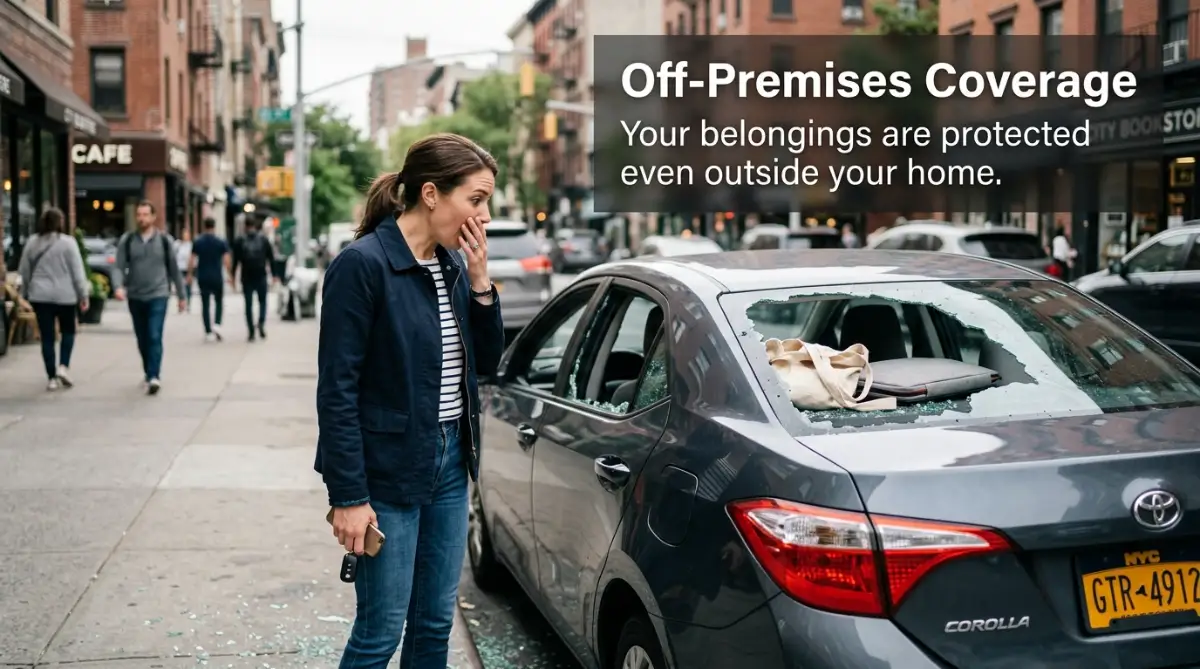
I still remember that rainy Tuesday morning when I walked out to my car and saw shattered glass everywhere. Someone had smashed my window and grabbed my laptop bag.
I felt that sinking feeling in my stomach, thinking about the $1,200 I just lost. I called my car insurance company, and they told me they don't cover "personal items" inside the vehicle.
I was devastated and felt like I had failed myself. I sat on my couch, staring at the floor, wondering how I would replace my work tools.
Then, almost by accident, I remembered my $15-a-month renters insurance policy. I thought it only covered fires or if someone robbed my actual apartment.
I called my agent, expecting a "no," but instead, they asked for the police report. Two weeks later, I had a check for the full value of my laptop.
That moment changed everything for me. I realized that most of us are paying for protection we don't even understand.
Many tenants live in constant fear of a disaster, thinking they are one broken pipe away from being homeless. We worry about our bikes being stolen or our dogs accidentally hurting someone at the park.
This mental stress is heavy. You work hard for your things, and the idea of losing them in a second is scary.
We often feel like we are throwing money away every month on insurance premiums. It feels like just another bill that doesn't provide any real value.
But the reality is that renters insurance is one of the most powerful tools for your peace of mind. It is not just about a fire; it is about protecting your lifestyle wherever you go.
I want to help you stop worrying. I want you to know exactly what you are paying for so you can sleep better at night.
Your Belongings Are Protected Even When You Are Traveling
One of the coolest things about a standard renters policy is something called "off-premises coverage." This means your stuff is covered even when it is not inside your home.
If you are on vacation in another state and someone steals your suitcase from a hotel lobby, your renters insurance usually steps in. Most people think they need special travel insurance for this, but you might already have it.
This also applies to your phone or laptop if they are stolen while you are working at a local coffee shop. As long as it is a "covered peril" like theft, you are protected.
I once made a big mistake by not documenting my electronics before a trip. I learned the hard way that having a simple photo of my receipts saved on my Google Drive makes the claim process so much smoother.
Helping You With Temporary Living Expenses
Imagine a pipe bursts in the apartment above you. Your ceiling caves in, and the water ruins your bed and electronics.
The landlord fixes the pipe, but the apartment is a wet, moldy mess for a week. Where are you supposed to sleep?
The landlord is generally not responsible for paying for your hotel. This is where "Loss of Use" coverage becomes your best friend.
Your insurance company will often pay for your hotel stays and even the extra cost of food since you can't cook at home. This keeps you from draining your savings during an emergency.
Watch this short video to see a real-life breakdown of how "Loss of Use" works during a claim:
Personal Liability: Your Shield Against Lawsuits
This is probably the most overlooked part of any policy. Renters insurance isn't just about your "stuff"; it is about protecting your bank account from legal trouble.
If someone visits your apartment, trips over a loose rug, and breaks their arm, they could sue you for medical bills. Without insurance, you would have to pay a lawyer and the settlement out of your own pocket.
Your policy typically includes liability coverage that pays for legal defense and settlements. This even applies outside your home in many cases.
For example, if you are at the park and your dog accidentally bites someone, your renters liability insurance might cover the medical costs. This is a massive relief for pet owners who worry about unpredictable situations.
Protection Against Spoiled Food During Power Outages
Have you ever had a summer storm knock out the power for three days? If your fridge was full of expensive groceries, that is a lot of money down the drain.
Believe it or not, many renters insurance policies offer coverage for food spoilage. If a power outage caused by a storm ruins your food, you can often file a claim.
Usually, there is a small deductible, but some policies have a specific "food spoilage" clause with a very low or no deductible. It is worth checking your fine print!
Medical Payments to Others
This is slightly different from liability. "Medical Payments to Others" is a smaller limit of coverage meant for small injuries that happen at your place.
If a friend cuts their hand while helping you cook, this coverage can pay for their stitches without anyone needing to file a lawsuit. It is a "no-fault" way to keep your friendships intact and your guests taken care of.
Coverage for Your Kids' Stuff at College
If you have a child away at college living in a dorm, your renters insurance might extend to their belongings too. This is a huge money saver for parents.
Instead of buying a separate policy for a college student, their laptop and clothes might be covered under your "off-premises" rules. Always double-check with your agent, as some limits might apply.
Damage You Accidentally Cause to Others
We all have accidents. Maybe you left the bathtub running and it overflowed, causing water damage to the tenant below you.
Your landlord's insurance covers the building, but the landlord (or their insurance) will likely come after you for the repair costs. Your liability coverage is what pays for that damage so you don't end up in debt.
Myth vs. Reality: What You Should Know
Why You Need a "Home Inventory" Today
I used to think a home inventory was a complicated task for people with big houses. I was wrong.
A home inventory is simply a list of what you own. Without it, filing a claim is a nightmare of trying to remember every single item you lost.
Pro Tip: Spend 10 minutes today walking through your apartment with your phone camera. Record a video of every closet, drawer, and electronic device. Mention the brand name and how much you paid if you remember. Save this video to the cloud immediately. It is the single best thing I ever did for my peace of mind.
Understanding Your Deductible
The deductible is the amount of money you pay before the insurance kicks in. If you have a $500 deductible and a $1,200 laptop is stolen, the insurance company gives you $700.
Choosing a higher deductible usually makes your monthly bill lower. However, make sure you actually have that $500 in a savings account just in case something happens.
The Power of "Replacement Cost" vs. "Actual Cash Value"
When you buy a policy, look for the words "Replacement Cost." This is a game-changer.
"Actual Cash Value" only pays you what your item is worth today (depreciated value). If your 5-year-old TV is stolen, they might only give you $50.
"Replacement Cost" gives you enough money to buy a new TV of similar quality. It costs a tiny bit more per month, but it is 100% worth it when you actually have to use it.
How to Get the Best Rate
Getting insurance doesn't have to be a chore. Most companies let you sign up in five minutes online.
You can often get a discount if you "bundle" your renters insurance with your car insurance. Even if you don't have a car, ask about discounts for having smoke detectors or a security system.
Protecting Your Peace of Mind
At the end of the day, insurance isn't about the money; it’s about the feeling of safety. It's knowing that if the worst happens, you aren't alone.
You have worked hard to build your life. You have filled your home with things that matter to you.
Don't let one bad day take all of that away. Understanding these hidden coverages is the first step to being a smart, protected tenant.
You deserve to live without that "what if" hanging over your head. Take a look at your policy today and see how many of these hidden perks you already have.
Master Strategies to Get the Most Out of Your Policy
Now that we have covered the basics, I want to share some expert secrets that most agents won't tell you unless you ask. Renters insurance is very flexible, but you have to know how to pull the right levers to make it work for you.
One of the most powerful moves you can make is asking for a "Scheduled Personal Property" endorsement. Most standard policies have a limit on how much they will pay for single items like expensive jewelry, high-end cameras, or pro gaming setups.
If you have a custom-built PC worth $4,000, but your policy only covers electronics up to $1,500 per item, you are in trouble. Adding a "rider" or "endorsement" for that specific item ensures you get the full value back if something happens.
I always suggest people take a look at their gaming console lag fixes and realize how much they have invested in their hobbies. If you spent thousands on your setup, spend the extra $2 a month to cover it fully.
Another secret is understanding the Liability "Gap." Most people start with the minimum $100,000 in liability, which sounds like a lot of money.
However, if a major accident happens in your apartment and multiple people get hurt, legal fees can eat that up in a week. I personally found that increasing my liability to $300,000 only cost me an extra $15 for the entire year.
It is also smart to look at how your insurance interacts with your other financial goals. For example, staying insured without gaps can actually help your long-term insurance profile.
When you eventually want to buy a house, having a clean history of renters insurance makes you look much more responsible to providers. You can learn more about managing your general financial health in this guide on how to increase your credit score rapidly.
If you are worried about the cost of living, remember that insurance is a shield against sudden debt. I recommend checking out 5 hidden secrets to stop inflation to see how small protections save your savings from disappearing.
Lastly, always ask about "Disappearing Deductibles." Some companies offer a plan where your deductible goes down every year you don't make a claim.
This is a fantastic way to reward yourself for being safe. Over time, you might end up with a $0 deductible, meaning a loss costs you nothing out of pocket.
Costly Errors That Could Leave You With Nothing
I have seen so many people lose their peace of mind because they made simple, avoidable mistakes with their coverage. One of the biggest heartbreaks is the "Roommate Assumption."
Most tenants think that because they live together, one policy covers everyone in the apartment. This is almost never true unless you are legally related or specifically listed as "additional insureds."
If your roommate’s cat ruins the carpet or their laptop gets stolen, your policy likely won't pay a dime for them. I have seen friendships fall apart because of this misunderstanding.
Everyone in the house should have their own individual policy to avoid these messy situations. If you have a pet, you should also look into how to train a puppy to stop biting to reduce your liability risks.
Another major pitfall is underestimating the value of your stuff. We often think, "Oh, I only have a bed and some old clothes."
But if you had to buy every single fork, towel, shoe, and charging cable all at once tomorrow, it would cost thousands. Most people own about $20,000 to $30,000 worth of items without even realizing it.
If you under-insure yourself, you might only get a fraction of what you need to restart your life. It is like trying to fix a leak with a tiny band-aid.
I strongly recommend reading about 7 huge insurance claim mistakes to make sure you aren't walking into a trap. Being informed is the only way to beat the system.
Many people also forget to update their policy when they move. If you move to a new zip code and don't tell your insurer, they might deny your claim because the risk profile changed.
Always treat your insurance like a living document that needs to change as your life changes. You should also be careful with the documents you sign during this process.
Take the time to carefully read and understand a legal contract before you agree to any policy terms. It might feel boring, but it is your only defense against hidden fine print.
Finally, never ignore the deductible math. If you set a $1,000 deductible but only have $200 in your bank account, your insurance is effectively useless for small emergencies.
You need an emergency fund financial safety net to cover that deductible. If you can't pay the deductible, the insurance company won't process the rest of the check.
Check out these smart spending tips to help you save up that initial deductible amount. Once you have that buffer, you are truly protected.
Your Path to Absolute Security and Peace of Mind
Taking control of your renters insurance is one of the most adult things you can do for yourself. It shows that you value your hard work and your future.
You don't need to be a billionaire to protect your life. For the price of a couple of pizzas a month, you are buying the right to sleep soundly every single night.
Think of it as a gift to your "future self." If a fire or a theft ever happens, your future self will be so thankful that you took ten minutes today to set this up.
I want you to feel empowered, not confused. You now know more about renters insurance than 90% of the people living in your building.
Use this knowledge to stay safe and keep your money in your pocket. You have the tools, the tips, and the plan to make it happen.
I truly believe that once you have this protection in place, a huge weight will lift off your shoulders. I started my journey into insurance after a bad loss, but you don't have to wait for something bad to happen to be prepared.
Go take a look at your policy right now or get a quick quote if you don't have one yet. It is the best way to prove that you are in charge of your own story.
Common Questions About Renters Protection
Does renters insurance cover damage from a flood?
Most standard policies do not cover natural floods from rising outdoor water or overflowing rivers. You usually need a separate flood insurance policy through the National Flood Insurance Program (NFIP) for that kind of protection. However, it usually covers water damage from a burst pipe inside your own apartment.
Will my policy cover my bike if it is stolen from the street?
Yes, in most cases, your bike is covered under the "off-premises" part of your personal property coverage. Even if you locked it up at a park or a train station and it was stolen, you can file a claim. Just make sure you have the serial number and a photo of the bike to make the process easier.
Can I share a policy with my significant other?
If you are living together but not married, you should check with your insurance provider first. Some companies allow you to add a domestic partner to a single policy, but others require you to have separate ones. It is always better to ask now rather than find out your partner isn't covered after a loss occurs.
Does it cover my car if it gets stolen?
No, renters insurance does not cover the actual car itself. For the vehicle, you need comprehensive car insurance. However, as we mentioned earlier, it does cover the items inside your car, like your gym bag, laptop, or sunglasses, if they are stolen.
What happens if my guest gets injured at my house?
Your policy’s liability and medical payments coverage will help pay for their doctor visits or any legal fees if they decide to sue. This is meant to protect your personal savings from being wiped out by a single accident. It is a huge relief to know you won't lose your life savings because someone tripped over a doorstep.
Disclaimer: This article is for informational purposes only and does not constitute professional legal or financial advice. Insurance policies vary greatly by state, company, and individual circumstances. Always read your specific policy documents and consult with a licensed insurance agent before making decisions about your coverage. We are not responsible for any claims denied by your insurance provider.