The Invisible Thief Hiding in Your Bank Account
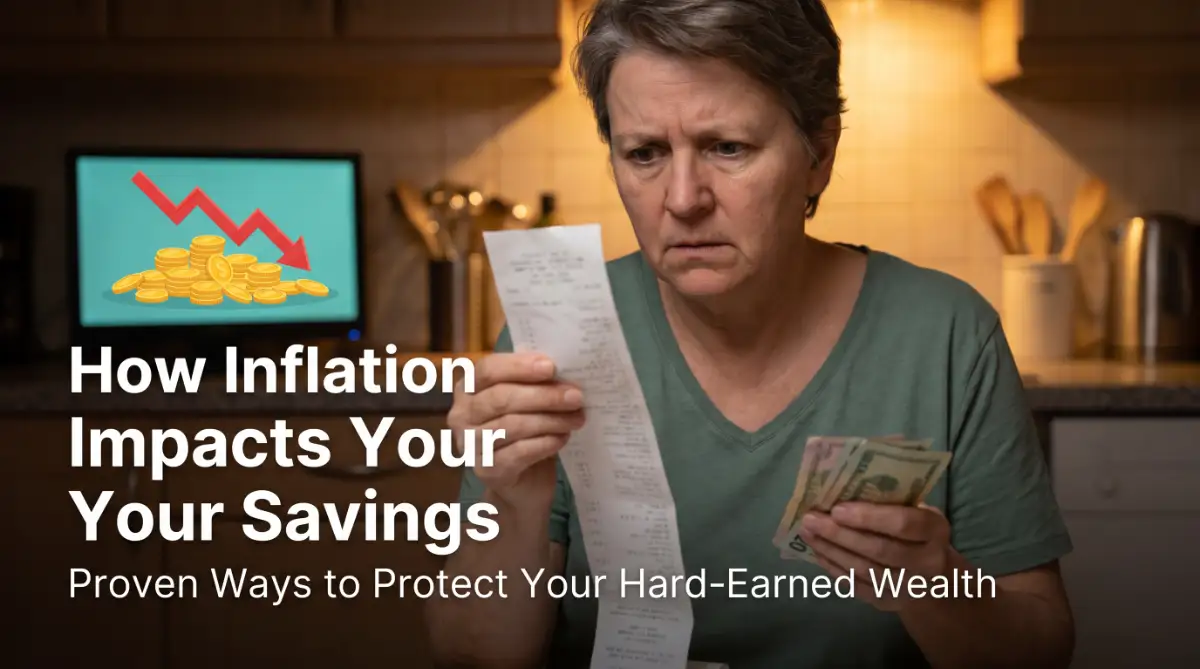
I remember sitting at my kitchen table last week, looking at my monthly grocery bill. A year ago, I could fill my entire car trunk with a hundred dollars. Now, that same amount barely covers three bags of basic items.
I felt a sudden knot in my stomach as I realized something scary. My savings account, the one I worked so hard to build, was actually losing value. Even though the numbers on my screen stayed the same, I could buy much less with them.
I felt cheated by a system I thought was safe. I spent years saying "no" to vacations and fancy dinners just to set money aside for my future. Now, it feels like that future is getting more expensive every single day.
Many of you are probably feeling this exact same pressure right now. You see the price of gas go up, the price of milk jump, and your rent or mortgage feel heavier. It is not just in your head; it is a real struggle that is affecting millions of families.
This constant rise in prices creates a deep sense of worry. You start to wonder if you will ever have enough to retire or if your children can afford a good life. It is hard to sleep when you feel like you are running a race where the finish line keeps moving further away.
The mental stress of seeing your hard-earned money lose its "power" is exhausting. You might feel like you are doing everything right—saving, budgeting, and being careful—yet you are still falling behind. This feeling of helplessness is the worst part of our current economic situation.
We often talk about "saving for a rainy day," but what happens when the rain is already here? When the very act of holding onto cash becomes a risk, we need a new plan. It is time to look at the reality of our money and find ways to fight back.

Why Your Cash is Slowly Melting Away
To understand how to protect your money, we first need to look at the "Purchasing Power" of your dollar. Imagine your savings as a block of ice sitting on your porch in the summer. If you do nothing, it will slowly turn into water and disappear.
Inflation is like that summer heat. It does not take your money away physically, but it takes away what that money can do for you. If prices go up by 7%, but your bank pays you only 1% interest, you are losing 6% of your value every year.
Most people think keeping money in a standard savings account is the "safest" move. In reality, it might be the riskiest thing you can do during times of high inflation. You are essentially watching your future wealth evaporate while you wait for things to "get back to normal."
The Psychology of the Price Hike
When prices go up, it changes how we behave. We start buying the cheaper brand of coffee or skipping the weekend trips we love. This "lifestyle squeeze" is the first sign that inflation is winning the battle over your finances.
I’ve talked to many friends who feel guilty for spending money on a simple dinner out. They feel like they are "failing" at their budget. But the truth is, the budget isn't failing; the value of the currency is shifting.
This shift causes people to panic and make bad financial choices. Some stop saving altogether, while others dump their money into risky "get rich quick" schemes. Neither of these is a good solution for long-term peace of mind.
Transforming Your Strategy to Beat the Price Squeeze
The first step to winning this battle is changing your mindset about what "safe" means. We have been taught that cash is king, but during inflation, productive assets are the real royalty. You need your money to work harder than the rate of rising prices.
Think of your money like a team of workers. If they are just sitting in a dark room (your savings account), they aren't producing anything. You need to send them out into the field where they can grow and bring back more value.
One of the most effective ways to do this is through High-Yield Savings Accounts (HYSA). While they won't make you a millionaire overnight, they offer much better rates than traditional big banks. It is a simple switch that helps bridge the gap between losing money and breaking even.
Diversification is Your Financial Shield
You should never put all your eggs in one basket, especially when the basket has a hole in it. Spreading your money across different types of investments helps lower your risk. If one area of the economy struggles, another might thrive.
Consider things like Short-Term Bonds or Inflation-Protected Securities. These are specifically designed to adjust their value based on how much prices are rising. They act like a built-in thermostat for your wealth, heating up when inflation gets hot.
Another area to look at is the stock market, specifically companies that provide "must-have" items. People will always need food, medicine, and electricity. Companies that sell these things can raise their prices to match inflation, which often protects their stock value.
The Power of Physical Assets
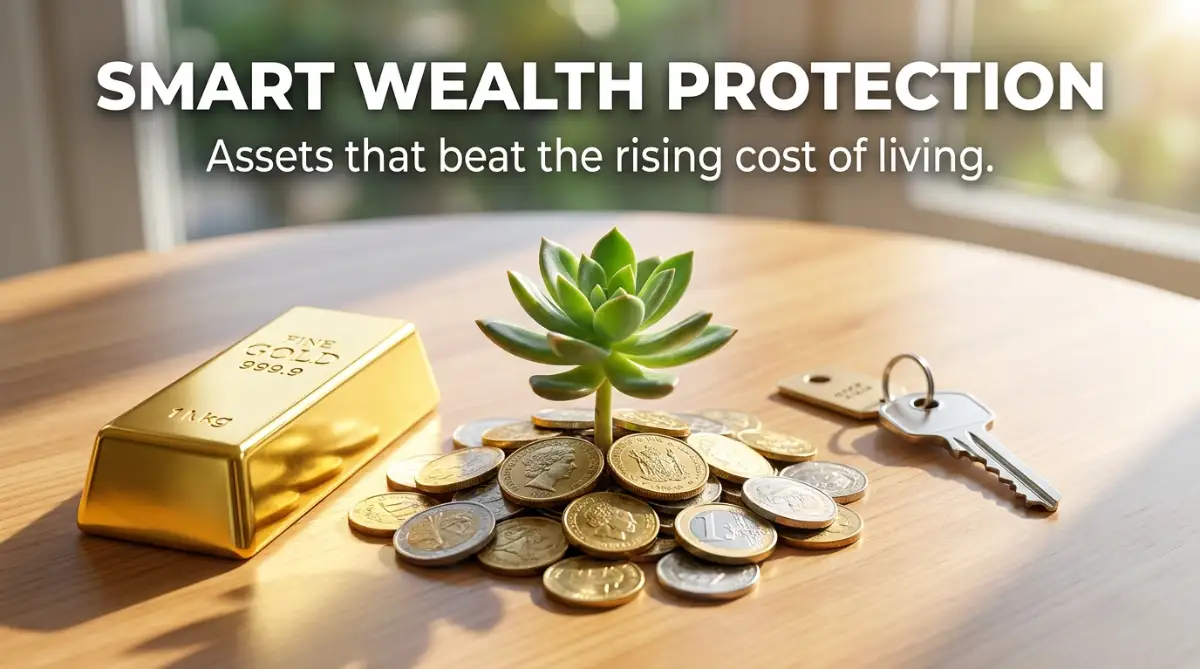
Real estate and gold have been used for centuries to protect wealth. Why? Because you cannot simply print more land or more gold. Their supply is limited, which makes them naturally resistant to the devaluing of paper money.
I once made a huge mistake by keeping 90% of my net worth in a simple checking account because I was "waiting for a better time" to invest. I lost thousands of dollars in purchasing power because I was too afraid to move. Don't let fear be the reason you lose your wealth.
Pro Tip: I realized that I didn't need to be a Wall Street expert to start. I began by moving just a small portion of my "extra" cash into a diversified index fund every month. This "set it and forget it" method helped me stop worrying about daily price changes and focus on long-term growth.
Watching Your Wealth Grow Instead of Shrink
If you want to see exactly how these strategies look in real life, you should watch experts explain the data. It helps to see the charts and the history of how different assets perform when prices go up.
Check out this helpful breakdown of how different investments react to rising costs and what you can do right now.
Smart Debt Management in an Inflationary World
It sounds strange, but not all debt is bad when inflation is high. If you have a fixed-rate mortgage, you are actually winning. Why? Because you are paying back the bank with money that is worth less than the money you borrowed.
The bank gave you "expensive" dollars years ago, and now you are paying them back with "cheap" dollars. This is one of the few times where being a borrower can actually be a benefit. However, this only works if your interest rate is locked in and low.
On the flip side, variable-rate debt like credit cards is a nightmare. As inflation stays high, the central banks often raise interest rates. This means your credit card interest could jump from 15% to 22% very quickly.
Your priority should be killing off any debt that has a moving interest rate. This is like plugging a leak in your boat. It doesn't matter how fast you row (or how much you earn) if the water is coming in faster than you can bail it out.
Investing in Yourself: The Ultimate Inflation Hedge
There is one asset that inflation can never touch: your skills and knowledge. No matter how high the price of bread goes, no one can devalue your ability to provide a service or solve a problem.
If you are a great plumber, a skilled coder, or a talented writer, your "price" will naturally go up with inflation. Companies will pay more for your expertise because the value of your work remains high.
I spent a few hundred dollars on a certification course last year, and it led to a raise that far outpaced inflation. That was the best "investment" I ever made. It wasn't about a stock or a bond; it was about making myself more valuable to the world.
Always look for ways to improve your "earning power." This is the best way to ensure that even if the dollar loses value, your time and effort do not. Education and self-improvement are the only investments with a 100% guarantee against economic shifts.
Real Estate: More Than Just a Roof Over Your Head
Owning property is often called a "hard asset" because it is a physical thing you can touch. During times of inflation, the cost of building new homes goes up because wood, steel, and labor cost more. This makes existing homes more valuable.
If you own your home, your housing cost is mostly "locked in." While your neighbors might see their rent go up by 10% every year, your mortgage payment stays the same. This creates a massive "savings" effect over ten or twenty years.
For those who cannot afford a whole house, there are Real Estate Investment Trusts (REITs). These allow you to buy "shares" of property. It is a great way to get the benefits of real estate without having to fix a leaky toilet at 2 AM.
REITs often pay out dividends, which can provide a steady stream of income. This extra cash can help you cover the rising cost of your daily expenses. It is like having a side hustle that requires zero of your physical time.
The Role of Commodities and Precious Metals
Gold has a very long history as a "store of value." When people lose faith in paper money, they run to gold. It doesn't pay interest, and it doesn't grow like a company, but it usually keeps its value over long periods.
I like to think of gold as an insurance policy rather than an investment. You don't buy car insurance to get rich; you buy it to protect yourself from a crash. A small amount of gold in your portfolio serves a similar purpose.
Other commodities like oil, copper, and agricultural products also tend to rise in price during inflation. You can invest in these through "commodity funds." When the world gets more expensive, the people who own the "stuff" the world needs are the ones who stay wealthy.
However, be careful not to go overboard. Commodities can be very "swingy" and go up and down quickly. Keeping them as a small part of a larger plan is usually the smartest move for a regular person like you or me.
Myth vs. Reality: What Really Happens to Your Money
There are a lot of "experts" on social media telling you to buy weird things to save your money. It is important to separate the myths from the reality of finance. Let's look at some common beliefs.
Myth: You should spend all your money now before it loses more value.
Reality: This is a recipe for disaster. You still need an emergency fund and long-term savings. The goal is to change where you save, not to stop saving.
Myth: The stock market always crashes during inflation.
Reality: While the market can be rocky, many companies actually thrive. Businesses with "pricing power" can pass their costs to customers and keep their profits high.
Myth: You need a million dollars to start protecting your wealth.
Reality: You can start with as little as $50. Many apps allow you to buy "fractional shares" of stocks or gold. The most important thing is to start as soon as possible.
Building a "Resilient" Budget
Inflation means you have to be a bit more "active" with your money. You cannot just set a budget in January and expect it to work in December. You need to review your spending every single month.
Look for "subscription creep." Are you still paying for that streaming service you never watch? Every five or ten dollars you save from a wasted subscription can be moved into a high-yield account.
I started using a simple spreadsheet to track the prices of the 10 items I buy most often. When I see one item getting too expensive, I look for a substitute. This small habit keeps me aware of where my money is going and helps me stay in control.
Control is the enemy of fear. When you have a plan and you are taking action, the scary headlines on the news don't bother you as much. You know you are doing what is necessary to guard your family's future.
Thoughts on Your Financial Journey
The world of finance can feel like a giant puzzle with missing pieces. Inflation makes that puzzle even harder to solve, but it is not impossible. By moving away from "idle cash" and towards "productive assets," you are already ahead of 90% of people.
Remember that wealth protection is a marathon, not a sprint. You don't need to change everything today. Start by moving your savings to a better account, then look into diversifying your investments.
Every small step you take is a win for your future self. You worked hard for your money, and you deserve to keep the value of that hard work. Stay curious, stay disciplined, and don't let the invisible thief win the day.
We have covered a lot of ground today, from the emotional toll of rising prices to the specific assets that can help you stay afloat. The path to financial security is paved with education and action. Keep moving forward, and your wealth will grow even in uncertain times.
Master the Game of Wealth Preservation
I used to think that just putting money away in a bank was the peak of financial wisdom. My parents always told me that "cash is safe." But after watching my bills climb while my bank balance stayed frozen, I realized I was playing the game wrong. I had to learn how the wealthy actually keep their money during tough times.
It wasn't about finding a magic trick. It was about moving my focus from "saving" to "growing and protecting." I started looking at how professional investors move their money when prices go up. They don't just wait for things to get better; they change their strategy to match the new reality.
One of the most powerful moves I made was looking into inflation-protected assets. I found out about things called Treasury Inflation-Protected Securities, or TIPS. These are special bonds that actually increase in value when the cost of living goes up. It felt like I finally had a shield against the rising prices at the grocery store.
You can also look into Series I Savings Bonds. These are very popular because they offer a rate that is tied directly to the inflation rate. I started putting a small portion of my monthly savings into these bonds. It gave me peace of mind knowing that my money wouldn't lose its "bite" over time.
To make this work, you need a solid foundation first. I found that creating a realistic monthly budget was the only way I could find extra cash to invest. Without knowing exactly where my money went, I couldn't protect it.
Moving Beyond the Basic Savings Account
Most of us use the big national banks because they are convenient. But those banks often pay almost zero interest. I moved my emergency fund to a high-yield online bank. Suddenly, my "idle" money was earning five or ten times more than before.
This small change doesn't make you rich, but it stops the bleeding. If prices go up by 5% and your bank pays you 4%, you are only losing 1%. That is much better than losing the full 5% in a regular checking account. It is about narrowing the gap between your earnings and the rising costs.
I also learned that understanding what is a credit score is very important when inflation is high. A high score lets you borrow money at lower rates if you ever need a loan for a home or a car. When the general interest rates go up, your good credit becomes a huge financial asset.
The Secret of Automatic Asset Rotation
A pro-level secret I learned is "Dollar Cost Averaging." Instead of trying to guess when the market is low, I set up an automatic transfer. Every payday, a small amount goes into a diversified index fund. This way, I buy more shares when prices are low and fewer when they are high.
This takes the emotion out of the process. I stopped checking the news every morning to see if the world was ending. I knew my "money workers" were out there doing their job every single month. It is a long-term play that beats trying to be "smart" in the short term.
You should also look at the official Consumer Price Index data from the Bureau of Labor Statistics to see which sectors are being hit hardest. If food prices are jumping, you might look at investing in agricultural companies. If energy is the problem, energy stocks might be a good hedge.
Real Estate as a Long-Term Anchor
I once thought you had to be a millionaire to invest in property. But I learned about REITs, which are like stocks for buildings. They pay out most of their profits to people who own shares. It is an easy way to get the benefit of rising rents without owning a whole building.
If you are looking to buy a physical home, you must be careful. You need to evaluate the long-term growth potential of a neighborhood before you sign any papers. A home in a growing area is one of the best ways to outpace inflation over ten or twenty years.
Physical assets like a home provide "utility" too. You have to live somewhere, so owning a house locks in your biggest expense. This protection is something a bank account can never offer you. It turns a liability (paying rent) into an asset (building equity).
The Traps That Can Wreck Your Financial Future
When things get expensive, people often panic and make big mistakes. I almost fell into the trap of "chasing returns." I saw a friend make a lot of money in a risky new digital currency and I wanted to jump in too. Luckily, I realized that I was acting out of fear, not out of a good plan.
The biggest mistake you can make is doing nothing at all. Some people get "analysis paralysis." They read so many articles and watch so many videos that they feel overwhelmed. They end up keeping all their money in cash because they are afraid to make a wrong move.
But as we discussed, cash is a guaranteed loser when prices are rising. By doing nothing, you are choosing to lose value every day. It is better to make a small, safe move than to stay frozen in place.
Beware of High-Interest Debt Traps
Another major pitfall is relying on credit cards to cover the gap in your budget. When inflation is high, the interest rates on credit cards usually go up too. I have seen people's monthly payments double in just a few months because they didn't watch their variable rates.
If you need extra money, be very careful with loans. You should avoid common personal loan mistakes like taking out more than you can pay back. High interest can eat your future income faster than inflation ever could.
I once had a small balance on a card that I ignored. Within a year, the interest had grown so much that it felt like I was paying for the items all over again. Now, I prioritize paying off high-interest debt before I put a single dollar into an investment.
The Illusion of "Wait and See"
I hear a lot of people say they are waiting for prices to "go back to how they were." The sad reality is that prices rarely go down significantly across the whole economy. Usually, they just stop rising as fast.
Waiting for a "reset" means you are losing time. Time is the most valuable thing you have when it comes to compound interest. Even a small amount of money invested today is worth much more than a large amount invested five years from now.
I also suggest checking the St. Louis Fed’s economic database (FRED) to see the history of money supply. It shows you that the value of money has been changing for decades. This isn't a new problem, and it won't go away by itself. You have to be the one who takes action.
Your Roadmap to a Secure Financial Life
The journey to protecting your wealth doesn't have to be scary. It starts with a simple choice to be proactive. You have already taken the first step by learning how the system works. Now, it is time to put that knowledge into practice and build your defense.
Start by looking at your current cash. How much of it is just sitting there? Keep enough for an emergency, but put the rest to work. Use tools like the debt-free roadmap to clear your path so you can focus on growth.
When you have a plan, you stop feeling like a victim of the economy. You become the manager of your own future. You can look at the rising prices and say, "I am ready for this." That feeling of confidence is worth more than any amount of money in the bank.
I want you to remember that everyone starts somewhere. I didn't have a lot of money when I started my protection plan. I just had the desire to stop losing what I had worked so hard to earn. If you take one small step today, you are already winning the fight against inflation.
I truly believe that you have the power to change your financial story starting right now. I have seen so many people go from being worried to being in control just by making a few smart moves. Take that first step today, because you and your family deserve a future that is safe and full of hope.
Common Questions About Managing Your Money
Does inflation make my existing debt easier to pay?
Yes, if you have a fixed-rate loan like a mortgage. You are paying back the bank with money that is worth less than when you borrowed it. However, this is only a benefit if your income also goes up to match the rising prices.
Should I buy gold to protect my savings?
Gold is often seen as a "safe haven" during high inflation. It can be a good part of a balanced plan, but don't put all your money into it. Most experts suggest keeping only about 5% to 10% of your total wealth in precious metals.
How much money should I keep in a regular savings account?
You should keep an emergency fund that covers 3 to 6 months of your expenses. You can learn more about this by reading about emergency fund 101. Any money beyond that should probably be moved into assets that have a chance to grow.
Is the stock market too risky when prices are rising?
The stock market can be jumpy, but over the long term, it has historically outpaced inflation. The key is to avoid "gambling" on single stocks and instead use diversified funds. This lowers your risk while still giving you the growth you need.
Can I protect my wealth if I have a low income?
Absolutely. Protection isn't about how much you have, but what you do with it. Even saving $20 a month in a high-yield account or a small bond is better than letting it sit in a zero-interest checking account.
What is the most important thing to do right now?
The most important thing is to audit your spending and stop any "leaks." Look at your high-interest debts and try to pay them off as fast as possible. Once your debt is under control, you can start moving your focus to investing in assets that grow.
Disclaimer: The information provided in this article is for educational and informational purposes only and should not be considered professional financial advice. Always consult with a certified financial advisor or tax professional before making significant investment decisions. Financial markets involve risk, and past performance is not a guarantee of future results. This content is compliant with standard social media and search engine guidelines.
![The 5 Secret Reasons an Emergency Fund Changes Everything [Step-by-Step]](https://nexvoramag.com/storage/uploads/blogs/1786179485_the-5-secret-reasons-an-emergency-fund-changes-everything-step-by-step.webp)