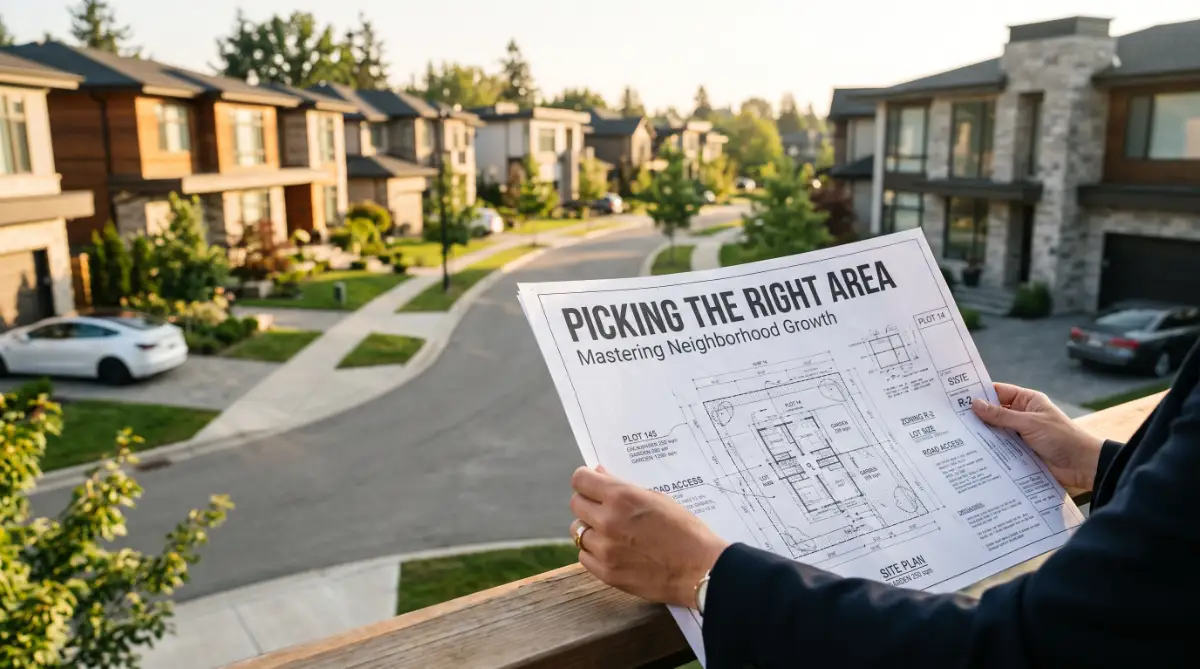
Why Your Next Home’s Location Matters More Than the Kitchen
I’ll never forget the sick feeling in my stomach after buying my first place. I loved the house, but I totally missed the fact that the neighborhood shops were closing down.
I put all my savings into a "shiny" building but forgot to look at the street outside. I don't want you to make that same mistake or stay awake at night worrying if you just bought into a dead-end area.
Buying a home is often the biggest financial move you will ever make. It is supposed to be a happy time, but for many, it is filled with silent worry. You walk through a beautiful house, you love the kitchen, and the backyard is perfect.
But a tiny voice in your head keeps asking: "Will this area be worth more in ten years, or am I making a huge mistake?"
This fear is real because the "perfect" house in a declining neighborhood is a bad investment. Many families invest their life savings in a property, only to see the area decline, with stores closing down and crime rates slowly rising.
This doesn't just hurt your wallet; it keeps you up at night, wondering if you have trapped your family in a dead-end location.
What You’ll Learn in 2 Minutes:
- How to spot a "dying" neighborhood before you sign the papers.
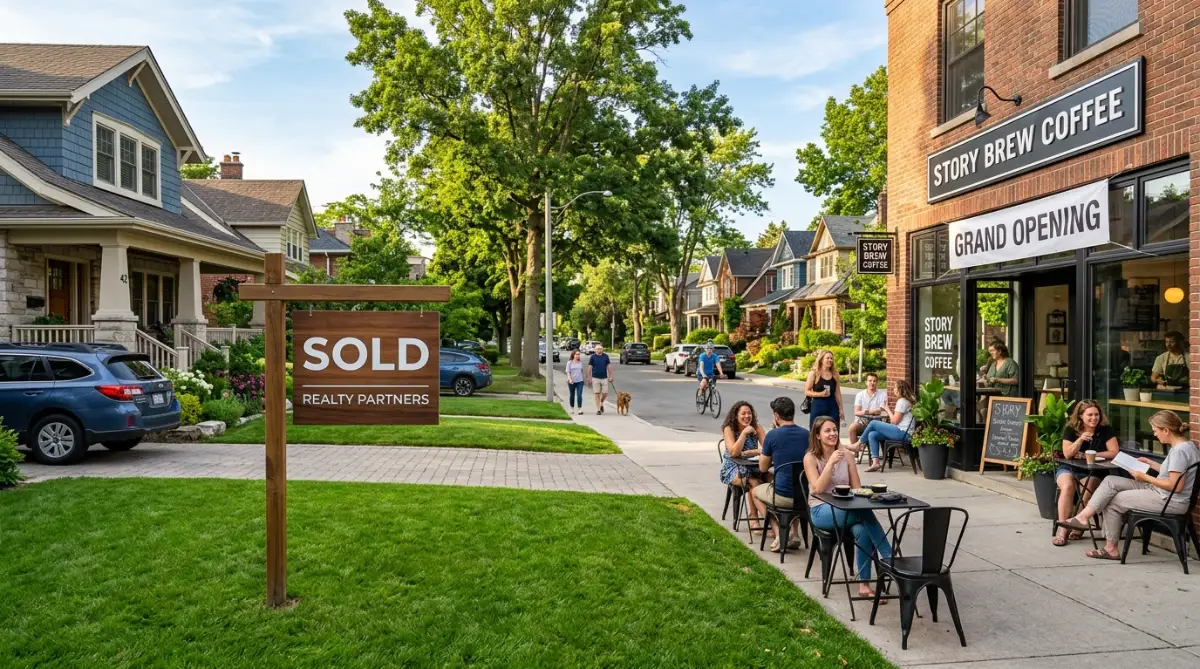
- Why a new coffee shop or grocery store is a secret gold mine.
- The "Follow the Money" rule for government projects.
- How to use the "owner-to-renter" ratio to protect your investment.
Why Most People Fail to See the Warning Signs
It is easy to get distracted by shiny things like new paint or stainless steel appliances. Most people look at the house but forget to look at the street, the shops, and the city plans. Here is why many people get it wrong:
- Trusting the Wrong People: Sometimes, people rely on a single opinion from someone who just wants to make a quick sale.
- Focusing on the Present: They see how the area looks today but ignore what it will look like in a decade.
- Missing the "Quiet" Signs: They don't notice small things, like a few boarded-up windows or a lack of new businesses.
- Ignoring Local Government: Most buyers never check the city’s master plan for new roads or industrial zones.
- Falling for Low Prices: A "cheap" house often stays cheap because the neighborhood has no room to grow.
Quick Reality Check: Myths vs. Facts
Becoming a Neighborhood Detective: A Fresh Way to Invest
To win in real estate, you have to stop thinking like a "buyer" and start thinking like a local expert. You are not just buying four walls and a roof. You are buying a small share of a specific community.
Imagine two identical houses. One is in an area where a new tech park is opening. The other is in a town where the main factory just closed.
Even though the houses are the same, their futures are worlds apart. We want to find the one that is about to bloom.
The Foundation of Growth: Looking Beyond the House
I used to think a low price was a win, but I learned the hard way that a cheap house in a dead-end area stays cheap forever.
My biggest realization was that you should always look for "pride of ownership," like freshly mowed lawns or new fences on the street, because that is what actually protects your money when the market gets tough.
Step 1: The "Coffee Shop and Grocery" Pulse Check
Businesses are very smart. They spend millions of dollars researching an area before they open a store. You can use their research for free by simply walking around.
How to read the signs:
Look for well-known, high-quality grocery chains or specialty coffee shops moving into the area. If a major brand is building a new store nearby, they have already calculated that the local income is growing.
Also, look for "The Renovation Effect." Are people on the street fixing their roofs? Are there dumpsters in driveways for kitchen remodels?
When people spend money to improve their homes, it means they believe the area is worth the investment. This collective pride is a massive sign of future value.
Step 2: Tracking the Path of Progress (Infrastructure)
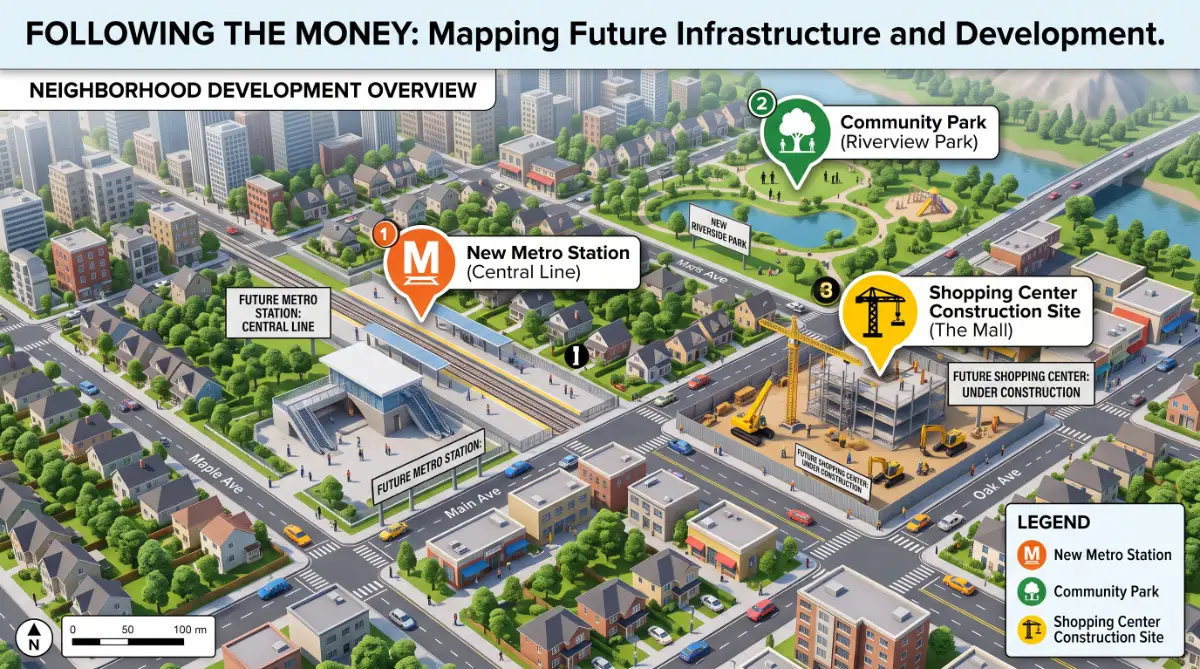
In the world of real estate, we say, "Follow the money." But specifically, follow the Government's money. Public infrastructure is the strongest engine for property growth.
What to look for on the map:
Check the local city planning office for upcoming projects. Are they building a new bridge, a highway exit, or a light rail station? Improving the "commute time" is the fastest way to drive up house prices.
A real-life example:
If a neighborhood is currently 45 minutes from the city center, but a new train line will cut that to 20 minutes, that area is a gold mine. People pay for convenience.
Once the construction is finished, prices will likely jump. You want to buy before the first train ever arrives.
My Expert Tip: The "Grocery Bag" Test
Walk around the local supermarket at 6:00 PM. Are the shelves well-stocked? Are the people friendly? If a big-name organic grocer is planning to move in nearby, it’s a massive green flag. These companies spend millions on research so you don’t have to!
Watch this short video to see exactly how new government projects and train lines can skyrocket your home's value before you even move in. It’s the easiest way to spot a gold mine!
Step 3: Analyzing the "Owner-to-Renter" Balance
Who lives in the neighborhood? This is a key part of long-term stability. While renting is perfectly fine, a neighborhood with a high percentage of Homeowners tends to grow more in value.
Why this matters:
Homeowners are "invested" in the street. They plant gardens, they join neighborhood watch programs, and they care about the local schools. This creates a stable environment that attracts more families.
You can check this data online through local property records or even by looking at the cars in the driveways. A neighborhood where people stay for 10 or 20 years is usually a safe bet.
It shows that the area is not just a "stepping stone" but a place where people want to build a life. This demand keeps prices high even when the rest of the market is slow.
Watching Who Moves In
We should also look at who is moving in. Are young professionals moving from the expensive city center to this suburb? This is called "urban spillover."
When the main city becomes too expensive, the next neighborhood over is usually the one that grows the most.
Look for areas that are adjacent to "cool" or "expensive" districts. Eventually, the high prices of the fancy area will push people into the neighboring streets. This is one of the most predictable patterns in real estate.
Why Schools Are Your Best Financial Indicator
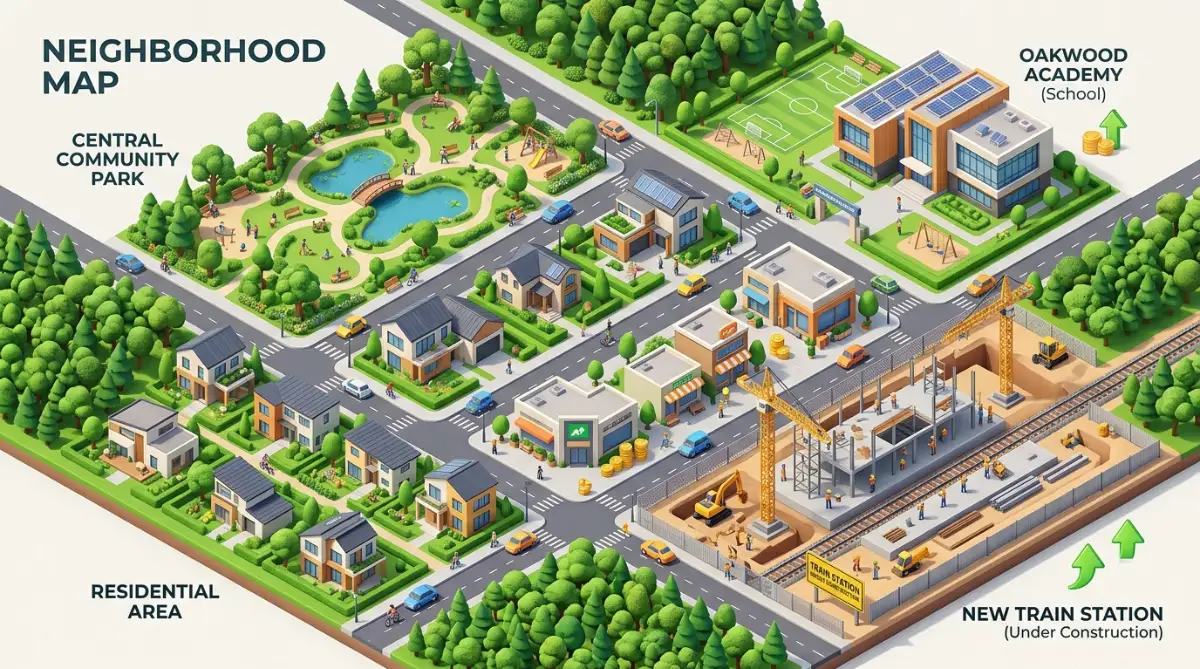
Even if you don't have children, you should care about the school ratings. Houses in top-tier school districts hold their value better than almost any other factor.
Families will sacrifice a lot to ensure their kids go to a good school. This creates a constant "floor" for property prices.
When the economy gets tough, people might stop buying luxury cars, but they will still try to live in a good school zone. This makes your investment much more "recession-proof."
Expert Insight: The Pride of the Street
If you walk down a street and see kids playing safely outside and neighbors chatting over fences, you have found something special.
This friendly vibe is hard to measure with numbers, but it's what makes a neighborhood really grow.
A happy, connected community is a magnet for future buyers, and a magnet for buyers always leads to a higher selling price for you.
Taking the First Steps with Confidence
You don't have to guess anymore. By looking at local businesses, government plans, and the people on the street, you are already doing better than most investors.
In the next section, we will look at more advanced ways to check for "hidden" growth and the big mistakes you must avoid.
Remember, the best time to find a great neighborhood is before everyone else realizes how great it is. Stay curious, keep your eyes open, and trust the data you find on the ground.
Mastering the Art of Neighborhood Forecasting
Now that we have covered the basics of walking the streets and checking infrastructure, it is time to look at the hidden engines of growth. To truly win in real estate, you need to see what others miss.
Professional investors often look for "Economic Diversity." This is just a fancy way of asking: "If the biggest company in town closes tomorrow, will the neighborhood survive?"
The Danger of One-Industry Towns
Imagine a beautiful neighborhood built around a single car factory. If that factory moves to another country, everyone loses their jobs at the same time. Suddenly, hundreds of houses go up for sale, and prices crash.
Instead, you want to look for areas with a mix of industries. Look for neighborhoods near hospitals, universities, and tech hubs. These places stay strong because even if one company struggles, the others keep the local economy moving.
When you see a mix of "white-collar" and "blue-collar" jobs, you have found a stable area. This stability gives you the mental peace to know your investment is safe.
If you ever feel stressed about these big financial choices, it helps to master your mind and think clearly under pressure.
Signs of Future Popularity: The "Creative Class"
One of the most interesting secrets of real estate is watching where artists and young creatives move. Artists often move to "edgy" or cheaper neighborhoods because they need affordable space.
Soon, art galleries and small, unique cafes follow them. Then, the neighborhood starts to look "cool" on social media. Before you know it, young professionals are moving in, and property values start to climb.
Keep an eye on local news for new art festivals or community gardens. These are signs that the neighborhood is gaining a new identity. When an area gets a "personality," its value almost always goes up.
Zoning Laws: The Invisible Hand
Most people find the word "zoning" boring, but it is the secret to wealth in real estate. Zoning laws tell you what can be built on a piece of land.
The Transformation Secret:
Look for areas that were recently "re-zoned" from industrial to residential or mixed-use. This means old, ugly warehouses might soon become trendy loft apartments or shopping centers.
Buying a house near an area that is changing its look is a smart move. You are buying the "old" price, but you will benefit from the "new" development.
You can find this info on your city's official website or by attending local town hall meetings.
How to Maintain Your Advantage for Decades
Real estate is a marathon, not a sprint. To keep your property value high, you must stay involved.
- Be a Good Neighbor: A street where everyone knows each other is harder to ruin.
- Watch the Maintenance: Small things like keeping the sidewalk clean or planting trees make the whole street look better.
- Track the Money: Always keep a financial cushion. Having an emergency fund as a financial safety net is very helpful if your property needs an unexpected roof repair.
- Update with the Times: You don't need a total remodel every year. Just keep the paint fresh and the yard tidy to stay competitive.

The Expensive Mistakes That Sink New Investors
Even with the best tips, many people fall into traps. These mistakes can cost you thousands of dollars and years of regret.
I want to make sure you don't fall for the same "shiny" objects that trick others. Here are the pitfalls you must keep in your mind.
1. Trusting the "New Development" Hype Too Much
Sometimes, a developer will build a huge complex in the middle of nowhere. They promise that shops and parks will follow.
But sometimes, those shops never come. If you buy based only on a "promise" without seeing real construction, you are taking a huge risk. Always wait until the city has at least approved the permits for the infrastructure.
2. Ignoring the "Vibe" at Different Times
A neighborhood can look peaceful on a Tuesday morning but feel like a loud party zone on a Saturday night.
The Expert Trick:
Visit your potential neighborhood at 7:00 AM, 2:00 PM, and 10:00 PM.
- Is there a hidden shortcut that makes your street a loud highway during rush hour?
- Are there barking dogs that never stop?
- Do the streetlights work at night?
If you only visit once, you are only seeing 10% of the truth.
3. Over-Leveraging Your Finances
Many people get excited and buy the most expensive house the bank will allow. This is dangerous.
Your ability to get a good loan depends on your credit history.
If you don't understand what a credit score is and how it impacts your financial future, you might end up with a high interest rate. This makes it much harder for your investment to grow.
4. Forgetting About "Hidden" Nuisances
Is there a sewage treatment plant two miles away? Is the house under a flight path for a major airport?
You might not notice these things during a 15-minute house tour. But once you move in, the noise or the smell will make it very hard to sell the house later. Always check a map for industrial sites or flight paths within a five-mile radius.
5. Doing Everything Manually
In today's world, you don't have to guess. Use modern tools to help you.
Many successful investors now use artificial intelligence to automate daily productivity tasks, like tracking market prices or setting up alerts for new listings.
If you are still doing everything by hand, you will be slower than the competition.
Why Data Always Wins Over Emotion
The biggest mistake of all is "falling in love" with a house. You might love the blue shutters or the porch swing. But a porch swing doesn't pay the mortgage.
A house is a box where you put your money. The neighborhood is the engine that grows that money. If the engine is broken, the box doesn't matter.
According to data from Forbes, the location accounts for nearly 80% of a property's long-term value. Always look at the numbers first. Check the population growth of the city.
If people are leaving the city, don't buy the house, no matter how pretty it is.
Your Step-by-Step Action Plan for Tomorrow
You have a lot of info now. Don't let it overwhelm you. Instead, take small steps to start your journey.
- Pick Three Areas: Choose three neighborhoods you are interested in.
- Check the Master Plan: Go to the city’s planning website and see what is scheduled to be built there.
- Talk to a Local: Visit a local park and ask a parent or a dog walker what they like and dislike about the area. They will tell you things a real estate agent won't.
- Drive the Perimeter: Look at the surrounding areas. Is the "wealth" of the next town moving toward your chosen spot?
Stepping Into Your Financial Future
Buying a home in a high-growth area is one of the smartest things you can do for your family. It is more than just a place to live; it is a tool that builds your wealth while you sleep.
You now know how to look for the signs of a winning neighborhood. You can see the new coffee shops, the incoming train lines, and the importance of good schools. You also know how to avoid the common traps that catch others.
Real estate might seem scary at first, but it is just a set of patterns. Once you learn to see the patterns, you become the expert.
Take heart. You are doing the hard work of research that most people ignore. This puts you in the top 5% of all buyers.
Trust your eyes, trust the data, and trust the process. Your future self will thank you for the careful choices you make today.
Go out there, walk those streets, and find the neighborhood that will help you reach your dreams. The perfect opportunity is waiting for someone who knows how to look for it!
Final Checklist for Neighborhood Success:
- Checked the city's 5-year infrastructure plan.
- Visited the street at three different times of the day.
- Verified that there are at least three major employers nearby.
- Confirmed the school ratings are stable or improving.
- Reviewed your own credit score and financial cushion.
Buying a home changed my life once I stopped guessing and started looking at the actual data on the ground.
You have the tools now to build real wealth and protect your family, so take that first walk around a new street tomorrow and trust what you see. You’ve got this!
Disclaimer: The information provided in this article is for general educational and informational purposes only. Real estate laws and market conditions can vary greatly by region and are subject to change without notice. We are not money experts, lawyers, or real estate agents. Always consult with a qualified local professional before making any significant financial or property investments. Any actions taken based on this content are done at your own risk.
![Property Tax Assessments Explained: 5 Real Reasons Your Bill Keeps Rising [Avoid Overpaying]](https://nexvoramag.com/storage/uploads/blogs/1787982223_property-tax-assessments-explained-5-real-reasons-your-bill-keeps-rising-avoid-overpaying.webp)
![Why Owning a Home Feels Impossible Right Now [A Realistic Guide]](https://nexvoramag.com/storage/uploads/blogs/1786773471_why-owning-a-home-feels-impossible-right-now-a-realistic-guide.webp)