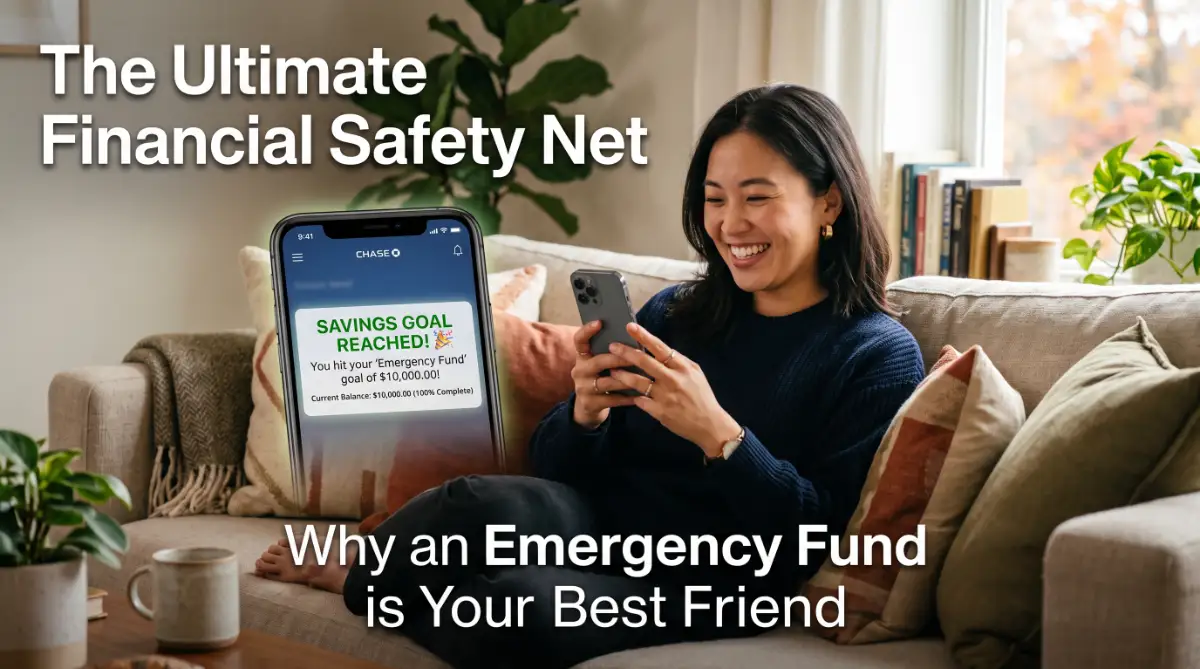
The Night I Realized I Was Living on the Edge
I remember it like it was yesterday. It was a Tuesday night, and the rain was pouring down. I was driving home from a long shift, thinking about what to cook for dinner.
Suddenly, my car made a loud grinding noise and just stopped. I sat there in the dark, my heart pounding against my ribs. I pulled out my phone and checked my bank account. I had exactly $47 left to last me until Friday.
My stomach dropped. I didn't have a "safety net." I didn't have a backup plan. I just had a broken car and a sense of total panic. I had to call my parents to borrow money, and the shame felt heavier than the car itself.
That night, I promised myself I would never feel that helpless again. I realized that my lack of savings wasn't just a money problem; it was a "life" problem.
Living without an emergency fund is like walking a tightrope without a net. You might be fine for a while, but one tiny slip-up changes everything. Most people I talk to are living this way every single day.
They wake up with a quiet anxiety in the back of their minds. They worry about the "what ifs." What if the roof leaks? What if the kids get sick? What if my boss says they don't need me anymore?
This constant stress eats away at your happiness. It makes you short-tempered with your family and tired at work. You aren't really "living" your life; you are just surviving it. This struggle is real, and it is exhausting. But I found a way out, and I want to help you find it too.
Building a pile of cash for emergencies is the first step to feeling like a human again. It isn't about being rich. It is about being safe. It is about knowing that if life hits you hard, you can hit back.
You deserve that peace of mind. You deserve to sleep through the night without counting coins in your head.
Why Your Brain Craves a Financial Buffer
Our brains are hardwired to look for danger. When you have no savings, your brain treats your bank account like a predator. Every time you see a low balance, your body goes into "fight or flight" mode. This is why people get so stressed about money. It is a biological reaction to a lack of safety.
When you start building an emergency fund, you are actually calming your nervous system. You are telling your brain, "We are okay. We have a plan." This allows you to think more clearly.
You can make better decisions at work and be more present with your loved ones. It is amazing how much better food tastes when you aren't worried about how to pay for it.
The Invisible Shield Against High-Interest Debt
One of the biggest reasons people stay poor is "emergency debt." When something goes wrong and you have no cash, you reach for a credit card. Now, you don't just have a $500 car repair; you have a $500 debt with 20% interest. You end up paying for that one bad day for the next three years.
An emergency fund stops this cycle. It acts as an invisible shield. When the car breaks, you pay cash. There is no interest. There is no debt collector calling you.
You handle the problem and move on with your life. You are essentially "self-insuring" against the chaos of the world.
Protecting Your Career and Your Choices
Have you ever stayed in a job you hated because you couldn't afford to quit? I have. It feels like being in a cage. When you have three to six months of expenses saved up, that cage door opens. You don't have to put up with a toxic boss or a soul-crushing commute because you are desperate.
Having money in the bank gives you "walk-away power." It doesn't mean you will quit tomorrow. It just means you could. That feeling of freedom changes how you carry yourself.
You speak up more in meetings. You take more risks. You become a better version of yourself because you aren't operating from a place of fear.
Breaking the "Paycheck to Paycheck" Cycle for Good
Most people think they need a huge salary to save money. I used to think that too. But I realized that it isn't about how much you make; it’s about how much you keep. Starting an emergency fund forces you to look at your money differently. You start to see the small leaks in your budget that are draining your future.
I started by saving just $5 a day. That’s just the cost of a coffee or a snack. By the end of the month, I had $150. That wasn't enough to retire, but it was enough to buy a new tire if I needed one. That small win gave me the confidence to keep going. It proved to me that I was in control, not my bills.
Pro Tip: I once made the mistake of keeping my emergency fund in my main checking account. I saw the "extra" money and spent it on a new pair of shoes. I learned the hard way that you must keep this money in a separate account. If you don't see it every day, you won't be tempted to spend it on things that aren't emergencies.
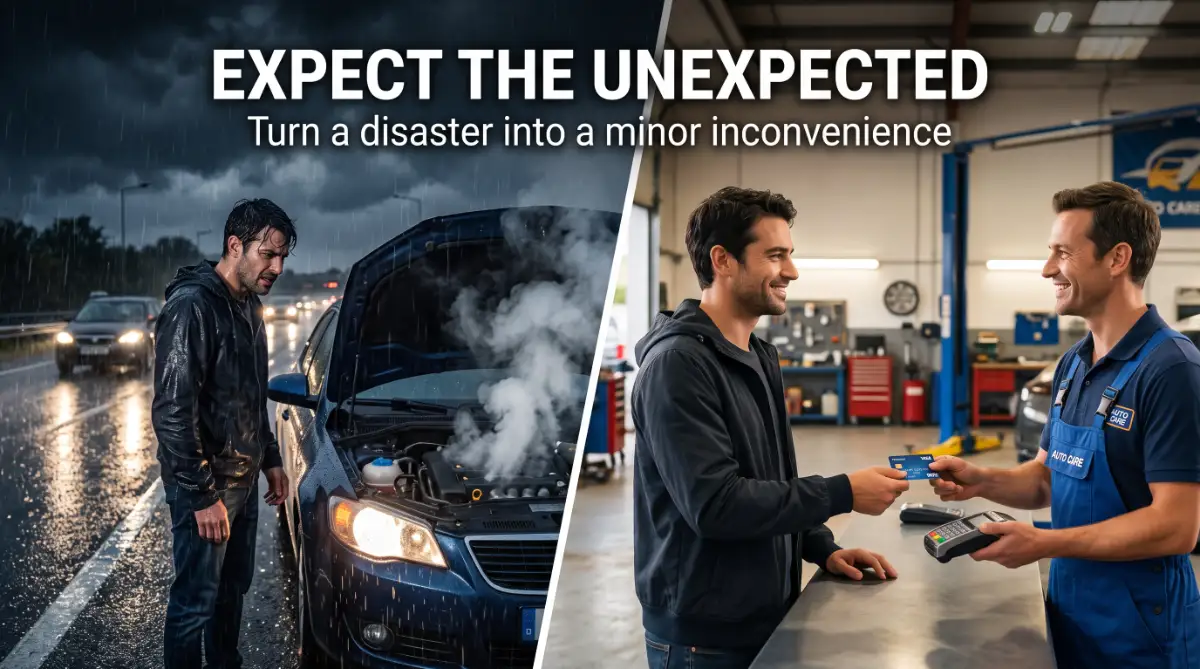
Turning Disasters into Minor Inconveniences
Think about the last time something broke in your house. Was it a tragedy? Did it ruin your whole month? For most people, a broken water heater is a crisis.
But for someone with an emergency fund, it is just an annoyance. It is something they fix on a Saturday and forget about by Monday.
That shift in perspective is life-changing. You stop fearing the future and start planning for it. You realize that "bad luck" is often just a lack of preparation.
When you are prepared, "bad luck" doesn't have the power to hurt you anymore. You become the master of your own financial destiny.
Watch This to Master Your Money Mindset:
If you want to see exactly how the pros structure their savings to avoid common traps, this video is a game-changer for your wallet.
How Much Do You Actually Need?
This is the question everyone asks. The "experts" often say you need six months of pay. That can feel like a mountain you can't climb. If you make $3,000 a month, that’s $18,000!
That sounds impossible when you are starting from zero. Don't let that big number scare you away.
I suggest starting with a "Starter Fund" of $1,000. Why $1,000? Because most common emergencies—like a car repair, a flight for a funeral, or a broken appliance—cost less than $1,000.
Once you hit that first goal, you will feel a rush of pride. You will realize that you can do this. Then, you can slowly build up to three or six months of expenses.
Where Should You Keep This Money?
You don't want your emergency fund under your mattress. You also don't want it in the stock market. If the market crashes the same day you lose your job, you are in big trouble. You need this money to be "liquid," which means you can get to it fast.
A high-yield savings account is usually the best place. It earns a little bit of interest, but more importantly, it is safe. It is also separate from your daily spending money. This creates a "mental barrier" that keeps your hands off the cash until it is truly needed.
The "Real" Definition of an Emergency
This is where many people fail. They build a small fund and then use it for a "shoe emergency" or a "vacation emergency." Let’s be clear: A sale at the mall is not an emergency. A weekend trip with friends is not an emergency.
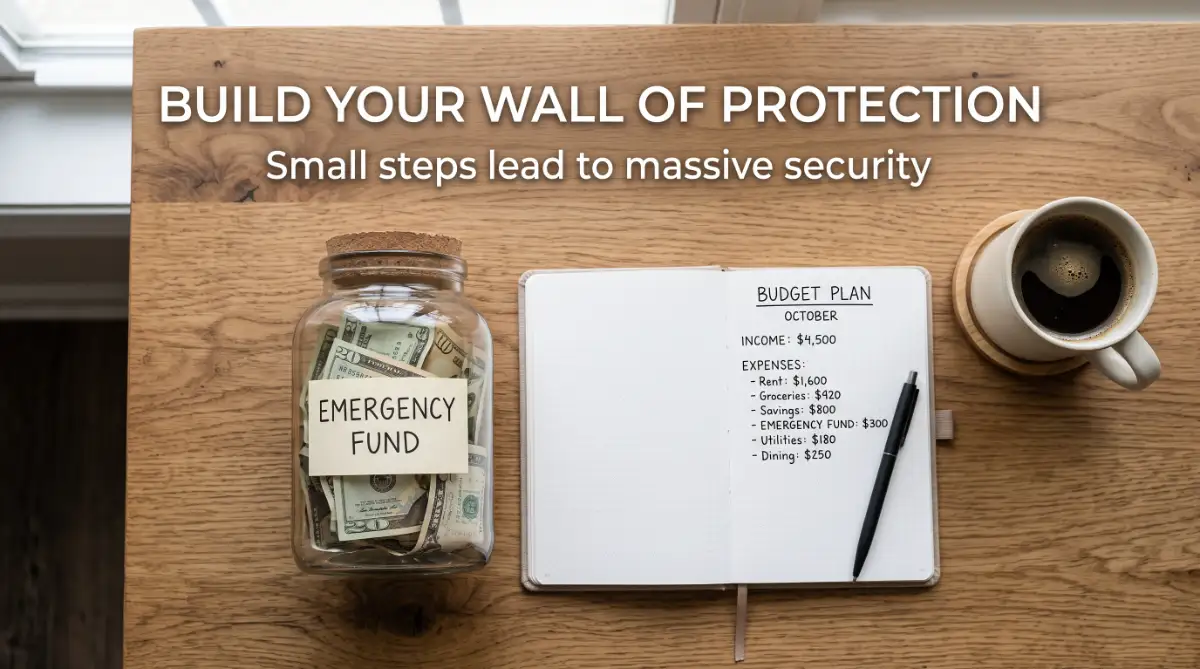
An emergency is something that is unexpected, necessary, and urgent. Losing your job is an emergency. A medical bill is an emergency. Your car not starting is an emergency. If it doesn't fit those three rules, don't touch the money. Keep that wall of protection strong.
Building the Habit of Consistency
The secret to a big bank account isn't luck; it’s a habit. I started by automating my savings. I set up my bank to move $25 every Friday into my emergency account. I didn't even have to think about it. After a few weeks, I didn't even miss the money.
Consistency is more important than the amount. Even if you can only save $10 a week, start there. It builds the "saving muscle." Over time, as you earn more or find ways to cut costs, you can increase that amount. The key is to never stop.
Finding Hidden Money in Your Life
You probably have more money than you think. When I was building my first $1,000, I went through my bank statements. I found three subscriptions I wasn't even using.
I was paying $40 a month for things I didn't need! I canceled them and put that money straight into my fund.
I also looked at my grocery bill. I started buying generic brands and planning my meals. I saved another $50 a week just by doing that. It wasn't about "suffering"; it was about prioritizing my safety over a specific brand of cereal. Those small changes added up faster than I ever expected.
Dealing with Setbacks (Because Life Happens)
You will have days where you have to spend the money. That is what it’s there for! Don't get discouraged if you save $500 and then have to spend $400 on a dental bill. That isn't a failure; it’s a success! You handled the bill without a credit card.
When you use the money, just start again. Refill the fund as fast as you can. Life is a series of ups and downs. The goal is to have the cash ready for the "down" times so you can get back to the "up" times as soon as possible.
The Peace of Mind is Priceless
At the end of the day, an emergency fund isn't about numbers on a screen. It is about how you feel when you put your head on the pillow.
It is about the smile on your face when you aren't worried about the mail. It is about the freedom to live your life on your own terms.
I can tell you from experience that the first time you pay for a major repair with cash, you will feel like a superhero. The stress just melts away. You realize that you have taken control of your life. You aren't a victim of circumstances anymore. You are a person with a plan.
How Your Relationships Improve
Money is the leading cause of arguments in many homes. When there is no safety net, every small expense becomes a fight. "Why did you spend $20 on that?" "We can't afford this!" These words hurt families.
When you have an emergency fund, those fights disappear. You and your partner can talk about money without fear. You both know the "wall" is there to protect you.
It brings a level of peace to the home that you can't buy with any luxury item. It allows you to focus on loving each other instead of worrying about the rent.
The Scientific Link Between Savings and Health
Studies show that financial stress leads to high blood pressure, headaches, and even heart disease. By building an emergency fund, you are literally improving your physical health. You are lowering your cortisol levels—the stress hormone.
Think of your savings account as a form of preventive medicine. It keeps you healthy by keeping you calm. Investing in your financial security is the same as investing in your gym membership or your diet. It is all connected to your well-being.
Taking the First Step Today
You don't need to have all the answers right now. You just need to start. Open a separate savings account today. Put $5 or $10 in it right now. Feel that small spark of power. That is the beginning of your new life.
Don't wait for the "perfect" time to save. The perfect time was yesterday. The second best time is right now. You have the power to change your future, one dollar at a time. Your future self will thank you for the work you are doing today. You are building a legacy of security and strength.
Summary of the Journey Ahead
We have talked about the pain of living without a net and the joy of having one. We have looked at the brain science of stress and the practical steps to build your fund. This is a journey, not a race. Take it one step at a time, and don't look back.
Remember, the goal is financial security. It is the foundation of everything else you want to achieve. Whether you want to buy a home, start a business, or travel the world, you need a solid base. Your emergency fund is that base. Build it strong, protect it fiercely, and watch your life transform.
Taking Your Financial Fortress to the Next Level
Now that you have started your savings journey, it is time to think like a pro. Having a few hundred dollars is great, but keeping that money safe from inflation and yourself is the real challenge. You want your money to sit there and stay ready for when things go wrong.
One of the best moves I ever made was moving my fund to a High-Yield Savings Account. Most regular banks pay almost zero interest.
If you leave your money there, it actually loses value over time because prices for everything keep going up. You can learn more about how to stop inflation from eating your savings to see why this is so important.
A high-yield account keeps your money growing just enough to keep up with the world. It is a smart way to ensure your $1,000 today still feels like $1,000 years from now. I checked several options before picking a bank that had no fees and a great mobile app.
According to the Consumer Financial Protection Bureau, keeping your savings separate from your spending is a top strategy for success.
Using the "Tiered System" for Your Savings
I don't keep all my emergency money in one single spot. I use a "Tiered System" that makes things much easier to manage. The first tier is $1,000 in a very easy-to-reach savings account. This is for the "immediate" stuff, like a flat tire or a broken microwave.
The second tier is the rest of my three to six months of expenses. I keep this in a slightly more "hidden" account. This makes sure I don't see it when I log in to pay my electric bill. If I don't see the big balance, I don't feel "rich" and I don't spend it on things I don't need.
You should also look into creating a realistic monthly budget to see exactly how much your tiers should be. If you know your basic needs cost $2,000 a month, your total goal is clear. Having this clarity stops you from guessing and helps you save with purpose.
The Power of "One Percent" Gains
People often think they need to save huge amounts at once. I learned that small, tiny wins are what actually build wealth. If you can find a way to save just 1% more of your income each month, you won't even feel the difference in your lifestyle.
But over a few years, that 1% adds up to a massive wall of protection. I found extra cash by looking at my old bills. I followed some easy ways to slash household spending and found an extra $60 a month. That $60 went straight into my emergency fund without me doing any extra work.
Adjusting Your Fund as Your Life Changes
Your safety net should grow as your life grows. When I got married, my "emergency" needs changed. We had two people to look after, not just one. Then, when we bought a house, the potential for big repairs went up.
Every time you hit a major life milestone, sit down and look at your fund. Ask yourself if the current amount can still cover your needs for three months. If not, it is time to start the debt-free roadmap again to adjust your savings. This keeps you prepared for the actual reality of your life today.
The Dangerous Traps That Can Empty Your Account
Building the fund is only half the battle; the other half is keeping it. I have seen so many people work hard to save $2,000 only to blow it on something silly. They call it an "emergency," but deep down, they know it wasn't.
One of the biggest traps is the "Borrowing from Myself" trap. You tell yourself you will just "borrow" $100 for a concert and pay it back next week. But next week comes, and another bill shows up. Suddenly, that $100 is gone forever, and your wall of protection is weaker.
Don't Let "Good Deals" Ruin Your Progress
I used to be a sucker for a big sale. I would see a 50% off tag on a new TV and think, "I'm actually saving money!" But I wasn't. I was spending money I had set aside for my peace of mind.
If you struggle with this, you need to learn how to tell if a product is actually worth your money. Realizing that a "deal" is just a way for companies to take your cash is a big step. Your emergency fund is worth way more than any gadget or pair of shoes.
The Risk of Keeping Your Fund in the Wrong Place
I once talked to a friend who kept his emergency fund in Bitcoin. He thought it would grow faster that way. Then, his car engine blew up during a month when the crypto market had crashed. He had to sell his coins at a huge loss just to fix his car.
This is a mistake that can cost you thousands. Your emergency fund is not an investment; it is insurance. It needs to be in a safe, boring place where the value doesn't jump around. You can check the American Psychological Association to see how financial stability lowers your stress levels. Keeping your money in risky places does the exact opposite.
Forgetting to Refill the Tank
Life is going to happen. You will eventually have to spend some of your emergency money. The biggest mistake people make is not refilling the account once the storm has passed. They get comfortable having a half-empty fund.
Treat refilling your fund like a mandatory bill. If you spent $500 on a plumbing leak, that is your new "debt" to yourself. You need to pay yourself back before you go back to spending on fun stuff. If you don't, the next emergency will find you unprepared and scared.
Ignoring the Impact of Your Credit Score
Many people don't realize that your credit score impacts your financial future even when you have savings. If you have an emergency that is bigger than your fund, you might need a small loan. If your credit is bad, you will pay a massive interest rate.
Having a strong emergency fund helps you keep your credit score high because you never miss payments. It is all connected. When you have cash, you don't make desperate moves that ruin your score. You stay in the driver's seat of your financial life.
Mastering the Psychology of Staying Safe
Saving money is more about your mind than it is about your math. I had to change how I looked at my bank account. I stopped seeing it as a way to buy things. I started seeing it as a way to buy "Time" and "Peace."
When you have $5,000 in the bank, you aren't just looking at five thousand dollars. You are looking at three months of life where you don't have to answer to anyone. You are looking at a world where you are the boss. That feeling is much better than any "stuff" you can buy at a store.
Avoiding "Lifestyle Creep"
As we earn more money, we naturally want to spend more. This is called lifestyle creep. You get a raise, so you buy a nicer car. You get a bonus, so you eat at more expensive restaurants.
The pros avoid this by "hiding" their raises. When I got a pay increase, I didn't change my lifestyle at all. I just sent the extra money to my automated savings.
I stayed safe while my friends stayed stressed, even though we were making the same amount of money.
How to Talk to Your Family About the Fund
It is hard to save if your partner or kids want to spend. I had to have some honest talks with my family. I explained that our emergency fund was for "Our Safety."
I showed them how much better we all felt when we didn't have to worry about the rent.
Getting everyone on the same page makes it a team effort. Instead of me being the "mean" person saying no, we became a family working toward a goal. We even started learning habits to transform our sleep because we were no longer staying up late arguing about bills.
The Role of Insurance in Your Safety Net
An emergency fund is not a replacement for good insurance. If your house burns down or you get a major illness, a $10,000 fund won't be enough. You need to make sure you have the right coverage to handle the "Big Stuff."
I made sure to look into why comprehensive car insurance is essential so I wouldn't lose my entire savings in an accident. Insurance handles the catastrophes, and your emergency fund handles the rest. Together, they make you invincible.
Common Questions About Staying Financially Secure
Should I pay off my debt or build my fund first?
I always tell people to save a $1,000 "starter fund" first. If you put every penny toward debt and then your tire blows out, you will just use your credit card again. The $1,000 acts as a buffer that stops the cycle of new debt while you pay off the old stuff.
Is an emergency fund taxable?
The money you put into the fund is already taxed, so you don't pay tax on that. However, the interest your high-yield savings account earns is considered income.
You will get a form at the end of the year if you earn more than a few dollars in interest. It is a small price to pay for having your money grow.
How do I know when I have "enough" saved?
"Enough" is usually when you can sleep through the night without worrying. For most people, that is three to six months of basic expenses. If you have a very unstable job, you might want closer to nine or twelve months. Listen to your gut and look at your monthly bills.
Can I use my emergency fund for a once-in-a-lifetime trip?
No! That is a "Sinking Fund" or a "Vacation Fund." An emergency is something that protects your life or your ability to earn money. A vacation is a luxury. If you want to travel, set up a separate account for that and save for it separately.
Should I keep my fund in a CD (Certificate of Deposit)?
I wouldn't recommend it for your whole fund. CDs lock your money away for a set time. If you have an emergency today but your money is locked for six months, you are in trouble. Stick to a high-yield savings account where you can get your cash in a day or two.
Your Path to a Fearless Future
Building an emergency fund is the most loving thing you can do for your future self. It is the wall that keeps the chaos of the world away from your family. I have seen it change lives, and I know it will change yours if you stay consistent.
There will be days when it feels hard to save. There will be times when you want to spend that cash on a new phone or a fancy dinner. In those moments, remember the feeling of being stuck in the rain with $47 in your pocket. Choose peace over stuff. Choose safety over status.
I truly believe that anyone can do this, no matter how much they make right now. It starts with one small choice and one small deposit.
My life changed the moment I took my security seriously, and I want that same freedom for you. You have worked hard for your money, now make sure your money is working hard to protect you.
Start today. Not tomorrow, not next week. Move your first five dollars right now and watch your fortress grow. You have the power, the plan, and the tools to make it happen. I am rooting for you every step of the way!
Disclaimer: The information provided in this article is for educational and informational purposes only. It is not intended as professional financial, legal, or investment advice. Always consult with a certified financial planner or a qualified advisor before making major financial decisions. We are not responsible for any financial losses or decisions made based on this content.
![5 Hidden Secrets to Stop Inflation from Eating Your Savings [Proven]](https://nexvoramag.com/storage/uploads/blogs/1785911233_5-hidden-secrets-to-stop-inflation-from-eating-your-savings-proven.webp)