I once signed a gym contract in two seconds just because the receptionist was smiling and waiting. Six months later, I found out I owed $300 just to cancel.
That one "quick" signature felt like a trap, and it taught me that being polite is never worth losing your rights over.
The Silent Risk of the "Quick Signature"
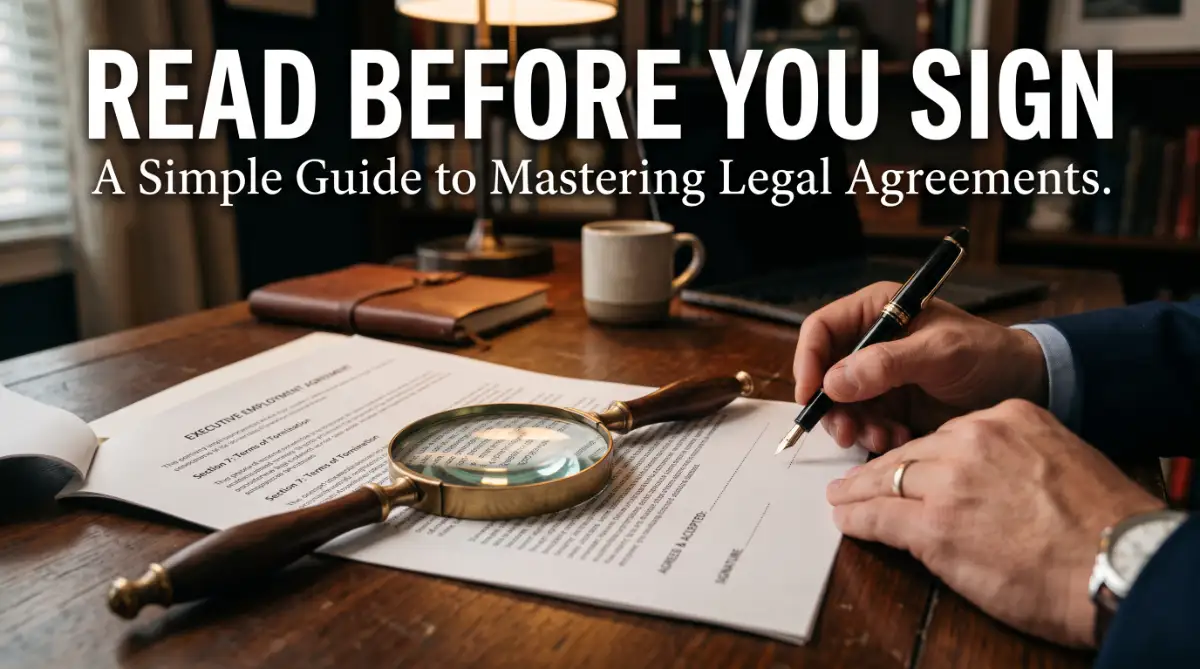
We have all been there. Someone hands you a thick stack of papers. They point to a small line at the bottom. "Just sign here," they say with a friendly smile.
You feel the pressure. You don't want to seem difficult or slow. So, you grab the pen. You scribble your name. In less than five seconds, you have made a life-changing decision.

Most people treat signing a contract like clicking "Agree" on a website update. They think nothing bad will happen. But a legal contract is not a software update. It is a powerful tool that can take away your money, your time, and your rights.
When you sign a paper you haven't read, you are walking into a room with your eyes closed. You don't know where the furniture is. You don't know where the walls are. One wrong step can lead to a very painful fall.
Don't Sign Until You Check These 4 Things:
- The Exit: Know exactly how to cancel and what it costs.
- The Price: Confirm the final dollar amount is what you agreed on.
- The Dates: Look for a clear start and end date for the deal.
- The Changes: If they promised something out loud, make sure it's written in the text.
Why Most People Fail to Protect Themselves
Understanding a contract feels like learning a secret language. It is frustrating and exhausting. Here is why many people get it wrong:
- The Legalese Barrier: Lawyers use words like "Indemnification" and "Force Majeure" to confuse average readers. This makes you feel like you aren't smart enough to understand the document.
- The Pressure Cooker: Salespeople or landlords often make you feel like you must sign right now or you will lose the deal.
- Small Print Overload: Important rules are often hidden in tiny fonts or buried in the middle of long, boring paragraphs.
- Blind Trust: Many people assume the person giving them the contract is being honest. Sadly, what is said out loud often contradicts what is written on the paper.
- The "Standard Form" Myth: You might hear, "This is just a standard form." There is no such thing as a standard form that cannot be changed or questioned.
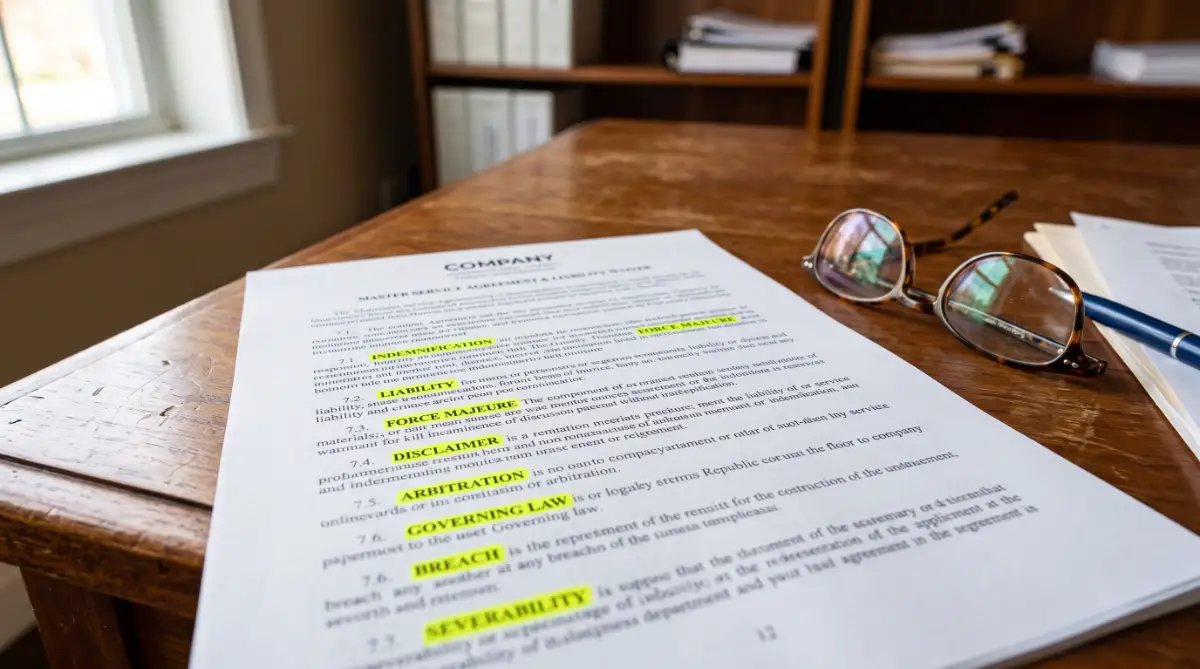
The Smart Way to Break Down a Legal Document
Reading a contract is a skill. You don't need a law degree to do it well. You just need a system. If you follow these steps, you will never feel lost again.
Step 1: Identify the "Big Three" Players and Promises
Before you look at the tiny details, look at the big picture. You need to know who is involved and what they are actually doing.
Who are the parties?
Check the very first paragraph. Make sure the names are spelled correctly. If you are signing for your business, make sure your business name is there, not just your personal name.
If the names are wrong, the whole contract might be invalid or trap the wrong person.
What is the "Consideration"?
In legal terms, "consideration" just means "the trade." What are you giving, and what are they giving back?
- Are you giving money? How much?
- Are you giving your time? How many hours?
- Are they providing a service? What exactly is that service?
Where is the timeline?
Every promise must have a deadline. If the contract says they will "finish the job," that isn't enough. It should say they will "finish the job by October 1st." Without dates, a contract is just a list of wishes.
Step 2: Use the "Linguistic Translation" Technique
When you see a word you don't know, don't skip it. Stop. Look it up.
Think of a contract like a map. If the map uses symbols you don't understand, you will get lost. Use a plain-English legal dictionary online.
Watch out for "Shall" and "May."
These two small words change everything.
- "Shall" means it is a requirement. It is a command.
- "May" means it is an option.
- If the contract says "The company may pay you a bonus," don't count on that money. They don't have to give it to you. If it says "The company shall pay you," then it is a guarantee.
Bold the "Action Words."
Take a pen and circle every verb. These are the actions you or the other party must take. If you can't do the action, don't sign the paper.
Wait! Before you move to the next step, watch this short video that breaks down the most confusing legal words into plain English. It makes the "fine print" so much easier to understand and will help you spot hidden traps in seconds!
Step 3: Hunt for the "Exit Doors"
An agreement is easy to start but can be hard to end. You need to know how to get out if things go wrong. This is called the Termination Clause.
Ask yourself these questions:
- Can I cancel this? Some contracts lock you in for years.
- Is there a fee to leave? Look for "Early Termination Fees."
- How much notice do I need to give? Most agreements require 30 or 60 days of written notice.
If there is no way to cancel the contract, you are essentially a prisoner to that agreement. Always insist on a way to leave if the other party fails to do their job.
Myth vs. Reality: Common Contract Misconceptions
MythRealityHand-written notes on a contract don't count.False. If both parties initial a hand-written change, it is legally binding.If it's "standard," I can't change it.False.
Everything is negotiable until you sign it.Email promises are the same as the contract.False. Most contracts have a "Merger Clause" saying only the written paper counts.
Pro Tip: The "Sleep On It" Rule
Never sign a contract the same day you receive it. Even if you think you understand it, your brain needs time to process the information.
Take the document home. Read it in a quiet room. Read it out loud. When you read out loud, your ears often catch mistakes that your eyes missed.
If the person is rushing you, that is a "red flag." Honest people will always give you 24 to 48 hours to review a document.
The Contract "Red Flag" Table]:
| Red Flag | Why It’s Dangerous | What You Should Say |
| :--- | :--- | :--- |
| Blank Spaces | They can add rules later without you knowing. | Please cross these out or fill them before I sign.|
| "Non-Refundable" | You lose your money even if they fail to work. | Can we make this refundable if the job isn't finished? |
| No End Date | You could be stuck paying for a service forever. | I need a specific date when this deal ends. |
Decoding the "Indemnity" Trap
You will often see a section called Indemnification. This is one of the most dangerous sections for a normal person.
In simple terms, "indemnify" means "to pay for someone else's mistake." If a contract says you will indemnify the company, it means if they get sued because of something you did, you have to pay for their lawyers and their fines.
Always ask: "Is this mutual?"
If you are protecting them, they should also protect you. If the protection only goes one way, the contract is unfair.
Look for the "Entire Agreement" Clause
Look for a paragraph that mentions the "Entire Agreement" or "Merger." This clause is very common. It says that the written contract is the only thing that matters.
If the salesman told you, "Don't worry, we will give you a free month," but that isn't in the contract, you won't get the free month. The "Entire Agreement" clause deletes all verbal promises. If it isn't on the paper, it doesn't exist in the eyes of the law.
Practical Scenario: The Apartment Lease
Imagine you are renting a new place. The landlord says, "I'll fix the broken window next week." You sign a lease that says the apartment is "as is."
Because the lease says "as is," the landlord has no legal duty to fix that window. Your signature agreed that you like the apartment exactly how it looks right now—broken window and all.
The Lesson: Always write the landlord's promise directly into the contract and have them initial it before you sign.
The Importance of "Governing Law"
At the very end, you will see a line about "Governing Law." This tells you which state's or country's laws will be used if you go to court.
If you live in New York, but the contract says "Governing Law: Florida," you might have to fly to Florida to fight a legal battle.
This is a common trick used to make it too expensive for you to sue. Always try to keep the governing law in your own local area.
Mastering the Fine Print: Pro-Level Secrets for Contract Success
Now that you know the basics of reading a contract, it is time to look at the advanced tactics. These are the details that professional negotiators use to protect themselves.
Understanding these hidden rules will help you stay safe for a long time.
Watch Out for the "Evergreen" Trap
Have you ever noticed that some services never seem to end? You might think your contract is for one month, but it keeps going. This is often because of an Automatic Renewal clause.
Some people call this the "Evergreen" clause because it stays green and active forever. In these agreements, the contract says it will renew itself unless you send a letter to cancel it.
Usually, you have to send this letter 30 or 60 days before the end date. If you miss that tiny window by even one day, you are locked in for another full term.
To handle this, always highlight any mention of "renewal" or "extension." If you sign a contract like this, immediately put an alert on your phone calendar.
Give yourself a warning three months before the deadline. This simple habit is a great way to master your mind and stay calm when dealing with big companies.
The Power of the Strikethrough
Many people think a printed contract is like a stone tablet. They believe they cannot change it. This is a big mistake. You have the right to change anything on that paper before you sign it.
If you see a paragraph you don't like, take a pen and draw a line through it. This is called a "strikethrough." If the other person agrees to this change, both of you should put your initials next to the line.
This turns a scary legal paper into a fair deal. If a company tells you that they "cannot" change the text, they are usually lying.
I used to think that printed contracts were like permanent laws that I wasn't allowed to change. My big "aha!" moment happened when I took a pen and crossed out a late fee on a rental agreement, and the landlord simply shrugged and initialed it.
I realized then that a contract is just a conversation until you sign it, and you have way more power to protect yourself than these big companies want you to believe.
Most of the time, they just don't want to do the extra work. Stand your ground. If the deal is important, they will often accept your changes to get your signature.
Understanding "Force Majeure" Without the Confusion
You might see a section called Force Majeure. This is just a fancy French way of saying "Superior Force." It is meant to protect people when something totally crazy happens that nobody could stop.
Think about things like earthquakes, floods, or major wars. If a massive storm destroys a building, the builder cannot finish the job on time. This clause says they won't get in legal trouble because it was an "Act of God."
However, be careful. Some companies try to include regular problems in this section. They might try to say "bad weather" or "shipping delays" are Force Majeure. Don't let them do this. If they are professionals, they should be able to handle normal rain or slow mail. Only allow this clause to cover truly massive, unavoidable disasters.
Building Your Digital Safety Net
Once the paper is signed, the real work begins. You must keep a copy of everything. Never walk out of a room without your own copy of the signed document.
In the modern world, paper gets lost. It is smart to scan your contracts and save them in a secure cloud folder. Treat these files like your most valuable assets.
Having a clear record is just as important as having an emergency fund for your financial safety.
It protects you when things go wrong unexpectedly. When you have your contracts organized, you can quickly check your rights. If a landlord tries to raise the rent, you can pull up your file in seconds.
This prevents people from taking advantage of you just because they think you lost the paperwork.
Expert Tips for Digital Contracts (DocuSign/PDFs):
- Search for Keywords: Use CTRL+F on your computer to quickly find words like "Fee," "Cancel," "Limit," and "Fine."
- Screenshot the Final Page: Sometimes digital contracts can glitch or change. Keep a screenshot of the final page before you hit "Submit."
- Check the Sender's Email: Make sure the email asking you to sign is actually from the company and not a scammer trying to steal your data or signature.
- Download Immediately: Don't wait for them to email you a copy. Download the signed PDF as soon as you finish the process.

Danger Zones: Mistakes That Could Cost You Everything
Even smart people make mistakes when they are tired or stressed. Legal agreements are designed to be long and boring so that you lose focus. If you fall into these traps, you might lose money or lose your rights in court.
Trusting a "Handshake" Over the Paper
The biggest mistake is believing what someone says instead of what is written. A salesperson might say, "Oh, we never enforce that late fee." You might think they are being nice and honest.
But if the contract says there is a $100 late fee, that is what matters. If that salesperson leaves the company, the new person will look at the paper, not the old handshake.
The law usually says that if it isn't in the written agreement, it didn't happen.
This is why you must learn how to protect your money from fake offers. If a promise sounds too good to be true, ask them to put it in writing. If they refuse, you should walk away from the deal immediately.
Leaving Blank Spaces on the Page
Never, ever sign a document that has empty lines or blank boxes. A dishonest person could write something in those spaces after you leave. They could add a higher interest rate or a longer time limit.
If there is a space that you don't need to fill out, draw a large "Z" shape through it. This prevents anyone from adding extra text later. It shows that you intended for that space to be empty.
It is a simple trick, but it has saved people thousands of dollars in legal battles.
Ignoring the "Choice of Forum" Clause
This sounds like a boring detail, but it is huge. This clause decides where a legal fight will happen. If you live in California and the contract says the "Forum" is in London, you have a problem.
If the company breaks the contract, you would have to hire a lawyer in London. You would have to pay for flights and hotels just to go to court.
This makes it almost impossible for a normal person to win. Always check this section and try to make sure any legal issues stay in your local city or state.
Forgetting to Check the Signature Authority
Are you sure the person signing the contract actually has the power to sign it? If you are dealing with a big company, make sure the person is a manager or a director.
If a low-level employee signs a contract they aren't allowed to sign, the company might try to say the deal isn't real later on. Ask for their title.
If you are signing a big deal, you can even ask for proof that they are allowed to sign for the business. This keeps you safe from "fake" agreements that won't hold up in court.
Signing Under Pressure or Stress
If someone tells you that you have to sign "right now" or the price will go up, they are using a pressure tactic. This is a huge red flag.
When you feel rushed, your brain stops checking for mistakes. You might miss a section that hurts your credit score and your financial future.
A good deal today will almost always be a good deal tomorrow. If they won't let you think about it overnight, they are probably hiding something in the fine print.
Your Path to Total Legal Confidence

You now have the tools to read any contract with ease. You don't have to be afraid of big words or long pages anymore. Remember, a contract is just a set of rules that you choose to follow.
You are the one in control of your signature. Take your time with every document. Use a highlighter to mark the things you don't like.
Ask questions until you are 100% sure you understand every sentence. It is much better to spend an hour reading today than to spend a year in court later.
Your Final Contract Checklist
Before you put pen to paper, go through this quick list:
- Names: Are all parties identified correctly?
- Money: Is the exact dollar amount listed clearly?
- Dates: Are there clear start and end dates?
- Exits: Do you know exactly how to cancel the deal?
- Changes: Have all verbal promises been added to the written text?
By following these steps, you are protecting your peace of mind. You are acting like a professional, and people will treat you with more respect. You have the power to say "no" to a bad deal and "yes" to a great one.
Start practicing these skills today. Even with small things, like a gym membership or a repair bill, read every line. The more you do it, the easier it becomes. You are now ready to sign with confidence!
Since I started taking the time to read every line, that nervous feeling in my stomach has completely disappeared. I want you to feel that same confidence every time someone hands you a pen.
Go ahead and take your time with your next agreement—it is the best way to show that you respect your own hard work and your future.
Disclaimer: The information provided in this article is for educational and informational purposes only. It does not constitute legal advice. Laws regarding contracts vary by location and situation. If you are dealing with a complex or high-value legal matter, we strongly recommend consulting with a qualified attorney in your area before signing any binding agreement.
![7 Hidden Legal Traps That Can Bankrupt Your Small Business Overnight [Avoid These!]](https://nexvoramag.com/storage/uploads/blogs/1787550945_7-hidden-legal-traps-that-can-bankrupt-your-small-business-overnight-avoid-these.webp)