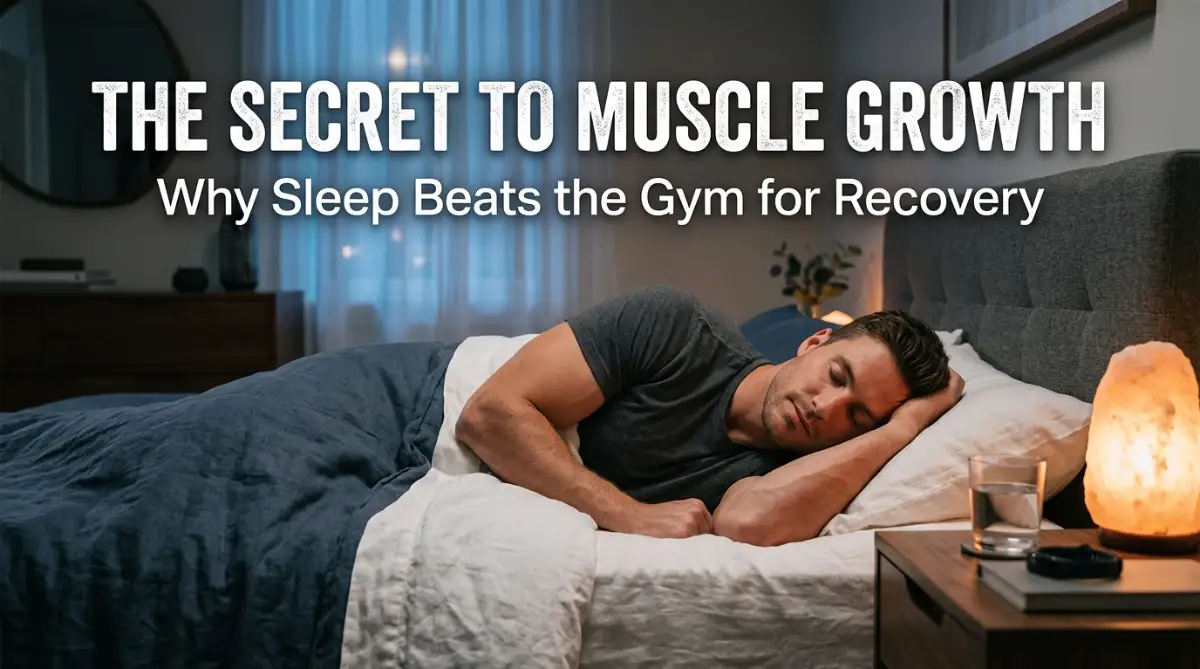
Why I Almost Quit the Gym Until I Fixed My Bedtime
I used to think that the more I pushed myself in the gym, the bigger I would get. I was hitting the weights six days a week, sometimes for two hours at a time. I was eating all the chicken and broccoli I could find, but something was wrong.
My strength stopped going up, and I felt tired all the time. I was grumpy, my joints hurt, and I looked smaller in the mirror despite working harder. I felt like a failure because I was doing "everything right" but seeing no progress.
Then I realized the one thing I was ignoring was my sleep. I was staying up late scrolling through my phone and waking up early to hit the gym. I thought sleep was for lazy people, but I was dead wrong.
Once I started prioritizing my rest, everything changed. My muscles finally started to grow, and my energy levels went through the roof. I want to share my journey so you don't make the same mistakes I did.
The Silent Struggle of the Sleep-Deprived Athlete
Do you ever feel like you are moving through a thick fog during your workouts? Many people go to the gym every day but feel like they are stuck in mud. They drink more coffee, buy more supplements, and try harder, but their bodies just don't respond.
This is a very common problem that ruins mental peace for many fitness lovers. It is frustrating to put in the work and get nothing back. You start to doubt your genetics or your workout plan.
When you don't sleep, your brain feels slow and your body feels heavy. This lack of rest doesn't just affect your muscles; it affects your mood and your will to keep going. You might find yourself snapping at friends or feeling sad for no clear reason.
Without enough rest, your body stays in a state of stress. This stress makes it impossible for your muscles to heal or grow. You are basically breaking your body down every day without giving it the tools to build back up.
The Hidden Science of How Your Body Heals at Night
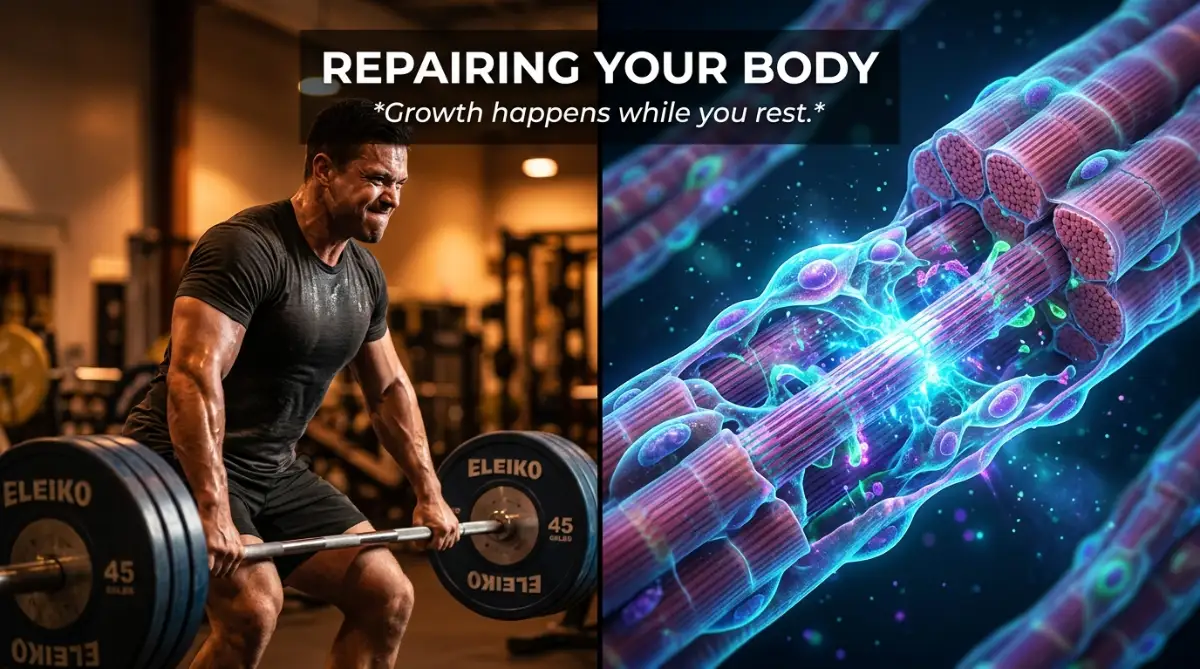
When you go to sleep, your body doesn't just turn off like a light bulb. It actually gets very busy. Think of your body like a construction site that only works at night.
During the day, you use your muscles and create tiny tears in them. This is normal and happens when you lift weights or do hard work. But these tears only get fixed when you are in a deep sleep.
Your body releases something called Growth Hormone when you sleep. This is like the "master builder" for your muscles. If you don't sleep enough, you don't get enough of this hormone, and your muscles stay damaged.
Pro Tip: I used to think a 20-minute nap could replace a full night of sleep. I found out the hard way that it doesn't work like that. Your body needs several hours of continuous sleep to reach the deep stages where the real healing happens. If you keep waking up, you are cutting off your growth.
Why Deep Sleep is the Best Supplement You Can’t Buy
Most people spend a lot of money on protein powders and pre-workout drinks. While those can help, they are nothing compared to the power of a good night's rest. Sleep is the only time your body can focus 100% on recovery.
When you are awake, your body is busy moving, thinking, and digesting food. It has many jobs to do at once. But when you sleep, it can put all its energy into fixing your tissues and balancing your hormones.
Deep sleep is especially important for your heart and nervous system. If your nervous system is tired, you won't be able to lift heavy weights the next day. Your brain won't be able to tell your muscles to work at their full power.
Watch: How Sleep Affects Your Gains
If you want to see exactly what happens to your muscle fibers while you are dreaming, you need to watch this short breakdown!
Phase 1: Turning Down the Stress Hormone
One of the biggest reasons you need sleep is to control a hormone called cortisol. Cortisol is the "stress hormone," and it is a total enemy of muscle growth. When you are awake and stressed, cortisol levels go up.
If you don't sleep enough, your cortisol stays high all the time. High cortisol tells your body to store fat and break down muscle for energy. This is the exact opposite of what you want when you are trying to get fit.
By getting 7 to 9 hours of sleep, you help your body lower these stress levels. This creates a safe environment for your muscles to grow. Think of sleep as a way to "reset" your internal stress levels every single day.
Phase 2: Powering Up Protein Synthesis
Protein synthesis is just a fancy way of saying "building muscle from the food you eat." You can eat all the protein in the world, but your body needs a signal to turn that protein into muscle. Sleep provides that signal.
Studies show that people who sleep less actually lose muscle even if they are eating well. Their bodies start to burn muscle instead of fat because the repair process is broken. It is like trying to build a house without any workers on the site.
When you get quality sleep, your body can efficiently use the nutrients you ate during the day. It takes the amino acids and uses them to patch up those tiny tears we talked about earlier. This is how you wake up bigger and stronger.
Myth vs. Reality: The Truth About Rest
Simple Steps to Better Sleep Starting Tonight
You don't need a fancy lab to improve your sleep. You just need to change a few small habits. The first thing I did was set a "digital curfew." I stop looking at my phone at least 30 minutes before bed.
Another thing that helped me was keeping my room cool and dark. Your body naturally wants to sleep when it is cool. If your room is too hot, you will toss and turn all night, which ruins your recovery.
Try to go to bed and wake up at the same time every day, even on weekends. This helps your body get into a rhythm. When your body knows when it's time to sleep, it can start the recovery process much faster.
The Connection Between Sleep and Testosterone
For men especially, sleep is the primary way the body produces testosterone. Most of your testosterone is released while you are sleeping. If you cut your sleep short, you are literally lowering your manliness and your strength.
Even one night of bad sleep can cause your testosterone levels to drop significantly. Imagine what weeks or months of poor sleep can do! It makes you feel weak, tired, and less motivated to train.
When you prioritize sleep, you are keeping your hormone levels at their peak. This makes your workouts feel easier and your results much more visible. It is the most natural way to boost your performance.
How Rest Affects Your Mental Focus in the Gym
Physical recovery is only half the story. Your brain needs to recover too. Lifting weights requires a lot of mental focus and "mind-muscle connection."
If you are tired, you can't focus on your form. Poor form leads to injuries, and injuries mean you can't go to the gym at all. Quality sleep keeps your mind sharp so you can train safely and effectively.
I noticed that when I was well-rested, I could feel my muscles working much better. I could push through that last difficult rep that I used to give up on. Sleep gives you the mental "grit" to succeed.
Avoiding the Overtraining Trap
Many people think they are "overtraining" when they are actually just "under-sleeping." They feel burnt out and think they need to stop exercising. In many cases, they just need to sleep more.
If you feel like you are hitting a wall, try adding one extra hour of sleep every night for a week. You might be surprised at how quickly your "overtraining" symptoms disappear. Your body is remarkably good at healing if you just give it the time it needs.
Don't be afraid to take a rest day if you had a terrible night's sleep. It is better to rest and recover than to go to the gym and risk a major injury because you are exhausted.
The Role of Nutrition in Sleep Quality
What you eat before bed can also affect how well you recover. I found that eating a heavy, spicy meal right before bed made my sleep very shallow. My body was too busy trying to digest food to focus on fixing my muscles.
On the other hand, having a small snack with some protein can actually help. It gives your body the building blocks it needs for that nighttime construction work. Just make sure it is something light that won't upset your stomach.
Also, be careful with caffeine. If you drink coffee late in the afternoon, it will still be in your system at night. This keeps your brain active when it should be winding down. I try to stop all caffeine by 2 PM.
Thoughts on the Power of the Pillow
We often praise people who work 24/7 and never rest. But in the world of fitness, that is a recipe for disaster. Real champions know that rest is a part of the work.
Getting quality sleep is not a sign of weakness. It is a sign that you are smart and that you respect your body. If you want to see the best results from your hard work, you have to give your body the time it needs to change.
Start tonight. Turn off the TV, dim the lights, and give your muscles the rest they deserve. You will wake up feeling like a new person, ready to crush your goals.
Optimizing Your Rest for Maximum Strength Gains
I used to believe that as long as I hit my macros and lifted heavy, my body would take care of itself. But after years of hitting walls and feeling like my progress was stuck in neutral, I found out that the small things make the biggest difference. It isn't just about how long you stay in bed; it is about how you treat your body before and during that time.
One of the biggest game-changers for me was learning about my internal clock. I started paying attention to how my body felt at different times of the day. I found that if I stayed consistent with my bedtime, my workouts the next morning felt 50% easier. My muscles didn't just feel bigger—they felt harder and more "charged" up for the heavy sets.
If you are serious about your fitness, you need to treat your sleep like a training session. You wouldn't skip your squats or your protein shake, so why skip your 8 hours of repair? I started tracking my recovery using simple tools, and the data was clear: better rest equals more muscle.
Advanced Strategies for Elite Muscle Recovery
To really get the most out of your rest, you have to look at the quality of your sleep cycles. Your body goes through different stages, and the "Deep Sleep" stage is where your tissues actually grow. I found that if I kept my room temperature around 65 degrees Fahrenheit, I stayed in that deep phase much longer. According to research from Harvard Health Publishing, a cool environment helps your core temperature drop, which signals your brain to stay asleep.
You should also think about what your brain is doing while you rest. It is cleaning out toxins that build up during the day. This process is like a "car wash" for your mind. If you cut your sleep short, you are leaving that "trash" in your brain, which makes you feel sluggish in the gym. This mental fatigue is often why people lose their focus in the gym and fail to hit their goals.
I also want to talk about "Sleep Consistency." If you sleep 8 hours on Monday but only 5 hours on Tuesday, your body gets confused. Your hormones don't know when to spike or when to drop. This inconsistency can actually lead to emotional eating habits because your hunger hormones get out of whack. I make it a rule to wake up at the same time every single day, and the results have been incredible for my physique.
The Role of Nasal Breathing in Athletic Recovery
This might sound weird, but how you breathe while you sleep changes how your muscles recover. If you wake up with a dry mouth, you are likely breathing through your mouth at night. This puts your body in a "stress state" (the sympathetic nervous system). To grow muscle, you want to be in the "rest and digest" state (the parasympathetic nervous system).
Nasal breathing helps your body get more oxygen into your blood. I started practicing this, and I noticed that my resting heart rate went down within just two weeks. More oxygen means your muscles can repair themselves faster while you dream. It is a simple trick that elite athletes use to get an edge over their competition.
If you struggle to stay calm during the day, your sleep might be the reason. Learning how to stay calm and think clearly often starts with a rested nervous system. When your nerves are recovered, your mind-muscle connection becomes much stronger. You can literally "feel" the muscle working during every rep.
Dangerous Habits That Are Silently Killing Your Gains
One of the most common traps people fall into is using alcohol to "relax" before bed. I used to think a glass of wine or a beer would help me sleep better because it made me sleepy. But I was totally wrong. Alcohol is like a fake sleep; it knocks you out, but it keeps you from reaching the deep recovery stages.
When you drink before bed, your heart rate stays high all night. Your body spends the whole time processing the alcohol instead of fixing your torn muscle fibers. You might wake up feeling like you slept, but your muscles will feel flat and weak. It is a massive waste of all the hard work you did in the gym earlier that day.
Another big mistake is the "Blue Light Trap." We all love scrolling through social media or watching videos before we sleep. But that bright light tells your brain that it is still daytime. It stops the production of melatonin, which is the hormone that tells your body it is time to grow. According to the National Sleep Foundation, even 10 minutes of screen time can delay your deep sleep by an hour.
I have seen people struggle with this for years. They wonder why their skin looks tired or why they aren't getting stronger. They blame their diet or their supplements. But the truth is, they are just staring at their phones too late at night. It is a simple habit that has a huge cost for your physical health.
The "Weekend Catch-up" Lie
I used to be the king of "catching up" on sleep. I would sleep 5 hours a night during the week and then sleep 12 hours on Saturday. I thought I was fixing the problem, but I was actually making it worse. This is called "Social Jetlag."
Your body cannot store sleep for later. It doesn't work like a bank account where you can pay back a debt. Every night you miss sleep, you lose a window of muscle growth that you can never get back. By sleeping in late on the weekends, you ruin your rhythm for Monday morning.
This cycle of being tired and then oversleeping makes your energy levels feel like a roller coaster. You want your energy to be like a steady flame, not a flickering light.
Consistent rest is the only way to keep your metabolism and your muscle-building processes running at 100%. If you want to transform your sleep quality forever, you have to break the weekend habit.
Practical Action Plan: Your Blueprint for Growth
So, how do we fix this? It starts with a routine that tells your body, "Hey, we are done for the day." I like to dim the lights in my house about an hour before I want to sleep. This mimics the sunset and helps my brain start producing the right hormones.
You should also look at your bed as a sacred space for rest. Don't do work in bed, and don't eat in bed. You want your brain to associate the mattress with one thing: deep, powerful recovery.
When I started doing this, I found I could fall asleep in under 5 minutes instead of tossing and turning.
If you find yourself worrying about money or work at night, try writing it down on a piece of paper. Getting those thoughts out of your head and onto paper helps your mind relax.
This is a great way to stay calm under pressure and ensure your sleep isn't interrupted by stress. Remember, a stressed body will never grow as fast as a relaxed one.
Realizing the Connection Between Sleep and Stamina
If you enjoy sports like soccer or long-distance running, sleep is your best friend. Your endurance is directly tied to how well your heart recovers at night. When you sleep, your heart rate slows down, and your blood vessels relax. This repair process is what allows you to improve your soccer stamina over time.
Without enough rest, your heart has to work much harder to do the same amount of work. This leads to early burnout and makes you feel like you are "out of shape." In reality, you are just "out of sleep." I have seen athletes shave minutes off their run times just by adding 45 minutes of sleep to their nightly routine.
The same applies to lifting. Your nervous system is what tells your muscles to fire. If that system is tired, your strength will drop. You might feel "weak" even if your muscles are technically large enough to lift the weight. Sleep is the "recharge" for your electrical system.
Expert Questions About Recovery and Muscle Growth
How many hours of sleep do I really need for muscle growth?
Most experts and studies, including those on PubMed Central, suggest that 7 to 9 hours is the sweet spot. If you are training very hard, you might even need 10 hours. Your body needs enough time to go through multiple REM and Deep Sleep cycles to fully repair muscle tissue.
Can I build muscle if I only sleep 6 hours?
You can, but it will be much slower and much harder. Your body will likely prioritize keeping you alive over building new muscle. You also risk gaining more fat because your insulin sensitivity drops when you are tired. It is much better to find a way to get that extra hour of rest.
Does napping help with recovery?
Yes, but a nap is like a "patch," not a full fix. A 20-minute power nap can help your brain feel sharper, but it won't replace the deep hormonal repair of a full night's sleep. If you have to nap, keep it short so you don't ruin your ability to sleep at night.
Is it okay to exercise right before bed?
For some people, it is fine, but for many, it raises the body temperature too much. A high body temperature makes it hard to fall into a deep sleep. If you find you can't sleep after a late workout, try taking a cool shower to help your body temperature drop.
Taking Your First Step Toward Better Gains
Fixing your sleep is the most honest thing you can do for your fitness journey. It isn't a magic pill or a fancy gadget. It is simply giving your body the respect it deserves after you push it to the limit in the gym. When you start sleeping better, you aren't just building muscle; you are building a better, healthier version of yourself.
I promise you that if you give this a real try for just one week, you will never want to go back to your old ways. I feel so much more alive and strong now that I have made peace with my pillow. You have the power to change your results starting tonight, so make the choice to rest hard and grow even harder.
Disclaimer: This article is for informational purposes only and does not constitute professional medical advice. Always consult with a healthcare provider or a qualified fitness expert before making significant changes to your sleep habits or exercise routine, especially if you have underlying health conditions.