The Frustration of Staying Lost in the Digital Noise
Does it feel like everyone is talking about a secret language you just don't speak? You hear the word "blockchain" everywhere. It’s on the news, in your social media feed, and at the office water cooler. Yet, most explanations feel like they were written for NASA scientists.
You want to understand the future of money and data. However, the technical jargon makes you feel left behind. This confusion isn't just annoying; it’s a barrier to your financial and digital literacy.
Many people feel a deep sense of anxiety about this. They worry they are missing out on the biggest shift since the internet began. This lack of clear info creates a "tech gap" that feels impossible to bridge.
The Cycle of Misinformation and Confusion
Why is it so hard to get a straight answer? Here is why most people struggle to grasp these concepts:
- Overly Complex Content: Most articles use big words to sound smart instead of being helpful.
- The Crypto Distraction: People often mix up "Bitcoin" with "Blockchain," making the core technology even harder to see.
- Information Overload: Watching ten different YouTube videos often leaves you with ten different, confusing definitions.
- Fear of Scams: Because some people use tech words to trick others, many beginners are too scared to even start learning.
- Lack of Simple Analogies: Without comparing it to something we use daily, the concept stays invisible and scary.
The Impact on Your Mental Peace and Confidence
This confusion does more than just keep you in the dark. It affects how you feel about your own intelligence and future readiness:
- Feeling "Old" or Outdated: Even young people feel like they are "too old" to learn this new tech.
- Decision Paralysis: You don't know if you should pay attention to it or ignore it, so you do nothing.
- Loss of Trust: When you don't understand how something works, it’s hard to trust the digital systems you use every day.
- Social Disconnect: You might stay quiet in conversations because you don't want to ask "stupid" questions.
Breaking Down the Wall: What is Blockchain Really?
Imagine a world where you don't have to trust a single company to keep your records safe. That is the core promise of this technology. It’s not just about money; it’s about trust and transparency.
At its heart, a blockchain is just a shared digital notebook. Think of it as a community diary where everyone has a copy.
If one person tries to cross out a sentence or change a page, everyone else can see it. Their copies won't match the "fake" one.
This system creates a "single source of truth." No one person owns the notebook. No one can secretly rip out a page. This simple idea is what makes it so powerful for the entire world.
The Blueprint of Trust: How the System Works Together
To truly understand this, we need to look at the "how" without getting lost in code. It’s like learning how a car works. You don't need to be a mechanic, but you should know what the engine and tires do.
Let's look at the first few pieces of this digital puzzle. These are the building blocks that make the system unshakeable and secure.
Step 1: The Concept of the Shared Ledger
Think about how a bank works today. You have an account, and the bank has a private list of every time you spend or receive money. You have to trust that the bank's list is correct. You can't see their master file.
In the blockchain world, we replace that private list with a Public Ledger.
How it works in real life:
Imagine a group of ten friends. Every time one friend lends money to another, they all write it down in their own notebooks. At the end of the day, they compare notebooks.
If nine notebooks say "John owes Sarah 5," but John’s notebook says " 0," the group knows John is wrong. This shared record-keeping is the "Ledger."
On a blockchain, thousands of computers do this automatically. It removes the need for a "middleman" like a bank to tell us what is true.
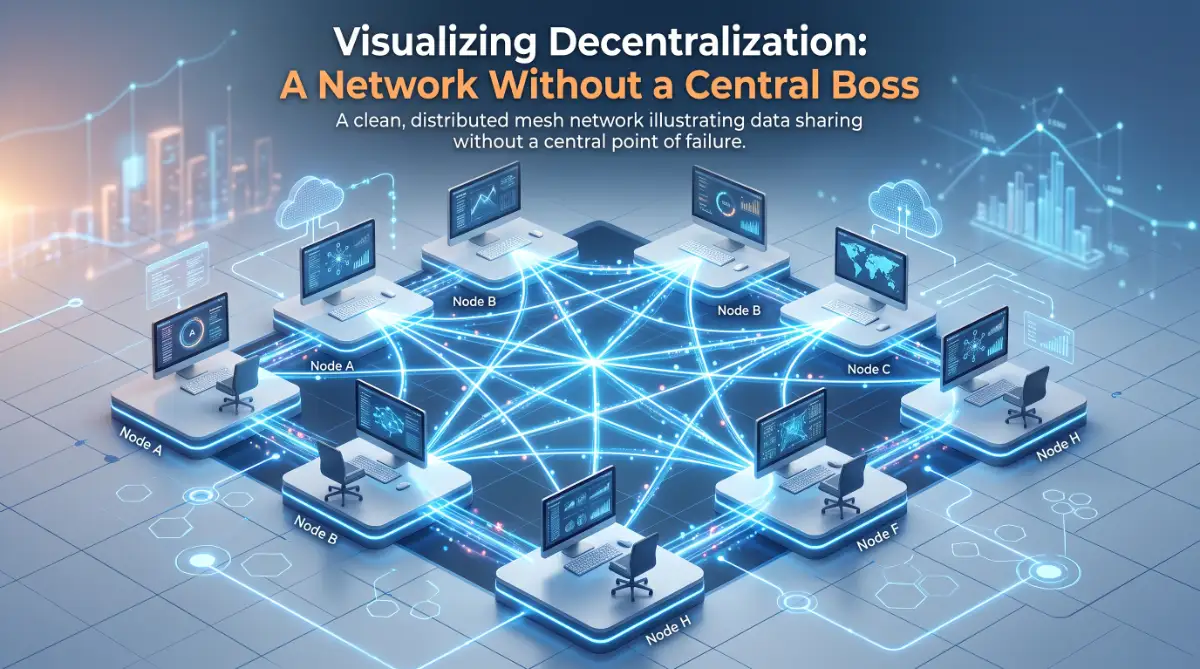
Step 2: Decentralization – The Power of the Many
Most things we use are "centralized." Your Facebook photos are on Facebook's servers. Your emails are on Google’s servers. If those servers go down or if the company changes the rules, you lose control.
Blockchain changes this by being Decentralized.
The "Shared Document" Analogy:
Think of an old Word document. If I write something, I have to email it to you. While you have it, I can't change it. We have different versions. Now, think of a Google Doc.
We can both see it at the same time. If I type a word, you see it instantly. Blockchain is like a Google Doc that nobody can delete.
Instead of one company owning the "server," the data lives on thousands of computers (called "nodes") all over the planet. This makes it almost impossible to hack or shut down. If one computer fails, the other 9,999 still have the data.
Step 3: The Magic of "Blocks" and "Chains"
Why is it called a "Blockchain"? It’s because of how the data is stored. It isn't just one long list. It’s organized into groups.
The Packing Box Scenario:
Imagine you are moving houses. You put a few items into a box. Once the box is full, you tape it shut and put a unique digital seal on it. Then, you start a new box.
But here is the trick: on that new box, you write down the seal number of the previous box.
- A Block: This is just a bundle of data (like a box of transactions).
- The Hash: This is the "digital seal." If even one tiny thing inside the box changes, the seal breaks and changes completely.
- The Chain: Because each new box references the seal of the old box, they are all linked together.
If a hacker tries to change an old transaction in Box #1, the seal on Box #1 changes. That means the reference on Box #2 no longer matches. This "breaks" the entire chain. Everyone on the network will see the break immediately and reject the change.
The Scientific Logic Behind the Security
This isn't just a clever idea; it’s based on mathematical certainty. It uses something called "cryptography." This is a fancy word for turning info into a secret code that is easy to check but hard to crack.
When a computer "mines" or "validates" a block, it is solving a very hard math puzzle. This proves that the computer did the work to verify the data.
This "Proof of Work" (or other similar methods) ensures that nobody can just flood the system with fake info.
It takes a huge amount of electricity and computing power to play the game. Trying to "cheat" the system would cost more money than any thief could ever hope to steal. This makes honesty the most profitable path for everyone involved.
Why This Matters for Your Everyday Life
You might think, "This sounds cool, but I'm not a tech person." But you already use complex tech every day. You don't know exactly how the "HTTPS" protocol works, but you know it keeps your credit card safe when you shop online.
Blockchain will soon be the "invisible layer" of the internet.
- Health Records: Imagine your doctor, your specialist, and your pharmacist all having access to the same accurate history of your health, without a single company "owning" your private data.
- Voting: A system where you can vote from home, and you can prove your vote was counted without anyone knowing who you voted for.
- Supply Chains: Want to know if that "organic" apple really came from an organic farm? A blockchain can track it from the tree to the store shelf.
Expert Insight: The Myth of Hacking
Myth: "I heard blockchain gets hacked all the time."
Reality: Almost every "crypto hack" you hear about happens at a centralized exchange (like a digital bank) or because someone gave away their password.
The actual Blockchain technology itself has almost never been "hacked." It is one of the most secure ways to store data ever created by humans.
Moving Forward with Confidence
Understanding these three steps—Ledgers, Decentralization, and Blocks—is more than enough to put you ahead of 90% of the population. You now know that it’s not magic; it’s just a smarter way to keep records.
In the next part of our guide, we will look at how "Smart Contracts" work. We will also see how this tech is creating new ways for people to own things digitally.
Remember, you don't need to be an expert today. Just being curious is the first step toward mastering your digital future. Keep asking "how" and "why," and the world of blockchain will start to feel like home.
Automating Trust: How Smart Contracts Change Everything
Now that you know how the "blocks" are built, let's talk about the brain of the system. Imagine if you could rent an apartment without a real estate agent or a lawyer.
You just send the money, and the digital lock on the door automatically gives you the code.
This is what we call a Smart Contract. It is not a legal paper with a signature. Instead, it is a piece of code sitting on the blockchain.
Think of a vending machine. If you want a soda, you put in the money and press a button. The machine checks if you gave enough money. If yes, it drops the drink. If no, it gives your money back. No human needs to stand there and watch.
The Power of "If-Then" Logic
Smart contracts work on a simple "If-Then" rule. If John sends 5 tokens, then Sarah gets the digital ownership of the car.
This removes the need for big companies to sit in the middle. We often pay huge fees to banks and lawyers just to make sure both sides do what they promised.
On a blockchain, the code is the law. Once the contract is set, nobody can change it. It happens exactly as planned. This level of automation helps in how to protect your money from fake loan and insurance offers because the system doesn't rely on a person's honesty. It relies on math.
Managing Your Digital Keys: The Lock and the Key
Many people worry about their security in this new world. How do you "own" something that you can't touch? The answer lies in Digital Keys.
When you use a blockchain, you get two things: a Public Key and a Private Key.
- The Public Key: This is like your email address. You can give it to anyone so they can send you tokens or data.
- The Private Key: This is your actual password or digital signature. You must never share this.
Imagine your public key is like a mailbox on the street. Anyone can drop a letter in it. But only you have the physical key to open the box and take the mail out.
If you lose your private key, you lose your assets forever. There is no "Forgot Password" button on a decentralized network. This is why learning to master your mind and think clearly under pressure is helpful when you are handling your own digital security.
The Secret to Long-Term Digital Safety
If you want to stay safe for years, you have to think like a bank. Most people keep their assets on "Hot Wallets," which are apps connected to the internet.
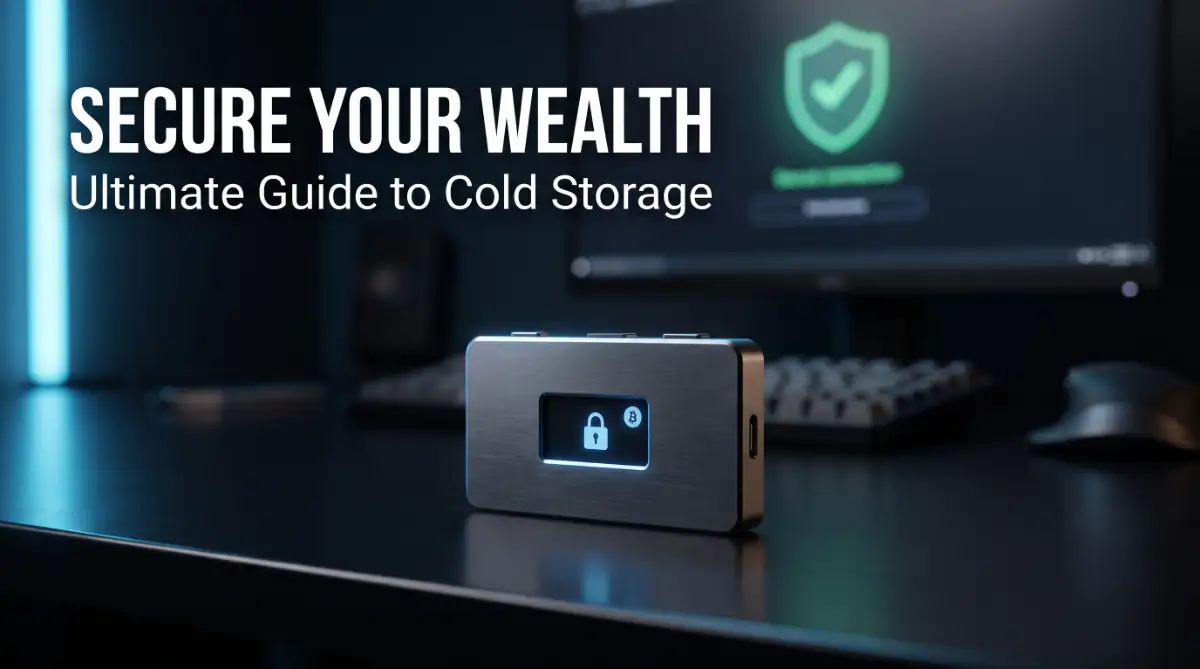
The Pro-level secret is using a "Cold Wallet." This is a device that looks like a USB drive. It keeps your private keys offline.
Even if a hacker gets into your computer, they cannot touch your keys. This is the gold standard for anyone serious about digital ownership. It’s a simple step that saves you from a lot of stress later.
Transparency: The Ultimate Truth Machine
In the traditional world, big companies keep their data hidden. You don't know what happens behind the closed doors of a big corporation.
Blockchain flips this. Everything is Transparent.
If a charity uses a blockchain to collect money, you can see exactly where every cent goes. You don't see names, but you see the "wallet addresses."
This creates a world of Public Accountability. It forces organizations to be honest. If they say they spent money on a school, the public ledger will show the transaction to the builder.
According to data from Investopedia, this transparency is why industries like food and medicine are moving to digital ledgers. It allows them to track a product from the farm all the way to your dinner table.

The Expensive Traps: Avoiding Common Beginner Mistakes
Even though the technology is secure, humans often make mistakes. I have seen many people lose their hard-earned progress because they rushed in without a plan.
Here are the most common pitfalls you should avoid:
1. Falling for the "Hype" Train
Many people hear a story about someone getting rich overnight. They jump in without understanding the "why."
They treat blockchain like a casino instead of a technology. If you don't understand what a project does, don't put your time or resources into it.
2. Ignoring Network Fees
Every time you move data or money on a blockchain, you pay a "Gas Fee." This is the payment for the computers that keep the network running.
Sometimes, these fees can be very high. Beginners often try to move a small amount of money and end up paying more in fees than the actual value. Always check the current "traffic" on the network before you hit "Send."
3. Storing Keys Digitally
This is a huge mistake. Never take a screenshot of your private keys or save them in a "Notes" app on your phone.
If your phone is hacked or your cloud storage is breached, your assets are gone. Always write your "Seed Phrase" on a piece of paper and hide it in a safe place.
Just like what is a credit score and how it impacts your financial future, your digital security habits determine your long-term success.
4. Trusting "Direct Messages"
If someone sends you a message on Discord, Telegram, or Facebook claiming to be "Tech Support," they are likely lying.
No real blockchain project will ever message you first to ask for your keys. The moment you give away those words, your account will be emptied.
5. Using the Same Password Everywhere
Since you are dealing with your own digital bank, you need a unique, strong password for every platform you use.
Using the same password you use for your social media is a recipe for disaster. If one site gets hacked, all your accounts are at risk.
Why Some Projects Fail and Others Win
Not all blockchains are the same. Some are built for speed, while others are built for high security.
Projects that win usually have a Real-World Use. For example, some blockchains help artists get paid every time their work is sold. Others help people in countries with high inflation protect their savings.
If a project has no clear use, it is likely a "bubble." Stick to learning about the networks that have a large community of developers building useful tools.
To understand how to manage your overall life and tech, you might also find it useful to learn how to use artificial intelligence to automate daily productivity tasks. Both AI and Blockchain are tools to make your life more efficient.
Your Daily Action Plan for Success
If you want to be comfortable with this technology, you don't need to study for 10 hours a day. You just need to be consistent.
- Read one article a week: Stay updated on how the technology is evolving.
- Practice small: Use a test network or send a very small amount of data to see how the process works.
- Join a community: Talk to other learners. Ask questions. There are no "dumb" questions in a field this new.
Your Journey into the Future of Data
Blockchain is much more than just a buzzword. It is a shift in how we trust each other. We are moving from a world of "Don't be evil" to a world of "Can't be evil."
In the old system, we hoped the bank wouldn't fail. In the new system, the math makes it impossible for the ledger to lie.
You now have the foundation. You know about blocks, chains, decentralization, and smart contracts. You also know the risks and how to avoid them.
This knowledge is a superpower. While others are confused, you are building a clear path forward. Start small, stay curious, and keep your keys safe. The digital world is yours to explore, and you are finally ready for it.
Final Checklist for Your Digital Security:
- Is your seed phrase written on paper?
- Did you enable Two-Factor Authentication (2FA) on all accounts?
- Are you using a hardware wallet for long-term storage?
- Did you research a project before joining?
Take that first step today. Whether it is setting up your first wallet or just explaining what you learned to a friend, action is the best teacher. You have the tools; now go use them!
Disclaimer: The information provided in this article is for educational and informational purposes only. Blockchain technology and digital assets involve significant risks and market volatility. This content does not constitute financial, investment, or legal advice. Always perform your own research and consult with a qualified professional before making any decisions related to digital assets or technology investments. We do not endorse any specific platforms or products mentioned as examples.