The Shocking Truth Behind Your Rising Insurance Bill
I remember opening my mail last week and seeing my new insurance renewal notice. I sat there at my kitchen table, staring at the numbers in total disbelief. My premium had jumped by almost twenty percent, even though I had zero accidents and no tickets.
It felt like a punch to the gut because I have been a loyal customer for five years. I always pay my bills on time and I take care of my car and home. Seeing that higher price made me feel like I was being punished for being a good customer.
I know I am not the only one feeling this way lately. Many of my friends and family members are complaining about the exact same thing happening to them. It seems like every time a renewal comes around, the price just goes up and up without a clear reason.
This constant price creeping is making it hard for normal people to plan their monthly budgets. When your bills go up but your paycheck stays the same, it creates a lot of stress and worry. You start to wonder if you are being cheated by a company you trusted.
It is honestly exhausting to have to fight for a fair price every single year. Most of us just want to feel protected without feeling like we are being drained of our hard-earned money. The lack of transparency from big companies makes the whole process feel very unfair.
We work hard for our money and we want to know where every dollar is going. When prices rise silently, it feels like a breach of trust between the insurer and the person paying the bill. I decided to dig deep and find out what is actually happening behind the scenes.
Why Your Loyalty Might Be Costing You Extra Money
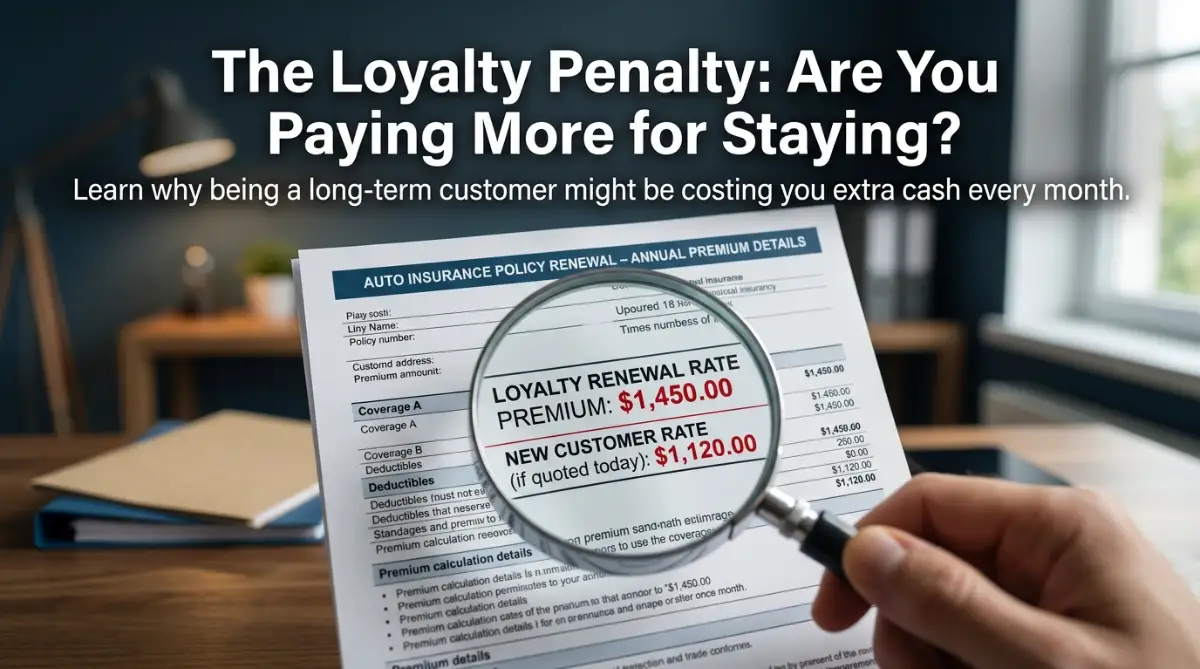
One of the weirdest things I found is something called "Price Optimization." It sounds like a fancy business term, but it is actually a way for companies to see how much of a price hike you will accept. They use data to guess if you are likely to shop around or just pay the higher bill.
If their computer thinks you are a loyal person who hates shopping for new plans, they might raise your rate more. It sounds backward, right? You would think being a long-term customer would get you a discount, but often it is the opposite.
This is why brand-new customers often get much better deals than people who have stayed for a decade. They are trying to lure new people in while slowly raising prices on the ones who already stay. I felt so betrayed when I first learned about this practice.
I used to think that staying with one company was the smart thing to do for my wallet. I thought my "loyalty" would be rewarded with lower rates over time. But the reality is that many companies take that loyalty for granted and use it to increase their profit margins.
How Inflation and Parts Costs Sneak Into Your Bill
Another big reason for the increase has nothing to do with you personally. It is about the world around us and how much things cost to fix these days. If you look at the price of car parts or building materials, they have gone up a lot recently.
When it costs more for the insurance company to pay for a repair, they pass those costs down to everyone. Even if you didn't have a claim, the "pool" of money needs to be bigger to cover the rising costs of others. It is a shared risk system, which means we all feel the heat when prices go up.
Modern cars also have a lot of expensive technology like sensors and cameras in the bumpers. A small fender bender that used to cost five hundred dollars might now cost three thousand. These high-tech repairs are driving up premiums for every driver on the road.
I didn't realize how much a simple headlight could cost until I saw a repair bill recently. These advanced parts make our cars safer, but they make our insurance much more expensive to maintain. It is a trade-off that most of us don't think about until the renewal notice arrives.
The Impact of Regional Risk and Weather Patterns
Sometimes your premium goes up because of things happening miles away from your house. If your state or even your specific zip code sees a lot of storms or accidents, the risk level goes up. Companies look at the total number of claims in your area to set the price.
Even if your house was perfectly safe, a big storm in the next town over can affect your bill. They see the whole area as more "risky" than it was before. This makes it feel very random and out of your control, which is the most frustrating part.
I noticed that after a particularly bad winter in my area, everyone’s rates seemed to jump at the same time. The insurance companies were trying to recover the money they paid out for all those fallen trees and icy road accidents. We all end up paying for the collective risk of our community.
It feels a bit unfair to pay for someone else's bad luck, but that is how the insurance world works. They have to make sure they have enough money to pay for the next big event. Unfortunately, that means our monthly bills keep getting higher and higher.
If you want to see a clear breakdown of how these companies actually calculate these sneaky price hikes, watch this helpful video.
Hidden Factors in Your Personal Risk Profile
There are things the company knows about you that you might not even think about. For example, did you know your credit score can change your insurance rate in many places? If your credit score drops, the company might see you as a higher risk.
They use a "credit-based insurance score" to predict how likely you are to file a claim. I found this out the hard way when I had a small dip in my score and my premium went up. It felt like I was being kicked while I was down.
Your job or your daily commute can also play a huge role in the final number. If you started driving more miles to a new job, your risk of an accident goes up. Even if you haven't had an accident yet, the "chance" of one happening is higher in their eyes.
I started keeping track of my actual miles driven each year to make sure I wasn't being overcharged. Many people pay for "standard" mileage when they actually drive much less. Small details like this can add up to big savings if you pay close attention to them.
The Role of "Social Inflation" and Legal Costs
You might not have heard the term "social inflation," but it is a big reason for rising costs. This refers to the fact that legal settlements and jury awards are getting much larger. People are suing more often and asking for much more money than they used to.
Insurance companies have to pay for these massive legal battles and high payouts. To keep their business running, they have to raise the premiums for everyone else. It is a cycle of rising costs that starts in the courtroom and ends in your mailbox.
I was surprised to learn how much of my premium goes toward "legal defense" and settlement funds. Even if you are a very safe person, you are helping to pay for the giant lawsuits happening elsewhere. This is a hidden cost that most people never even consider.
It makes the whole system feel very heavy and expensive for the average person. We are all caught in a web of rising legal costs and higher expectations for payouts. This is one of the hardest factors to change because it involves the entire legal system.
A Realization About My Own Insurance Habits
I realized that I was making a huge mistake by just letting my policy "auto-renew" every year without checking it. I thought I was being efficient, but I was actually giving the company permission to raise my rates. I was essentially telling them, "I don't care what the price is, I will pay it."
Now, I make sure to call my agent at least two weeks before my policy expires. I ask them to look for any new discounts or "affinity groups" I might have joined. Sometimes just asking the question can trigger a manual review that lowers the price.
I also started comparing my coverage to what I actually need right now. My car is getting older, so I might not need the same level of coverage I had when it was brand new. Adjusting these small details has helped me keep my costs a bit more stable over the years.
Understanding the "Loss Ratio" of Your Company
Insurance companies look at something called a "loss ratio" to decide their prices. This is basically the amount of money they pay out in claims compared to the money they collect. If they pay out too much, they have to raise prices to stay in business.
If your company had a bad year with lots of claims, they will likely raise rates across the board. You can actually look up the financial health of your insurance company online. If they are struggling, you can bet a price hike is coming your way very soon.
I found that smaller, regional companies sometimes have more stable rates than the giant national ones. They aren't always trying to please thousands of stockholders every quarter. This was a big eye-opener for me when I started looking for a new provider.
How Your Vehicle's "Safety Rating" Changes Over Time
The car you drive today might be seen as less safe next year by the insurance company. As newer, safer cars come out, older models are viewed as more dangerous in comparison. This can cause the "rating" of your car to drop, which increases your premium.
They also look at how much it costs to repair your specific model compared to others. If your car parts become harder to find, the insurance company will charge you more. I never thought about parts availability affecting my monthly insurance bill before.
It is a good idea to check the "insurance group" rating of a car before you buy it. Some cars look cheap to buy but are incredibly expensive to insure because of these hidden factors. Doing your homework before you sign a car deal can save you thousands in the long run.
The Secret World of "Reinsurance" Costs
Insurance companies also have to buy their own insurance, which is called "reinsurance." This protects them if there is a massive disaster like a hurricane or a giant wildfire. When the price of reinsurance goes up, the company passes that cost to you.
Global disasters like floods in Europe or fires in Australia can actually affect your rates in the US. The global reinsurance market is all connected, and they share the risks of the entire world. This is a truly "hidden" reason that most people would never guess.
It shows just how connected our world is and how big events far away can hit our wallets. Even if you live in a very safe area, you are part of a global financial system. Understanding this helps take the mystery out of why prices fluctuate so much.
Thoughts on the Struggle for Fair Pricing
It is a constant battle to keep your insurance costs under control in today's world. Between inflation, legal costs, and "loyalty taxes," the odds are often stacked against the consumer. But being informed is the first step toward taking your power back.
I have learned that being proactive is the only way to avoid these silent price hikes. You cannot just sit back and hope that the company will treat you fairly out of the goodness of their heart. You have to be your own advocate and stay on top of the details.
It might feel like a lot of work, but the savings are worth the effort. Every dollar you save on insurance is a dollar you can spend on things that actually matter to you. Don't let these hidden reasons drain your bank account without a fight.
Stay curious and always ask "why" when you see a price change that doesn't make sense. You have the right to know what you are paying for and why the price is what it is. With the right knowledge, you can navigate the insurance world with confidence.
Pro Tactics to Outsmart Your Insurance Renewal Notice
I learned the hard way that silence is very expensive when it comes to insurance. Last year, I simply let my policy renew without asking a single question. I thought I was saving time, but I was actually throwing away hundreds of dollars.
When I finally sat down and compared my rates, I realized my neighbor was paying way less for the same coverage. It made me realize that the "best" rate doesn't just happen by accident. You have to actively hunt for it every single time your policy is up for renewal.
One of the most effective things I did was look into usage-based insurance programs. These are often called telematics, where a small device or app tracks how you actually drive. If you are a safe driver who doesn't speed or slam on the brakes, you can get a massive discount.
I was a bit worried about my privacy at first, but the savings were too big to ignore. It turns out that showing the company you are safe in real-time is much better than letting them guess based on your age or zip code. Most companies now offer these programs as a way to reward good habits.
Another secret I found is the power of the "higher deductible" strategy. If you have a decent amount of savings, you can choose to pay more out of pocket if an accident happens. In exchange, the company lowers your monthly or yearly premium significantly.
This works because the company sees you as someone who is taking on more of the risk. It is a great way to stop the money leak and slash your household spending without losing your protection. Just make sure you actually have that deductible amount sitting in an emergency fund.
If you don't have that cash ready, you should focus on building a safety net first. Having a backup plan makes these higher deductibles much less scary to manage. I always recommend having at least a small emergency fund as a financial safety net before changing your policy limits.
I also discovered that my credit score was affecting my car insurance more than I ever imagined. In many states, insurers use your credit history to decide how "reliable" you are. If your score goes up, your insurance rate often goes down at the next renewal.
I spent a few months cleaning up my credit report and paying off small debts. When my renewal came around, I asked for a re-rate based on my new score. To my surprise, my premium dropped by nearly ten percent just because I looked better on paper.
If you are struggling with a low score, you can increase your credit score rapidly without stress by following a few simple steps. It is one of those hidden financial links that most people never talk about. Keeping your credit healthy is a secret weapon for lower insurance bills.
I also started asking about "affinity discounts" that I never knew existed. Did you know that being part of a certain college alumni group or a specific profession can save you money? My sister saved money just because she is a teacher, and my cousin got a discount through his credit union.
These discounts are usually around five percent, but they add up when you stack them together. I now keep a list of every group or organization I belong to and share it with my agent. You would be shocked at how many "hidden" boxes they can check to lower your price.
According to the National Association of Insurance Commissioners, shopping around at least once a year is the best way to ensure you aren't being overcharged. They provide great resources to help you understand your rights as a consumer. It pays to know that you are in the driver's seat when it comes to your money.
The Expensive Habits That Keep Your Premium Climbing
The biggest mistake I ever made was falling into the "auto-pilot" trap. I used to think that the company would automatically give me the best deal because I had been with them for years. I didn't realize that they often reserve their best prices for new people they are trying to attract.
When you just let the bill pay itself through your bank account, you are essentially giving them a "loyalty tax." You are telling the company that you are too busy to check other prices. This is a green light for them to slowly raise your rates by a few dollars every month.
I also see a lot of people making the mistake of not updating their life changes. If you started working from home and your commute is now zero miles, you should tell your insurer immediately. Driving fewer miles means you are less likely to have an accident, which should lower your cost.
If you get married or buy a home, those are also major triggers for lower insurance rates. Insurers see married people and homeowners as more stable and less risky. I saved a good chunk of change just by updating my address and marital status on my profile.
Another dangerous habit is staying with the same coverage levels even as your car gets older. If you are driving a ten-year-old car, you might not need the most expensive collision coverage anymore. At a certain point, the cost of the insurance is more than the car is actually worth.
I had a friend who was paying for full coverage on a car that was only worth two thousand dollars. He was basically paying the insurance company for a check he would never be able to fully collect. It is very helpful to understand why comprehensive car insurance is essential for newer cars, but maybe not for old ones.
You should also be very careful about making small, "nickel and dime" claims. I once filed a claim for a broken windshield that only cost a few hundred dollars to fix. My premium went up at the next renewal because I was now seen as a "claim-prone" customer.
It is often cheaper to pay for small repairs out of your own pocket to keep your record clean. Only use your insurance for the big stuff that would actually ruin you financially. Making too many small claims is one of those huge insurance claim mistakes that will cost you thousands over time.
I also learned that ignoring the "fine print" in your renewal packet is a recipe for disaster. Sometimes companies change their terms or remove certain benefits without making it obvious. I once lost my roadside assistance coverage because I didn't read the update notice they sent in the mail.
Taking twenty minutes to carefully read and understand a legal contract before you sign or renew is so important. It protects you from surprises when you actually need to use your benefits. Knowledge is your best defense against unfair price hikes and hidden fees.
The Insurance Information Institute suggests that comparing at least three different quotes is the magic number. It gives you enough data to see if your current company is still being competitive. Never feel guilty about leaving a company for a better price elsewhere.
Take Back Control of Your Household Budget Today
Looking back, I realize that my frustration with rising insurance rates was actually a wake-up call. It forced me to stop being lazy with my finances and start paying attention to where my money was going. I feel so much more confident now that I understand the "why" behind the numbers.
Managing your insurance is just one part of a bigger picture of financial health. When you save money on your premiums, it becomes easier to handle other things like rising food or gas prices. It is one of the few hidden secrets to stop inflation from eating your savings effectively.
I want you to know that you don't have to be a victim of these silent price increases. You have the tools and the information to fight back and keep more of your hard-earned cash. It takes a little bit of time, but the peace of mind you get is absolutely worth it.
I feel so much better knowing that I am paying a fair price for the protection my family needs. I no longer dread opening that renewal notice because I know exactly how to handle it. I hope my experience helps you feel empowered to take the same steps for your own wallet.
I encourage you to pick up the phone tomorrow and call your insurance agent to ask for a review. You might be surprised at how much you can save just by showing that you are paying attention. Taking that one small step today can lead to a much more stable and stress-free financial future for you and your loved ones.
Common Questions About Insurance Price Hikes
Why did my insurance go up even though I had no accidents?
Insurance rates often rise because the cost of repairs, medical care, and legal fees has gone up for everyone in the "pool." Companies also look at the number of claims in your specific area, so a bad storm nearby can affect your bill even if your property stayed safe.
Does checking my rate with other companies hurt my credit score?
No, when an insurance company checks your credit for a quote, it is considered a "soft pull." This does not impact your credit score at all, unlike applying for a new credit card or loan. You can shop around as much as you want without worrying about your credit.
Can I change my insurance company in the middle of my policy?
Yes, you can switch companies at any time and you do not have to wait for your renewal date. Most companies will even give you a pro-rated refund for the time you didn't use. Just make sure your new policy is active before you cancel the old one to avoid a gap in coverage.
Will my rate go down if I get a new car with more safety features?
While safety features like automatic braking can lower your rate, new cars are also more expensive to fix. Sometimes the high cost of high-tech parts can cancel out the safety discount. It is always a good idea to get an insurance quote before you actually buy a new vehicle.
Disclaimer: This article is for informational purposes only and does not constitute professional financial or legal advice. Insurance laws and practices vary by location and provider. Always consult with a licensed insurance agent or financial advisor before making changes to your coverage or financial plan. We do not guarantee any specific savings or results from following the tips mentioned in this post.
![5 Things Your Renters Insurance Covers (That Your Landlord Won't Tell You) [Must Read]](https://nexvoramag.com/storage/uploads/blogs/1786690217_5-things-your-renters-insurance-covers-that-your-landlord-wont-tell-you-must-read.webp)