
A few years ago, I felt stuck. My house looked tired, and I was terrified that its value was dropping every single day. I actually felt embarrassed to host dinner parties because of the small cracks in the walls and the messy yard.
I almost spent my entire savings on a big kitchen remodel until I realized that small, smart fixes were all I really needed to feel proud of my home again.
The Hidden Stress of a Declining Home Value
Most homeowners look at their house as their biggest financial asset. However, it is painful to see that same asset lose its shine over time. You might walk through your front door and notice small cracks, fading paint, or a leaky faucet.
These tiny issues might seem small at first, but they build up. Soon, you start feeling like your home is "falling apart." This creates a heavy mental load. You worry that if you tried to sell today, you would lose thousands of dollars.
The stress of not knowing where to start is real. You see your neighbors selling their homes for high prices while yours feels stuck in the past. This lack of progress can make you feel like you are failing as a homeowner.
Why Most Homeowners Struggle to Find a Solution
Many people think the only way to increase home value is to spend $50,000 on a kitchen remodel. This is a big mistake. Here is why most people get stuck:
- Information Overload: You search online and see "luxury" renovations that you simply cannot afford right now.
- Ignoring the Small Stuff: People wait for "big" problems to happen before they fix anything.
- Wrong Priorities: Homeowners often spend money on fancy decorations instead of basic structural health.
- Fear of Costs: The word "renovation" sounds expensive, so many people do nothing at all.
- Bad Advice: Following trends that go out of style quickly instead of focusing on timeless maintenance.
How a Neglected Home Hurts Your Peace of Mind
Living in a house that needs repair does more than just hurt your wallet. It affects your daily happiness.
- Lower Confidence: You feel embarrassed to invite friends or family over because of the peeling paint or messy yard.
- Anxiety about the Future: Every time it rains, you worry about the roof or the basement.
- Financial Guilt: You know the value is dropping, and you feel guilty for "letting it go."
- Decision Paralysis: Because there are so many small things to fix, you end up doing nothing.
This cycle of neglect creates a home that feels like a burden rather than a sanctuary. You deserve to feel proud of your space. You deserve to know that your investment is growing, not shrinking.
The Secret to Increasing Value Without Spending a Fortune
You do not need a sledgehammer or a construction crew to make your home worth more. In fact, most buyers prefer a house that has been perfectly maintained over a house with one "fancy" room and ten "broken" ones.
Maintenance is the "silent" value builder. It shows that the home has been loved and cared for. When a home inspector walks through a well-maintained house, they find fewer red flags. This leads to higher offers and faster sales.
We are going to look at 7 specific areas where you can put in a little work and see a big jump in your property's worth. These are practical steps you can start today. They focus on logic, cleanliness, and basic care.
Step 1: Master the Art of Curb Appeal
First impressions are everything in real estate. The moment a person pulls up to your house, they have already decided what it is worth. This is called "Curb Appeal."
Clean Your Siding and Entryway
You would be surprised how much dirt collects on your house walls. Use a garden hose or a mild power washer to clean the exterior siding. Scrub the front door and polish the handle.
If the door looks tired, a fresh coat of paint in a classic color like black, navy, or deep green can add thousands to the perceived value.
Manicure the Greenery
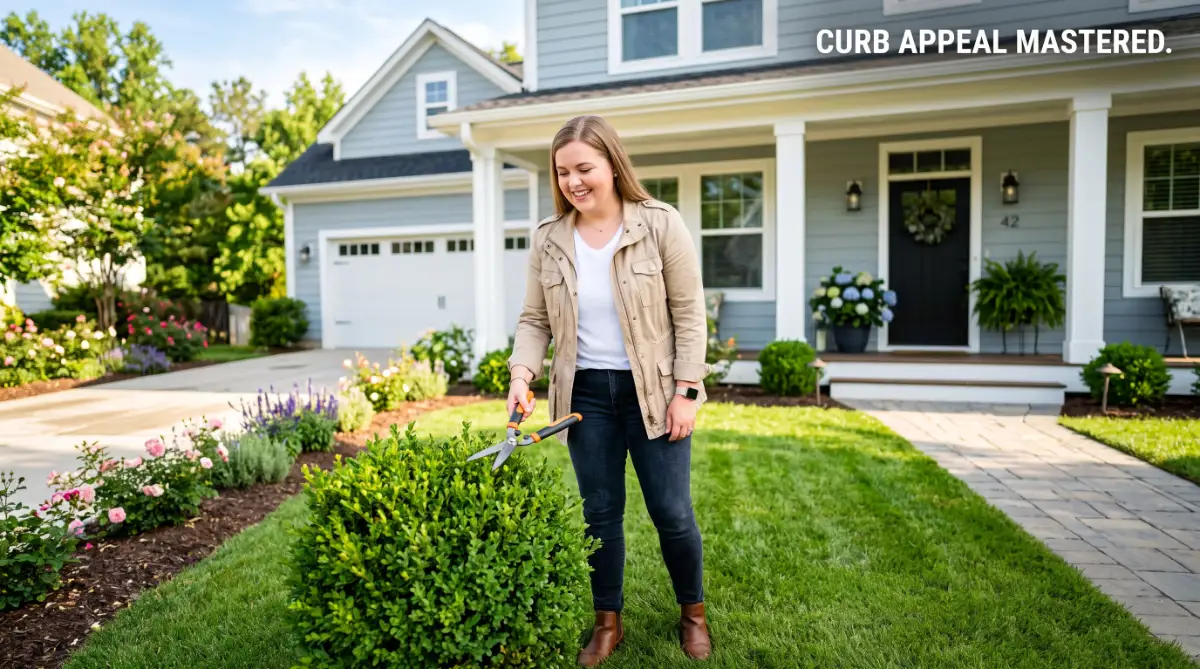
You don't need a professional landscaper. Pull the weeds from your flower beds. Trim the bushes so they don't cover the windows. Add a fresh layer of dark mulch. Mulch is cheap, but it makes a garden look "expensive" and well-kept.
Light the Way
Old, rusty porch lights make a house look dated. Replace them with modern, clean fixtures. Ensure the walkway is clear and well-lit. This makes the home feel safe and welcoming.
Myth vs. Reality: Landscaping
Step 2: Refresh the "Touch Points" Inside the Home
"Touch points" are things you interact with every day. If these feel old or grimy, the whole house feels old.
Update Cabinet Hardware
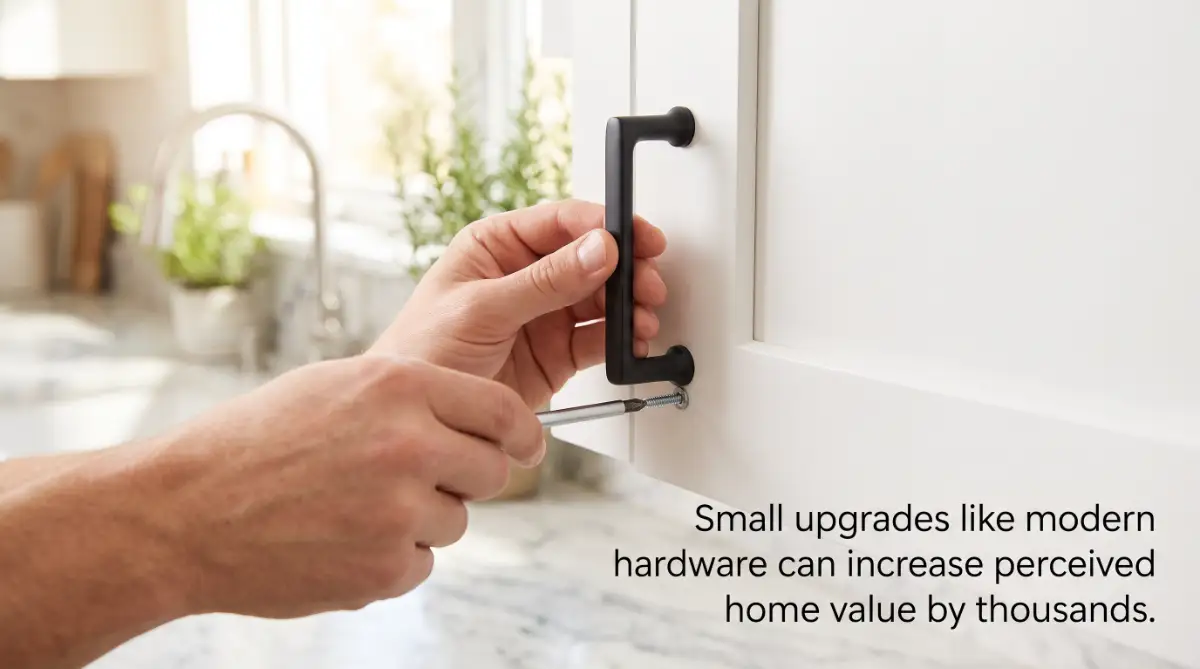
In the kitchen and bathroom, take a look at your handles and knobs. Are they gold-plated from thirty years ago? Switching them to brushed nickel or matte black is a ten-minute job. It instantly changes the "age" of the room.
Fix the Faucets
A leaky faucet is not just annoying; it signals neglect. Replace old, lime-scaled faucets with clean, modern versions. It makes the kitchen or bathroom feel hygienic and updated.
Standardize Your Lighting
Check every light bulb in your house. Are some "warm white" and others "cool blue"? This creates a messy look. Switch all your bulbs to a consistent "soft white" LED. This makes the rooms feel brighter and more cohesive.
Expert Insight: I always tell homeowners that cleanliness is a form of maintenance. Deep cleaning your grout and steaming your carpets can add as much value as a minor upgrade. It tells the buyer, "This house is healthy."
I once ignored a tiny water spot in my guest bathroom for months, thinking it was nothing. By the time I finally checked it, the repair cost me three times more than it should have.
Now, I always keep a flashlight handy and do a quick "leak check" every month to catch problems early before they eat my budget.
Step 3: Perform a "System Health" Audit
The "bones" of your home are what truly matter to your bank account. If your HVAC or plumbing fails, your home value drops instantly.
Service Your HVAC System
Change your air filters. This is the simplest maintenance task, yet many people forget it. A clean filter helps your system run better and last longer.
If you have a professional service your heater and AC once a year, keep the receipts. Showing these to a buyer proves you are a responsible owner.
Check for Water Damage Signs
Go into your basement or attic with a flashlight. Look for water spots or dampness. Fixing a small leak in the roof or a pipe now is much cheaper than fixing mold later.
Buyers are terrified of water issues. By keeping everything dry, you protect your equity.
Clean the Gutters
Clogged gutters lead to foundation problems and roof rot. Ensure water flows away from your house. This is a free task that saves you from a $10,000 repair bill down the road.
Pro Tip: Create a "Home History" folder. Put all your maintenance receipts, paint color codes, and manual books in it. This folder is a powerful tool during a sale. It gives the buyer "proof of care."
Want to see these tips in action? Watch this quick guide to see how a few simple outdoor changes can instantly make your home look like a million bucks! After you watch, keep reading to learn the indoor secrets that buyers love.
Why Consistent Care Beats One-Time Fixes
Think of your home like a car. If you never change the oil, the engine will eventually explode. You cannot fix that by just giving the car a new paint job.
Your home works the same way. By doing these small steps, you are preventing "Value Erosion." You are making sure that every dollar you put into your mortgage stays protected.
When you take care of the small things, the big things stay healthy. This approach saves you money in the long run. It also makes your home a much more pleasant place to live while you still own it.
In the next sections, we will talk about how to handle walls, flooring, and the "decluttering" secret that changes everything.
Refreshing Your Interior Walls and the Psychology of Color
Now that we have covered the exterior and the main systems of your house, let's go inside. The walls of your home act like a canvas. If they are covered in scuff marks, holes, or outdated wallpaper, buyers will subtract money from their offer.
Fixing the Small Imperfections
You do not need to paint every single room to see a change. Grab a "magic eraser" or a damp cloth and walk through your hallways.
Wipe away the fingerprints around light switches and door frames. Use a small amount of spackle to fill in tiny holes left by old picture frames.
The Power of Neutral Tones
If you do decide to paint, stick to "greige," soft whites, or light sands. These colors make a space feel larger and cleaner.
Bright or highly personal colors like neon green or dark purple can actually turn buyers away. They want to see themselves living there, and neutral walls make that easier.
Expert Secret: Focus on the Trim
Sometimes, you don't need to paint the whole wall. Simply cleaning or repainting the baseboards and window trim can make a room look brand new.
White trim creates a sharp contrast that looks very professional in photos.
If you are planning to sell soon, you should also consider how to evaluate the long-term growth potential of a residential neighborhood before investing to understand your market better.
Reviving Your Floors Without Replacing Them
New flooring is expensive, but making your current floors look great is surprisingly cheap. Most people overlook how much dirt their floors actually hold.
Deep Clean Your Carpets
Rent a professional-grade carpet cleaner for a day. You will be shocked at the color of the water that comes out of your "clean" carpets.
Removing stains and odors instantly makes a home feel more hygienic. It also removes that "old house" smell that can linger in fabrics.
Hardwood and Tile Care
For hardwood floors, use a high-quality polish to bring back the shine. If you have tile, the secret is in the grout.
Buy a grout pen or use a mixture of baking soda and vinegar to scrub the lines between tiles. Clean grout makes a kitchen or bathroom look like it was just renovated yesterday.
The Role of Area Rugs
If a floor is permanently damaged in one spot, do not panic. Use a stylish, neutral area rug to cover the flaw. This adds a layer of comfort and hides imperfections without the cost of a full floor replacement.
Energy Efficiency: The Silent Value Booster
In today's world, buyers are very worried about monthly costs. A home that is "energy smart" is worth more than one that leaks expensive air. You can prove your home is efficient by making small, cheap adjustments.
Seal the Gaps
Feel for drafts around your windows and doors. Use weather stripping or simple caulking to seal those gaps. This is a very low-cost fix that can lower monthly utility bills through sustainable home energy habits. It keeps the heat in during winter and the cool air in during summer.
Smart Thermostat Upgrade
Installing a basic smart thermostat is a DIY job that takes about 30 minutes. It looks modern on the wall and tells the buyer that the house is updated. It also helps you save money on your own bills while you still live there.
Attic and Basement Insulation
Check your attic to see if the insulation has settled or moved. Adding one or two extra rolls of insulation is not expensive, but it makes a huge difference in how the home feels.
A house that stays at a steady temperature without the AC running constantly is a huge selling point.
The Secret of Professional Decluttering
One of the most effective ways to increase home value costs zero dollars. In fact, it might even make you money if you sell your old stuff. Decluttering is about "visual square footage."
Remove 30% of Your Items
When a room is full of furniture and boxes, it looks small. By removing just a few items, you create "negative space."
This makes the ceilings look higher and the floor plan look more open. Put extra items in a neat storage unit or a garage corner.
Organize the Closets
Buyers will open your closets. If clothes are falling out, they think the house lacks storage. If the closet is half-empty and organized, they think the house has "plenty of space." It is a psychological trick that works every time.
Clear the Countertops
In the kitchen, remove the toaster, the blender, and the spice racks. Leave almost nothing on the counters.
This makes the kitchen look massive and clean. According to Investopedia, small kitchen improvements and clearing space provide some of the best returns on investment for homeowners.
Common Traps That Can Lower Your Home’s Worth
Many homeowners try to help their home’s value but end up hurting it instead. Avoiding these mistakes is just as important as doing the right maintenance.
Over-Personalizing Your Space
You might love your DIY mosaic tile backsplash, but a buyer might hate it. When you do maintenance, keep it "boring" and classic.
Unique designs often require the next owner to spend money to "fix" them, so they will offer you less money for the house.
Ignoring the "Nose Blind" Effect
We all get used to the smell of our own homes. Pets, cooking, and dampness create odors that we don't notice anymore. Buyers notice them instantly.
Do not just spray heavy perfumes; they make people think you are hiding a mold problem. Instead, use an air purifier and deep clean the source of the smell.
Using Cheap Materials for Quick Fixes
If you are fixing a leaky pipe or a broken floorboard, do it right. Using duct tape or the wrong kind of glue will be caught by a home inspector.
This makes the buyer wonder what other "short cuts" you took with the house. It is better to spend a few extra dollars on the right part.
Ignoring the Small Details
Loose doorknobs, cracked switch plates, or a doorbell that doesn't ring might seem minor. However, they send a message of neglect. When a buyer sees five small things broken, they assume there is a big problem hidden behind the walls.
You can find more tips on avoiding these issues in our guide on how to stop losing money 7 huge mistakes first time home sellers make.
The Danger of Unpermitted Work
Never try to do complex electrical or plumbing work yourself if it requires a permit. If you can't show paperwork for a major change, it can ruin a sale. Stick to the "easy maintenance" tips we have discussed here, which are safe and don't require legal permits.
A Simple Routine for Long-Term Value Protection
Maintaining your home value is not a one-time event. It is a habit. If you wait until you want to sell, the list of repairs will be too long and too expensive.
The Weekend Checklist
Once a month, spend two hours walking around your property with a notebook. Look for peeling paint, dripping faucets, or overgrown weeds.
Fixing these things as they happen takes almost no effort. It also keeps your 30-day budget blueprint on track by avoiding sudden, huge repair costs.
Keep a Maintenance Log
Buy a simple notebook and write down every time you service the AC, clean the gutters, or paint a room. This "logbook" is incredibly impressive to buyers and real estate agents. It proves the home has been treated with respect.
Seasonal Deep Cleans
Every time the season changes, do one "deep" task. In spring, wash the windows. In autumn, clean the gutters. In winter, check the insulation. This prevents small issues from turning into "house-eating" disasters.
Taking Action for a Brighter Financial Future
Your home is more than just a place to sleep. It is your safety net and your biggest investment. By following these 7 easy maintenance tips, you are taking control of your financial future.
You don't need a huge bank account or a professional construction team. All you need is a little time, a few simple tools, and the willingness to pay attention to the details.
The effort you put in today will pay off in the form of a higher bank balance and a much happier living environment.
Start small. Pick one thing from this list today—maybe it’s cleaning your front door or fixing that one leaky faucet. Once you see the difference it makes, you will feel motivated to do more.
Your home will thank you, and your future self will thank you even more when it’s time to see the true value of your hard work.
I know how hard it can be to start when you feel overwhelmed, but I promise you that even one small fix makes a huge difference.
I felt so much lighter and more confident once I started checking off these simple tasks. Take that first step today—you will be so glad you did when you see your home shining again.
Disclaimer: The information provided in this article is for educational purposes only. Home maintenance requirements can vary based on your location, home age, and local laws. Always consult with a professional contractor or real estate expert before making significant changes to your property.


![Avoid These 5 Costly Home Inspection Mistakes [Step-by-Step]](https://nexvoramag.com/storage/uploads/blogs/1785927325_avoid-these-5-costly-home-inspection-mistakes-step-by-step.webp)